

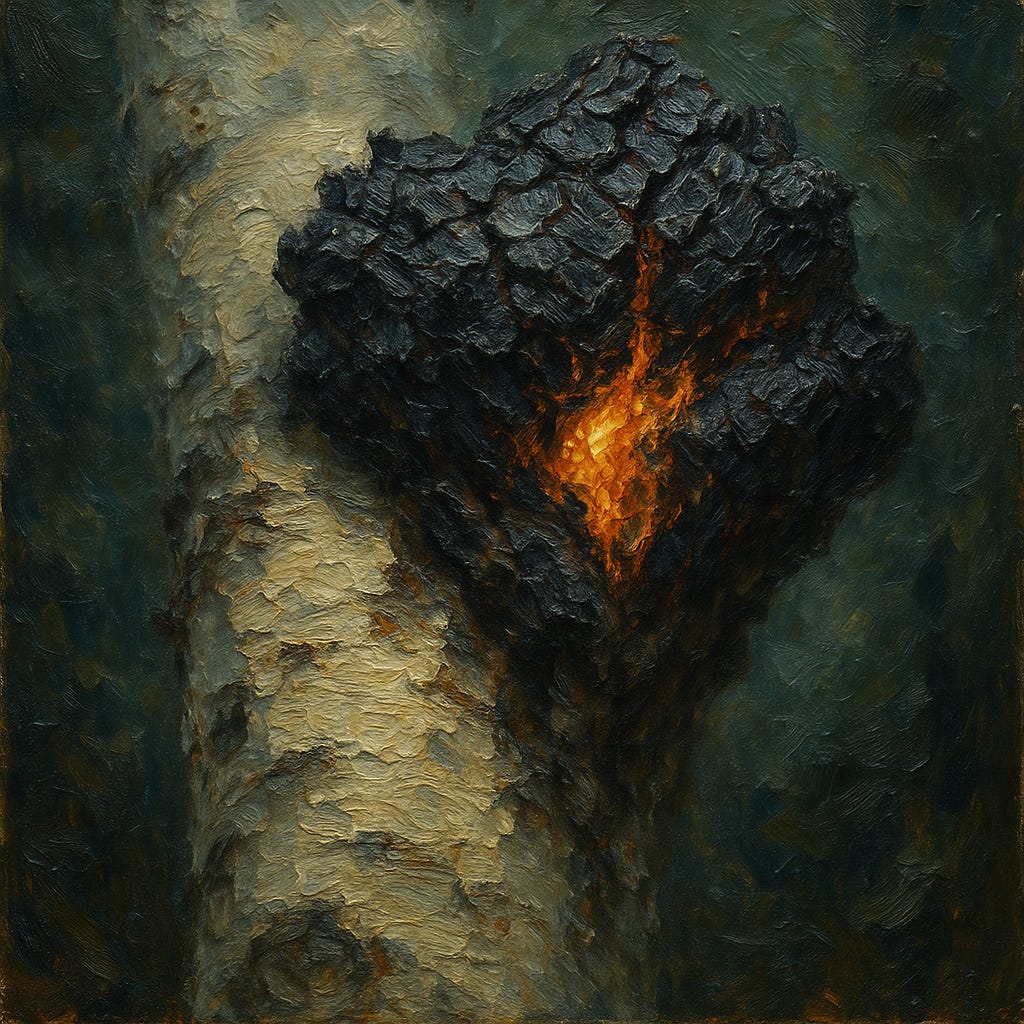
In the circumpolar forests of the northern hemisphere, a black, charcoal-like growth emerges from birch trees with a burnt, lightning-struck appearance that belies its extraordinary healing properties. This is Chaga—Inonotus obliquus—a mushroom that Siberian shamans have long crowned the “king of the mushrooms,” not for its regal appearance, but for what Russian novelist Aleksandr Solzhenitsyn called its unlimited benefits. For thousands of years, this strange denizen of the forest has been used as medicine, tea, fire starter, and spiritual ally across Asia and Northern Europe. Now, as modern science begins to validate what traditional wisdom has always known, Chaga stands at a remarkable intersection: a ancient folk remedy whose beta glucans, melanin, betulinic acid, and superoxide dismutase content are revealing mechanisms of healing that pharmaceutical research is only beginning to understand.
David Wolfe’s book inaugurates a new series on superherbs with a subject that deserves the royal treatment. The journey begins with Chaga’s natural history—its relationship with birch trees, its role in forest ecosystems, its appearance in everything from ancient Chinese herbalism texts to the equipment of Ötzi the Iceman found preserved in an Alpine glacier. From there, the book moves through centuries of traditional use in Siberian medicine, the Russian research that led to its approval for cancer treatment in 1955, and contemporary scientific investigations into how its compounds work at the cellular level. But this isn’t just a book about studying Chaga from a distance. Wolfe provides detailed guidance on harvesting wild Chaga, preparing it as tea and tinctures, incorporating it into recipes from breakfast smoothies to chocolate desserts, and understanding the differences between wild specimens and laboratory-grown mycelium products. The recipes alone—ranging from simple Chaga tea to elaborate formulations combining multiple medicinal mushrooms and superherbs—transform abstract nutritional information into daily practice.
What makes this work distinctive is Wolfe’s refusal to separate the poetic from the practical, the mystical from the molecular. He writes about mushroom spores traveling through space with the same careful attention he brings to extraction temperatures and ORAC scores. The book treats Chaga as both a measurable concentrate of antioxidants and melanin, and as what he calls a “denizen of an enchanted realm”—a bridge between the visible world and something less easily detected. This approach serves readers whether they come to Chaga seeking relief from specific health challenges, looking to understand medicinal mushrooms more broadly, or simply wanting to know how to make their morning beverage more nourishing. A cancer patient will find detailed protocols combining traditional and modern approaches. A forager will learn how to identify Chaga in the wild and distinguish it from look-alikes. Someone interested in the science gets access to research on beta glucans’ effects on immune function, betulinic acid’s selective cytotoxicity against tumor cells, and melanin’s radioprotective properties—all explained in accessible language with extensive citations.
The first rule of herbalism, Wolfe writes, is compliance: will you actually take the herbs? This book exists because knowledge without application remains abstract, and Chaga’s benefits only manifest when consumed. The pages that follow offer more than information about a medicinal mushroom. They present an invitation into a different relationship with healing—one that positions us not as passive recipients of pharmaceutical interventions but as active participants in our own wellness, connected to forests, traditional wisdom, and the intelligence inherent in natural systems. Whether you’re holding a cup of Chaga tea for the first time or you’ve been hunting this king of mushrooms for years, what follows is both a comprehensive guide and an opening into mysteries that science is only beginning to map.
With thanks to David Wolfe.
The rest of this summary — the analogy, one-minute elevator explanation, 12-point summary, Q&As, and Golden Nugget — is for paid subscribers.
Your subscription also unlocks every other book summary in the library, the Deep Dive Audio Library, my original books (new ones added monthly), and three series for the moments when a real decision is in front of you: Questions for Your Doctor, Before You Consent, and Package Inserts.