

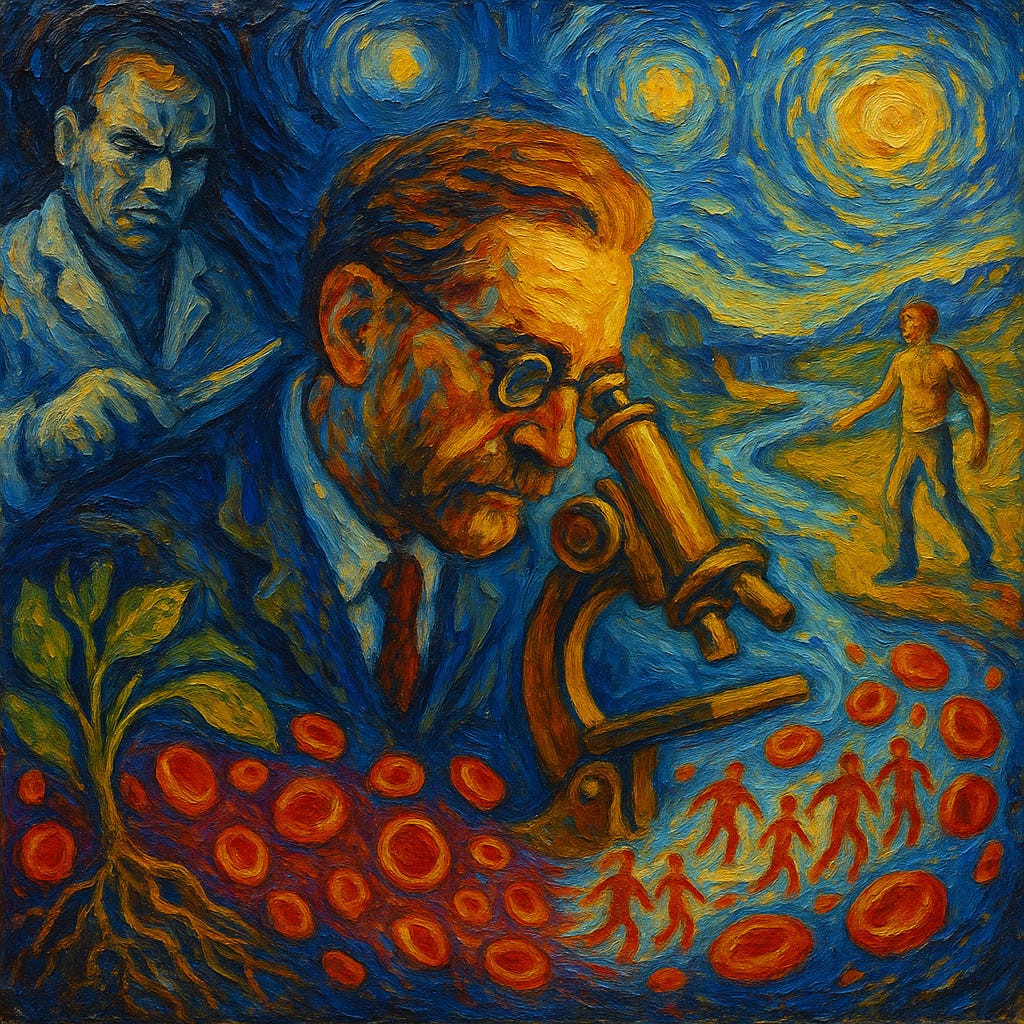
When Harvey Bigelsen peered into Gaston Naessens' revolutionary microscope in Montreal, witnessing living blood at 60,000 times magnification, he discovered organisms and movements that four years of medical school had insisted didn't exist. This moment crystallized a forty-year journey that would expose modern medicine's most dangerous deception: that doctors heal, when in reality they often harm. Through his pioneering work with holographic blood analysis, Bigelsen revealed that disease follows predictable patterns rooted in trapped inflammation from medical interventions, not random attacks requiring pharmaceutical warfare. His clinical evidence—including patients recovering from "incurable" conditions like hepatitis C simply by removing sources of chronic inflammation—demonstrates that the body possesses profound wisdom to heal itself when medical interference is removed. This understanding transforms the doctor-patient relationship from one of dependency to liberation, revealing that our greatest health threat often wears a white coat.
Bigelsen's terrain-based approach aligns with a growing chorus of medical heretics who dare expose their profession's predatory nature. Like Vernon Coleman warning that doctors have become the most likely people to kill you, or Robert Mendelsohn revealing how pediatricians transform healthy children into lifelong patients through unnecessary interventions, Bigelsen documents how every surgery creates permanent scar tissue that traps healing inflammation, establishing patterns of chronic disease. His work parallels Marizelle Arce's recognition that symptoms represent intelligent bodily responses rather than enemies to suppress, and Rashid Buttar's discovery that systemic detoxification can reverse conditions conventional medicine deems hopeless. These physicians share a common revelation: modern medicine's "attack and kill" philosophy, rooted in Pasteur's flawed germ theory, ignores Béchamp's proven terrain theory and Bernard's wisdom that the internal environment determines health. The evidence is overwhelming—from Bigelsen's living blood analysis showing how inflammation fragments into what appears as "viruses," to documented recoveries when trapped inflammation is finally released through neural therapy and structural work.
The revolutionary truth hidden in symplasts—those holographic images appearing in living blood—is that what modern medicine calls "viruses" may actually be our own tissue fragments created by intense trapped inflammation, not foreign invaders. This single insight demolishes the foundation of virology and explains why patients like Marissa recovered from "incurable" hepatitis C simply by removing an IUD and allowing trapped inflammation to resolve. Bigelsen's message empowers readers to become their own health advocates: understand that disease is a process with a traceable history through your body's unique terrain, recognize that your symptoms communicate vital information about trapped inflammation and structural blockages, and know that healing requires removing the dams created by medical interventions rather than adding more. As the supporting voices from Coleman to Buttar affirm, the most dangerous fiction in healthcare is that doctors are necessary for healing—when mounting evidence proves they are often the primary obstacle. True health emerges when we stop allowing well-meaning but misguided medical engineers to dam our body's flowing river system and instead trust the magnificent self-healing wisdom that modern medicine has trained us to fear.
With thanks to Dr. Harvey Bigelsen.
Deep Dive Conversation Library (Bonus for Paid Subscribers Only)
This deep dive is based on the book:
Discussion No.112:
23 insights and reflections from “Doctors Are More Harmful Than Germs”
Thank you for your support.
Analogy
Think of your body as a magnificent river system with countless tributaries flowing together in perfect harmony. When the river flows freely, it carries nutrients to every part of the landscape while washing away waste and debris. The water sparkles with life, supporting diverse ecosystems and maintaining the delicate balance that sustains all living things along its banks.
Now imagine that well-meaning engineers decide to "improve" this river system by building dams wherever they see turbulence or flooding. Each dam stops the immediate problem they can see, but also creates stagnant pools behind the barriers where debris accumulates and the water loses its vitality. At first, the river seems to adapt—water finds new channels around the obstacles. But over time, more dams are built to manage the problems created by the first dams, until the once-flowing river becomes a series of disconnected pools with increasingly polluted, stagnant water.
The engineers focus on managing each problem area separately, never recognizing that the river's turbulence was actually its way of cleaning itself and maintaining healthy flow. They measure the water quality in isolated sections and treat each stagnant pool with chemicals, but the fundamental problem—the blocked flow—remains unaddressed. Meanwhile, the original river's wisdom—its ability to self-clean, nourish the landscape, and maintain balance—is completely disrupted.
Your body is that river system, and modern medicine is the well-meaning but misguided engineering approach. Every surgery creates a dam (scar tissue) that blocks natural flow. Every drug suppresses the body's natural turbulence (symptoms) that indicates cleaning and healing processes at work. The result is trapped inflammation (stagnant pools) that creates the chronic diseases plaguing our society. True healing means removing the dams and restoring the river's natural flow, allowing the body's inherent wisdom to clean, nourish, and heal itself.
The One-Minute Elevator Explanation
Imagine you're designed to run on eight cylinders, but medical interventions have you running on only four. Every surgery leaves permanent scars that act like dams in your body's circulation, trapping the inflammation that should heal and move on. Modern medicine fights your body's natural healing with drugs and procedures, when symptoms are actually your body's way of communicating and cleaning itself.
Here's the key insight: disease isn't an attack from outside—it's your body adapting to trapped inflammation and blocked flow from past interventions. That "Lyme disease" or "fibromyalgia" diagnosis? It's probably your body still trying to heal from surgeries, dental work, or injuries from years ago. The inflammation got stuck behind scar tissue and never finished its job.
The solution isn't more drugs to suppress symptoms—it's removing the blockages so your body can complete its healing. Think of it like unclogging a drain instead of just mopping up the overflow. Your body has incredible wisdom to heal itself when we stop interfering and start supporting its natural processes.
The medical system profits from managing chronic disease, not curing it. They've convinced us our bodies are defective machines needing constant maintenance, when we're actually self-healing organisms being prevented from healing by the very interventions meant to help us.
Your health is in your hands. Find practitioners who understand flow, structure, and the body's natural healing capacity. Address the trapped inflammation from your past interventions. Support your body's wisdom instead of fighting it.
[Elevator dings]
Follow these threads for your own research:
Neural therapy and biological medicine practitioners in your area
Osteopathic manipulation and cranial work for structural healing
Living blood analysis to assess your current inflammation levels
Terrain theory and the work of Antoine Béchamp vs. Louis Pasteur
12-Point Summary
1. Disease is a Process, Not an Attack Disease doesn't randomly attack healthy people—it develops through a predictable process based on each person's unique life experiences, emotional patterns, and physical history. Understanding disease as a process means healing is also a process that must address root causes rather than just suppressing symptoms. Every chronic condition can be traced back through a chain of events including surgeries, injuries, emotional traumas, and medical interventions that disrupted the body's natural balance and healing capacity.
2. Terrain Theory vs. Germ Theory Two competing philosophies explain disease: germ theory (germs attack from outside) versus terrain theory (germs live in diseased tissue). Modern medicine follows germ theory, leading to the "attack and kill" approach of drugs and surgery. Terrain theory, supported by scientists like Claude Bernard, recognizes that the condition of our internal environment determines whether we get sick. Even Louis Pasteur reportedly admitted on his deathbed that "the terrain is everything; the germ is nothing."
3. Inflammation is Healing, Not Disease Inflammation is the body's primary healing mechanism—swelling, fever, and pain indicate the body is working to repair damage and eliminate toxins. Suppressing inflammation with drugs or procedures interferes with natural healing and pushes problems deeper into the body. When inflammation completes its natural cycle, injuries heal completely. When inflammation becomes trapped by scars or suppressed by medications, it becomes chronic and toxic, creating the foundation for serious diseases years later.
4. Surgery Creates Permanent Damage Every surgery creates scars through multiple tissue layers from skin to the surgical site, permanently disrupting the body's natural flow patterns. Scar tissue contains no blood vessels, nerves, or circulation, acting like dams that trap healing inflammation and force the body to work around permanent obstructions. Even "minimally invasive" procedures cause significant structural damage. Most surgeries performed today are elective rather than life-saving, creating more long-term harm than benefit by establishing patterns of trapped inflammation.
5. The Body Has Inherent Wisdom and Healing Capacity The human body contains remarkable intelligence that coordinates trillions of cellular processes without conscious effort. Symptoms are the body's way of communicating what it needs, not malfunctions requiring suppression. The body constantly works to maintain balance and heal injuries through sophisticated mechanisms like the primary respiratory mechanism—a subtle pumping of cerebrospinal fluid that nourishes every cell. Supporting these natural processes is more effective than fighting against them with drugs and procedures.
6. Function Creates Structure How we live, move, think, and handle emotions literally shapes our physical structure over time. Chronic emotional patterns create muscular tension that pulls on bones and affects organ function. Injuries and surgeries force structural adaptations that can cause problems in seemingly unrelated body areas. Understanding this principle means healing must address both structural restrictions and the functional patterns that created them, which is why bodywork and emotional healing are essential components of health care.
7. Each Person is Biochemically and Structurally Unique No two people develop the same disease through identical processes, making standardized treatments ineffective for most people. Individual genetics, life experiences, emotional patterns, and structural adaptations create unique terrains that require individualized assessment and treatment. This is why the same drug works for some people and fails or harms others with supposedly identical conditions. True healing requires understanding each person's complete story, not just matching symptoms to disease names.
8. The Medical System Suppresses Natural Healing Modern medical education deliberately trains doctors to ignore the body's natural healing capacity and focus on intervention with drugs and surgery. The 1910 Flexner Report systematically eliminated traditional healing methods and created a medical monopoly that serves industry profits rather than patient health. Medical research is funded by pharmaceutical companies seeking to prove their products work, while natural healing methods are dismissed as "unscientific" despite thousands of years of successful use.
9. Dental Health Affects Whole-Body Structure The mouth is the "base of the temple"—its structure and alignment affect the entire nervous system and body posture through cranial nerve connections. Root canals create dead zones that often develop hidden infections, while tooth extractions disrupt structural integrity and eliminate important drainage pathways. Orthodontia and other dental procedures can jam cranial bones together, affecting circulation and nervous system function throughout life. Dental trauma often creates the foundational weaknesses that manifest as chronic diseases decades later.
10. Emotions and Physical Structure are Intimately Connected Chronic emotional patterns create physical armoring through sustained muscle tension that reshapes body structure over time. Where we hold emotions determines where physical problems are most likely to develop when combined with injuries or medical procedures. The fascia—connective tissue throughout the body—carries emotional tension patterns that affect distant body parts. True healing requires addressing both physical restrictions and emotional patterns, which is why bodywork often releases emotional memories along with physical tension.
11. Early Life Experiences Have Lifelong Health Consequences Birth trauma, childhood injuries, and early medical interventions establish structural and neurological patterns that affect health throughout life. C-sections prevent essential developmental processes, while procedures like tonsillectomies and orthodontia can disrupt natural growth patterns. Many adults' chronic health problems can be traced to early interventions that seemed minor at the time but created foundational weaknesses. Understanding this connection helps explain why some people develop chronic diseases while others remain healthy despite similar exposures.
12. True Prevention Supports Natural Health Rather Than Detecting Disease Current "preventive" medicine consists of early detection through testing and screening, which cannot actually prevent anything and often causes more harm than benefit through radiation exposure and unnecessary procedures. True prevention involves supporting the body's natural healing capacity through proper nutrition, stress management, emotional health, adequate rest, and avoiding unnecessary medical interventions. People can take control of their health by understanding their body's signals, minimizing harmful interventions, and working with practitioners who support natural healing rather than suppress symptoms.
The Golden Nugget
The Most Profound and Unknown Truth: Your Body Creates Its Own "Viruses" From Trapped Inflammation
The single most revolutionary and least understood concept in this entire work is that what we call "viruses" may actually be fragments of our own tissues broken apart by intense, trapped inflammation—not foreign invaders attacking from outside.
The Hidden Reality:
When inflammation becomes severely trapped and reaches critical intensity, it can literally break apart the protein structures of our own organs and tissues. These broken protein fragments—composed of nucleic acids and peptide links—are identical in structure to what laboratory medicine identifies as "viruses." In essence, your liver under extreme inflammatory stress doesn't get "infected" with hepatitis C—it creates hepatitis C by breaking apart its own protein structures under the pressure of overwhelming, trapped inflammation.
Why This Changes Everything:
This understanding demolishes the entire foundation of modern virology and infectious disease medicine. If "viral" diseases are actually the body's own tissues fragmenting under inflammatory pressure, then:
Antiviral drugs are attacking the body's own cellular components, not foreign invaders
"Contagious" diseases may be environmental or procedural factors that create similar inflammatory patterns in multiple people
The billions spent on vaccine development are based on a fundamental misunderstanding of disease causation
Many "incurable" viral conditions could potentially be resolved by addressing trapped inflammation
The Evidence Hidden in Plain Sight:
Marissa's case provided the proof: her hepatitis C disappeared completely when the source of chronic inflammation (her IUD) was removed and the trapped inflammation was allowed to resolve. No antiviral drugs, no liver transplant—just removing the inflammatory source and supporting natural healing. This suggests that hepatitis C was never a virus she "caught," but rather her own liver proteins fragmenting under the pressure of massive, chronic inflammation.
Why So Few Know This:
This concept threatens the very foundation of virology, infectious disease medicine, vaccine development, and antiviral pharmaceutical industries. It suggests that much of modern medical practice regarding "infectious" diseases is based on a fundamental misunderstanding of what these conditions actually represent. The implications are so profound that acknowledging this truth would require rebuilding entire medical specialties from the ground up.
This single insight—that intense trapped inflammation can fragment our own tissues into what appears to be "viral" material—represents perhaps the most important paradigm shift in medical understanding since the acceptance of germ theory itself. It transforms victims of viral attacks into people whose own healing processes have been overwhelmed and misdirected, pointing toward entirely different and potentially far more effective therapeutic approaches.
30 Questions and Answers
1. What is the fundamental difference between germ theory and terrain theory of disease?
Germ theory, championed by Louis Pasteur, views disease as an attack by hostile external organisms that invade healthy bodies without warning. This theory forms the foundation of modern medicine's "attack, attack, attack and kill, kill, kill" strategy, where symptoms must be suppressed and germs destroyed. Terrain theory, supported by Antoine Béchamp and Claude Bernard, holds that germs live in diseased tissue rather than causing disease themselves. According to this philosophy, bacteria adapt to their environment and only thrive in bodies that are already out of balance. The terrain—meaning the whole person including their physical condition, emotional state, experiences, and environment—determines whether disease can take hold. Pasteur himself reportedly recanted his germ theory on his deathbed, admitting that Béchamp was right: "the terrain is everything; the germ is nothing."
The practical implications are profound. Germ theory leads to interventions that suppress natural healing processes, while terrain theory focuses on supporting the body's innate wisdom to heal itself. Modern medicine treats diseases as isolated entities attacking random victims, whereas biological medicine recognizes that each person's unique terrain creates their individual disease process. This explains why the same "germ" affects people differently—it's not the germ that matters, but the condition of the person's internal environment.
2. How does the concept "the terrain is everything; the germ is nothing" challenge modern medical thinking?
This concept fundamentally challenges the entire foundation of modern medicine by shifting responsibility from external attackers to internal conditions. Modern medicine operates on the premise that diseases are accidents or attacks that can strike anyone at any time, requiring constant vigilance through testing and preemptive strikes with drugs and procedures. The terrain concept suggests instead that we create the conditions for our own health or disease through our experiences, emotions, lifestyle, and how we handle life's challenges. This means that instead of being victims of random attacks, we are participants in our health outcomes.
The challenge extends to treatment approaches. If terrain is everything, then suppressing symptoms with drugs or removing organs surgically doesn't address the underlying imbalance that allowed disease to develop. The focus shifts from fighting diseases to understanding why a particular person developed a particular condition at a particular time. This requires doctors to spend time understanding each patient's unique story, emotional patterns, physical history, and environmental factors—something modern medicine's efficiency-driven model doesn't support. It also suggests that many expensive interventions are unnecessary and potentially harmful, threatening the economic foundation of the current medical system.
3. Why does the author argue that disease is a process rather than an accident or attack?
Disease represents the body's attempt to adapt and heal from imbalances or injuries that have occurred over time. Every disease has a history that can be traced through an individual's physical and emotional experiences. The body doesn't suddenly malfunction without reason—there are always preceding events, often involving trapped inflammation from surgeries, injuries, or chronic emotional stress. Disease symptoms are actually the body's intelligent response to these underlying problems, not random attacks that require suppression.
Understanding disease as a process means that healing is also a process that must move through specific stages. You cannot jump from disease back to health—you must retrace the steps that led to the problem. This is why suppressing symptoms with drugs often leads to deeper, more chronic problems later. The body was trying to communicate and heal through those symptoms. When we block that communication, the underlying imbalance remains and eventually manifests in more serious ways. The process view also explains why the same disease name can look completely different in different people—each person's unique life process creates their unique disease expression.
Tonsil Removal
Tonsils as Part of the Drainage System: The book identifies tonsils as important components of the body's lymphatic drainage system, particularly for the head and neck region. When the head structure is properly aligned, inflammation in the mouth drains naturally through the tonsils as part of the body's waste elimination process.
Tonsillectomy as Early Surgery: Tonsil removal is mentioned as one of the most common "first surgeries" that children experience, often occurring before age twenty. The author notes that many people don't even consider tonsillectomy as "real surgery" when recounting their medical history, despite it being a significant intervention that creates scars and affects body structure.
Structural and Drainage Consequences: When tonsils are removed, the natural drainage pathway for inflammation in the mouth and throat area is eliminated. This can contribute to problems with the cranial mechanism (the subtle movement of skull bones that supports circulation and nervous system function). The removal creates scar tissue in the back of the throat that can affect the overall structural alignment of the head and neck.
Connection to Chronic Disease Patterns: Throughout the case study appendix, tonsillectomy appears repeatedly in the medical histories of people with various chronic conditions including:
Multiple sclerosis and ALS
Rheumatoid arthritis
Hepatitis C
Lyme disease
Fibromyalgia and chronic fatigue
Various other chronic conditions
Part of Accumulated Damage: The book treats tonsillectomy as part of the cumulative damage that sets people up for chronic disease later in life. While rarely the sole cause of major health problems, it contributes to the overall pattern of interventions that disrupt natural flow and create areas of trapped inflammation.
Treatment Approach: In the author's neural therapy approach, treating the scarred area in the back of the throat where tonsils were removed helps improve the entire cranial mechanism and can contribute to overall structural healing.
The book presents tonsillectomy as an example of how common medical procedures that seem minor or routine actually have lasting structural consequences that contribute to chronic health problems decades later.
4. What is meant by "function creates structure" and how does this apply to human health?
This principle, derived from architect Louis Sullivan, means that how we use our bodies determines their physical form. Our daily activities, emotional patterns, postures, and habits literally shape our bones, muscles, fascia, and organ function over time. For example, chronic stress causes people to tighten certain muscle groups, which over years pulls on bones and creates structural changes that can affect circulation, nerve function, and organ health. The way we breathe, sit, walk, and even think creates our physical structure.
In health terms, this means that disease often reflects structural problems that developed from how we've lived and functioned. A person who chronically holds anger in their jaw may develop TMJ problems, dental issues, and headaches. Someone who slouches forward to protect their heart emotionally may develop breathing problems, digestive issues, and back pain. These aren't separate, unrelated conditions—they're all expressions of how that person's emotional and physical functioning has shaped their structure. True healing requires addressing both the structural problems and the functional patterns that created them. This is why bodywork, osteopathy, and structural therapies are essential—they help restore proper function so the structure can heal.
5. How does inflammation serve as the turning point between health and disease?
Inflammation is the body's primary healing mechanism and represents the crucial moment when the body can either successfully resolve an injury or become trapped in a chronic disease process. When the body encounters any insult—physical injury, emotional trauma, chemical exposure—it creates inflammation to isolate the problem and bring healing resources to the area. This is a normal, healthy response that should resolve naturally once healing is complete. Inflammation includes swelling, increased blood flow, immune system activation, and temporary barriers to protect damaged tissues while repair occurs.
The turning point comes when inflammation cannot complete its natural cycle. If the inflammation is trapped by scar tissue, suppressed by medications, or overwhelmed by the magnitude of injury, it becomes chronic and toxic to the body. Trapped inflammation consumes energy continuously as the body keeps trying to heal, leading to exhaustion and breakdown of other systems. The waste products from chronic inflammation circulate throughout the body, depositing in tissues and creating the conditions we call chronic diseases. Whether inflammation resolves naturally or becomes trapped determines whether an injury heals completely or becomes the seed of lifelong health problems.
6. What happens when inflammation becomes trapped in the body and why is this dangerous?
When inflammation becomes trapped, it creates a toxic, energy-draining cycle that progressively weakens the entire body. Normally, inflammation should complete its work and be eliminated through natural channels—blood and lymph circulation carry away waste products and the inflammatory response shuts down. However, scar tissue acts like a brick wall, preventing this natural flow. The healing inflammation gets stuck behind the scar, unable to access nutrients or eliminate its waste products. This creates a stagnant pool of inflammatory chemicals that should have been cleared from the body.
The trapped inflammation continues to signal the immune system that healing is needed, so the body keeps sending more resources to an area that cannot be reached. This is like a car engine running in place with the parking brake on—tremendous energy is expended with no forward progress. Over time, the body exhausts its reserves trying to heal unreachable areas. The waste products from trapped inflammation become toxic and begin circulating to other areas, creating the foundation for chronic diseases. The longer inflammation remains trapped, the more severe the eventual health consequences. This explains why people can feel fine for years after surgery, then suddenly develop chronic conditions that seem unrelated to their surgical history.
7. Why does the author claim that surgery is more harmful than beneficial in most cases?
Surgery creates the most severe form of trapped inflammation possible because it cuts through multiple layers of tissue from skin to the surgical site, creating scars throughout the body's structure. Even "minimally invasive" procedures create holes through every tissue layer and expose internal organs to air and foreign substances, causing widespread trauma. The body perceives surgery as a life-threatening attack and responds by creating massive inflammation to heal what it sees as potentially fatal injuries. However, the scars left behind permanently trap much of this healing inflammation.
Most surgeries performed today are elective rather than life-saving, meaning there were other treatment options available. The medical system has convinced people that surgery is routine and safe, but every surgery permanently reduces the body's overall function and energy. The author estimates that most people operate at only 50 percent of their natural capacity due to accumulated effects of medical interventions. Surgery also sets people up for future health problems because trapped inflammation creates the terrain where chronic diseases develop. While trauma surgery can be life-saving, the vast majority of procedures—from appendectomies to cosmetic surgery—create more long-term harm than benefit by establishing patterns of trapped inflammation that manifest as chronic diseases years later.
8. How do surgical scars permanently alter the body's structure and flow?
Surgical scars are fundamentally different from normal tissue—they contain no blood vessels, nerves, or lymph channels, making them essentially dead zones in the body's communication and circulation networks. Scar tissue is primarily collagen, which is much denser and less flexible than normal tissue. This creates permanent dams in the body's natural flow patterns, forcing circulation to find alternate routes while energy builds up behind the barriers like water behind a dam.
The structural effects extend far beyond the visible scar on the skin surface. Surgery creates scars through every layer of tissue from skin to the surgical site, including fascia, muscles, organs, and fluid membranes. These scars contract over time, pulling surrounding tissues toward them and creating tension patterns throughout the body. A abdominal surgery scar might eventually cause shoulder pain, breathing difficulties, or digestive problems as the scar tissue pulls on connected structures. The deeper, internal scars are often more problematic than surface scars because they disrupt organ function and circulation directly. The body must constantly work around these permanent obstructions, leading to compensatory patterns that eventually break down and create secondary problems.
9. What is the primary respiratory mechanism and why is it crucial for health?
The primary respiratory mechanism is a subtle, rhythmic movement of cerebrospinal fluid that occurs independently of breathing and heartbeat, flowing from the tailbone up through the skull and throughout the entire body every few seconds. This movement, discovered by osteopath William Sutherland, is powered by the coordinated movement of the tailbone and tongue, creating hydraulic pressure changes that pump cerebrospinal fluid around the brain and spinal cord, then throughout the body to nourish every cell.
This mechanism is crucial because it represents the body's most fundamental life force—the movement that sustains cellular function and coordinates all bodily processes. When this flow is restricted by structural problems, scars, or misalignments, the entire body suffers from poor circulation and inadequate cellular nutrition. The primary respiratory mechanism also coordinates with cellular respiration, the process by which each cell takes in nutrients, produces energy, and eliminates waste. Disruption of this flow leads to cellular starvation and toxic accumulation. Many chronic diseases can be traced to restrictions in this primary movement, which is why osteopathic treatment focuses on restoring natural flow patterns rather than just moving bones back into place.
10. How does living blood analysis reveal information that conventional blood tests miss?
Living blood analysis involves observing a drop of blood under a microscope while it's still alive and active, revealing dynamic processes that are destroyed when blood is processed for conventional testing. Standard blood tests require blood to be chemically treated, stained, and essentially killed before examination, which eliminates all information about the blood's vitality, activity, and natural behavior. Living blood shows the actual condition of cellular function, energy levels, and inflammatory processes in real time.
In living blood, you can observe the activity level of somatids—tiny organisms that indicate the body's overall vitality and adaptive capacity. The size and number of platelets reveal the intensity and duration of inflammatory processes throughout the body. The quality of red blood cells shows circulation efficiency and cellular health. The plasma activity indicates overall energy and life force. Most importantly, living blood analysis reveals how long the blood sample remains viable after being drawn—healthy blood may stay active for days, while compromised blood dies within hours. This information about vitality and inflammatory patterns cannot be obtained through any conventional test, yet it provides crucial insights into the body's current state and healing capacity.
11. What are somatids and what role do they play in health and disease?
Somatids are microscopic plant-like organisms that exist in our blood and throughout our bodies, serving as the basic building blocks of life itself. These organisms, observed by researchers like Gaston Naessens and Antoine Béchamp, have their own life cycle and adapt their form based on the condition of their environment—our internal terrain. When viewed in living blood, healthy somatids appear active and "dancing," indicating good vitality and balanced terrain.
Somatids play a crucial role in maintaining our internal ecological balance, much like beneficial bacteria in our gut. They help create our physical form, sustain our life processes, and eventually assist in decomposing our bodies when we die. When our terrain becomes imbalanced through stress, injury, or illness, somatids change their form to help restore balance—what we call "bad bacteria" or "germs" are actually somatids adapting to clean up imbalanced conditions. This explains why the same organism can be beneficial in one person and cause problems in another—it's not the organism that's the problem, but the terrain it's trying to help balance. Understanding somatids reveals that we are not isolated beings fighting external enemies, but complex ecosystems where every component, including bacteria, serves a purpose in maintaining health.
12. Why is the mouth considered "the base of the temple" in terms of body structure?
The mouth contains more sensory mechanisms than the rest of the body combined and serves as the foundation for the entire cranial structure and nervous system function. The jawbone moves 1,800 to 2,400 times daily during swallowing, and this movement is essential for pumping cerebrospinal fluid around the brain through the primary respiratory mechanism. Every tooth connects to specific acupuncture meridians and contains three miles of lymphatic channels, making the mouth a major component of the body's drainage and communication systems.
The structural alignment of the mouth, jaw, and skull directly affects the function of all twelve cranial nerves, which control essential unconscious functions like breathing, heartbeat, digestion, and sensory processing. The eleventh cranial nerve specifically controls the muscles responsible for keeping the head and shoulders aligned—the body's righting reflex that maintains balance and proper posture. When dental work, orthodontia, or mouth structure problems disrupt this alignment, the effects cascade throughout the entire body. A misaligned jaw forces compensatory changes in shoulder position, which affects hip alignment, leg length, and spinal curve. This is why dental health and mouth structure are fundamental to overall health—problems here create structural imbalances that affect every other system in the body.
13. How do dental procedures like root canals and extractions affect overall health?
Root canals create dead spaces in the jawbone that often become sealed chambers of infection called cavitations. During the procedure, all living tissue is removed from the tooth—blood vessels, nerves, and lymph channels—leaving behind dead tissue that the body recognizes as foreign material requiring disposal. However, the dental cement used to seal the procedure prevents the body's natural cleanup mechanisms from accessing the dead tissue, creating a permanent toxic waste site in the jawbone.
Research by Weston Price in the 1920s demonstrated that root canals cannot be completely sterilized and often develop hidden infections that drain toxins into the bloodstream. These infections cannot be detected because the nerves have been removed, so there's no pain signal, and they're sealed from view. Tooth extractions disrupt the structural integrity of the skull and eliminate important acupuncture meridian connections. Each missing tooth creates a weak spot in the skull structure and removes lymphatic drainage capacity. Both procedures trigger inflammatory responses that often become trapped in the jaw area, contributing to chronic diseases throughout the body. The mouth's central role in structural alignment and nervous system function means that dental trauma has far-reaching consequences that conventional medicine doesn't recognize or address.
14. What is the connection between emotions and physical structure in the body?
Emotions directly influence physical structure through muscular tension patterns that become habitual over time. When we experience emotions like anger, fear, or sadness, we instinctively contract specific muscle groups to protect ourselves or contain the feelings. If these emotional patterns persist, the muscular contractions become permanent armoring that reshapes our physical structure. For example, chronic anger often creates jaw tension that affects dental alignment and cranial nerve function, while persistent sadness may cause chest collapse that restricts breathing and circulation.
These emotion-structure connections create unique physical patterns in each person based on their emotional temperament and coping strategies. The fascia—connective tissue that wraps every structure in the body—carries these tension patterns throughout the entire system, so emotional holding in one area affects distant body parts. When combined with physical injuries or medical interventions, emotional armoring determines where problems are most likely to develop and how they will manifest. This is why the same surgery affects different people differently—their emotional patterns influence how and where trapped inflammation will express itself. True healing must address both the physical restrictions and the emotional patterns that created them, which is why bodywork often releases emotional memories along with physical tension.
15. How do IUDs create chronic inflammation and what diseases can result?
IUDs function by creating constant irritation and inflammation in the uterus to prevent pregnancy. The device is intentionally designed as a foreign object that the body recognizes as an irritant, causing the uterine lining to become chronically inflamed. This inflammation makes the uterus inhospitable to a fertilized egg, preventing implantation. However, this means that as long as the IUD is in place, the body is continuously creating inflammatory responses in the pelvic area.
This chronic inflammation gradually exhausts the immune system and creates the internal terrain where serious diseases can develop. The author found that every female client who had used an IUD could trace her health problems back to that time period. The accumulated stress from years of chronic inflammation can manifest as autoimmune diseases like rheumatoid arthritis, chronic fatigue syndromes like fibromyalgia, or even cancers—particularly ovarian cancer. The case of Marissa dramatically illustrated this connection: her hepatitis C developed from the massive inflammation created by her IUD, which overwhelmed her liver's capacity to process the inflammatory waste products. Once the IUD was removed, her inflammation levels dropped dramatically and her liver function returned to normal, essentially curing her "incurable" hepatitis C.
16. What was the significance of the Flexner Report of 1910 in shaping modern medicine?
The Flexner Report was a federally commissioned study that officially sanctioned modern, scientific medicine as the only legitimate approach to healthcare in America, effectively destroying all competing medical philosophies and practices. Funded by the Carnegie Foundation and supported by the AMA, this report established standards that eliminated funding for any medical school that didn't teach the allopathic approach of drugs and surgery. Schools teaching homeopathy, naturopathy, herbalism, and other traditional healing methods were labeled "unscientific" and forced to close.
The report's implementation marked the beginning of medical monopoly in America. Prior to 1910, patients had access to diverse healing approaches, with homeopathy being particularly popular and successful. The report created the framework for modern medical education that focuses on matching symptoms to drug prescriptions and surgical procedures, while eliminating any understanding of the body's natural healing processes or the connection between lifestyle and health. This educational model deliberately separated students from holistic thinking and trained them to see the body as a machine with replaceable parts rather than a living system with inherent wisdom. The report's long-term effect was to create a medical system based on intervention and profit rather than healing and health maintenance.
17. How has the medical establishment suppressed alternative healing methods throughout history?
The medical establishment has used systematic legal, economic, and propaganda campaigns to eliminate competition from other healing methods. Starting in 1912, the AMA established the Federation of State Medical Boards to shut down schools that didn't meet their approval, followed in 1913 by creating the first Propaganda Department to distribute information labeling anything outside their control as "health fraud" and "quackery." This pattern continued throughout the 20th century with legal attacks on chiropractors, homeopaths, naturopaths, and other practitioners.
The suppression operates through multiple channels: licensing laws that restrict who can legally practice medicine, insurance policies that refuse to cover alternative treatments, research funding that only supports drug and device studies, and media campaigns that ridicule traditional healing methods. When alternatives show success, they're often co-opted and modified to fit the pharmaceutical model. The legal system has been used aggressively—chiropractors won a landmark antitrust case in 1987 proving the AMA conducted "a nationwide conspiracy to eliminate a licensed profession." Despite thousands of years of successful use, methods like acupuncture are still labeled "unproven" while dangerous drugs and devices are approved based on minimal testing. This systematic suppression has created a medical monopoly that eliminates patient choice and prevents people from accessing healing methods that might be more effective and less harmful.
18. Why does modern medicine focus on treating symptoms rather than addressing root causes?
Modern medicine's symptom-focused approach stems from its mechanical view of the body and its profit-driven business model. Medical education trains doctors to match collections of symptoms to disease names, then prescribe standardized treatments—usually drugs or surgery—for those named conditions. This approach treats diseases as isolated entities rather than expressions of underlying imbalances in unique individuals. The focus is on making symptoms disappear quickly rather than understanding why they appeared and what the body is trying to communicate.
The economic incentives reinforce symptom suppression because it creates repeat customers rather than actual cures. If a drug truly cured diabetes, the patient would only need it once. Instead, drugs are designed to manage symptoms for life, ensuring continuous profit. Surgery generates immediate high fees, while teaching patients how to heal naturally would eliminate future revenue. The system also lacks time for root cause analysis—insurance reimbursement supports brief appointments focused on prescribing rather than extended conversations about life history, emotional patterns, and environmental factors. Additionally, addressing root causes often requires lifestyle changes and personal responsibility, which many patients resist. It's easier to take a pill than examine the emotional and lifestyle patterns that created the problem, making symptom suppression appealing to both doctors and patients despite its ultimate ineffectiveness.
19. What is homotoxicology and how does it explain the progression from health to disease?
Homotoxicology, developed by Dr. Hans-Heinrich Reckeweg, describes six distinct stages in the progression from perfect health to death, explaining how the body moves through these stages based on how well it can handle toxic influences and maintain its natural flow. The six stages move from excretion (healthy elimination of toxins) through inflammation and deposition to impregnation, degeneration, and finally dedifferentiation (death). The key insight is that this progression can move in either direction—toward health or toward disease—depending on how the body's natural processes are supported or suppressed.
The crucial transition point occurs when the body's natural reaction to toxins becomes blocked or trapped. In healthy progression, the body encounters a toxin, creates inflammation to isolate and eliminate it, then returns to balance. However, when inflammation is suppressed with drugs or trapped by surgical scars, the body must activate backup systems and compensation mechanisms. If these compensatory systems become overloaded, the person moves deeper into the disease process toward cellular degeneration and organ breakdown. Understanding homotoxicology explains why suppressing symptoms often leads to more serious problems later—it forces the disease process deeper into the body instead of allowing natural resolution. The goal of biological medicine is to support the body's movement back through these stages toward health by removing obstructions and restoring natural flow.
20. How do pharmaceutical drugs create direct effects rather than true "side effects"?
The term "side effects" is misleading pharmaceutical marketing that disguises the fact that drugs create multiple direct effects throughout the body. When any foreign chemical enters the body, it affects every system it contacts because the body must respond to and process this unnatural substance. These responses aren't accidental side effects—they're predictable direct effects based on the drug's chemical properties and the body's natural defensive reactions.
For example, cholesterol-lowering drugs don't just affect cholesterol—they interfere with cellular energy production because cholesterol is necessary for cell membrane function. Viagra doesn't just affect blood flow to the penis—it affects circulation throughout the body, which is why it can cause vision problems when blood is diverted from the eyes to achieve the desired effect. Every drug effect represents the body's attempt to neutralize or adapt to a foreign chemical. The pharmaceutical industry uses the term "side effects" to minimize perceived risks and suggest these reactions are minor or optional, when they're actually inevitable consequences of introducing unnatural chemicals into natural biological systems. This linguistic manipulation helps maintain the illusion that drugs can selectively target specific problems without affecting the rest of the body, which is impossible given how interconnected all body systems are.
21. What role does birth trauma play in lifelong health problems?
Birth trauma can establish structural and neurological problems that affect health throughout life, particularly because birth is when the body's basic structural patterns are established. Natural vaginal birth includes essential processes like the skull bones overlapping to fit through the birth canal, then spreading apart with the first deep breath to establish proper cranial expansion and circulation. Labor contractions and compression through the birth canal activate the movement of multiple diaphragms throughout the body, establishing the flow patterns necessary for optimal circulation and nervous system function.
When birth is traumatic—through C-section, forceps delivery, or interference like holding the baby back until the doctor arrives—these essential processes are disrupted. C-section babies never experience the compression and expansion cycle that activates their structural development. Forceps can jam skull bones together, preventing normal expansion and affecting cranial nerve function. Early trauma can freeze the nervous system in protective patterns that persist throughout life, affecting everything from breathing and circulation to emotional regulation and stress response. Cases like AJ (held back during birth, leading to lifelong neck problems and eventual Lyme disease diagnosis) and Farrah (premature birth creating developmental delays) demonstrate how birth trauma can create the foundational structural weaknesses that make people vulnerable to chronic diseases decades later. These early patterns are often so fundamental that they require specialized treatment to recognize and correct.
22. How did Marissa's case demonstrate the connection between IUDs and hepatitis C?
Marissa's case provided a clear demonstration of how trapped inflammation can create conditions that modern medicine labels as viral diseases. She developed hepatitis C while using an IUD, despite having no known risk factors like drug use or blood transfusions. Her living blood analysis showed massive inflammation and very little life force, indicating her body was overwhelmed by inflammatory processes. The inflammation appeared to be coming from the chronic irritation created by the IUD, which was designed to keep her uterus constantly inflamed to prevent pregnancy.
When the IUD was removed, her blood immediately transformed, showing dramatically reduced inflammation and increased vitality. Over the following year, as her body cleared the trapped inflammation, her liver function returned to normal and hepatitis C became undetectable. This case suggested that hepatitis C might not be a viral infection at all, but rather a name given to liver breakdown caused by overwhelming inflammation. The intensity of inflammation determines the severity of liver damage—mild inflammation might be called hepatitis A, while severe inflammation becomes hepatitis C. Marissa's case demonstrated that removing the source of chronic inflammation and supporting the body's natural healing could resolve even "incurable" conditions, challenging fundamental assumptions about viral diseases and the need for pharmaceutical interventions.
23. What did David's vasectomy case reveal about "minimally invasive" procedures?
David's experience revealed that even procedures labeled "minimally invasive" can create severe, long-lasting health consequences because they still create scars that trap inflammation. His vasectomy was performed in a clinic office and presented as routine outpatient surgery with minimal risk. However, the procedure created scar tissue that trapped inflammation in his pelvic area, leading to progressive health deterioration including fatigue, personality changes, nightmares, and eventually a diagnosis of Lyme disease.
The case demonstrated several crucial points about surgical interventions: first, that any procedure creating scars has the potential for serious consequences regardless of how minor it appears; second, that symptoms from trapped inflammation can take years to develop and may seem completely unrelated to the original procedure; and third, that the medical system typically doesn't connect later health problems to previous surgeries, leading to misdiagnosis and inappropriate treatment. David's vasectomy scar was continuously draining his energy as his body tried unsuccessfully to heal the trapped inflammation. When this was finally addressed through neural therapy to soften the scar and osteopathic work to restore flow around the obstruction, his symptoms resolved. His case illustrated that there is no such thing as truly minor surgery—every surgical intervention has the potential to create lifelong consequences that must be factored into decision-making.
24. Why does the author argue that each person requires individualized treatment?
Every person develops their unique physical and emotional structure through their individual life experiences, making it impossible to apply standardized treatments effectively. While all humans start from the same basic tissue types, genetic expression, life experiences, emotional patterns, and environmental factors create completely unique terrains in each person. The same condition name—like rheumatoid arthritis or Lyme disease—can arise from entirely different causal chains in different people, requiring different therapeutic approaches.
Individualized treatment recognizes that the person's whole story matters, not just their current symptoms. Someone's rheumatoid arthritis might stem from a hysterectomy scar creating trapped inflammation, while another person's identical diagnosis might come from emotional armoring patterns combined with a childhood accident. The location and nature of trapped inflammation, the person's structural patterns, their emotional coping strategies, and their overall vitality all influence how they will respond to different treatments. This is why homeopathy, osteopathy, and acupuncture are called the "divine trinity"—they all start with the principle that each person is unique and requires individualized assessment and treatment. Modern medicine's standardized protocols fail because they treat disease names rather than unique human beings, which explains why the same drug works for some people and fails or harms others with the supposedly same condition.
25. How does neural therapy help release trapped inflammation and restore flow?
Neural therapy uses precise injections of local anesthetic into specific nerve sites, scars, and trigger points to reset the nervous system and restore normal electrical function to tissues. When scars or injuries disrupt the body's electrical circuitry, they create "interference fields" that block normal nerve communication and trap inflammation. The neural therapy injection temporarily interrupts these abnormal electrical patterns, allowing the nervous system to remember its normal function and restore natural flow to the area.
The therapy is particularly effective for treating scars because it softens the dense collagen fibers and restores some circulation to these dead zones. When applied to surgical scars, neural therapy can help release years or decades of trapped inflammation by removing the electrical blockages that prevent normal healing. The treatment works systematically—starting with the most superficial scars and progressing to deeper restrictions as the body's flow improves. Neural therapy also stimulates the tissues to resume normal metabolic activity, bringing nutrients to areas that have been starved and allowing waste products to finally be eliminated. The key is that neural therapy works with the body's natural healing mechanisms rather than forcing change, supporting the nervous system's ability to coordinate normal function and allowing the body to complete healing processes that were interrupted by trauma or surgery.
26. What is the relationship between stagnation, energy blockages, and chronic disease?
Stagnation occurs when the body's natural flow of energy and fluids becomes blocked by physical or emotional obstructions, creating areas where energy swirls around endlessly instead of flowing through and out of the body. These blockages act like dams in a river—energy builds up behind them while areas downstream become depleted. Surgical scars are the most common physical cause of stagnation because they create permanent barriers to flow, while chronic emotional holding patterns create functional blockages through sustained muscle tension.
When energy cannot flow naturally, it becomes "potential energy" that builds pressure until it eventually explodes outward in destructive ways. This explains why chronic diseases often seem to appear suddenly after years of apparent health—the energy has been building behind blockages until the system can no longer contain it. The stagnant areas also become collection points for cellular waste that should be eliminated, creating toxic accumulations that further impair function. Chronic disease represents the body's attempt to adapt to these unnatural energy patterns and toxic accumulations. Different people develop different diseases based on where their individual blockages occur and how their unique constitution responds to stagnation. Healing requires identifying and releasing these energy blockages so natural flow can resume, allowing the body to clear accumulated toxins and restore normal function.
27. How do medical imaging procedures and radiation contribute to health problems?
Medical imaging exposes the body to high-energy radiation or electromagnetic waves that penetrate deeply into tissues, causing cellular damage that accumulates over time. CT scans deliver radiation doses equivalent to hundreds of x-rays, often exceeding the annual radiation exposure limits set for nuclear plant employees. The energy waves used in imaging are powerful enough to require lead-lined rooms to protect technicians, yet patients are told these procedures are safe and routine.
The radiation damage is cumulative and often doesn't manifest as cancer or other problems until years or decades later, making it difficult to connect health problems to previous imaging procedures. Each scan adds to the total radiation burden carried by the body's cells, increasing cancer risk and potentially triggering other chronic diseases. Additionally, contrast agents used in many scans are themselves toxic chemicals that can cause allergic reactions and long-term health effects. The deeper problem is that most imaging is performed for defensive medicine purposes rather than genuine medical necessity—doctors order scans to protect themselves from lawsuits rather than because the information will change treatment. This subjects millions of people to unnecessary radiation exposure for procedures that often don't provide useful information or change medical outcomes, creating a significant hidden source of health problems in the population.
28. Why is preventive medicine as currently practiced actually harmful rather than helpful?
Current preventive medicine consists primarily of early detection through testing and screening rather than actual prevention of disease. These procedures cannot prevent anything because they only detect problems that already exist. True prevention would involve supporting the body's natural healing processes and addressing root causes of imbalance before disease develops. Instead, the medical system promotes annual screenings, mammograms, colonoscopies, and blood tests that expose people to radiation, invasive procedures, and psychological stress while creating the false impression that disease can be prevented through early detection.
Many screening procedures are themselves harmful—mammograms compress breast tissue and expose it to radiation, colonoscopies can perforate the intestine, and biopsies spread cancer cells. The psychological effects are also damaging, as constant screening creates anxiety and the expectation that disease is inevitable. Even worse, the treatments prescribed based on screening results often cause more harm than the detected problems would have caused if left alone. The system trains people to fear their bodies and depend on medical surveillance rather than learning to support their natural health. True prevention would involve education about nutrition, stress management, emotional health, and avoiding unnecessary medical interventions, but these approaches don't generate revenue for the medical industry.
29. What steps should someone take to find and work with biological medicine practitioners?
Finding biological medicine practitioners requires looking beyond conventional medical doctors to professionals who understand the body as a whole system with inherent healing wisdom. Start by seeking out osteopaths (DOs) who practice structural work, chiropractors who understand flow and energy, acupuncturists who work with meridians and energy balance, naturopaths who focus on supporting natural healing, and homeopaths who individualize treatment. Look for practitioners who spend adequate time listening to your complete health history and who view symptoms as communication from the body rather than problems to suppress.
Good biological medicine practitioners will ask about your birth history, all surgeries and procedures, emotional patterns, and life stresses because they understand these factors all contribute to current health problems. They should be able to explain how your various symptoms connect to each other and to past experiences rather than treating each symptom as a separate disease. Bodyworkers who understand fascia, cranial work, and energy flow are essential for addressing structural restrictions. The key is finding practitioners who work to support your body's natural healing rather than fighting against it, and who see you as a unique individual rather than trying to fit you into standardized treatment protocols. Often the best practitioners are found through referrals from others who have experienced real healing rather than just symptom management.
30. How can people take control of their health while navigating the current medical system?
Taking control of health requires understanding that you are responsible for your own healing and that the medical system, while useful for crisis care, is not designed to create or maintain health. Start by minimizing unnecessary medical interventions—avoid routine screenings, question the need for any proposed surgery or procedure, and exhaust conservative options before agreeing to invasive treatments. When medical intervention is necessary, prepare your body beforehand and work with bodyworkers afterward to address the structural effects and prevent trapped inflammation.
Build a healthcare team that includes biological medicine practitioners who can address the whole person rather than just symptoms. Learn to interpret your body's signals and understand that symptoms are communication rather than problems to suppress. Support your body's natural healing with proper nutrition, adequate rest, stress management, and regular bodywork to maintain optimal flow. Most importantly, address the emotional and structural patterns that create disease rather than just treating symptoms when they appear.
When you must interact with the conventional medical system, ask questions about necessity, risks, and alternatives before agreeing to any procedure. Get second opinions from practitioners outside conventional medicine who can offer different perspectives. Remember that you have the right to refuse treatments and seek alternatives, despite pressure from medical providers. Document your complete health history including all procedures, surgeries, and emotional traumas so you can connect current problems to their roots. Take responsibility for understanding your unique terrain and the factors that support or undermine your health, rather than depending on medical experts to manage your body for you.
I appreciate you being here.
If you've found the content interesting, useful and maybe even helpful, please consider supporting it through a small paid subscription. While 99% of everything here is free, your paid subscription is important as it helps in covering some of the operational costs and supports the continuation of this independent research and journalism work. It also helps keep it free for those that cannot afford to pay.
Please make full use of the Free Libraries.
Unbekoming Interview Library: Great interviews across a spectrum of important topics.
Unbekoming Book Summary Library: Concise summaries of important books.
Stories
I'm always in search of good stories, people with valuable expertise and helpful books. Please don't hesitate to get in touch at unbekoming@outlook.com
Baseline Human Health
Watch and share this profound 21-minute video to understand and appreciate what health looks like without vaccination.
Only visit doctors for acute problems (one second you’re fine, the next you’re not.)
For chronic problems - decades to happen - never see doctors. Lifestyle was the problem, solve the lifestyle problem and the chronic illness goes away. Without side effects. Drugs never cure, they just ‘manage’ the symptoms, and usually require you to be on them for life. Profitable for Big Pharma, no good for you.
Chiropractor John Bergman, CA, USA: The body is self-healing and self-regulating. Love the guy!
This provides yet more basis for outrage over the mass injection of billions of people. The ignorance, the hubris, the shameless use of force. Disgusting. Enraging.
No. 7 in the first section...I say that all the time, summarizing thusly: We're all the same, but we're all different. How DARE anyone proceed to declare that every person must get the same treatment -- especially for that which has yet to appear and may never???