

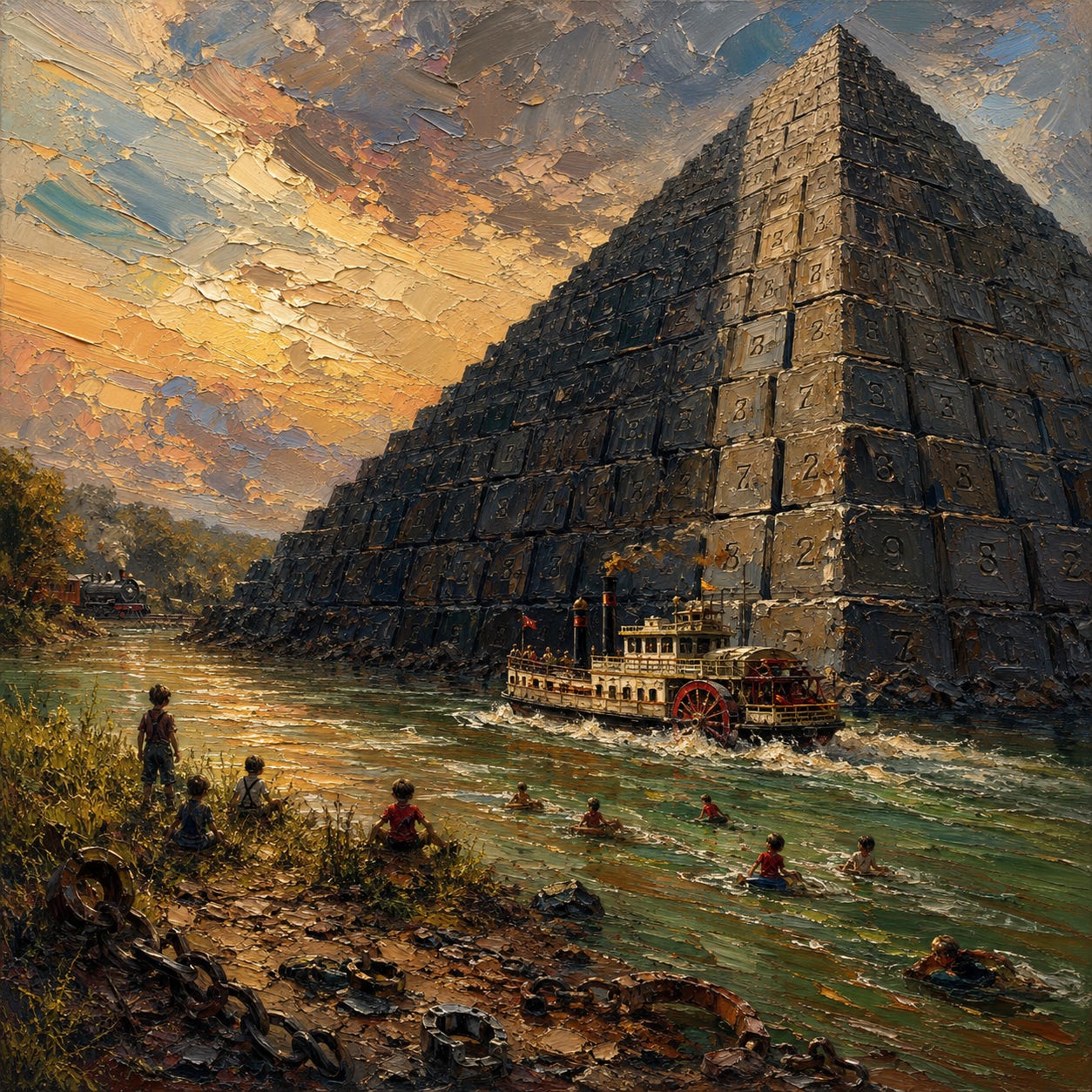
In the 1880s, Massachusetts state militia entered Barnstable on Cape Cod, seized the town’s children, and marched them under armed guard to the school building. An estimated eighty percent of the state’s population had resisted compulsory schooling when it was introduced in 1850, sometimes with guns. Barnstable was the last outpost to surrender. This is not the story most Americans have been told about the origin of their public schools, and it is the story John Taylor Gatto tells in Dumbing Us Down: The Hidden Curriculum of Compulsory Schooling (1992), a book built from the two Teacher of the Year acceptance speeches he was invited to give in 1990 and 1991 and used to indict the institution honoring him.
Gatto taught in New York City public schools for thirty years across six different institutions, from the elite Upper West Side to Central and Spanish Harlem. He came to teaching in 1964 after walking away from a career as an advertising copywriter, having concluded that thirty-second television spots were not work a serious person could give a life to. He was named New York City Teacher of the Year in 1990 and New York State Teacher of the Year in 1991. His acceptance speech from the first award, “The Psychopathic School,” was later entered into the Congressional Record by Senator Bob Kerrey of Nebraska. By 1991, his teaching license had been destroyed during a medical leave and required nine months of effort and a secretary’s sworn testimony to retrieve. He retired that year and spent the following decades writing and speaking to dismantle the assumption that schooling and education are the same thing.
The book appeared in 1992, a decade into the school reform movement launched by A Nation at Risk in 1983. The reformist consensus held that American schools were failing from underfunding and weak curriculum, and that the remedy required more standardization, longer days, and national testing. Gatto inverted the premise. The schools were succeeding at what they had been built to do, and no reform of curriculum or funding could touch a system whose real content was its method. The critique had precursors. Paul Goodman’s Growing Up Absurd appeared in 1960, followed by the work of John Holt, Jonathan Kozol, and James Herndon through the decade. By the reform era, that argument had gone largely quiet. Gatto’s speeches, reprinted in homeschool magazines and op-ed pages across the country, revived it and gave it the documented historical spine the earlier critics had not assembled.
Gatto documents an industrial capture pattern that will be familiar to readers who have followed the same mechanism in other domains. Two years before Alexander Inglis published Principles of Secondary Education in 1918, the Flexner Report had done to American medicine what Inglis was writing into secondary education: Carnegie and Rockefeller money cut medical schools from 162 to 66, closing those that taught outside the sanctioned framework and installing a certified expert class as gatekeeper. Same funders, same decade, adjacent institutions, the same architecture of one central orthodoxy replacing distributed local competence. The full summary walks through the seven lessons that every school transmits by bells and schedules regardless of curriculum, the time arithmetic that leaves nine hours per week in which a modern child might construct a self, and the parallel statements by John Cotton in 1650 and Horace Mann in 1850 that breaking the child from the family was the purpose of the schools they were building. Two hundred years apart, the two founding voices of American compulsory schooling said the same thing out loud. The record is on the page. Almost no one has read it.
Support This Work
The essays are free and will stay free. What paid subscribers get is the library that surrounds them: the full digital book catalogue, audio deep dives, archived, and embedded in each essay, and the Questions for Your Doctor, Before You Consent, and Package Insert series. Platinum Supporters also receive the digital edition of every paperback on the day it’s published.
Whichever tier suits, thank you for being here. If you’d like to become a paid subscriber, upgrade a tier, or gift a subscription to someone who might value the work, the options are below.