

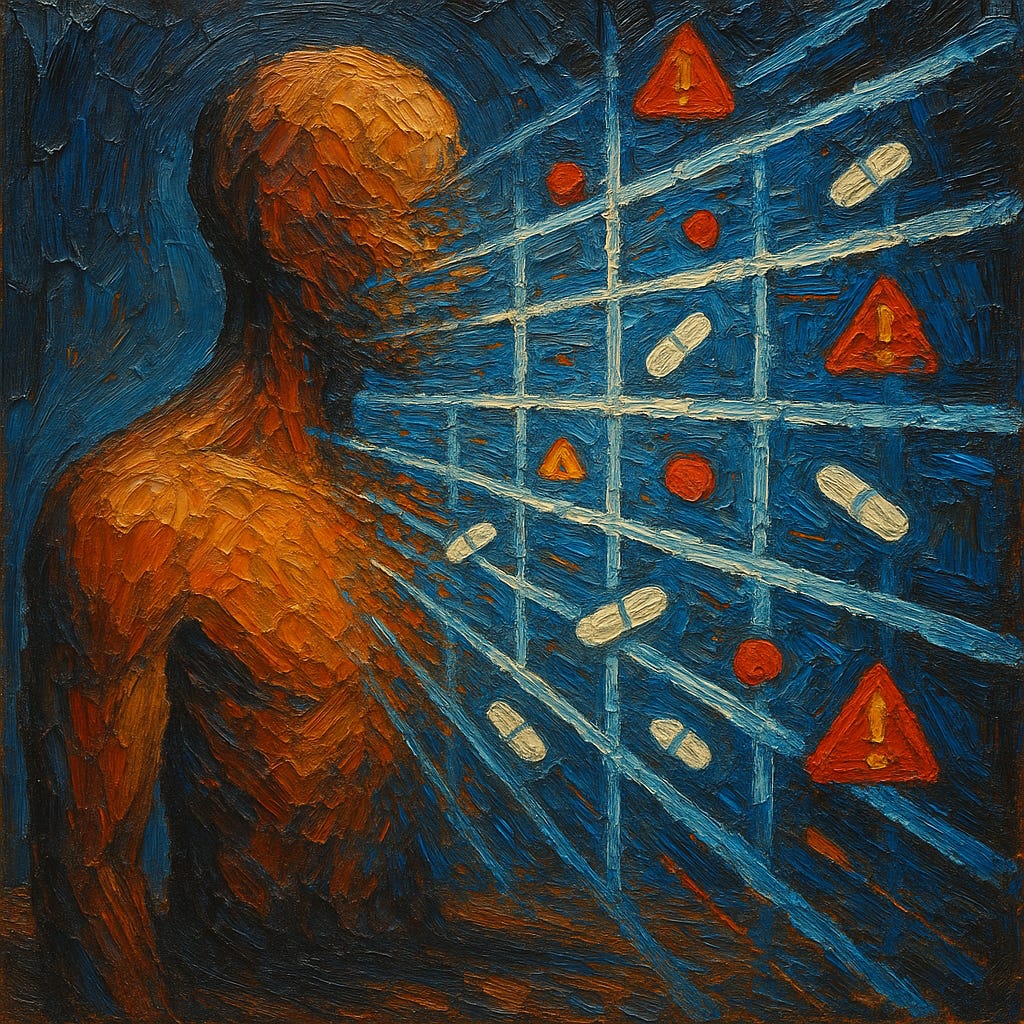
Your car’s check-engine light comes on. You take it to the shop, and the mechanic finds three other sensors flashing warnings you hadn’t even noticed. Six hundred dollars later, after replacing parts that weren’t quite broken to prevent problems that probably weren’t coming, your car runs exactly the same as before. This, according to Dr. H. Gilbert Welch and his colleagues, is modern medicine in miniature—except the stakes involve your body, not your vehicle, and the interventions carry risks far greater than an unnecessary repair bill. We’ve built a medical system so sophisticated at finding abnormalities that we can now detect “problems” our grandparents lived with unknowingly their entire lives. The question Welch, Schwartz, and Woloshin force us to confront isn’t whether we can find these abnormalities, but whether we should go looking for them at all.
The transformation began innocently enough. In the 1960s, studies proved that treating severe high blood pressure—the kind above 180/110 that caused strokes—saved lives dramatically. Success bred ambition. If treating very sick people worked so well, wouldn’t treating mildly abnormal people prevent them from becoming very sick? Medicine pivoted from its traditional role of helping people who felt ill to actively hunting for disease in people who felt fine. We started screening everyone for everything: blood pressure, cholesterol, diabetes, various cancers, bone density, arterial blockages. Then we lowered the thresholds for what counted as disease. Blood pressure that was normal in 1980 became “pre-hypertension” by 2003. A fasting glucose of 125 made you normal one day and diabetic the next when committees changed the cutoff from 140 to 126. Advanced imaging let us peer inside bodies with unprecedented clarity, finding bulging discs, thyroid nodules, gallstones, and tiny cancers that previous generations died with peacefully, never knowing they existed.
But here’s where the story turns dark. For every person helped by early detection, many more are harmed by overdiagnosis—the correct identification of abnormalities that would never have caused symptoms or death. The prostate cancer screening debacle revealed the scale of the problem: for each life saved, between 30 and 100 men were overdiagnosed, suffering impotence and incontinence from treating cancers that never threatened them. Women with DCIS detected by mammography undergo mastectomies for “stage zero breast cancer” that might never have progressed. People with mild thyroid nodules get their thyroids removed, requiring lifelong hormone replacement, for abnormalities that autopsy studies show most of us die with naturally. The cascade effect takes hold—one test leads to another, each with its own false positives and incidental findings, until healthy people emerge from the medical system damaged by treatments for diseases they never really had. Meanwhile, the overdiagnosed become the system’s most passionate advocates, genuinely believing screening saved their lives, never knowing they were actually its victims.
The forces maintaining this system run deeper than medical mistakes or misunderstandings. Every player benefits from overdiagnosis except patients: pharmaceutical companies expand markets when disease thresholds drop, device manufacturers profit from increased scanning, hospitals fill beds with people getting unnecessary procedures, and doctors avoid lawsuits by testing extensively. The authors—all physicians and researchers at Dartmouth Medical School—don’t argue against all screening or suggest abandoning modern medicine. They argue for honesty about trade-offs, for recognizing that medicine’s technological power has outpaced its wisdom, for acknowledging that sometimes the best medical care means doing less. Their book matters because it exposes how our healthcare system has confused activity with benefit, how we’ve medicalized normal human variation, and how the pursuit of health through ever-earlier detection has become a primary way we make healthy people sick. In an age where a simple executive physical can launch a cascade ending in real harm, understanding overdiagnosis isn’t just academic—it’s self-defense.
Reader’s Guide PDF Download & Audio Deep Dive (Paid Subscribers Only)
The rest of this summary — the analogy, one-minute elevator explanation, 12-point summary, Q&As, and Golden Nugget — is for paid subscribers.
Your subscription also unlocks every other book summary in the library, the Deep Dive Audio Library, my original books (new ones added monthly), and three series for the moments when a real decision is in front of you: Questions for Your Doctor, Before You Consent, and Package Inserts.