

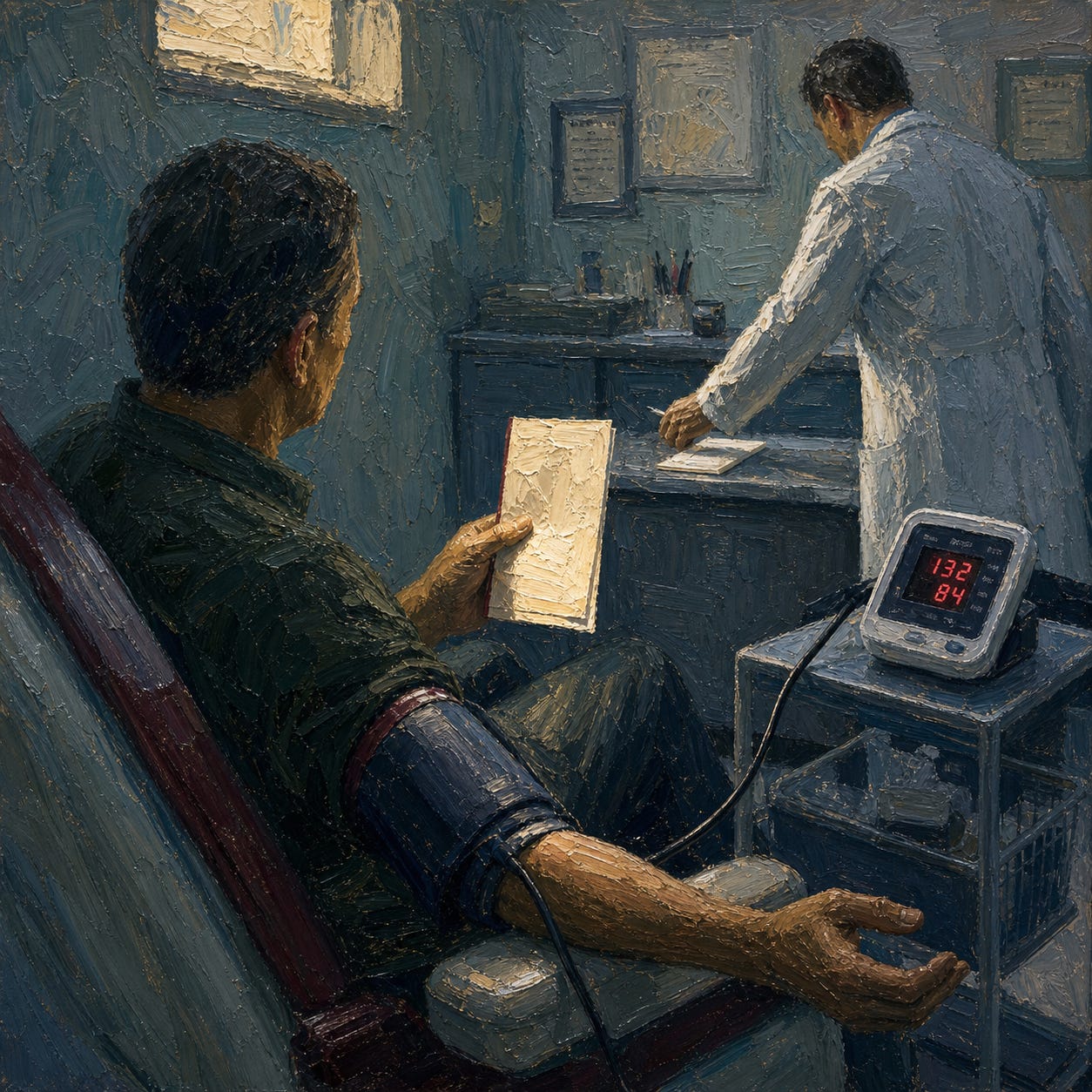
One of the most prescribed blood pressure medication classes in the United States has been on the market for forty years. The FDA-approved label for every drug in that class — lisinopril, enalapril, ramipril, benazepril, quinapril — contains a single sentence that should give every patient on one of these drugs pause.
The sentence reads: “Whether increased levels of bradykinin, a potent vasodepressor peptide, play a role in the therapeutic effects of [drug name] remains to be elucidated.”
Forty years. The manufacturers do not fully know how the drugs work. The label says so. The FDA approved the label.
Bradykinin is the same pathway implicated in the most common ACE inhibitor side effect — chronic dry cough, observed in up to 12% of patients in a one-year ramipril study. It is also the pathway implicated in the most dangerous side effect, angioedema, which can be fatal. The pathway the labels cannot confirm as therapeutic is the pathway implicated in the drugs’ most serious harms.
Most patients on these drugs have never read the label. Most have never been told what the label says. The pharmacy bag contains the prescription information sheet. The information sheet contains the bradykinin sentence. Almost no one reads it.
This sixth instalment of Questions for Your Doctor is built around what the FDA labels say in the manufacturers’ own language, what the published evidence says about how blood pressure is actually generated in the body, and what readers can ask before consenting to a diagnosis or a prescription that may follow them for the rest of their lives.
The threshold change. In 2017, the line defining “high blood pressure” was lowered from 140/90 to 130/80. The change added an estimated 31 million Americans to the patient population and made nearly half of all American adults eligible for pharmaceutical intervention. No biological change occurred. Only the line moved.
The cause that no one can name. The diagnosis “essential hypertension” sounds clinically authoritative. Translated into plain English, as Malcolm Kendrick observes in The Clot Thickens, it means “raised blood pressure of no known cause.” Over 90% of cases have no known cause. Around a billion people globally have been given a diagnosis whose cause is unknown.
The signal versus the disease. Kendrick documents the mechanism. As small vessels block, total peripheral resistance rises. The kidneys force the pressure up to maintain blood flow to the organs. The number is the body’s response to a problem upstream — not the problem itself. Stephen Hussey reaches the same conclusion through a different framework: chronic elevation is a signaling problem driven by insulin resistance, chronic stress, and insufficient radiant energy at the endothelial level. Lowering the number with a drug, while the underlying signal continues, addresses neither.
A sample question from the document, with its Key Fact intact:
8. If I am on (or being offered) an ACE inhibitor, beta-blocker, or other antihypertensive — which class is it, and what does its FDA label actually say?
Key Fact: Every ACE inhibitor label states that whether the bradykinin pathway plays a role in the therapeutic effect “remains to be elucidated.” After 35 to 40 years on the market, the manufacturers do not fully know how one of the most prescribed blood pressure drug classes actually works.
The full document covers the threshold change, the missing fasting insulin test, the chloride-not-sodium experimental data on the salt myth, the older-reader question about adaptive mechanisms, what diuretics actually do to homocysteine, the FDA label evidence, and a question most patients on an ACE inhibitor have never been asked: should you be taking ibuprofen for a headache while you are on this drug? Every ACE inhibitor label warns that combining the two may worsen renal function and possibly cause acute kidney injury, particularly in older or volume-depleted patients. Most patients have never been told.
The evidence is drawn from Malcolm Kendrick’s The Clot Thickens, Stephen Hussey’s Understanding the Heart, Kilmer McCully’s The Heart Revolution, Daniel Roytas’s Can You Catch a Cold?, Dawn Lester’s What Really Makes You Ill?, and the FDA-approved prescribing information for the five most prescribed ACE inhibitors. Every figure traces to a named source.
If you or someone you love has an appointment coming up, or a recent reading being discussed as a diagnosis, print the Quick Reference page and take it with you.
The series so far:
What to Ask Before Your Next PSA Test — available
What to Ask Before Your Next Mammogram — available
What to Ask Before Your Next Colonoscopy — available
What to Ask Before Your Child’s Next Vaccine Visit — available
What to Ask Before Your Next Statin Prescription — available
What to Ask Before Your Next Blood Pressure Reading — available now
If there is a screening test, a prescription, or a procedure where you needed the right questions before you walked into the room, put it in the comments.
Questions for Your Doctor: What to Ask Before Your Next Blood Pressure Reading is available for download below, for Paid Subscribers.