

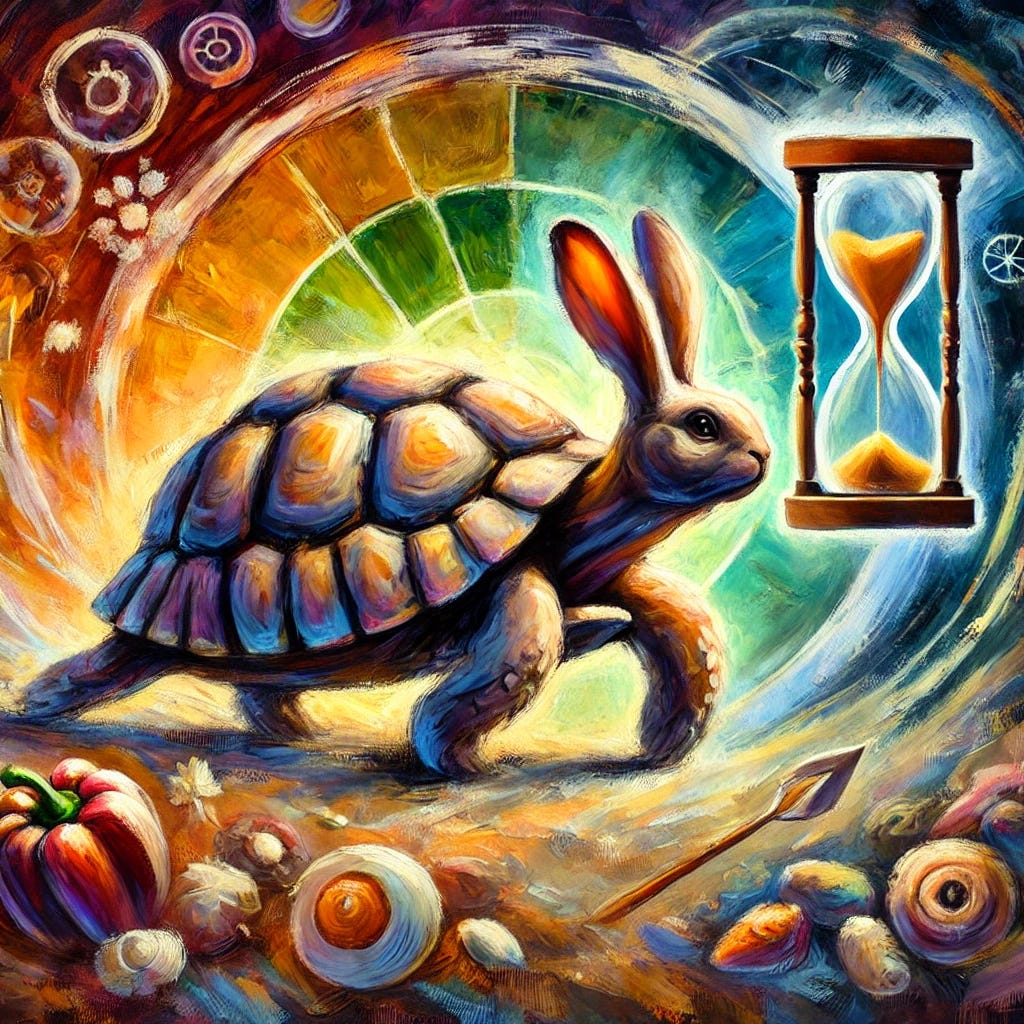
I’ve been introduced to this book, Rabbit-Tortoise Model for Cancer Cure by Dr. Biswaroop Roy Chowdhury, thanks to a recommendation from a reader (thanks Toni.) This book challenges the foundational assumptions of modern oncology, proposing a model that distinguishes between “indolent” and “aggressive” cancer cells—symbolized by the tortoise and the rabbit, respectively. Indolent cells, Chowdhury argues, are ubiquitous and benign, residing harmlessly within the body, while aggressive cells represent the true threat through their capacity to proliferate and metastasize. Central to the book’s thesis is the contention that conventional diagnostic tools—biopsies, PET scans, and the like—fail to differentiate between these two states with any reliability. This diagnostic imprecision, triggers a cascade of invasive interventions, including chemotherapy, radiation, and surgery, which may paradoxically transform indolent cells into aggressive ones. At its core, the book posits that cancer is not an inexorable death sentence but a condition intricately linked to disruptions in the body’s circadian rhythm—a natural clock that, when realigned through light exposure, time-restricted eating, and grounding, can facilitate the body’s self-healing potential.
This perspective situates itself within a broader critique of “Cartel Medicine”—a profit-driven medical establishment that prioritizes intervention over observation. In The Cancer Industry: Crimes, Conspiracy and The Death of My Mother, Mark Sloan unveils a system where financial incentives eclipse patient welfare, with aggressive diagnostics and treatments perpetuating fear rather than fostering health. Chowdhury echoes this sentiment, noting that biopsies, a linchpin of cancer diagnosis, carry risks—pain, infection, even mortality—while offering scant clarity on whether detected cells pose a genuine danger. This aligns seamlessly with the arguments in Cancer is not a disease, it’s a survival mechanism, by Andreas Moritz, which reframes cancer as a natural response to environmental stressors rather than a malevolent foe requiring annihilation. Within this framework, Chowdhury’s “tortoise” cells emerge as adaptive mechanisms—benign unless provoked by external factors, including the very medical procedures intended to detect them. The critique is clear: a system that cannot distinguish friend from foe risks harming those it claims to save.
The book further contends that cancer’s natural ebb and flow is obscured by what might be called the weaponization of testing—a theme amplified in The Top 10 Cancer Cures No One is Talking About by Danica Collins. This book champions alternative therapies often sidelined by mainstream medicine, a stance Chowdhury mirrors with his advocacy for the DIP (Disciplined and Intelligent Person) diet and Zero Volt/Earthing therapy. These non-invasive strategies starkly contrast with the toxic arsenal of conventional oncology, emphasizing restoration over destruction. Similarly, Cancer is a Fungus: A Revolution in Tumor Therapy by Dr. Tullio Simoncini, explores the body’s capacity to resolve tumors via autophagy—a self-cleaning process Chowdhury deems pivotal to healing. Together, these works suggest that cancer cells may naturally wax and wane, a cycle disrupted by a medical industry that thrives on perpetual intervention. By overdiagnosing and overtreating, modern medicine transforms manageable conditions into crises, a notion that challenges the sanctity of the “early detection saves lives” mantra.
Chowdhury’s solutions hinge on the circadian rhythm as the body’s master regulator, a concept reinforced by Earthing and the Interview with Roman S. Shapoval. These sources extol grounding and natural light exposure as transformative for health, aligning with the book’s “Circadian Triangle” of earthing, the DIP diet, and heat/gravity therapies. This holistic framework seeks to address disease at its root, rather than merely suppressing symptoms, and is bolstered by reports from Chowdhury’s “Cure@72hrs” program, where patients reversed chronic conditions by adhering to these principles. In an era where the “standard of care” faces mounting scrutiny for its efficacy (or lack thereof) and ethics (or lack thereof), Rabbit-Tortoise Model for Cancer Cure emerges as a call to embrace nature-aligned healing—respecting the body’s innate wisdom over the dictates of a profit-driven paradigm.
Rabbit-Tortoise Model for Cancer Cure: Dr. Chowdhury, Biswaroop Roy
Deep Dive Conversation Library (Bonus for Paid Subscribers Only)
This deep dive is based on the book:
Discussion No.71:
23 insights and reflections from “Rabbit-Tortoise Model for Cancer Cure”
Thank you for your support.
Analogy
Imagine your body as a finely crafted Swiss watch with numerous interconnected gears working in perfect harmony. The master gear—your circadian rhythm—controls all other mechanisms, ensuring they activate and deactivate at precisely the right moments throughout a 24-hour cycle.
In modern life, we've inadvertently begun tampering with this master gear. We expose the watch to bright light when it should be in darkness, we force its digestive gears to work at midnight when they should be resting, and we attempt to repair minor imperfections with aggressive interventions that damage the surrounding mechanisms.
When the watch begins malfunctioning, conventional medicine focuses on individual broken gears—treating symptoms and affected areas with increasingly invasive methods. But the author's approach suggests we should instead focus on resetting the master gear—the circadian rhythm—rather than tampering with individual components.
By restoring proper timing to the watch—ensuring it receives light during daylight hours and darkness at night, feeding it when its digestive gears are most active, and allowing it to ground itself to Earth's natural electrical current—the watch can often repair itself. The body's innate intelligence, when properly synchronized with natural cycles, can identify damaged cells, dissolve unwanted growths, and restore balance without the need for interventions that may cause more harm than good.
Just as you wouldn't fix a watch by randomly removing gears or pouring acid on its mechanism, the book suggests we shouldn't treat the body with approaches that disrupt its fundamental timing system. Instead, by respecting and restoring the body's natural rhythms, we allow its self-healing capabilities to function optimally.
12-point summary
The Rabbit-Tortoise Model: The author presents a cancer framework where "tortoise" represents indolent cancer cells (harmless, present in most people) and "rabbit" represents aggressive cancer cells (harmful, spreading). Research shows 99.9% of circulating tumors never cause harm, with autopsy studies revealing cancer cells in 100% of thyroid, 70% of prostate, and 40% of breast tissue in people who died from non-cancer causes.
Cancer Diagnostics Critique: The book strongly criticizes conventional cancer diagnostics, particularly biopsies and PET scans, claiming they cannot distinguish between harmless and dangerous cells. The author cites studies showing significant disagreement among pathologists interpreting the same samples and details how PET scans only measure glucose consumption rather than definitively identifying cancer.
Harmful Treatments: Conventional cancer treatments like chemotherapy, radiation, and surgery are presented as harmful interventions that convert indolent cancer into aggressive cancer. The author claims these treatments suppress the immune system, promote metastasis, and decrease quality of life while offering no survival benefits, citing numerous studies of adverse effects on various body systems.
Circadian Rhythm Importance: The book centers on the Nobel Prize-winning science of circadian rhythms, arguing that disruption of the body's 24-hour clock is a primary cause of cancer and other diseases. The suprachiasmatic nucleus (SCN) in the brain coordinates all bodily functions in harmony with Earth's day-night cycle, and disrupting this balance leads to disease development.
Light Exposure Management: Light is presented as a powerful tool for resetting circadian rhythm, with recommendations to get at least 1000 Lux of light for 30-60 minutes during daytime and less than 50 Lux after sunset. The author explains that light at night (LAN) disrupts melatonin production and significantly increases cancer risk, particularly in shift workers.
Time-Restricted Eating: The book advocates eating within an 8-10 hour window (ideally 10AM-6PM) to align with natural pancreatic function and promote autophagy. This approach supposedly dissolves tumors, stones, and other outgrowths by allowing the body to break down excess minerals and proteins during fasting periods, with recommended progression from 8 hours to 12 hours maximum.
The DIP Diet: The Disciplined and Intelligent Person Diet consists of three steps: consuming only fruits until noon (10g per kg of body weight), eating raw vegetables followed by traditional vegetarian food for lunch/dinner, and avoiding packaged and animal/dairy foods. The author claims this government-tested diet effectively reverses conditions from diabetes to bone diseases.
Anemia-Cancer Connection: The book establishes a direct link between anemia and cancer progression, citing statistics showing 80-97% of various cancer patients have anemia. The author suggests tracking hemoglobin levels as a better diagnostic tool than conventional testing and criticizes cancer treatments for causing anemia, which creates conditions for tumor growth.
Zero Volt/Earthing Therapy: Connecting the body to the Earth's surface through barefoot walking or conductive devices is presented as a method to neutralize body voltage and reduce inflammation. The author claims specific benefits occur at different time intervals: immediate voltage neutralization, improved mood within 20 minutes, pain relief within an hour, and blood disorder reversal within a month.
The Circadian Dining Table: This concept emphasizes that when you eat matters as much as what you eat. The same quantity of food consumed with largest portion at breakfast and smallest at dinner maintains normal blood sugar, while the reverse pattern significantly raises blood sugar. Extending the eating window or skipping breakfast further disrupts metabolism and can lead to diabetes.
Cure@72hrs Program Results: The author's 72-hour intervention program focusing on sleep, grounding, DIP diet, living water, and light exposure reportedly achieved remarkable results for 50 patients: all diabetic patients lowered blood glucose without medicines, half of insulin-dependent patients eliminated insulin completely, and 11 of 12 hypertensive patients stopped medications while maintaining or lowering blood pressure.
Success Stories Pattern: The book presents 20 cases of patients with various serious conditions (including different types of cancer, brain tumors, and other diseases) who allegedly reversed their conditions by following the author's protocols instead of conventional medical treatments. These anecdotal accounts consistently show symptom reversal, medication elimination, and avoidance of recommended surgeries or treatments.
30 Questions and Answers
Question 1: What is the "Rabbit-Tortoise Model for Cancer Cure" and what are its four rules?
In the Rabbit-Tortoise model, 'tortoise' represents an 'indolent cancer cell' that sits silently in the body without causing harm, while the 'rabbit' represents 'aggressive cancer cells' that can spread from one organ to another with potential to harm. The first rule states that each person has detectable indolent cancer cells, with 99.9% of circulating tumors never maturing to form secondary growth. Autopsies of people who died from causes other than cancer showed 100% of thyroid specimens, 70% of prostate specimens, and 40% of breast specimens contained cancer cells.
The second rule explains that biopsy and other diagnostic tests cannot distinguish between indolent and aggressive cancer, citing a study where pathologists significantly disagreed on diagnosing the same biopsy slides. The third rule states that indolent cancer can become aggressive cancer through interventions like radiation, chemotherapy, biopsy, and surgery. The fourth rule indicates that aggressive cancer can be turned back into indolent cancer by resetting the body clock or circadian rhythm, which is the central controller of health.
Question 2: How does the book differentiate between indolent and aggressive cancer cells?
The book describes indolent cancer cells as those that sit silently in the body lifelong without causing harm, like a tortoise. These cells are often called pseudocancer or incidentalomas, frequently found in organs like thyroid, prostate, breast, lungs, and blood. Despite looking potentially harmful from a pathologist's perspective, these indolent cells never cause harm. Many aggressive cells can also regress on their own and settle as indolent cells.
Aggressive cancer cells, symbolized as rabbits, jump from one organ to another and have the potential to cause harm. They grow actively and can spread throughout the body. The book emphasizes that the distinction between indolent and aggressive cancer is very thin and cannot be reliably determined by modern diagnostic methods like biopsy or PET scan. The progression from indolent to aggressive is often triggered by diagnostic procedures, treatments like chemotherapy and radiation, or disruption of the body's circadian clock.
Question 3: What does the book reveal about the prevalence of cancer cells in healthy individuals?
The book reveals that 99.9% of circulating tumors in our bodies never mature to form secondary growth. It cites research showing that upon autopsy of people who died from non-cancer causes, 100% of thyroid specimens, 70% of prostate specimens, and 40% of breast specimens were found to be cancerous. This means that had these individuals voluntarily undergone cancer diagnosis while alive, most would have been declared cancer patients and subjected to unnecessary treatments.
These indolent cancer cells, also known as pseudocancer or incidentalomas, are frequently found in other body organs including lungs and blood. The book challenges the common belief that cancer progresses linearly from stage I to stage IV, asserting instead that aggressively growing tumors often regress on their own and settle as indolent cancer cells without causing harm. This phenomenon is known as a "disease reservoir," meaning potentially harmful-looking cancer cells never actually cause harm.
Question 4: Why does the book claim biopsy and other diagnostic tests cannot reliably distinguish between indolent and aggressive cancer?
The book cites a study where biopsy samples were shown to trained pathologists from eight US states, revealing significant disagreement in their diagnoses. Of the same samples, 33% of pathologists diagnosed them as normal, 48% as abnormal, and 19% as cancerous. The book argues this highlights a serious flaw in biopsy science, suggesting that a patient's treatment fate depends on a diagnostic method "no more accurate than a coin toss."
This ambiguity is explained through the 'Soil and Seed' hypothesis, where the cancer cell (seed) may have potential to grow, but its actual growth depends on the surrounding environment (soil). The most fertile ground for cancer cells is when the surrounding has chemical changes similar to wound healing processes. The book argues there's a very thin line between indolent and aggressive cancer cells that cannot be distinguished by modern diagnostics, leading to frequent misinterpretation of non-lethal cells as cancer, listing 16 types of benign conditions often misdiagnosed as cancer.
Question 5: What are the immediate complications of biopsy according to the book?
According to the book, biopsies can lead to numerous immediate complications. The text cites research showing that pain is reported in 84% of cases. Severe bleeding occurs in 0.16% of biopsies, while infection affects 13.5% of patients. More serious complications include puncture of viscera (0.1%), death (0.11%), colon puncture (0.033%), kidney puncture (0.033%), and gallbladder puncture (0.013%).
Beyond these direct complications, the book claims biopsies suppress the immune system and promote cancer metastasis, citing multiple references. It also states that epithelial cell displacement can occur following needling procedures, leading to misdiagnosis of subsequent excision specimens as cancer. The author concludes that these evidences prove the "worthlessness of biopsy" while emphasizing the alarming aspects of immediate damage it causes to patients, including moderate to heavy bleeding, unbearable pain, brain damage, and even death.
Question 6: How does the book explain the relationship between conventional cancer treatments and cancer progression?
The book argues that conventional cancer treatments like chemotherapy, radiation, and surgery can actually promote cancer progression rather than preventing it. It states that recent evidence shows cutting out a tumor either provides no benefit to patients or increases mortality, claiming "the more the body is cut, the worse is the outcome." The author cites numerous studies suggesting that surgical removal of tumors causes cancer metastasis, which is the primary cause of most cancer deaths, while asserting that the public remains unaware of this connection.
Regarding chemotherapy and radiation, the book claims there are no evidences to prove these treatments help improve quality of life or increase lifespan, but there are "sufficient evidences to prove otherwise." It suggests that while shrinking of initial tumor mass by chemotherapy deceives doctors into thinking patients are benefitting, in reality, these treatments accelerate cancer growth and spread. The book provides a comprehensive list of chemotherapy's negative effects on various body systems, including blood, bone, brain, digestive, heart, immune system, and sexual health.
Question 7: What is the circadian rhythm/body clock and how does it relate to cancer according to the author?
The circadian rhythm is described as the body's internal clock that functions in a 24-hour cycle, coordinating with the Earth's rotation. Each cell, tissue, and organ in the body functions rhythmically in coordination with this cycle. The suprachiasmatic nucleus (SCN), a small brain region in the hypothalamus, acts as the master timekeeper by receiving signals from the eyes about light-dark cycles and relaying these signals to clock proteins in every cell. The author compares the SCN to a concert master directing an orchestra, ensuring all organs "play the music of life" in harmony.
According to the author, disruption of the circadian clock is a major cause of cancer formation and progression. This disruption can occur through poor lifestyle choices like exposure to too much light at night (LAN) or improper eating patterns (feeding late at night and fasting during the day). The book cites research showing that shift workers and flight attendants have up to five times higher risk of various cancers. By correcting the circadian clock through limiting light exposure after sunset, time-restricted eating, grounding the body, consuming calorie-light food with phytochemicals, and managing core body temperature, the progression of cancer can be halted and even reversed.
Question 8: How does disruption of circadian rhythm lead to disease development?
Disruption of circadian rhythm leads to disease development by disturbing the coordinated functioning of various bodily systems. When the body's natural rhythms are thrown off balance, it affects the 24-hour cycles of blood pressure, body temperature, urine output, insulin production, and sleep-wake hormone secretion. For example, exposure to light at night (LAN) disrupts melatonin and estrogen production, causing chronic inflammation and lowering production of killer cells, which results in DNA damage and creates favorable conditions for cancer proliferation.
Similarly, eating outside the peak functioning time of the pancreas (8 am to 8 pm) correlates with increased cancer deaths. The book explains that in a healthy body, there's a specific rhythm to various aspects of organ coordination: blood pressure is highest around 10 AM and lowest around 10 PM; body temperature peaks near 6 PM and is lowest near 6 AM; urine production during waking hours should be at least 3 times that during sleep; and the pancreas works best around 8 AM and least after 8 PM. Any deviation from these rhythms indicates disruption of the central circadian clock, which creates conditions for illness development, including cancer.
Question 9: What are the three tools the author recommends to fix the circadian rhythm?
The three tools the author recommends to fix circadian rhythm are light, timing of food intake, and sleep. Regarding light, the author advises exposure to at least 1000 Lux of light for 30-60 minutes after sunrise and throughout the day, while limiting exposure to less than 50 Lux after sunset. This balance helps regulate melatonin production at night and cortisol production in the morning, supporting healthy sleep-wake cycles and overall wellbeing. The author explains that light works as medicine, producing beneficial hormones when exposed at the right time, but can be harmful when exposed at wrong times.
For timing of food intake, the author recommends eating within a 10-hour window (between 8:00 AM and 6:00 PM), which helps release more beneficial gut bacteria and promotes hormone balance throughout the body. For sleep, the author provides age-specific recommendations (e.g., 7-9 hours for adults aged 18-65) and emphasizes the importance of maintaining ancestral sleep patterns by sleeping at sunset and waking at sunrise when possible. The author also mentions a "Circadian Triangle" that incorporates earthing, healthy food choices (DIP diet), and heat and gravity (through hot water immersion and Ayurvedic Panchkarma) to balance the body clock.
Question 10: How does light exposure affect the circadian rhythm according to the book?
Light exposure significantly impacts circadian rhythm by signaling the suprachiasmatic nucleus (SCN) in the brain, which coordinates bodily functions throughout the 24-hour cycle. The book explains that human bodies are designed to follow a natural light-dark cycle, but modern life with electric lighting has disrupted this balance. After sunrise, the body needs exposure to at least 1000 Lux of light for 30-60 minutes to properly regulate the circadian system, while after sunset, exposure should be limited to less than 50 Lux to allow proper melatonin production.
Exposure to light at night (LAN), especially blue light from screens, disrupts melatonin production, which has been linked to increased risk of breast, prostate, and rectal cancers. The book cites meta-analysis studies showing shift workers and flight attendants having up to five times higher cancer risk due to circadian disruption from irregular light exposure. The author also mentions that light therapy (exposure to 10,000 Lux for 30-60 minutes) can work as an anti-depressant, demonstrating light's powerful effects on brain chemistry and mood. The book emphasizes that light works as medicine when properly timed, but can be harmful when exposure occurs at the wrong times.
Question 11: What is time-restricted eating and what health benefits does it offer according to the text?
Time-restricted eating involves limiting food intake to a specific window of time during the day. The author recommends eating within a 10-hour window (between 8 AM and 6 PM) or even an 8-hour window for more therapeutic effects. This approach gives the body a 14-hour fasting period, which promotes the release of beneficial bacteria in the gut that produce hormones to regulate various body systems. The book explains that this practice helps correct the body's circadian rhythm and provides a simple yet effective way to address multiple health conditions.
According to the text, time-restricted eating offers numerous health benefits, including reversal of heart disease, liver disease, metabolic disorders like hypertension and diabetes, and even cancer. The author claims that eating within the recommended time window can dissolve internal outgrowths such as tumors, kidney and gallbladder stones, fibrosis, and internal blockages. It also helps with weight management, as consuming the same amount of food in a shorter time window results in less weight gain compared to spreading it over a longer period. The book presents this approach as "time as medicine," recommending an 8-hour window for the first 15 days, a 10-hour window for the next 15 days, and maintaining a 12-hour window thereafter for lifelong health.
Question 12: What are the optimal sleep patterns for health according to the book?
The book provides age-specific recommendations for optimal sleep duration, stating that infants (0-3 months) need 14-17 hours of sleep, while adults (18-65 years) need 7-9 hours. Sleep outside these ranges—either too little or too much—is considered abnormal and may disrupt the body clock. Additionally, taking more than 45-60 minutes to fall asleep or waking up more than once during the night (beyond one normal awakening) are indicators of disturbed sleep patterns that could lead to health issues.
The author emphasizes the importance of following ancestral sleep patterns, which involved sleeping at sunset and waking at sunrise. This natural rhythm helps maintain a balanced circadian system and promotes longevity. The book correlates disturbed sleep patterns with increased mortality, obesity, and poor food choices. People with good sleep tend to choose healthier foods like fruits, vegetables, nuts, or seeds, while those with disturbed sleep gravitate toward unhealthy options like chocolates, noodles, cold drinks, and chips. The text warns that shift workers who regularly disrupt their sleep cycles face higher risks of various diseases, including obesity, stroke, cancer, diabetes, heart disease, and metabolic syndromes.
Question 13: What is the DIP diet and what are its three steps?
The DIP diet (Disciplined and Intelligent Person Diet) is a nutrition plan designed to reset the body clock and reverse various diseases. The first step involves consuming only fruits until noon, with the recommended quantity being approximately 10 grams of fruit for each kilogram of body weight. For example, a 70 kg person should eat about 700 grams of fruit. The author explains that fruits are naturally high in sugar, fructose, carbohydrates, and minerals, which provide energy when consumed in the morning when digestive juices are most productive.
The second step covers lunch and dinner, consisting of two plates: the first plate should contain four types of raw vegetables (salad) in a quantity of 5 grams per kilogram of body weight, followed by a second plate of traditional vegetarian food based on appetite. The raw vegetables stimulate the release of incretin, a hormone that helps regulate insulin. The third step involves avoiding two categories of food: packaged foods (factory-produced items like snacks, bread, or biscuits) and animal/dairy foods (meat, fish, eggs, chicken, cheese, butter, milk). The diet also recommends consuming soaked nuts/sprouts (1 gram per kg of body weight), plenty of fruits, and getting 40 minutes of sunshine daily.
Question 14: How does the book explain the relationship between anemia and cancer?
The book presents a direct correlation between anemia and cancer progression, stating that anemia causes tumor hypoxia, which leads to angiogenesis (formation of new blood vessels), increasing tumor aggressiveness. It cites statistics showing high prevalence of anemia in various cancer types: 84% of lung cancer patients, 82% of breast cancer patients, 85% of ovarian cancer patients, 93% of pancreatic cancer patients, 93% of lymphoma patients, 97% of pediatric leukemia patients, and 78% of bone cancer patients. These figures suggest that on average, 90% of end-stage cancer patients also suffer from anemia.
This correlation is presented as a potential avenue for treatment—if anemia can be addressed and hemoglobin levels increased, the chances of survival and quality of life for cancer patients should theoretically improve. The book criticizes conventional cancer treatments like chemotherapy and radiation for causing or worsening anemia by destroying red blood cells and reducing hemoglobin levels. The author argues that rather than helping control cancer growth, these treatments promote cancer spread throughout the system by creating the conditions (anemia) that favor tumor aggressiveness. The text suggests that correcting the circadian rhythm of red blood cells is crucial for addressing the anemia-cancer connection.
Question 15: Why does the author suggest tracking hemoglobin levels as a diagnostic tool for cancer?
The author suggests tracking hemoglobin levels as a diagnostic tool for cancer because of the strong correlation between anemia and cancer progression. The book presents evidence showing that anemia prevalence increases with cancer severity across various types of cancer, with graphs demonstrating that as cancer advances from early to later stages, the percentage of patients with anemia rises significantly. For example, in renal cancer, anemia prevalence increases about 4-fold with extracapsular spread and grows further with metastasis, while in colon cancer, 40% of patients with Dukes stage A tumors had anemia compared to nearly 80% with stage D tumors.
This correlation provides a simpler, less invasive way to monitor whether cancer cells in the body are causing life-threatening damage. The author argues that rather than relying on unreliable diagnostic tests like biopsies, mammograms, or PET scans (which cannot distinguish between harmless indolent cancer cells and harmful aggressive ones), tracking hemoglobin levels offers a more accurate indication of cancer progression. The book suggests that falling hemoglobin levels indicate aggressive cancer activity, while stable or improving levels suggest the cancer is either indolent or regressing, making this approach a more reliable and less harmful diagnostic method than conventional cancer testing.
Question 16: What are the limitations and false positives of PET scans described in the book?
PET scans fundamentally measure which cells consume more glucose rather than definitively identifying cancer, according to the book. The author explains that when radioactive glucose (fluorodeoxyglucose or FDG) is injected into a fasting patient, cells that consume more sugar will appear brighter in the scan images, but this increased metabolism doesn't necessarily indicate cancer. Several non-cancerous conditions can cause "hot spots" on PET scans: brown fat cells (found on shoulders and neck) that regulate body temperature, thyroid glands that naturally consume more glucose, irritable bowel syndrome (IBS) with sugar-consuming microbes, autoimmune diseases, plaques, blockages, infections, and inflammatory cells.
The book also criticizes the use of Serum Uptake Value (SUV) of 2.5 as an arbitrary cutoff for determining cancerous cells, noting that normal brown fat cells and thyroid glands can show SUV counts of 3-4 and 7-10 respectively. Other factors causing false positives include healing tissues and bones, muscle activity from exercise, speech (activating facial muscles), non-fasting state, menstrual cycle/ovulation, testosterone production, and lactation. The author argues that PET scans lead to over-diagnosis by incorrectly labeling various normal metabolic processes as cancer, creating "cancer patients" out of healthy individuals.
Question 17: How can PET scan results be manipulated according to the author?
According to the author, PET scan results can be manipulated both by patients and by doctors. Patients can influence their PET scan results through several activities before the scan: performing arm exercises for 15 minutes (causing arm muscles to require more sugar and potentially be misdiagnosed as tumors); speaking during the scan (activating facial muscles that might be misinterpreted as oral cancer); eating before the scan (preventing cells from appearing glucose-hungry); getting scanned during menstruation or ovulation (showing increased activity in reproductive organs); males viewing erotic material before the scan (increasing testosterone and sugar requirements in testes); and for lactating mothers, breastfeeding before the scan (increasing breast tissue activity).
The book also describes how doctors can manipulate PET scan results: increasing the FDG dose beyond the stipulated quantity (creating more "shining spots" that suggest cancer); creating injected clots by pulling and pushing the syringe piston (making "hot-spots" with increased FDG uptake); administering insulin before the PET scan (causing cells to absorb more FDG); and through the inherent radioactive nature of FDG itself, which the author claims can potentially cause cancer. The book also mentions that COVID-19 vaccines can alter PET scan results, making vaccinated individuals more likely to be diagnosed with cancer.
Question 18: What is Zero Volt/Earthing therapy and what benefits does it provide?
Zero Volt/Earthing therapy involves connecting the human body to the Earth's surface to neutralize the body's voltage and receive electrons from the Earth. This can be achieved by walking barefoot on earth (not concrete) for a few minutes or by using conductive wire systems like a zero-volt bed sheet connected to the earth. The author compares this process to a mobile phone switching time zones—just as a phone needs to connect to local internet to adjust to a new time zone, our bodies need to connect to the earth to reset our internal clocks and overcome "jet lag" in our circadian rhythms.
According to the book, earthing provides numerous health benefits that occur at specific time intervals: within 10 seconds, body voltage becomes zero; after 20 minutes, mood and stress improve; within 30-45 minutes, palpitations are reduced; after 1 hour, pain relief is experienced; within 1-2 hours, sleep quality improves; overnight benefits include fast wound healing, reduced stiffness, Parkinson's relief, and blood pressure reduction; after 7 days, diabetic patients experience reduced blood pressure; and after 1 month, blood disorders can be reversed. The author cites several research papers supporting these claims and mentions that in his hospitals, patients are grounded for 8-10 hours daily, leading to continuous reduction in inflammation and various health improvements.
Question 19: What were the key outcomes of the "Cure@72hrs" program?
The "Cure@72hrs" program, conducted at Dayanand Ayurvedic College in Jalandhar from March 16-19, 2023, treated 50 patients by focusing on correcting their circadian rhythms through seven key guidelines: age-appropriate sleep, maintaining zero voltage with special bed sheets, following the DIP diet, providing living water from a 3-pot system, implementing physical balance therapies, ensuring proper light exposure (10,000 lux for 30+ minutes during day, less than 50 lux before sleep), and restricting food intake to a 10-hour window (9 AM-7 PM) while allowing unrestricted water.
The program achieved remarkable results: all 24 diabetic patients lowered blood glucose without medicines; half of insulin-dependent patients eliminated insulin completely while the rest reduced dosage by 50%; 11 of 12 hypertensive patients stopped medications while maintaining or lowering blood pressure; overweight patients lost an average of 2 kg in three days; 66% of participants experienced improved energy levels; 43% of patients with pain either eliminated or significantly reduced it; 83% of constipated patients achieved complete evacuation; 75% of patients with disturbed sleep had better sleep from day one; and 75% of patients with swelling reduced it by more than 75%. Several notable individual cases included patients reducing blood sugar from 307 to 136 mg/dl without medication, becoming insulin-free within 48 hours, and reducing weight by 5 kg within the 72-hour period.
Question 20: How does the author describe the correlation between food timing and blood sugar levels?
The author presents a direct correlation between food timing and blood sugar levels through the concept of the "Circadian Dining Table." Using the example of a healthy person consuming the same quantity of food across three meals, the author demonstrates how changing the distribution and timing of these meals dramatically affects blood sugar. When a person eats the largest meal at breakfast (around 8 AM) and progressively smaller meals for lunch and dinner (finishing by 8 PM), their blood sugar remains at a healthy level (hypothetically 150 mg/dl). However, simply reversing this pattern—eating the smallest meal at breakfast and largest at dinner—can raise blood sugar by approximately 50 mg/dl without changing the total food quantity.
This effect is attributed to the natural rhythm of pancreatic function, which is most active around 8 AM and least active beyond 8 PM. Extending the eating window from 12 hours (8 AM-8 PM) to 14 hours (6 AM-10 PM) further increases blood sugar, while skipping breakfast can make matters worse by disrupting insulin production patterns. The author explains that when insulin isn't produced at the right time (morning), hormonal changes occur throughout the body, potentially leading to permanent insulin dependency. The book presents this timing factor as more crucial than the quantity or type of food consumed, offering time-restricted eating as a simple yet powerful intervention for blood sugar management.
Question 21: What is the "Circadian Dining Table" concept?
The Circadian Dining Table concept focuses on the timing of food intake rather than just the type or quantity of food consumed. It involves distributing food intake across three meals (breakfast, lunch, and dinner) within a specific time window, with the largest portion at breakfast, a moderate portion at lunch, and the smallest portion at dinner. This distribution pattern aligns with the body's natural circadian rhythm, particularly the activity of the pancreas, which is most effective in the morning around, 8:00 AM, and gradually decreases in efficiency throughout the day, reaching its lowest activity level by 8:00 PM.
The author illustrates this concept using three plates of standard Indian food (chapatis, seasonal vegetables, pulses, and rice) distributed within a 12-hour window between 8:00 AM and 8:00 PM. By following this pattern, the body can maintain healthy blood sugar levels and prevent various diseases. The concept emphasizes that the same quantity of food consumed in different patterns can lead to dramatically different health outcomes. The author asserts that this approach can not only prevent but also reverse conditions like diabetes, heart disease, and various metabolic disorders simply by respecting the body's natural timing mechanisms without requiring medication.
Question 22: How does the book suggest optimal food distribution throughout the day?
The book suggests that the optimal food distribution follows a descending pattern throughout the day, with the largest meal at breakfast, a moderate-sized meal at lunch, and the smallest meal at dinner. This pattern aligns with the body's natural pancreatic function, which is most active around 8:00 AM and least active after 8:00 PM. The author recommends consuming only fruits until noon, following the DIP diet guidelines of approximately 10 grams of fruit per kilogram of body weight (e.g., 700 grams for a 70 kg person).
For lunch and dinner, the author recommends a two-plate system: first consuming a plate of raw vegetables (salad) calculated at 5 grams per kilogram of body weight, followed by a plate of traditional vegetarian food according to appetite. The ideal eating window should be between 10:00 AM and 6:00 PM (8 hours) for therapeutic effects, which can be extended to 10 hours (8:00 AM to 6:00 PM) after 15 days, and eventually to 12 hours for maintenance. The author emphasizes that this time-restricted feeding pattern activates autophagy (the body's self-cleaning mechanism), which helps dissolve tumors and other internal outgrowths, making "time" itself function as medicine.
Question 23: What activities can enhance sugar uptake by cells and potentially affect PET scan results?
The book describes several activities that can enhance sugar uptake by cells and potentially affect PET scan results, leading to false cancer diagnoses. Muscle activity, such as performing arm exercises with weights for 15 minutes before a PET scan, can increase sugar demands in those muscles, causing them to appear as potential tumors on the scan. Speaking during the scan activates facial muscles, which might be misinterpreted as oral cancer. For women, the time of menstrual cycle and ovulation increases activity and sugar uptake around the uterus and ovaries, potentially leading to misdiagnosis of ovarian or uterine cancer.
For men, exposure to erotic or pornographic material before a scan increases testosterone levels, which raises sugar requirements in the testes and can be misinterpreted as testicular cancer. Lactating mothers naturally have more active breast tissues with higher sugar demands, which can be misdiagnosed as breast cancer. The author presents these examples to demonstrate how normal physiological processes that increase metabolic activity can be falsely interpreted as cancer on PET scans, which only measure which cells are consuming more sugar at a given moment, not whether those cells are cancerous or not.
Question 24: What does the author mean by "How to Invent a Cancer Patient"?
The author uses the phrase "How to Invent a Cancer Patient" to challenge the reliability of conventional cancer diagnostics, particularly PET scans, which he argues create cancer patients out of healthy individuals through misinterpretation of normal metabolic processes. The chapter explains how PET scans fundamentally detect cells that consume more glucose by injecting radioactive fluorodeoxyglucose (FDG) into fasting patients, with cells appearing as bright spots on the scan being labeled as cancerous. However, many non-cancerous conditions cause increased glucose consumption: brown fat regulating body temperature, thyroid function, irritable bowel syndrome, healing tissues, inflammation, and even normal muscle activity.
The author further suggests that cancer diagnostics "fuel the cancerous growth of the cancer industry" by expanding the definition of cancer, conducting large-scale unnecessary screenings, and using excessive pressure during mammography that could potentially rupture existing tumors. The chapter also details how diagnostic results can be manipulated, both unintentionally through normal physiological processes (exercise, speaking, menstruation) and intentionally by medical practitioners (altering FDG dosage, insulin administration before scans). The title reflects the author's view that cancer diagnosis often "invents" patients rather than identifying actual disease, turning healthy people into patients through unreliable testing methods.
Question 25: What is the author's approach to self-diagnosis of cancer?
The author proposes a simple five-point self-diagnosis approach to determine if one has overactive cells (potentially cancer) in their body. Instead of relying on conventional diagnostics like PET scans and biopsies, which the author considers unreliable and potentially harmful, individuals should monitor for five consistent symptoms: constant weakness, low-grade fever lasting about a month, constant body ache, any unusual bodily symptoms, and consistently declining hemoglobin levels. If these symptoms are present, the author suggests this indicates overactive cell development in the body.
Rather than recommending conventional cancer treatments, the author advises addressing these symptoms by fixing or resetting the body's circadian clock, which may be disrupted and leading to the overactive cells. The approach is presented as a safer alternative to conventional cancer diagnostics, which the author argues often "invent" cancer patients through misinterpretation of normal metabolic processes or through tests that themselves can trigger cancer progression. This self-diagnosis method focuses on symptomatic indicators of potential health issues rather than imaging or tissue sampling that might lead to overdiagnosis and harmful treatments.
Question 26: How does the book explain the role of autophagy in healing?
The book explains autophagy as a natural process where the body breaks down excess minerals, proteins, and other nutritional deposits in the form of tumors and internal outgrowths when in a fasting state. When discussing the 8-hour eating window (between 10:00 AM and 6:00 PM), the author notes that this practice triggers autophagy, allowing the body to utilize excess minerals and proteins only when food intake is restricted to daytime hours. This process leads to the dissolution of tumors, stones, fibrosis, fibromyalgia, and internal blockages.
The author mentions that research on autophagy has received the Nobel Prize four times, underscoring its scientific significance. During starvation periods (the 16 hours when not eating in the time-restricted approach), the body breaks down internally outgrown cells that manifest as diseases like tumors or stones. These outgrowths are described as deposits of protein, calcium, potassium, and other nutrients that the body can reabsorb and utilize during autophagy. The book presents this natural self-cleaning mechanism as a key reason why time-restricted eating is effective for treating various conditions, especially when food intake is limited to daylight hours rather than nighttime.
Question 27: What is the "Circadian Triangle" described in the book?
The "Circadian Triangle" represents three key factors that help restore the body's circadian rhythm and overall health. The first factor is earthing or grounding, which involves connecting the body to the Earth's surface to neutralize body voltage and receive electrons, helping reset the body clock. This can be achieved through barefoot walking on natural ground or using conductive devices like zero-volt bed sheets connected to the earth, which the author implements in his hospitals for 8-10 hours daily to reduce inflammation.
The second factor is healthy food choices, specifically the DIP diet, which brings back the chemical balance of the body. The third factor involves the proper use of heat and gravity, including hot water immersion and Ayurvedic Panchkarma treatments, which utilize the power of heat and gravitational force to correct the body clock. The author references his book "360° Postural Medicine" for deeper understanding of these practices. Together, these three elements form a triangular approach to resetting and maintaining proper circadian rhythm, which the author considers fundamental to reversing disease and maintaining physical and mental wellbeing.
Question 28: What evidence does the author present to support his therapeutic approach?
The author cites several forms of evidence to support his therapeutic approach. He references a clinical trial of the DIP diet conducted by the All India Institute of Ayurveda (under the Ministry of AYUSH, Government of India) in 2018, registered as CTRI/2018/12/016654, which allegedly demonstrated the diet's effectiveness in controlling various diseases. He also mentions a case study published in the Journal of the Science of Healing Outcomes (January 2021, Vol 13, No. 50) documenting the reversal of Type 1 diabetes using a plant-based diet, and another study in the International Journal of Ayurvedic and Pharmaceutical Chemistry (2020, Vol. 13, Issue 1) evaluating the efficacy of Agnikarma and the DIP diet for lumbar spondylosis.
Additionally, the author presents results from the "Cure@72hrs" program conducted at Dayanand Ayurvedic College, which treated 50 patients by implementing his methods of correcting circadian rhythms. The detailed outcomes included 100% of diabetic patients lowering blood glucose without medicines, 50% of insulin-dependent patients becoming insulin-free, and 11 out of 12 hypertensive patients stopping their medications while maintaining or lowering blood pressure. The book also includes 20 success stories of patients who allegedly reversed various conditions including brain tumors, different types of cancer, and kidney cysts by following the author's protocols. Each case includes the patient's previous medical condition, treatments received, and current status after implementing the author's approach.
Question 29: How does the book describe the effects of shift work on health?
The book describes shift work as highly detrimental to health due to its disruption of the circadian rhythm. The author explains that when people work night shifts, they typically eat during nighttime hours when the pancreas is less active and sleep during daylight hours, completely inverting the body's natural cycle. This disruption leads to a significantly higher risk of numerous diseases compared to the general population. The text specifically mentions that shift workers face increased rates of obesity, stroke, cancer, diabetes, heart disease, and various metabolic syndromes.
The author compares the health risks of night shift work to hazardous professions like military service at the border, suggesting that just as a soldier accepts the risk of being shot, night workers must accept that their profession inherently disrupts body clocks and leads to disease. The book cites research showing that shift workers who eat at night have dramatically higher mortality rates compared to those who maintain normal daytime eating patterns. This effect is attributed to the complete inversion of the light-dark cycle and eating patterns, which causes hormonal imbalances, immune dysfunction, and metabolic disorders. The author emphasizes that this occupational hazard extends to night watchmen, soldiers, marine workers, and others whose jobs require nighttime activity.
Question 30: What success stories are presented in the book and what patterns do they show?
The book presents 20 success stories of patients who supposedly reversed various serious conditions by following the author's protocols. These cases include aggressive angiomyxoma, liver hemangioma, kidney cysts, multiple tumors in the lower spine, brain tumors, non-Hodgkin's lymphoma, cervical cancer, lung cancer, breast cancer, renal cell carcinoma, ovarian cancer, and more. The typical pattern shows patients who were diagnosed with serious conditions through conventional medical testing, often recommended aggressive treatments like surgery, chemotherapy, or radiation, but instead chose to follow the author's DIP diet, postural therapies, and circadian rhythm correction approaches.
The consistent pattern across these stories shows patients eliminating medications, experiencing reduction or complete reversal of symptoms, and avoiding conventional cancer treatments while still achieving positive outcomes. Many patients report significant improvements within weeks or months. Notable examples include Vidhika Batra who reversed aggressive angiomyxoma and now runs a HIIMS Premier Hospital; Simmi Handa who went from bedridden with osteoporosis and spinal tumors to becoming a marathon runner; and numerous cancer patients who allegedly recovered completely without conventional treatments. While these cases are presented as evidence of the author's methods' effectiveness, they are primarily anecdotal and lack independent verification through standard medical follow-up testing.
I appreciate you being here.
If you've found the content interesting, useful and maybe even helpful, please consider supporting it through a small paid subscription. While everything here is free, your paid subscription is important as it helps in covering some of the operational costs and supports the continuation of this independent research and journalism work. It also helps keep it free for those that cannot afford to pay.
Please make full use of the Free Libraries.
Unbekoming Interview Library: Great interviews across a spectrum of important topics.
Unbekoming Book Summary Library: Concise summaries of important books.
Stories
I'm always in search of good stories, people with valuable expertise and helpful books. Please don't hesitate to get in touch at unbekoming@outlook.com
For COVID vaccine injury
Consider the FLCCC Post-Vaccine Treatment as a resource.
Baseline Human Health
Watch and share this profound 21-minute video to understand and appreciate what health looks like without vaccination.
I've read so many amazing articles on cancer in Unbekoming, and the complete inefficacy of conventional 'cut, burn, poison' 'treatments' now. The last thing I'd do would be to submit to Big Cancer. Funnily, I've mentioned chemo has a 1 - 3% success rate to friends, that scans and surgery spread cancer cells, that oncologists make money every time they sign someone up for this, that cancer rates are through the roof despite cancer 'charities' making record profits, that there are massive amounts of false positives and so on. Every single one of them says they would go with Big Cancer if they were diagnosed positive. The fear and ignorance is just off the charts. Excellent article - well done again.
I saw this whacked-out looking guy Jan 2020 talking about his covid treatment. Looked like Santa with gothic skull and bones rings all over his fingers. Creepy. When told by news reporters that hydroxychloroquine was dangerous and shouldn't be used, Dr Raoul Didier from Versailles actually said, "I don't give a shit, it works" My man!!
Can't judge a book by it's cover. as they say. And that's all medicine in America has. Cover stories. Fairy tales really. I stopped reading them when I was 6, and yes, I could read at 6.
A cancer diagnosis for a young person is no doubt catastrophic. For me, not even a blip. To go against what I have already known and seen is unfathomable. There's always been cures for cancer.
How about we stop talking about cancer and concentrate on why you have it in the 1st place. You're vaccinated. You don't cook nutritious food. You don't take Vit C & D. You don't appreciate the sun. The biggest is, you put trust in doctors that REALLY don't give a shit.