

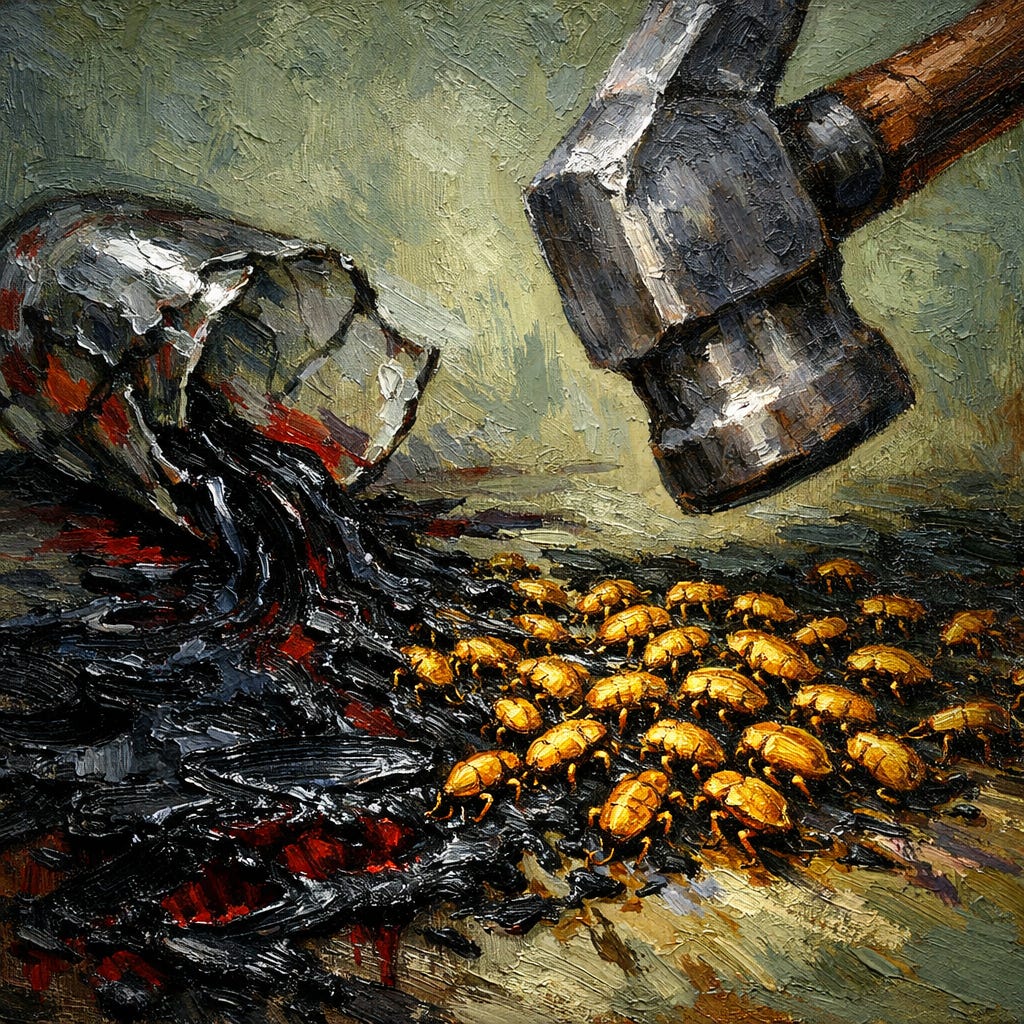
Approximately 40% of patients diagnosed with sepsis have negative blood cultures.
Dr. Tom Cowan encountered this finding when he began investigating sepsis through his New Biology Clinic. As a former emergency room physician who had drawn countless blood cultures and treated septic patients under the standard protocol, the number stopped him cold. The clinical definition of sepsis — the one taught in medical schools, applied in emergency rooms, and used to justify billions in antibiotic prescriptions — requires a bacterial infection of the blood. A positive blood culture. Bacteria where bacteria supposedly should not be. That is what sepsis means. Or meant, until the definition quietly expanded to accommodate its own failure.
Today, a patient can present with fever, low blood pressure, and organ dysfunction. The physician draws blood, sends it to the lab, and the culture comes back clean. No bacteria. And the diagnosis? Sepsis. The word has been stretched until it means nothing more precise than “very sick person” — which is not a diagnosis. It is a description. And descriptions do not explain causes.
The mortality rate tells the rest of the story. Even with aggressive antibiotic treatment — intravenous, broad-spectrum, round the clock — somewhere between 30 and 40 percent of patients with severe septic shock still die. The standard treatment fails a third of the time in the best-case scenario, and the standard definition fails 40% of the time by its own criteria. This is not a theory under strain. This is a framework that has already collapsed and continues operating on institutional momentum alone.
Sepsis is not a marginal diagnosis. It is one of the leading causes of hospital death worldwide. In the United States alone, sepsis is implicated in roughly 350,000 deaths per year. Globally, the World Health Organization has called it a leading cause of preventable death and disability. Families are told their loved one died of a bacterial blood infection. Hospitals code it as such. Insurance processes it as such. The entire chain of documentation, billing, treatment, and grief rests on the assumption that bacteria caused the crisis.
The question is not whether the definition holds. It doesn’t. The question is what happens to the patients, the treatment protocols, and the families making life-and-death decisions under a diagnostic framework that cannot account for nearly half its own cases.
To answer that, you have to go backward — through 150 years of experimental, surgical, and clinical evidence that the medical establishment has systematically ignored. And you have to start with the name itself.
Support Independent Investigative Journalism and Research
This work remains free because paid subscribers make it possible. If you find value here, consider joining them.
What paid subscribers get: Access to the Deep Dive Audio Library — 180+ in-depth discussions (30-50 min each) exploring the books behind these essays. New discussions added weekly. That’s 100+ hours of content for less than the price of a single audiobook.
Plus 1-2 free books each month.
[Upgrade to Paid – $5/month or $50/year]
Get in touch Essay ideas, stories, or expertise to share: unbekoming@outlook.com
The Name They Changed
Most people know the phrase “blood poisoning.” It is old, common, and — as it turns out — far more accurate than the term that replaced it.
The word “sepsis” derives from the Greek for putrefaction or decay. In earlier medical usage, it described poisoning — specifically, the presence of toxic substances in the blood. The word “virus,” similarly, meant poison in its original Latin. The word “infection” originally referred to contamination or pollution, not the invasion of a microorganism. These terms carried clear, toxicological meaning for centuries before they were captured and redirected toward a bacteriological framework.
Herbert Shelton, writing in Natural Hygiene: Man’s Pristine Way of Life, used the term “septic infection” — but his meaning was poisoning, not microbial invasion. He described a mechanism by which toxic substances entering the bloodstream directly — through vaccination, for instance — would inevitably poison the blood:
“Protein, as essential to life as it is, is a virulent poison if introduced directly into the blood without first undergoing digestion.”
Shelton’s observation was straightforward. Injecting foreign proteins or toxic chemicals into the bloodstream bypasses the digestive system’s capacity to neutralise harmful substances. The blood becomes poisoned. Not infected. Poisoned.
The relabelling from “blood poisoning” to “bacterial infection” was not a scientific advance. It was a conceptual capture — one that redirected causation from poisons and toxins to bacteria. The original name pointed at the actual mechanism. The replacement pointed at a scapegoat.
This linguistic drift — from poison to pathogen, from toxicology to bacteriology — mirrors a broader pattern. Once bacteria were cast as the cause rather than the consequence, the entire treatment apparatus pivoted toward killing them. And the actual question — what poisoned the blood in the first place? — stopped being asked.
The Experiment That Inverted the Model
In the late 1800s, Professor John Burdon-Sanderson, a professor of medicine at one of England’s most prestigious universities, conducted a series of experiments that should have redirected the entire trajectory of infectious disease theory. They didn’t. But the results were never refuted.
Burdon-Sanderson took fluids from the muscle of an animal with sepsis and set about determining what was actually producing the symptoms. He precipitated the fluid with alcohol, filtered it, and obtained a solution free of bacteria. He then injected this bacteria-free solution into healthy animals. They developed fever.
He refined the experiment. He filtered the septic fluid through paper and through porcelain separately. The paper-filtered solution — free of bacteria but retaining minute particles — still produced fever when injected into healthy animals. The porcelain-filtered solution — free of both bacteria and particles — produced no fever at all.
Two additional observations completed the picture. The paper-filtered solution, when left to sit for one hour, became teeming with bacteria. The porcelain-filtered solution remained completely sterile after 24 hours.
Burdon-Sanderson drew the logical conclusion: the porcelain filter had removed not only the substance responsible for producing fever but also some unknown substance essential for bacterial growth. The bacteria were not the fever-producing agent. They were secondary — dependent on an underlying substance for their proliferation.
Then he went further. He intravenously injected animals with a sterile chemical irritant — liquor ammonia. No bacteria. A pure chemical insult. Within 24 hours, the pathological fluids were swarming with germs.
The bacteria had not been introduced. They arose endogenously — from inside the blood — in response to the chemical damage. The causal sequence was: poison first, tissue damage second, bacterial proliferation third. The standard model claims the reverse: bacteria first, infection second, damage third. Burdon-Sanderson demonstrated experimentally that this sequence is backward.
These results were not an isolated finding. Bert, Panum, Coze, Bergman, Schmiedeberg, Vulpain, and Clementi all independently produced septicaemia in animals by injecting sterile solutions. No bacteria introduced. Chemical damage alone. Bacteria appearing afterward, every time. Campbell documented these replications in an 1885 paper in the Buffalo Medical and Surgical Journal, noting that the results were consistently “at odds with the widely accepted belief that sepsis is caused by the introduction of germs into the bloodstream.”
That was 140 years ago. The experiments stand. The medical establishment’s response has not been rebuttal. It has been silence.
The implications extend well beyond sepsis. The standard bacteriological model assumes a linear pathway: pathogenic bacteria enter the body, multiply, produce toxins, and cause disease. Burdon-Sanderson showed that the actual sequence runs in the opposite direction. A chemical insult — with no bacteria involved — produces tissue damage. The damaged tissue then becomes the substrate on which bacteria proliferate. The bacteria are not the initiating cause. They are a secondary biological response to a pre-existing condition.
This distinction is not academic. It determines everything about treatment. If bacteria cause the damage, you kill the bacteria. If the damage causes the bacteria, you address the damage. These are opposite therapeutic strategies, and only one of them addresses the actual problem.
The Surgeons Who Saw It Daily
Laboratory experiments produce controlled evidence. Surgical wards produce clinical reality. Between the 1880s and 1920s, a succession of surgeons working with infected wounds arrived independently at the same conclusion: bacteria follow tissue damage. They do not cause it. Remove the dead tissue, and the bacteria leave on their own.
Dr. Lawson Tait, surgeon and president of two large hospitals in Britain, conducted a three-year comparative study involving 100 ovariectomy patients. Fifty women were operated on with strict Listerian antisepsis — the prevailing standard, involving carbolic acid sterilisation of wounds, instruments, and surgical dressings. Fifty were operated on with only general cleanliness and cold water. No antiseptic chemicals.
The women treated without antiseptic measures had lower mortality, fewer complications, shorter recovery times, and better outcomes across every metric. The antiseptic protocol was not merely unnecessary — it was harmful. Carbolic acid, the centrepiece of Listerian practice, was itself a chemical irritant that damaged living tissue.
Tait was not alone. Professor Victor von Bruns, Dr. John Lowe, Dr. Thomas Keith, and Dr. George Bantock all reported that Listerian antiseptic methods failed to improve surgical outcomes and in many cases worsened them. The pattern was consistent: chemical antisepsis introduced additional toxins into the wound, provoking the very conditions it claimed to prevent.
Tait’s clinical observations extended beyond outcomes data. He examined pus within abscesses and found it full of bacteria — but the healthy living tissue immediately surrounding the abscess was free of germs. When he drained the pus, the bacteria — deprived of their food source — evacuated. Despite bacteria remaining in the wound during healing, recovery proceeded without complication. If bacteria were the cause of the disease, he asked, why did they not re-infect the perfectly accessible healthy tissue right beside them?
In an 1890 paper, Tait laid out the saprophytic model. If a piece of dead tissue was introduced into a man’s leg, bacteria would proliferate rapidly — to break down the dead matter. If an inorganic foreign body — an ivory shard, a lead bullet — penetrated tissue, no bacterial growth occurred. There was nothing to decompose. Bacteria consumed devitalised tissue. Their metabolic waste products were themselves toxic. Those waste products produced the symptoms conventionally attributed to “bacterial infection.” But bacteria introduced into healthy, vitalised tissue produced no decomposition and no disease.
Professor James William White, writing in 1891, confirmed the pattern: if all decomposable matter was removed from a wound site, germs could enter freely without consequence. It was impossible to keep germs out of a surgical incision — they existed in blood, bodily fluids, and tissue ubiquitously. But they could not proliferate without a food source. Dead tissue was the food source. Remove it, and the “infection” resolved.
Professor Hugh Cabot, addressing a major medical association in 1921, provided the same testimony from a different theatre. During World War I, when surgeons treated battle wounds, the key to successful outcomes was completely excising the damaged tissue. The presence of germs, Cabot stated, was “neither here nor there — of no great importance.” Wounds were almost never completely free from bacteria, even after surgical debridement. Yet wounds healed. It was the removal of devitalised tissue, not the removal of germs, that determined the outcome. Germs, he observed, grow on dead tissue and clotted blood — not in tissue of normal condition. The battlefield had provided, at appalling scale, a controlled natural experiment. Thousands of men with contaminated wounds, exposed to soil bacteria, faecal bacteria, every conceivable pathogen — and the ones who survived were not the ones given the most aggressive antiseptic treatment. They were the ones whose dead tissue was most completely removed.
Dr. Kadernath Das offered an analogy in 1895 that distills the entire principle. When entomologists want to attract gravedigger beetles, they place dead tissue under a board. Within two to three days, countless beetles arrive. No entomologist concludes the beetles caused the tissue death. They migrated after conditions were favourable and assist in decomposition. The germ is analogous to the beetle. For healthy tissue, it remains absent or inactive. For diseased tissue, it actively seeks it out — a pattern mistaken for pathogenesis.
Dr. George Wilson, addressing the Section of State Medicine in 1899, put it plainly: pathogenic germs are only found in necrosed tissue. Rather than causing the dead tissue, germs perform a benign function — changing necrosed tissue into harmless byproducts for the body to remove.
Dr. George Granville Bantock, the same year: bacteria are not causative of disease but scavengers of tissue devoid of vitality.
Six surgeons and physicians, across three decades, working independently in different institutions and different countries, observing different patient populations — all converging on the same conclusion. Bacteria are the cleanup crew. Not the cause.
The Blood Was Never Sterile
The entire edifice of sepsis rests on a foundational assumption: the bloodstream is a sterile environment. Bacteria do not belong there. Their presence constitutes invasion, infection, disease. This assumption is wrong.
A December 2002 paper titled Are There Naturally Occurring Pleomorphic Bacteria in the Blood of Healthy Humans reported exactly what the title suggests. Researchers searching for spirochetes involved in Alzheimer’s disease observed pleomorphic bacteria in the blood of healthy human subjects. The researchers themselves described this as “surprising” — because the sterility of blood was considered settled science.
Dawn Lester and David Parker, in What Really Makes You Ill?, draw out the implication: “The medical establishment claims that the presence of bacteria in the blood represents an ‘infection’ or blood poisoning, also known as sepsis or septicaemia; but this too is erroneous; bacteria do not ‘infect’ or ‘poison’ the blood.”
If bacteria are naturally present in healthy blood, then finding bacteria in a sick patient’s blood does not establish causation. It establishes correlation at best — and expected baseline biology at worst. Growing bacteria from a sick patient’s blood no more proves bacterial causation than finding firefighters at a house fire proves they set it.
This explains the 40% problem. Four in ten sepsis patients have negative blood cultures. The patients are sick. They may be dying. But no bacteria can be found. The condition exists independent of bacterial presence — because the cause was never bacterial in the first place. And when bacteria are present in the other 60%, they are responding to the underlying toxic condition, not creating it.
Claude Bernard stated the principle 150 years ago: “The microbe is nothing, the terrain is everything.” Johann Loibner, a general practitioner, put it in clinical terms: “Under close observation of disease progression, particularly in infective processes, damage to the organism occurs at the beginning of the disease — and only afterwards the bacterial activity begins. Everyone can observe this in himself. If we put dirt into a fresh wound, other bacteria appear as well. After the penetration of a foreign body, very specific germs appear which, after removal or release, go away on their own and do not continue to populate us.”
Virus Mania draws out the broader implication: this is why so many different microorganisms — including supposedly dangerous ones like the tuberculosis bacillus, Streptococcus, and Staphylococcus — can coexist in human bodies without producing any recognisable damage. “They only become harmful when they have enough of the right kind of food.” The food is dead or damaged tissue. Without it, bacteria are inert passengers. With it, they are decomposers doing exactly what decomposers do everywhere else in nature.
This is precisely what Burdon-Sanderson demonstrated with sterile ammonia. Damage first. Bacteria second. Always in that order.
The Iatrogenic Trap
Once you understand the actual sequence — toxic insult, tissue damage, bacterial proliferation — the standard sepsis treatment protocol reveals itself as a self-reinforcing diagnostic trap.
A patient arrives critically ill. Blood cultures are drawn. The physician, trained to think “bacterial infection,” starts intravenous antibiotics immediately — broad-spectrum, because the specific organism has not yet been identified. The antibiotics are hepatotoxic and nephrotoxic. They damage the liver and kidneys — the very organs responsible for detoxifying the blood.
If the patient worsens, the deterioration is attributed to “worsening sepsis” or “antibiotic-resistant infection.” More antibiotics are added. Different ones. Stronger ones. Each additional agent carries its own toxic load, further burdening organs already failing under the strain of whatever poisoned the blood in the first place.
Virus Mania documents the mechanism in surgical patients specifically. Paracetamol, anaesthetics, and the metabolic demands of wound healing can deplete glutathione — the body’s primary detoxification molecule. In a patient whose glutathione is already compromised, additional drug toxicity cascades through the system. What looks like post-surgical “sepsis” may be drug-induced organ failure building on drug-induced organ failure. The diagnosis generates its own evidence.
Dr. Henry Bieler, cited in What Really Makes You Ill?, offered a provocative explanation for the apparent efficacy of antibiotics. He argued that penicillin “whips the endocrine glands into hyperactivity” — that the body, recognising the antibiotic as a toxin, mounts an intensified elimination response. The apparent “cure” is not the antibiotic killing bacteria. It is the body’s emergency response to being further poisoned — a response that incidentally mobilises whatever capacity remains for detoxification and healing. When the body has enough reserves, this works. When it doesn’t, the patient dies. And the death is attributed to the bacteria that were never the cause.
The iatrogenic dimension extends beyond individual treatment protocols. The Death by Medicine study published in 2003 estimated 783,936 annual deaths in the United States from medical interventions — iatrogenesis as the leading cause of death. Within that figure: 106,000 annual deaths from non-error adverse effects of correctly prescribed medications. These are patients who received exactly the drugs their physicians intended, at the prescribed dosages, and died from the toxicity of those drugs. In a hospital environment saturated with pharmaceutical chemicals, the question is not why some patients develop what looks like “blood poisoning.” The question is why anyone is surprised.
Virus Mania also documents that neuraminidase inhibitors — drugs like Tamiflu — “can have serious complications including anaphylaxis, toxic epidermal necrolysis (with potential sepsis and multi-organ failure) and even death.” The dead are then classified as victims of infection. The drug that produced the organ failure disappears from the causal chain. The bacteria that arrived afterward to clean up the damage take the blame.
This is the trap. Treatment poisons the patient. Poisoning produces organ dysfunction. Organ dysfunction is diagnosed as worsening infection. Worsening infection demands more treatment. The loop closes, and the original question — what actually poisoned this person’s blood? — never enters the differential diagnosis.
Dr. Robert Ormiston described bacteria as saprophytes — organisms that return the elements of dead and dying tissue back to their original source for recycling or disposal. Dr. Ulric Williams observed that “disease germs develop in dirt; and, becoming virulent in a toxic environment, themselves evolve matter of high toxicity.” The bacterial metabolic waste — the byproducts of decomposing dead tissue — are themselves toxic. This is what produces many of the visible symptoms attributed to “infection.” But the bacteria are not the disease. They are responding to the disease. Their waste products are an unavoidable consequence of the decomposition work they were recruited to perform. Kill the bacteria, and you stop the decomposition but leave the dead tissue in place. Leave the dead tissue, and the body will recruit more bacteria — or the toxic burden will express itself through other pathways.
What the Compost Pile Knows
Thomas Cowan offers an analogy that strips this question to its essentials. If you put organic waste in a compost pile, bacteria arrive and break it down. No rational person calls this an infection. What the bacteria do is bioremediation — they decompose dead matter and return its components to the soil. This is their function. It is what bacteria do everywhere in nature.
A pond that becomes a dumping ground for industrial waste: algae arrive and digest the toxins, working to restore the pond’s chemistry. This is not an algal infection of the pond. This is a living system’s response to poisoning. The algae are the treatment, not the disease.
Cowan extends the principle. Clostridia, under healthy aerobic conditions, ferments carbohydrates and produces butyric acid — a beneficial short-chain fatty acid. Place the same bacteria in an anaerobic, oxygen-depleted environment, and it produces toxins capable of causing botulism. The bacteria did not change. The environment changed. The toxicity comes from the terrain, not the organism.
This is what Burdon-Sanderson demonstrated with ammonia. This is what Tait observed with abscesses. This is what Cabot documented in war wounds. This is what Das described with his gravedigger beetles. The principle has been articulated by experimentalists, surgeons, clinicians, and natural philosophers across 150 years, in different countries, in different contexts, using different methods.
The bacteria are not the problem. The bacteria are the response to the problem. Kill the bacteria, and you have silenced the cleanup crew while leaving the mess untouched. The patient may appear better temporarily — the metabolic byproducts of bacterial decomposition, which produce many of the visible symptoms, are reduced. But the underlying toxic condition remains. And it will express itself again, in a different form, through a different pathway, until it is addressed.
Back to the Definition
Return to the 40%. Four in ten patients diagnosed with sepsis have no bacteria in their blood. The definition, which requires bacterial infection, does not hold for nearly half the people to whom it is applied. The treatment, which targets bacteria, fails a third of the time even in the most severe cases. The foundational premise — that blood is sterile and bacteria are invaders — was documented as false over two decades ago.
The experimental record, stretching back to the 1870s, demonstrates that sterile chemical irritants produce septicaemia without any bacterial introduction — and that at least seven independent research groups replicated this finding. The surgical record, from the 1880s through the 1920s, demonstrates that removing dead tissue resolves “infection” while killing bacteria does not — and that chemical antisepsis, the precursor to antibiotic therapy, was counterproductive. The clinical record shows that bacteria exist naturally in healthy blood, appear in damaged tissue as part of a saprophytic decomposition process, and cannot be shown to cause disease in healthy, vitalised tissue.
The original name — blood poisoning — was the accurate one. Something is poisoning the blood. Pharmaceutical drugs, vaccines, environmental chemicals, anaesthetic agents, or some combination of insults that overwhelms the body’s capacity to detoxify. The bacteria that appear in response are doing exactly what bacteria have always done in the presence of dead or dying tissue: breaking it down for removal.
There is evidence — significant and worth examining — that high-dose intravenous vitamin C dramatically reduces mortality in severe sepsis cases. This makes sense within a poisoning framework. Vitamin C is a potent antioxidant and detoxification support molecule. It does not kill bacteria. It helps the body process and eliminate toxins. That it works where antibiotics fail is not a paradox. It is a confirmation that the problem was never bacterial.
The vitamin C finding is instructive for another reason. It was not the product of a multi-billion-dollar research program. It did not require genomic sequencing or targeted molecular therapy. It required only the willingness to ask a different question. Not “which bacteria are we fighting?” but “what is poisoning this person, and how do we help their body clear it?” The answer — support detoxification — follows naturally from the question. But the question itself has been made nearly unaskable within the institutional framework of modern medicine, where “sepsis” means “bacterial infection” and every treatment algorithm begins and ends with antibiotics.
A diagnosis that cannot meet its own criteria 40% of the time is not a diagnosis. It is a habit. And habits, unlike diagnoses, do not require evidence. They require only repetition and the unwillingness to ask what went wrong.
The 30–40% of septic shock patients who die under standard treatment are not dying because the antibiotics aren’t strong enough. They are dying because the treatment is aimed at the wrong target. The bacteria are not the enemy. The poison is the enemy. And every round of hepatotoxic, nephrotoxic antibiotics pushes the patient further from recovery, not closer — because it adds to the toxic burden that created the crisis.
The question that every family sitting in an ICU waiting room deserves to have answered is not “which antibiotic should we try next?” It is: what poisoned this person’s blood, and what will help their body clear it?
That question has not been asked in a mainstream clinical setting in over a century. The experimental and surgical evidence for why it should have been was available the entire time. The original name for the condition pointed directly at the answer.
Blood poisoning. It was right there in the name.
References
Bantock, G.G. (1899). On the role of bacteria in surgical wounds.
Bastian, H.C. (1875). BMJ, 1(745):469–76.
Burdon-Sanderson, J. (1871). Journal of Cell Science, 11(44):323–52.
Burdon-Sanderson, J. (1873). Nature, 8(190):141–43.
Burdon-Sanderson, J. (1875). Lancet, 105(2695):592–93.
Burdon-Sanderson, J. (1877). BMJ, 2(886):879–81.
Burdon-Sanderson, J. (1878). BMJ, 1(893):179–83.
Campbell, F. (1885). Buffalo Medical and Surgical Journal, 24(11):483–99.
Cowan, T. and Fallon Morell, S. (2020). The Contagion Myth. Skyhorse Publishing.
Cowan, T. (2026). Wednesday Webinar, February 4, 2026. Transcript via Otter.ai.
Das, K. (1895). On the analogy between bacteria and gravedigger beetles.
Engelbrecht, T., Köhnlein, C., Bailey, S., and Scoglio, S. (2021). Virus Mania. Books on Demand.
Lester, D. and Parker, D. (2019). What Really Makes You Ill? Why Everything You Thought You Knew About Disease Is Wrong. Independently published.
McLaughlin, L.M. et al. (2002). “Are There Naturally Occurring Pleomorphic Bacteria in the Blood of Healthy Humans?” Journal of Clinical Microbiology, December 2002.
Null, G. et al. (2003). Death by Medicine. Nutrition Institute of America.
Ormiston, R. On the saprophytic function of bacteria.
Roytas, D. (2024). Can You Catch a Cold? Untold History and Human Experiments. Independently published.
Shelton, H. Natural Hygiene: Man’s Pristine Way of Life. Various editions.
Tait, L. (1890). Paper on saprophytic action of bacteria. Birmingham and Midland County Branch, British Medical Association.
White, J.W. (1891). Paper on bacterial behaviour in surgical wounds. Professor of Clinical Surgery.
Williams, U. Terrain Therapy. Cited in Roytas (2024).
Wilson, G. (1899). Address to the Section of State Medicine.
New Biology Clinic
For those of you looking for practitioners who actually understand terrain medicine and the principles we explore here, I want to share something valuable. Dr. Tom Cowan—whose books and podcasts have shaped much of my own thinking about health—has created the New Biology Clinic, a virtual practice staffed by wellness specialists who operate from the same foundational understanding. This isn’t about symptom suppression or the conventional model. It’s about personalized guidance rooted in how living systems actually work. The clinic offers individual and family memberships that include not just private consults, but group sessions covering movement, nutrition, breathwork, biofield tuning, and more. Everything is virtual, making it accessible wherever you are. If you’ve been searching for practitioners who won’t look at you blankly when you mention structured water or the importance of the extracellular matrix, this is worth exploring. Use discount code “Unbekoming” to get $100 off the member activation fee. You can learn more and sign up at newbiologyclinic.com
Sepsis is sold to us as a bacterial invasion, but the numbers don’t even support their own story—40% of cases show no bacteria at all. What we’re really looking at is blood poisoning, a body overwhelmed by toxins, with bacteria showing up afterward to clean up the damage. For over a century, surgeons and experimenters have seen the same pattern: damage first, microbes second. Yet the system keeps firing more toxic drugs into already failing bodies and calling the decline “worsening infection.” Wrong target, wrong tool. Ask the right question—what poisoned the blood and how do we help the body clear it—and the whole picture flips. Lone wolves have been saying it for years: the terrain matters, and the cleanup crew isn’t the enemy.
—Lone Wolf 🐺
Thanks for the truth. How would someone counter this when confronted in a hospital? The last thing I want to take these days is an antibiotic. I have an antibiotic in a bottle that the doc who did my 1/2 hip replacement after a fall a few years back said I should take if any dental work is needed. I have researched this stuff. Horrific side effects could occur. This post is certainly eye opening. Also so disturbing, as the whole medical system we confront is. I have read Thomas Cowan. I read him during Covid. Should I load up on oranges or glutathione supplementation? I am extremely healthy as an almost 78 yo gal. I stay away from conventional treatments and processed food. Right now I’m using chlorine dioxide and DMSO for a couple of issues.