

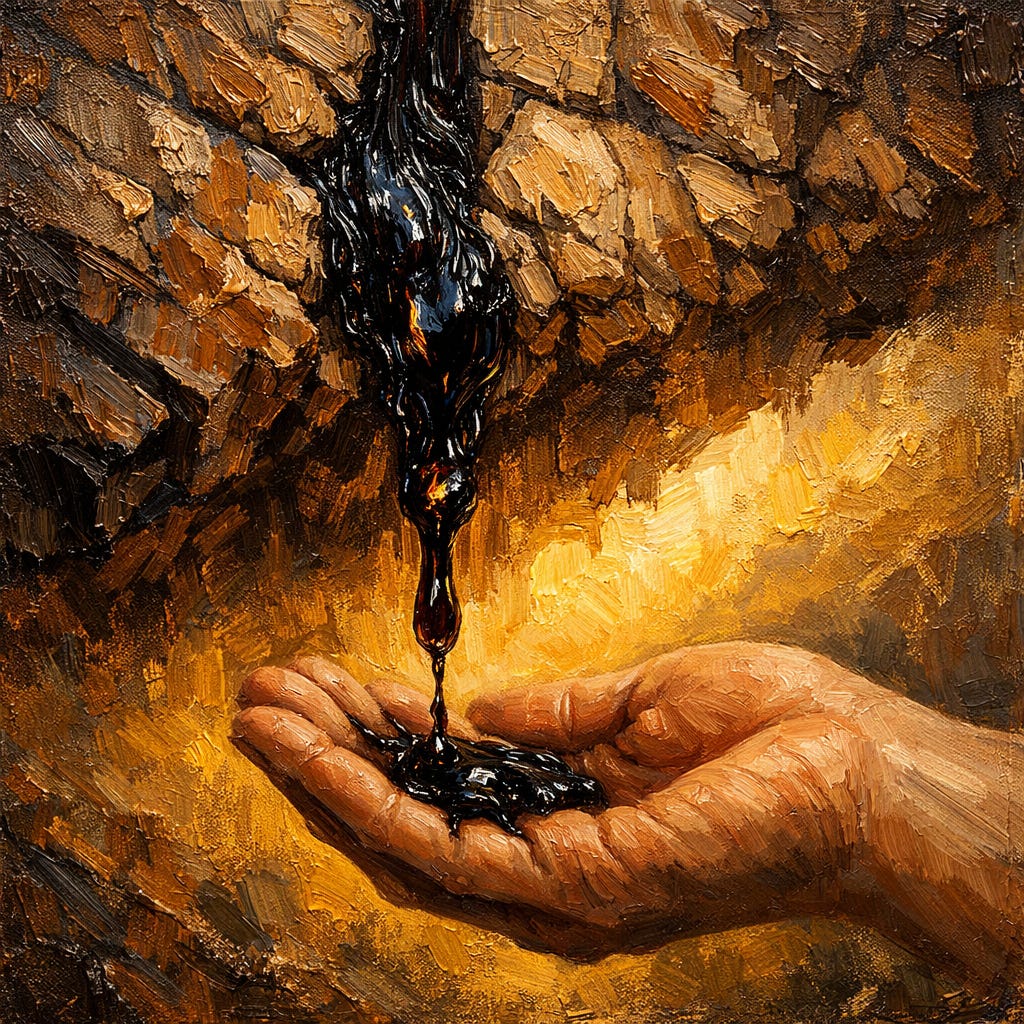
In the mid-1960s, doctors at the University of Tashkent in Uzbekistan administered a dark, resinous substance to over 2,500 patients with bone fractures. The substance — shilajit, scraped from cracks in high-altitude rock faces across Central Asia — accelerated bone formation by thirteen to seventeen days compared to control groups receiving no treatment. X-ray evidence confirmed it. The dose was small: 200 to 300 mg, twice daily, for thirty days.¹ ²
That clinical dataset — 2,500 patients, measurable acceleration of bone healing, confirmed by imaging — would be considered a significant evidence base for any pharmaceutical intervention. The study was led by Professor Adyl Shakirov, a pioneer of medical research at the University of Tashkent, who spent decades documenting shilajit’s effects across multiple conditions and published extensively in Russian scientific literature.² ⁶⁵
The substance was never commercialised in the West. No pharmaceutical company pursued it. No regulatory body evaluated it. The reason is simple: shilajit is a naturally occurring geological substance that cannot be synthesised, patented, or reduced to a single active ingredient. It contains dozens of mineral elements and scores of organic compounds working in concert.²¹ ²⁴ There is nothing to own, so there is nothing to sell.
The clinical record — spanning Soviet-era hospitals, Indian universities, Iranian research centres, and Ayurvedic practice stretching back millennia — is extensive and largely consistent. Whether shilajit works is not really the question. The question is why a substance with this kind of documentation remains almost entirely unknown outside the traditional medicine systems that have used it for thousands of years.
Support Independent Investigative Journalism and Research
This work remains free because paid subscribers make it possible. If you find value here, consider joining them.
What paid subscribers get: Access to all books I’ve written plus 1-2 new ones per month. e.g.
The DMSO Book
Chlorine Dioxide
The PSA Trap
Breast Cancer
Drilling for Profit
What Your Vet Can’t Tell You
Plus: Access to the Deep Dive Audio Library — 180+ in-depth discussions (30-50 min each) exploring the books behind these essays. New discussions regularly added. That’s 100+ hours of content for less than the price of a single audiobook.
[Upgrade to Paid – $5/month or $50/year]
What It Is
Shilajit is a viscous, dark-brown geological substance found in high-altitude mountain regions, primarily in the Himalaya, the Altai Mountains, the Tien-Shan range, and parts of Central Asia, Iran, and China. It oozes from rock faces during months of intense heat, appearing at elevations between 1,000 and 5,000 metres, almost exclusively on southern-facing slopes.¹⁵ It has never been found on northern exposures.
The name comes from Sanskrit: “rock-overpowering.” In Central Asian languages, it goes by Mumijo, which translates roughly as “protecting the body from diseases.” Other regional names describe its appearance — “blood of the mountain” in Myanmar, “oil of the mountains” in Siberia, “mountain sweat” in Iran.
Its formation remains only partly understood. Evidence increasingly points toward a fossil origin — organic material from ancient seas and forests, compressed over geological time in sedimentary rock formations dating to the Triassic period, some 200 to 250 million years old.¹⁵ Chinese researchers studying Tibetan deposits in 2020 established that the substance emerged from steep cliff faces through pore spaces and structural fissures in shale and hydrocarbon-containing rock, driven to the surface by tectonic pressure.¹⁵ This is not something washed down by rain. It seeps from within the mountain itself.
In 2008, Professor Shibnath Ghosal — one of the world’s leading researchers on shilajit’s fundamental chemistry — identified fullerene compounds in shilajit that also occur in meteorites and fossilised ammonites.¹³ The same group of substances was later detected on comet 67P after the Philae lander touched down in 2014. The ancient religious notion that shilajit was a substance “sent from heaven” acquires an unexpected resonance.
One summary description, offered by the Kyrgyz scientist D.D. Djenchorow in 1995, captures the current best understanding: shilajit is “a complex, macromolecular organic/mineral metabolic product of aerobic microorganisms, created through the decomposition process of plant matter, lichens, and resins.”¹⁷
What It Contains
Shilajit’s composition is the first clue to why pharmaceutical science has ignored it. It is not a single compound. It is a matrix — a dense, interlocking web of minerals, organic acids, amino acids, and complex carbon-based molecules that vary somewhat by location but maintain a remarkably consistent overall profile across geographically distant deposits.
Laboratory analysis by the Pascher Microanalytical Laboratory in Remagen, Germany, identified over twenty-five mineral elements in a single sample: calcium (27,000 mg/kg), potassium (60,000 mg/kg), magnesium (14,000 mg/kg), sulfur (6,000 mg/kg), iron (173 mg/kg), zinc (71.8 mg/kg), strontium (145 mg/kg), phosphorus (485 mg/kg), and others including selenium, copper, manganese, iodine, and molybdenum.² Virtually every element in the periodic table, with the exception of rare earth elements, could in principle be present.
Twelve amino acids have been identified, including essential ones — leucine, methionine, threonine — that the body cannot produce and must obtain from external sources.²¹ Estonian researchers at Tallinn University identified sixty-five distinct organic compounds in alcoholic extracts, including twenty-four free fatty acids not previously detected in the substance.²⁴
The organic fraction includes carbohydrates, waxes, alkaloids, lipids, resins, polyphenols, steroids, essential oils, and B vitamins. But the compounds that have attracted the most research attention are the humic substances — humins, humic acids, and fulvic acids — which are present in considerable quantities and appear to be responsible for many of shilajit’s documented effects.²² ²³
Fulvic acids deserve particular attention. These are highly complex, highly ramified organic molecules that form through the microbial decomposition of dead organisms over long periods. No two fulvic acid molecules in a sample are structurally identical.²⁵ Their molecular weights range from a few hundred to several hundred thousand grams per mole.²⁷ They cannot be synthesised. They cannot be standardised in the way pharmaceutical regulation demands. And they are among the most biologically active components of shilajit.
One specific group — the dibenzo-α-pyrones, identified by Ghosal’s research group — function as mitochondria-targeted antioxidants, operating at the level of cellular energy production.¹¹³ Another group, the hydroxydibenzo-α-pyrones, are biochemical precursors of coumarins — a class of compounds used in mainstream medicine to thin blood and prevent thrombosis.⁹²
The complexity that makes shilajit resistant to pharmaceutical reductionism is the same complexity that makes it therapeutically potent. The matrix is the medicine. Isolate any single component and you lose the synergistic interactions that produce the observed clinical effects.
Terrain Logic
The conventional medical framework asks: what disease does this treat? The terrain framework asks a different question: what does this substance provide to the internal environment of the body?
Shilajit’s composition answers that question directly. It delivers a broad-spectrum mineral and organic replenishment — the raw materials the body requires for enzymatic function, cellular energy production, hormonal synthesis, connective tissue repair, and the maintenance of mucous membranes. Zinc alone is involved in approximately 300 enzymatic reactions in the body, including critical functions in cellular and humoral immunity.⁴³ Magnesium participates in a comparable number. Selenium is integral to glutathione peroxidase, one of the body’s primary antioxidant enzymes. Sulfur is a component of amino acids, insulin, and cartilage. Iron is essential for oxygen transport.
The terrain perspective reframes every one of shilajit’s documented effects. Bones heal faster not because shilajit “fights” a disease, but because it supplies the minerals — particularly strontium and zinc — that the terrain requires for osteoblast function and mineralisation. Testosterone levels rise not because shilajit is a drug, but because it provides the zinc that is a prerequisite for gonadotropin production, which in turn controls testosterone synthesis. The body’s resilience under stress improves not through some pharmacological trick, but because cellular energy production is better supported when mitochondria have access to the full spectrum of cofactors and antioxidants they need.
The compositional analysis makes this plain. Shilajit is, in essence, concentrated terrain support — a geological deposit that has accumulated the mineral and organic wealth of its surrounding environment over immense timescales, and delivers it to the body in bioavailable form.
Bones: The Strongest Evidence
The Tashkent fracture studies remain the most robust clinical dataset in the shilajit literature.
Professor Shakirov’s protocol was straightforward. Patients with bone fractures received 200 to 300 mg of shilajit twice daily for thirty days. For severe fractures, a ten-day break was followed by a second thirty-day course. Clinical examination and X-ray imaging documented the results. Bone formation occurred thirteen to seventeen days faster than in control groups.² ⁷⁹
The mechanism centres on strontium. Shilajit contains 145 mg/kg of naturally occurring strontium — a bivalent alkaline earth metal chemically similar to calcium. Strontium competes with calcium for deposition in bone, functioning as a “calcium carrier” that promotes remineralisation. It stimulates osteoblast function (bone formation) and inhibits osteoclast function (bone resorption).⁸⁰ ⁸¹ ⁸² This dual action — building up while slowing breakdown — is the same mechanism that mainstream medicine recognised when it approved strontium ranelate as an osteoporosis medication. That drug was taken off the market by 2017, amid discussion about side effects and low prescription rates.⁸⁸ Shilajit provides strontium in its natural form, embedded in a mineral matrix, without the synthetic carrier.
Apart from mineral deposits of strontium itself, shilajit is the only known natural substance with appreciable strontium levels.
A 2019 Iranian study confirmed enhanced rates of cell division in bone tissue when shilajit was administered.⁸⁶ A 2020 randomised, double-blinded, placebo-controlled trial in Iran demonstrated efficacy in tibia fracture repair.⁸⁴ A 2016 study on human skeletal muscle transcriptome showed measurable changes in gene expression following oral shilajit supplementation.⁸⁵
The author of the Windmann book — himself a scientist — documented cases within his own circle that remain striking. Two hairline femur fractures that had failed to heal for eight months despite surgery and mechanical stimulation healed completely within three weeks of introducing shilajit. The bone hardened so dramatically that surgical fasteners, normally removable under local anaesthetic, required general anaesthesia for extraction. A compound fracture of the tibia, fibula, and ankle from a forklift accident required no further treatment after eight weeks.²
These are not randomised controlled trials. They are clinical observations. But they are consistent with the mechanism (strontium-mediated bone formation), the large-dataset Tashkent findings, and the subsequent controlled studies from Iran. The convergence across evidence types is difficult to dismiss.
Osteoporosis: Living Bone, Dead Paradigm
Bone is living tissue. It continuously reshapes itself through a dynamic balance of building up (osteoblasts) and breaking down (osteoclasts) to bear the loads placed upon it. When bone is compressed under weight, electrical signals stimulate growth and remodelling. Healthy bone bends under stress and springs back. Brittle bone snaps.
Conventional osteoporosis care measures bone density with DEXA scans and prescribes bisphosphonate drugs to increase that number. The approach is built on a false equivalence: that density equals strength. Bisphosphonates work by poisoning osteoclasts — the cells that clear old bone. The result is bone that scores higher on a scan but has lost the capacity to remodel, flex, and adapt. Bones that appear denser but break catastrophically. The pharmaceutical industry turned a natural aging process into a disease category, then sold a treatment that makes the underlying problem worse.
Shilajit operates on entirely different terms. It does not artificially block the remodelling cycle. It supplies the mineral raw materials — strontium, zinc, calcium, magnesium, sulfur — that osteoblasts require to build new bone tissue as part of the natural cycle.⁸⁰ ⁸¹ ⁹⁰ ⁹¹ Strontium promotes calcium deposition while simultaneously inhibiting excessive bone resorption — not by poisoning osteoclasts, but by shifting the biochemical environment toward mineralisation. Zinc is an essential constituent of bone growth; its levels decrease with age and after menopause, and it promotes osteoblast differentiation while moderating osteoclast activity.⁹⁰ ⁹¹
Apart from mineral deposits of strontium itself, shilajit is the only known natural substance with appreciable strontium levels. This is a substance that supports the living cycle of bone — not one that freezes it in place and calls the result “treatment.”
The terrain reading: osteoporosis is not a disease. It is the consequence of a depleted internal environment — declining mineral availability, reduced stomach acid impairing absorption, industrial agriculture stripping soils of trace elements, and a sedentary indoor life that removes the weight-bearing electrical signals bone needs to maintain itself. Shilajit addresses the mineral component of this depletion directly. It replenishes what the terrain has lost.
The recommended preventive dose in the traditional literature is 200–500 mg, taken twice daily.
Testosterone and Male Fertility: The Mineral Foundation
In 2015, scientists at the University of West Bengal published a study on purified shilajit and testosterone levels in healthy male volunteers aged 45 to 55. Participants received 250 mg twice daily for 90 days. Overall testosterone levels rose significantly.¹⁰³
The mechanism traces directly to zinc.
Zinc is essential for building proteins and plays a significant role in cell division. It is a prerequisite for the production of gonadotropin, the hormone that controls testosterone synthesis. Insufficient zinc means less gonadotropin, which means less testosterone. Cell division — particularly in cells with high turnover rates, such as sperm — slows when zinc levels drop. Each ejaculation costs approximately 2 mg of zinc. Sexually active men with marginal zinc intake can enter a deficit that directly impairs both hormone production and sperm quality.¹⁰⁹
Parallel studies on mice confirmed dose-dependent increases in testosterone, sperm production, quality, and concentration, along with increased libido and male fertility index.¹⁰⁴ An additional finding was that shilajit’s humic acid components facilitated the detoxification and excretion of cadmium — a heavy metal that induces infertility in laboratory settings — reversing cadmium-induced fertility damage.¹⁰⁵
A separate study on rats addressed female fertility. After a five-day course of shilajit, ovulation was induced in seven of nine animals, compared to three of nine in the control group.¹⁰⁶ The sample size is too small to be definitive, but the direction of the finding is consistent with the broader pattern.
In 2020, American scientists reviewed 109 different ingredients marketed as “testosterone boosters” and assessed whether the advertising claims were supported by published scientific literature. Only 27 had any supporting studies. Only 17 had a clear evidence base. Shilajit was among them.¹⁰⁷
Hormonal production depends on the availability of specific mineral building blocks. When those building blocks are supplied — in bioavailable form, within a synergistic mineral matrix — the hormonal environment improves. Not drug action. Nutrient repletion.
The Soviet Secret: Performance, Resilience, and Cellular Energy
The Soviet interest in shilajit was never primarily medical. It was military.
After the opening of Soviet archives in the 1990s, the scale of this interest became clear. Shilajit was given to elite troops — including the Spetsnaz special forces — as a dietary supplement to increase mental and physical resilience and stress resistance.¹¹⁶ Russian cosmonauts received it for the same reasons, with the additional rationale that its antioxidant properties offered protection against cosmic radiation exposure in space.
The Soviet government provided its national sports committee with USD 6.5 million for research into shilajit’s use in sport.¹²¹
The results were documented. Shilajit produced approximately 10 percent increases in muscle mass, prolonged muscular endurance, increased tolerance of oxygen deficiency at high altitudes, and greater resilience under stressful conditions — without the side effects associated with anabolic hormones.¹¹⁶ ¹¹⁷ ¹¹⁸ ¹²¹ Recovery times shortened. A 2019 study confirmed that shilajit supplementation reduced fatigue-induced decreases in muscular strength.¹¹⁷
A study on chronic fatigue in rats demonstrated that shilajit attenuated behavioural symptoms by modulating mitochondrial bioenergetics and the hypothalamic-pituitary-adrenal (HPA) axis.¹²⁰ The mechanism was not pharmacological in the conventional sense. Shilajit improved the efficiency of cellular energy production in mitochondria and normalised the stress-response axis. It improved the terrain at the most fundamental level — the energy-producing machinery of the cell itself.
The Moscow clinic treating former President Boris Yeltsin reportedly ordered a course of shilajit from a Kyrgyz producer before his first heart bypass operation, going to considerable lengths to transport it to the capital in secrecy.
None of this was published in Western scientific journals during the Soviet era. Russian scientists published in the Referatiwny schurnal — a USSR-specific publication containing summarised extracts of research. The original papers had to be ordered from the originating institutions. After the Soviet collapse, research activity shifted to India, Pakistan, Nepal, and Iran, where it continues today.
The West never noticed. Or, more accurately, the Western pharmaceutical industry noticed and saw nothing it could monetise.
Alzheimer’s and the Aluminium Terrain
The mainstream narrative frames Alzheimer’s as a mystery — cause unknown, cure unavailable, with billions spent on drugs targeting beta-amyloid plaques. Seventeen Phase III randomised controlled trials of anti-beta-amyloid monoclonal antibodies, involving 12,585 patients, have failed to produce significant cognitive improvement. The drugs cause brain bleeds, accelerated brain atrophy, and deaths. The beta-amyloid hypothesis has been tested to destruction and has not survived.
The evidence that aluminium is a causal factor in Alzheimer’s is, by contrast, substantial. Autopsy and analysis of 242 brains of people diagnosed with Alzheimer’s, reported across six studies, found elevated aluminium levels in every case. The brain regions that accumulate the most aluminium are the same regions that show the most accelerated atrophy. Worldwide aluminium production and Alzheimer’s prevalence from 1900 to 2020 follow the same exponential curve. Application of Bradford Hill’s causality criteria to human data supports the causal relationship. These are not fringe claims. They are documented findings published in peer-reviewed literature.
Aluminium is a neurotoxin. It is the third most common element in the earth’s crust, but in its purified form — mass-produced since the late 1890s — it has saturated the modern environment: cookware, beverage cans, baking powder, antiperspirants, antacids, water treatment coagulants, and vaccine adjuvants. The body has no biological use for it. It accumulates.
Orthosilicic acid (OSA) — a naturally occurring form of silica — detoxifies aluminium by forming a tight bond with it and facilitating its excretion through urine and sweat. OSA crosses the blood-brain barrier and has been shown in animal studies to facilitate aluminium elimination from the cortex, hippocampus, striatum, cerebellum, thalamus, and olfactory bulb.
Shilajit is rich in silica. Its fulvic acid components have documented capacity to chelate and facilitate the excretion of heavy metals, including aluminium and cadmium.¹⁰⁵ Several studies published since 2012 have examined shilajit specifically in relation to Alzheimer’s.¹²² ¹²⁵ ¹²⁶ ¹²⁷ Animal experiments demonstrated improved memory performance and prevention of the protein aggregation that characterises the disease process.¹²⁵ Effects on neuronal messenger substances and enzyme metabolism have been confirmed in rat brain tissue.¹²⁸
The terrain reading connects these findings. A brain saturated with aluminium — a neurotoxin the body cannot use and struggles to excrete — is a brain in which degenerative processes accelerate. Shilajit provides both the silica that facilitates aluminium removal and the fulvic acids that support detoxification at the cellular level, alongside the mineral cofactors and mitochondrial antioxidants that the brain’s terrain requires to function.
In Ayurvedic medicine, shilajit holds the classification of a Rasayana — an “elixir of life” — valued for its capacity to maintain mental acuity, revitalise the body, and decelerate aging.⁷ ⁶⁰ ⁶¹ Animal experiments have confirmed a deceleration of certain aging processes and improved cognitive capacity.⁶⁰ Modern science is arriving, slowly, at what Ayurvedic practitioners documented centuries ago — and at what the aluminium research has been demonstrating for decades, to an audience that refuses to listen.
Safety
Toxicological studies dating from 1967 onward have attempted to establish a toxic dose for shilajit. They were unable to do so — the limiting factor in animal experiments was stomach capacity, not toxicity. Shilajit produced no genetic harm, no fetal damage, and no harm to heart, kidneys, or liver at doses up to 10,000 mg/kg of body weight in rats.¹³⁷ ¹³⁸ ¹³⁹ ¹⁴⁰ ¹⁴¹
Daily doses between 50 and 800 mg have been documented as safe. The standard therapeutic dose is 200 mg, taken two or three times daily. Extended courses of up to 60 days produced no toxic side effects.
Occasional reported effects include a brief burning sensation at fracture sites in bone-healing patients, mild and transient heat or sweating at higher doses (above 1 g per day), and brief episodes of flatulence after initial doses.
Those with thyroid conditions — particularly Hashimoto’s thyroiditis — should exercise caution due to shilajit’s iodine content, and consultation with a knowledgeable practitioner is warranted.
Why You Haven’t Heard of It
A substance with this breadth of clinical documentation — thousands of patients, multiple countries, decades of research, at least one randomised controlled trial — remains essentially invisible in the Western medical landscape.
The reasons are structural. It cannot be patented. It cannot be reduced to a single molecule for standardised pharmaceutical production. Its composition is too complex for the regulatory frameworks that govern drug approval. No company stands to profit enough from it to fund the large-scale Western clinical trials that would be required for mainstream acceptance.
The problem runs deeper than economics. Western medicine is built on a framework that asks “what pathogen are we fighting?” or “what receptor are we targeting?” Shilajit does not answer those questions. It answers a different one: what does the body’s internal environment need in order to function as it was designed to? This is terrain medicine — the oldest form of medicine — and it is structurally incompatible with a pharmaceutical industry built on the premise that health is the absence of specific diseases rather than the presence of a well-nourished, well-functioning biological terrain.
The Soviets understood this pragmatically. Cut off from Western pharmaceutical supply chains and unable to spend foreign currency on imported drugs, they investigated what their own geography offered. The Himalayan and Central Asian mountains offered shilajit, and the clinical results were substantial enough that the military classified the research and the sports establishment invested millions.
India understands it through the Ayurvedic tradition, which has classified shilajit as a Rasayana for millennia — not a treatment for this or that disease, but a substance that maintains the foundational vitality of the organism.
The West, locked into a model where natural substances are competitors to patentable products, has simply never looked. The studies exist. The clinical data exists. The compositional analysis exists. The mechanisms are understood at the biochemical level. What doesn’t exist is a commercial incentive to bring this information to public attention.
A substance that contains dozens of minerals and scores of organic compounds, has been tested on thousands of patients, has documented effects on bone repair, hormonal health, cellular energy production, stress resilience, and neuroprotection, and has no established toxic dose — this substance costs a few dollars a month in supplemental form and is available without prescription.
The document is publicly available. The studies are on record. The composition has been analysed by accredited laboratories. Whatever word you choose for the gap between this evidence and its absence from mainstream medical practice — neglect, disinterest, structural blindness — the evidence exists and says what it says.
References
Shakirov, A.Sh. “Effect of ‘Mumie’ on bone regeneration and blood alkaline phosphatase in experimental fractures of the tubular bones.” Ortop Travmatol Protez. 1965 May; 26:24–7.
Shakirov, Adyl S. Mumijo in der Therapie der Knochenfrakturen. Monograph. Health Ministry of the Republic of Uzbekistan, University of Tashkent.
Gupta, S.H., Stapelfeld, E. Ayurveda Medizin. 3rd edition, Thieme, 2019.
Ghosal, S., Muruganandam, A. “Fulleren-DBP Conjugates, their occurrence in meteorites, ammonites and Shilajit.” J. Ind. Chem. Soc. 85(9): 911–919.
Ding R. et al. “Mechanisms of generation and exudation of Tibetan medicine Shilajit (Zhaxun).” Chin Med. 2020 Jun 29; 15:65.
Djenchorov, D.D. Mumijo. Conference paper, Bishkek, 1995.
Ghosal S., Reddy J.P., Lal V.K. “Shilajit I: chemical constituents.” J Pharm Sci. 1976 May; 65(5): 772–773.
Ghosal S. et al. “Similarities in the core structures of shilajit and soil humus.” Soil Biol Biochem. 1993 Mar; 25(3): 377–381.
Ghosal S. et al. “The core structure of shilajit humus.” Soil Biol Biochem. 1991; 23(7): 673–680.
Liiv, M.E. et al. “Study of the composition of ethanolic extracts of natural Mumio by chromatographic mass spectrometry.” Zh. Anal. Kim. 49(3): 315–318 (1994).
These, A. Strukturelle Charakterisierung von Fulvinsäure-Molekülen mittels LC-MS/MS. Dissertation, TU Berlin, 2005.
Rashid, M.A. Geochemistry of marine humic compounds. Springer, Berlin.
Windmann, W. (2023). Shilajit: The Ayurvedic Adaptogen for Anti-aging and Immune Power. Chapter 3: Zinc and immune function.
Bhaumik, S. et al. “Effects of Shilajit on mouse peritoneal macrophages.” Phytother Res. 1993; 7: 425–427.
Ghosal, S. “Chemistry of Shilajit, an immunomodulatory Ayurvedic rasayan.” Pure Appl Chem (IUPAC) 1990; 62: 1285–1288.
Govindarajan, R. et al. “Antioxidant approach to disease management and the role of ‘Rasayana’ herbs of Ayurveda.” J Ethnopharmacol. 2005 Jun 3; 99(2): 165–78.
Bhattacharya, S.K. et al. “Adaptogenic activity of Siotone, a polyherbal formulation of Ayurvedic rasayanas.” Indian J Exp Biol. 2000 Feb; 38(2): 119–128.
Shakirov, DSh. “Comparative evaluation of antibacterial properties of the medicinal drug mumie and penicillin.” Antibiotiki. 1967 Mar; 12(3): 248–51.
Shakirov, A.Sh. “Effect of ‘Mumie’ on bone regeneration.” Ortop Travmatol Protez. 1965 May; 26:24–7.
Martín-Del-Campo, M. et al. “Bone Regeneration Induced by Strontium Folate Loaded Biohybrid Scaffolds.” Molecules. 2019 Apr 27; 24(9): 1660.
Marx, D. et al. “A review of the latest insights into the mechanism of action of strontium in bone.” Bone Rep. 2020 Apr 24; 12: 100273.
Cabrera, W.E. et al. “Strontium and bone.” J Bone Miner Res. 1999 May; 14(5): 661–8.
Sadeghi, S.M.H. et al. “Efficacy of Momiai in Tibia Fracture Repair: A Randomized Double-Blinded Placebo-Controlled Clinical Trial.” J Altern Complement Med. 2020 Jun; 26(6): 521–528.
Das, A. et al. “The Human Skeletal Muscle Transcriptome in Response to Oral Shilajit Supplementation.” J Med Food. 2016 Jul; 19(7): 701–9.
Abbasi, N. et al. “The effects of mumie extract on cell proliferation and enzyme expression of human osteoblast-like cells.” J Stem Cells Regen Med. 2019 Dec 24; 15(2): 18–23.
Deutsche Apotheker Zeitung, “Nachruf auf Protelos,” 2017.
Yamaguchi, M. “Role of nutritional zinc in the prevention of osteoporosis.” Mol Cell Biochem. 2010 May; 338(1–2): 241–54.
Jiménez, M. et al. “Bibliographic review on strontium and zinc based regenerative therapies.” J Mater Chem B. 2019 Mar 28; 7(12): 1974–1985.
Ghosal, S. et al. “Anti-ulceronic Activity of Fulvic Acids and 4’-Methoxy-6-Carbomethoxybiphenyl Isolated from Shilajit.” Phytother Res. Vol 2 No. 4: 187–191 (1988).
Pandit, S. et al. “Clinical evaluation of purified Shilajit on testosterone levels in healthy volunteers.” Andrologia. 2016 Jun; 48(5): 570–575.
Noh, S. et al. “Role of Antioxidant Natural Products in Management of Infertility.” Antioxidants (Basel). 2020 Oct; 9(10).
Mishra, R.K. et al. “Profertility effects of Shilajit on cadmium-induced infertility in male mice.” Andrologia. 2018 Oct; 50(8): e13064.
Park, J.S. et al. “The spermatogenic and ovogenic effects of chronically administered Shilajit to rats.” J Ethnopharmacol. 2006 Oct; 107(3): 349–353.
Clemesha, C.G. et al. “’Testosterone Boosting’ Supplements Composition and Claims Are not Supported by the Academic Literature.” World J Mens Health. 2020 Jan; 38(1): 115–122.
Allouche-Fitoussi, D., Breitbart, H. “The Role of Zinc in Male Fertility.” Int J Mol Sci. 2020 Oct 21; 21(20): 7796.
Bhattacharyya, S. et al. “Shilajit dibenzo-α-pyrones: Mitochondria targeted antioxidants.” Pharmacologyonline. 2009; 2: 690–698.
Mittal, P. et al. “Therapeutic Potentials of ‘Shilajit Rasayana’ — A Review.” Int J Pharm Clin Res. Vol. 1, No. 2: 47–49, 2009.
Keller, J.L. et al. “The effects of Shilajit supplementation on fatigue-induced decreases in muscular strength.” J Int Soc Sports Nutr. 2019 Feb 6; 16(1): 3.
Meena, H. et al. “Shilajit: A panacea for high-altitude problems.” Int J Ayurveda Res. 2010 Jan; 1(1): 37–40.
Surapaneni, D.K. et al. “Shilajit attenuates behavioral symptoms of chronic fatigue syndrome by modulating the hypothalamic-pituitary-adrenal axis and mitochondrial bioenergetics in rats.” J Ethnopharmacol. 2012 Aug; 143(1): 91–99.
Gupta, R.C. et al. “Anti-Inflammatory and Anti-Arthritic Efficacy and Safety of purified Shilajit in Moderately Arthritic Dogs.” ResearchGate publication 279746105.
Schliebs, R. et al. “Systemic administration of defined extracts from Withania somnifera and Shilajit differentially affects cholinergic markers in rat brain.” Neurochem Int. 1997 Feb; 30(2): 181–90.
Carrasco-Gallardo, C. et al. “Shilajit: a natural phytocomplex with potential procognitive activity.” Int J Alzheimers Dis. 2012; 674142.
Calfio, C. et al. “The Emerging Role of Nutraceuticals and Phytochemicals in the Prevention and Treatment of Alzheimer’s Disease.” J Alzheimers Dis. 2020; 77(1): 33–51.
Carrasco-Gallardo, C. et al. “Can nutraceuticals prevent Alzheimer’s disease?” Arch Med Res. 2012 Nov; 43(8): 699–704.
Bhattacharya, S.K., Ghosal, S. “Effects of shilajit on rat brain monoamines.” Phytother Res 6: 1163–1164 (1992).
Murbach, T.S. et al. “A toxicological evaluation of a fulvic and humic acids preparation.” Toxicol Rep. 2020 Sep 14; 7: 1242–1254.
Stohs, S.J. “Safety and efficacy of shilajit (mumie, moomiyo).” Phytother Res. 2014 Apr; 28(4): 475–9.
Velmurugan, C. et al. “Evaluation of safety profile of black shilajit after 91 days repeated administration in rats.” Asian Pac J Trop Biomed. 2012 Mar; 2(3): 210–214.
Anisimov, V.E., Shakirzyanova, R.M. “The use of mummy in medical practice.” Kazan Med J 63: 65–68 (1982).
Kelginbaev, N.S. et al. “Treatment of long tubular bone fractures with Mumie asil preparations.” Exp Surg Anesthes 18: 31–35 (1973).
I and my hubs have been taking shilajit for months, myself almost a year. We buy a purified version from Prima Vie and open the capsule into our coffee, 250 MG once daily. No negative effects, of course. It is fantastic for maintenance of health. We are both 'boomers' and have been captive to the medical slavery of this country most of our lives, although no multitudes of vaccines in our first years of life! We resisted Covid and it's poisonous vax big time and I understood so much from reading about health, mostly prevention oriented. Your Substack is prized - thank you!!
In researching shilajit, I encountered such resistance. "It could have heavy metals!" was the most common. I'm thinking, "right, we NEVER encounter THAT in American products."🙄 The ONE thing I learned that is a nugget I'll never let go of is that WE NEED MINERALS. We are made from the same minerals as earth and sea. Technology has depleted these in our bodies, our earth, our food, our water. I highly recommend Shilijat for maintenance. The brain works better, faster, and clearer. The bones! The teeth! We are surrounded by folks on allopathic meds who are our age but seem like bidenized zombies who have one problem after another. Not us!!
I thank you for this article I can share. Thank you, thank you, and may God richly bless you and your work.
Have been using Shilajit for many years. At 61 years old, I can drop and give you 50 pushups without struggle and I never go to the gym. I work 12-14 hours a day in an extreme stress job as president of our company, yet my energy levels are vey high. I have not had so much as a flu or severe cold in more than 10 years.
Not kidding or boasting, though can tell you from my experience, everything said in this article is validated and my naturopathic doctor I go to, performs an extensive blood and hair analysis panel every six months. He says my health is that of a man in his 30's.
So there you have it.