

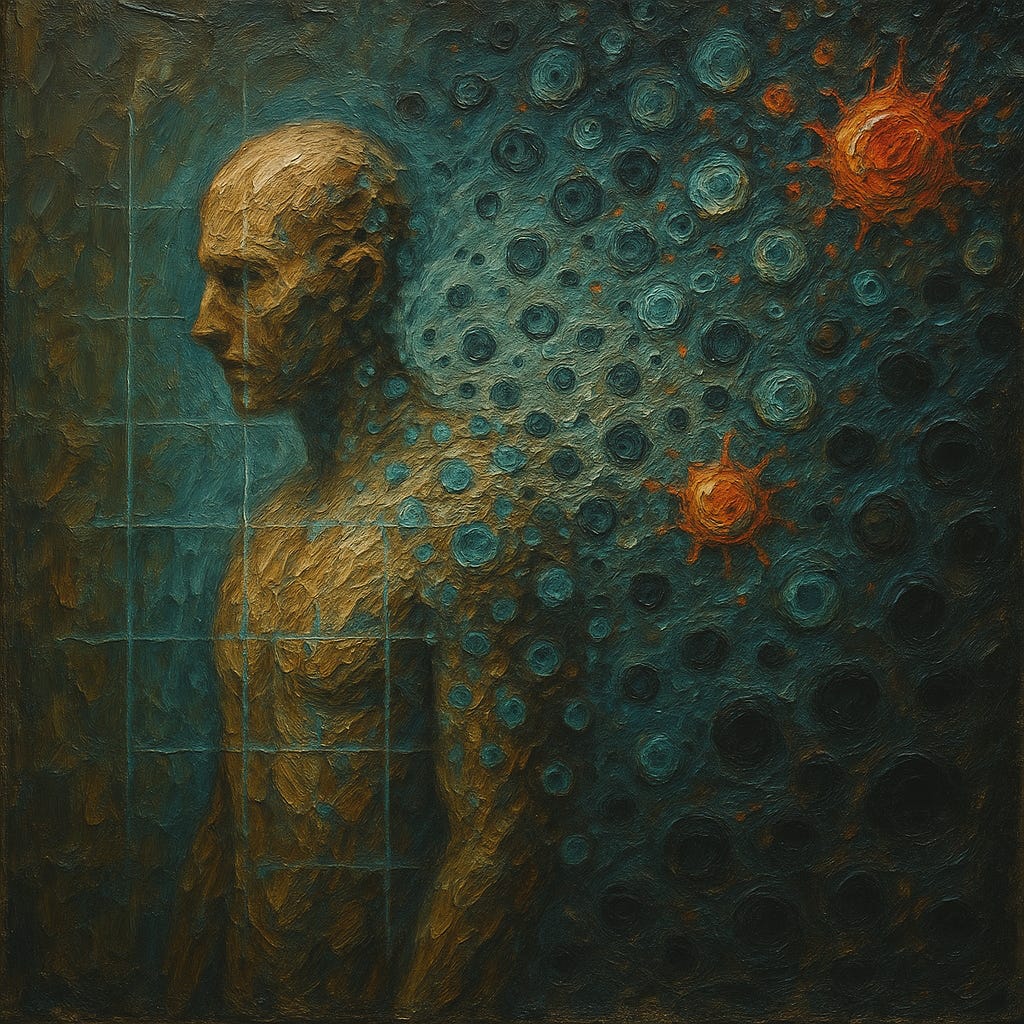
Imagine being told that the smoke detector in your house is so sensitive it can detect a candle burning three blocks away—and that this is somehow supposed to make you safer. This is essentially what has happened with cancer screening over the past several decades. In “Should I Be Tested for Cancer? Maybe Not and Here’s Why,” Dr. H. Gilbert Welch delivers a meticulously researched bombshell that challenges one of medicine’s most sacred assumptions: that finding cancer early saves lives. The truth, as Welch demonstrates through compelling evidence from major studies and real-world data, is far more unsettling. Our increasingly powerful detection technologies—mammograms, PSA tests, CT scans—have indeed become exquisitely sensitive at finding cellular abnormalities we call cancer. But here’s the catch: most of these “cancers” were never going to harm anyone. They’re pseudodisease, cellular irregularities that meet the technical definition of cancer under a microscope but would have sat quietly in the body, never causing symptoms, never threatening life, until something else entirely caused death decades later. Meanwhile, the aggressive cancers that actually kill people tend to grow so fast they sprint through the window between screening appointments, showing up as symptomatic disease regardless of our surveillance efforts.
The scope of this hidden epidemic of overdiagnosis is staggering. Autopsy studies reveal that roughly 40-70% of older men who die from other causes have prostate cancer they never knew about, while careful thyroid examinations find cancer in 36-100% of people, depending on how meticulously pathologists search. A third of women who die from non-cancer causes harbor undiagnosed breast cancer. These aren’t rare anomalies—they represent a vast reservoir of cellular abnormalities that have always existed in human bodies but remained harmless when left undiscovered. When screening programs find these silent cancers in living people, however, everything changes. Suddenly healthy individuals become cancer patients, subjected to surgery, radiation, and chemotherapy for conditions that never threatened them. The neuroblastoma screening disasters in Japan, Quebec, and Germany provide the most damning evidence: these programs doubled the detection of this childhood cancer and achieved impressive “survival” rates, yet the number of children dying from neuroblastoma remained exactly the same. The only achievement was subjecting hundreds of healthy infants to toxic treatments for cancers that would have spontaneously disappeared—some children died from the treatment itself, sacrificed to our compulsion to find and fight every cellular abnormality we can detect.
The medical establishment maintains this illusion through statistical manipulation that would be considered fraudulent in any other field. Five-year survival rates—the metric most often trumpeted as proof that screening works—are fundamentally misleading. These rates automatically improve whenever we diagnose cancer earlier, even if patients die at exactly the same age, because we’re simply starting the survival clock sooner. Welch uses kidney cancer as a perfect illustration: five-year survival improved from 50% to 60% as CT and MRI scans found more small kidney cancers, yet the death rate from kidney cancer remained completely flat. Every person diagnosed with harmless pseudodisease becomes a five-year “survivor,” padding the statistics while gaining nothing from their diagnosis except anxiety and the risks of treatment. Even more troubling is the length bias inherent in screening: slow-growing, relatively harmless cancers linger in the detectable phase for years, making them easy targets for screening tests, while aggressive cancers race through this window in months, becoming symptomatic before the next scheduled test. We’re catching precisely the cancers that don’t need catching while missing the ones that kill. The pathologists themselves operate in a gray zone of uncertainty—studies show they disagree about whether cancer is present in 20-25% of cases, with some pathologists twice as likely as others to diagnose cancer from identical tissue samples. Whether you’re told you have cancer might depend more on which pathologist reviews your slide than on biological reality.
The forces maintaining this system of overdiagnosis run deep through the entire medical-industrial complex. Doctors face asymmetric legal pressure—severe malpractice penalties for missing cancer but none for overdiagnosis—creating powerful incentives to test aggressively. Physicians who own imaging equipment order significantly more scans, generating hundreds of thousands in annual revenue. Hospitals profit enormously from screening programs that create downstream procedures and treatments. Quality metrics reward screening compliance rather than thoughtful patient care, while electronic medical records generate endless reminders for preventive screenings that crowd out time to address patients’ actual concerns. The culture of medicine itself, trained to “do something” rather than watch and wait, views finding disease as success and missing it as failure. Welch reveals how even well-intentioned awareness campaigns transform healthy people into the “worried well,” perpetually anxious about hidden cancers, consuming medical resources in an endless cycle of testing and retesting. The cumulative false positive rate reaches 50% for women undergoing annual mammography for a decade—half will experience a cancer scare requiring additional imaging, biopsies, and sometimes surgery for abnormalities that prove benign. This isn’t healthcare; it’s the mass production of patients, turning a screening test into a gateway drug for medical intervention. The book’s ultimate message is both liberating and deeply uncomfortable: for many people, not looking for cancer might be the healthiest choice they can make. This isn’t nihilism or neglect—it’s recognition that our bodies harbor countless cellular abnormalities that are better left undiscovered, that the aggressive cancers screening purports to catch usually evade our scheduled surveillance anyway, and that transforming healthy people into cancer patients through overdiagnosis might be one of modern medicine’s greatest but least recognized harms.
Reader’s Guide PDF Download & Audio Deep Dive (Paid Subscribers Only)
The rest of this summary — the analogy, one-minute elevator explanation, 12-point summary, Q&As, and Golden Nugget — is for paid subscribers.
Your subscription also unlocks every other book summary in the library, the Deep Dive Audio Library, my original books (new ones added monthly), and three series for the moments when a real decision is in front of you: Questions for Your Doctor, Before You Consent, and Package Inserts.