

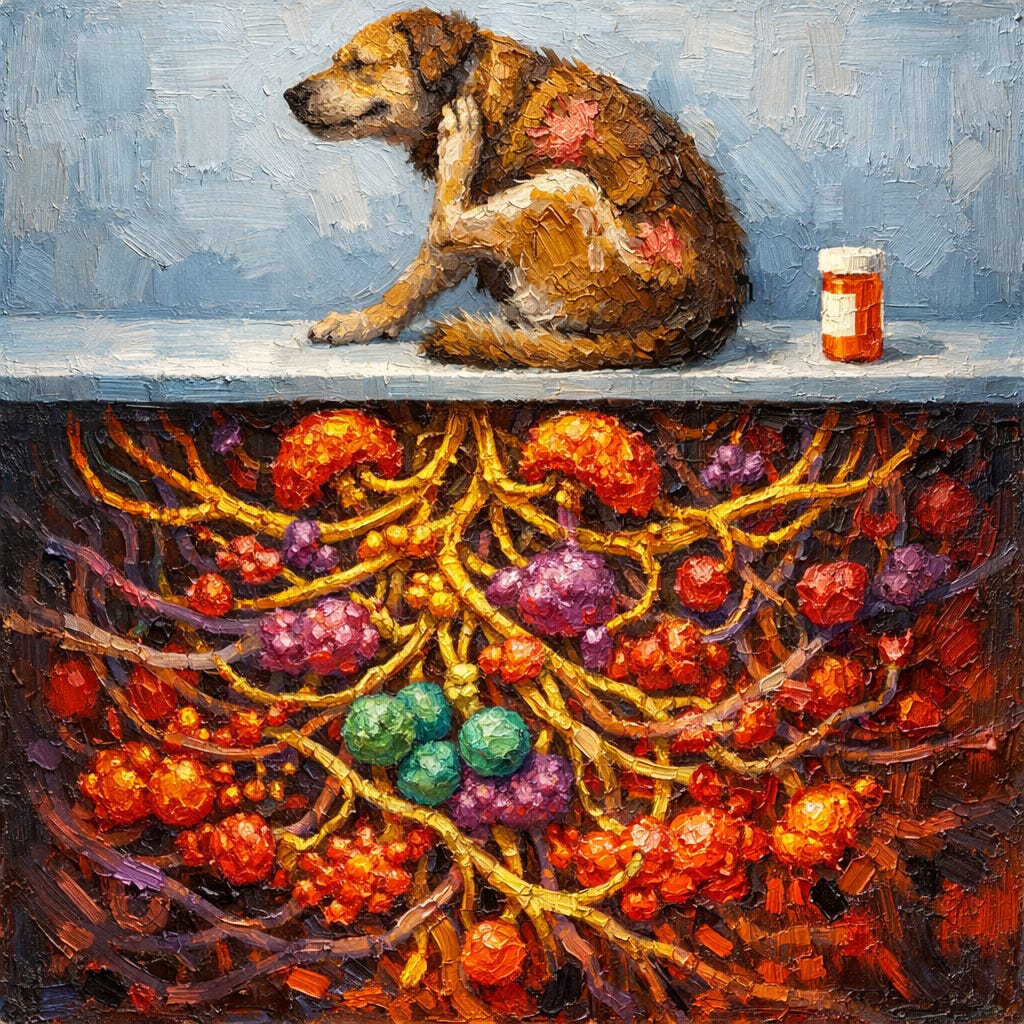
Veterinarians treat more skin disorders than any other condition.¹ The dog scratching at its ears until they bleed. The cat licking bare patches into its belly. The hot spots, the rashes, the greasy, foul-smelling coat that won’t respond to medicated shampoos. If you have lived with this — the midnight scratching, the cone of shame, the rotating prescriptions — you already know the pattern. The vet prescribes steroids. The itching stops. The steroids stop. The itching returns, often worse. A newer drug gets prescribed. Apoquel, perhaps, or Cytopoint. The itching stops again. The underlying problem remains untouched.
Pitcairn tells the story of Tiny, a middle-aged Chihuahua whose coat had long since stopped being sleek. Large greasy patches reeked with an unpleasant odour. His hospital record showed a long history of treatments — cortisone shots, medicated soaps, ointments, more shots, more salves — none of which had brought noticeable improvement. His owners had “tried it all.” The dog was miserable. The veterinary establishment had nothing left to offer.² This story repeats itself in clinics across the country, thousands of times a day, with different breeds and different drugs but the same trajectory: symptom suppression, relapse, escalation.
What nobody explains is why this particular dog is reacting to pollen, or fleas, or chicken — while the dog next door, breathing the same air, bitten by the same fleas, eating the same brand of food, has no symptoms at all.
That question — why this animal and not that one — is the question conventional veterinary dermatology does not ask. The answer leads somewhere most vets never go.
A note on language. This essay uses terms like “immune system,” “immune dysfunction,” and “antibodies” because they are the vocabulary of the veterinary sources it draws from and the vocabulary most readers bring to the subject. I have written elsewhere about why the “immune system” concept is itself a construct — a linguistic framework that embeds germ theory assumptions into the way we think about our bodies. What conventional medicine calls the immune system is more accurately understood as the body’s cleansing, adaptation, and repair network — processes that maintain the internal terrain rather than wage war against external invaders. The endocrine-immune cascade described in this essay is real, measurable physiology. The cortisol deficiency, the estrogen excess, the thyroid suppression, the breakdown of intestinal integrity — these are documented findings from clinical blood work and autopsy. What changes under a terrain reading is the interpretive layer: the allergic response is not a defence system misfiring. It is the body’s attempt to cleanse itself of substances that should never have entered the bloodstream — substances that gained entry because the terrain was degraded. The conventional vocabulary is used here as a bridge, not an endorsement. For the fuller argument, see What is the “Immune System”?

Support Independent Investigative Journalism and Research
This work remains free because paid subscribers make it possible. If you find value here, consider joining them.
What paid subscribers get: 1-2 free books per month. e.g. The PSA Trap, Breast Cancer, Chlorine Dioxide, and Drilling for Profit.
Plus: Access to the Deep Dive Audio Library — 180+ in-depth discussions (30-50 min each) exploring the books behind these essays. New discussions regularly added. That’s 100+ hours of content for less than the price of a single audiobook.
[Upgrade to Paid – $5/month or $50/year]
Two quick things please.
Unbekoming is featured on Sidestack this week for Substack of the Week. If you have a moment, please head over and give me an upvote: https://sidestack.io/week
I’ve also been relisted on the Reality of Illness site, and an upvote there would be much appreciated too.
That’s it. Thank you.
The Conventional Treatment Trap
The standard veterinary approach to allergic dermatitis follows a predictable script. The animal presents with itchy, inflamed skin. The vet identifies apparent triggers — fleas, environmental allergens, food proteins — through skin testing, elimination diets, or simply educated guessing. Treatment targets those triggers: flea preventatives, hypoallergenic diets, desensitisation injections. When the itching persists, which it usually does, the prescription pad comes out.
Corticosteroids — prednisone, prednisolone, dexamethasone — remain the most widely used treatment. They are powerfully effective at suppressing the itch-scratch cycle. They are also powerfully destructive over time. Short-term side effects include increased thirst, increased urination, and ravenous appetite. Long-term use causes immune suppression, diabetes, liver disease, osteoporosis, obesity, and iatrogenic Cushing’s disease.⁴ As Richard Pitcairn, DVM, PhD, observes, these drugs “effectively suppress symptoms like inflammation and itching, but are in no sense curative.”³
The newer drugs carry their own problems. Apoquel (oclacitinib) works by inhibiting Janus kinase enzymes, which are involved in the signalling pathways of the immune system. Put plainly: it suppresses the immune response that produces the itch. The FDA’s own review noted increased susceptibility to infections and the development of new neoplasias in dogs during clinical trials.⁵ Cytopoint (lokivetmab) takes a different route — a monoclonal antibody that neutralises interleukin-31, a cytokine involved in the itch signal — but the fundamental logic is identical. Block the signal. Suppress the symptom. Leave the cause in place.
The veterinary dermatology industry has built a multi-billion-dollar infrastructure around this logic. Allergy testing, desensitisation injections, prescription diets, immunosuppressant drugs, monthly injections — an escalating cascade of interventions, each one managing a symptom of the previous one’s failure. The animal becomes a permanent patient. The disease becomes a revenue stream.
What none of these treatments address is the question that matters: why is this animal’s immune system misfiring?
Plechner saw this pattern decades ago: “I see quite a few referrals after skin testing and desensitization treatment have failed. Often the pet owner will tell me that ‘the dog seems better until we give him the shot and then he itches like hell for ten days afterward.’”⁶ The desensitisation shot — designed to retrain the immune system — was making things worse because the immune system wasn’t functioning normally to begin with. It couldn’t give a textbook reaction to the injected allergen because its regulatory machinery was broken.
This is the trap. Every conventional treatment — steroids, antihistamines, immunosuppressants, desensitisation — operates on the assumption that the immune system is fundamentally sound but overreacting to a specific trigger. Remove or block the trigger, suppress or modulate the response, and the problem is managed. But if the immune system itself is dysregulated — if the problem is upstream of the allergic response — then every trigger-focused treatment is chasing shadows.
The Question Nobody Asks
Donald Hamilton, DVM, a veterinary homeopath with decades of clinical experience, states the matter with precision: “Allergies are not caused by the allergen — they are an internal problem first. The immune system becomes overreactive and then develops an allergy to whatever potential allergens are around.”⁷
A flea allergy is not caused by fleas. The dog is already immunologically primed for overreaction. Fleas are common, so the hypersensitive immune system develops a response to flea saliva. A food allergy is not caused by chicken or beef. The dog has been eating that protein for years without issue. Something changed in the immune system’s capacity to distinguish between harmless dietary protein and genuine threat.
Hamilton is direct about the primary triggers: “The immune system must be compromised first, and this is often caused by other stressors like vaccines, toxins, and poor foods.”⁸
Pitcairn, trained in veterinary immunology at the PhD level, identifies the same convergence. Food allergies, he writes, are likely the product of several intersecting factors: damage to the intestinal walls and gut biome, associations between common foods and the toxins they contain, reactions to overvaccination, and inheritance.⁹ Each of these factors operates on the immune system itself — not on the skin, not on the allergen, but on the regulatory machinery that determines whether the body reacts to its environment with tolerance or with inflammation.
This convergence — independent practitioners from different therapeutic traditions arriving at the same conclusion — is where the evidence becomes difficult to dismiss.
The Mechanism: Plechner’s Endocrine-Immune Cascade
Alfred Plechner, DVM, a Los Angeles veterinarian who investigated the endocrine-immune connection for over twenty years, identified the specific biological pathway that explains why some animals’ immune systems lose their capacity for normal regulation.¹⁰
The mechanism begins in the adrenal glands — specifically, the middle layer of the adrenal cortex, where cortisol is produced.
Cortisol is the hormone that regulates lymphocyte activity. Lymphocytes are the white blood cells that produce antibodies — IgA, IgM, IgG — to combat viruses, bacteria, and foreign matter. Cortisol keeps this system in check: enough response to neutralise threats, not so much that the body attacks itself. The pituitary gland regulates cortisol production through ACTH (adrenocorticotropin), creating a finely tuned feedback loop. When cortisol is adequate, ACTH drops. When cortisol falls, ACTH rises.¹⁰
In Plechner’s clinical findings, that feedback loop is broken in a large number of animals. The middle layer of the adrenal cortex is defective — genetically underdeveloped, producing cortisol that is either insufficient in quantity or inactive (”bound”) and unusable by the body.¹¹ During some two hundred routine autopsies on predominantly purebred animals, Plechner found adrenal cortices that were visibly smaller than normal. Under the microscope, he found grossly underdeveloped tissue — a lack of cellular content and structure, regardless of the animal’s age.¹²
When the adrenal cortex can’t produce adequate cortisol, the consequences cascade through the endocrine and immune systems in a specific, predictable sequence:
Step one: Cortisol deficiency. The flawed adrenal cortex produces insufficient or defective cortisol. The lymphocytes lose their regulatory chaperone.
Step two: ACTH excess. Because cortisol isn’t present in adequate amounts to signal the pituitary to reduce production, ACTH continues to pour out unchecked. The feedback loop has lost its braking mechanism.
Step three: Adrenal estrogen excess. The inner layer of the adrenal cortex — where the sex hormones estrogen and androgen are produced — is also responsive to ACTH. The uncontrolled ACTH stimulates excess production of adrenal estrogen.¹³
Step four: Estrogen binds thyroid hormone. Excess estrogen binds and inactivates thyroid hormone. The thyroid hormone is present in the blood at normal levels — a standard blood test shows nothing wrong — but it has been rendered inactive, unable to perform its functions. The classic signs of hypothyroidism appear (obesity, hair loss, sluggishness) despite apparently normal thyroid levels. This is one of the most commonly missed diagnoses in veterinary medicine.¹⁴
Step five: Estrogen suppresses immune function. Excess estrogen suppresses lymphocyte and antibody activity. The immune system’s ability to respond normally to stimuli is degraded.¹⁵
Step six: Estrogen neutralises remaining cortisol. Whatever small amount of cortisol the flawed system is still producing gets bound and neutralised by the excess estrogen — the same mechanism that disabled the thyroid hormone. This creates a vicious cycle: less usable cortisol means more ACTH, which means more estrogen, which means even less usable cortisol.¹⁶
Step seven: Antibody dysregulation. Uninhibited, unchaperoned, out of regulatory control, the lymphocytes produce either too much or too little antibody. IgA — the antibody responsible for protecting the mucous membranes of the gut, respiratory tract, and urinary system — becomes erratic. Too much IgA and the immune system attacks the body’s own tissues. Too little and pathogens, toxins, and improperly digested food proteins pass freely through the intestinal wall into the bloodstream.¹⁷
Step eight: Allergic response. Mast cells throughout the body detect these foreign proteins in the bloodstream and secrete histamine. The histamine makes the walls of tiny blood vessels more permeable. Blood components seep into adjacent tissue, causing inflammation, irritation, and itchiness. The mast cells are concentrated just below the skin — around the ears, around the eyes, on the chest and abdomen, above the tail base, and on the feet. These are precisely the locations where allergic dermatitis manifests.¹⁸
The allergen — the flea, the pollen grain, the chicken protein — is the last domino. Everything upstream of it is endocrine-immune dysfunction.
What Breaks the Immune System
The cascade Plechner identified does not arise from nowhere. Multiple factors damage or dysregulate the endocrine-immune system, and the sources converge on the same short list.
Diet. Commercial pet food is the daily chemical environment of the immune system. Cereal grains are the primary ingredients in most commercial formulations — a dramatic departure from the primarily protein diets that dogs and cats evolved on.¹⁹ The idea that one commercial pet food can provide all the nutrition a companion animal needs for its entire life is, as Messonnier notes, a myth. The problems associated with a commercial diet are seen every day in veterinary practices: chronic digestive problems, inflammatory bowel disease, and — above all — allergies.²⁰
The top ten allergens for dogs are beef, dairy, wheat, egg, chicken, lamb, soy, pork, rabbit, and fish — all protein sources present in commercial foods, often from low-quality by-products.²¹ This list surprises people who follow the grain-free trend and expect to see mostly grains. The two main plant food allergies for dogs — soy and wheat — involve soy that is highly processed and almost entirely from GMO sources, and wheat that likely comes from moldy, stale, or low-nutrient discards from the food industry. These are not the same as the whole, freshly prepared grains from organic sources on which dogs can thrive.²²
Lynne Friday, DVM, attributes fully half of all skin problems she sees to inappropriate grain, protein, and other food sources for a particular breed or breed mix. Chow dogs, which originated in China eating indigenous grains like rice and barley, develop horrible skin conditions on beef-based products and wheat. Shar-peis, also from China, are so predictably allergic that veterinarians know a new puppy owner will be making many clinic visits over the animal’s lifetime.²³
As William Pollak, DVM, observes: “Diets that contain poor and inappropriate ingredients create animals who do not function properly. Their systems are continually besieged with toxicity. Under this constant burden, even otherwise harmless and beneficial nutrients become part of a cascade of events that unleashes an ‘attack’ mode against the food inside the animal.”²⁴
Pitcairn connects this to the gut directly: glyphosate and other agricultural chemicals are killing beneficial gut bacteria, allowing damaging species like candida to colonise the intestinal tract. These organisms damage the intestinal lining, permitting undigested foreign protein molecules directly into the tissues surrounding the intestines. The immune system overreacts to these proteins as though an invasion were taking place. This “leaky gut syndrome” is now thought to trigger or worsen autoimmune conditions from allergies to arthritis to thyroid disease to diabetes.²⁵
Messonnier describes the same mechanism from the integrative side: in some pets, whole proteins leak through a hyperpermeable intestinal wall and enter the blood, causing allergic reactions that may include food allergies, arthritis, autoimmune diseases, impaired nutrient absorption, and chemical sensitivities. It is theorised that many chronic diseases, treated for years with various conventional medications, may in fact result from leaky gut syndrome. The common yeast Candida albicans has been observed to enter the bloodstream from the intestinal tract. Overgrowth of this yeast may occur in pets undergoing chronic antibiotic or NSAID therapy — the very drugs prescribed to manage their allergy symptoms.²⁶
Plechner found that the IgA antibody — the frontline defender of the intestinal wall — was consistently dysregulated in allergic animals. In his model, the cortisol deficiency impairs IgA function, which in turn breaks down the intestinal barrier, which allows allergens into the bloodstream, which produces the skin symptoms that bring the animal to the vet. The skin is the last place the problem manifests and the first place the vet treats.²⁷
Vaccination. Hamilton’s clinical observations are specific: “In my experience and according to research, vaccination is a major factor in initiating skin problems. Immune system sensitization and stimulation creates fertile ground for allergic and autoimmune skin reactivity, and in practice we see that skin diseases often arise in four- to eight-month-old animals — during the time of intensive vaccination.”²⁸ Many skin allergies, he reports, worsen within a one- to three-month period following a booster immunisation.
Catherine O’Driscoll’s survey data supports this timeline. In her research, over half of dogs with allergic conditions first became allergic within three months of vaccination. Frick and Brooks demonstrated as early as 1983 that vaccines can trigger atopic dermatitis.²⁹ The mechanism is straightforward: vaccines insert foreign proteins directly into the bloodstream, bypassing the layered tier of normal body defences, triggering an inflammatory overreaction that can become chronic — particularly in animals whose endocrine-immune system is already compromised.
Hamilton frames this in the broader pattern of chronic disease: “We have traded risk of acute illness for ever-increasing levels of chronic illness. We have done this through the use of vaccinations and much of modern medicine.”³⁰ Allergies are rampant. Sales of steroids to suppress them are probably at an all-time high. Autoimmune diseases — the immune system attacking the body’s own tissue — are increasing across every breed.
Genetics. Plechner traces the adrenal defect to cosmetic breeding practices: “Years of inbreeding and line breeding in a one-pointed attempt to achieve certain cosmetic appearances for sales or show ribbons have upset the precision of these systems and perpetuated the breeding of genetically flawed animals.”³¹ The defect passes from purebreds to purebreds, from purebreds to mixed breeds, and from mixed breed carriers to other mixed breeds. The greater the adrenal damage, the greater the vulnerability. The difference between a mild allergy and complete autoimmune collapse may depend on the degree of damage to the middle layer of the adrenal cortex.³²
This is a permanent genetic defect — not a temporary illness, not something outgrown. Animals carrying it are, in Plechner’s words, “walking timebombs.”³³
Over-medication. The drugs used to treat the symptoms of immune dysfunction further suppress the immune system. Long-term corticosteroid use can induce Cushing’s disease. Chronic antibiotic therapy disrupts the gut microbiome, worsening intestinal permeability. Monthly heartworm preventives and sulfa drugs are known to trigger autoimmune thyroid disease.³⁴ Each medication adds another burden to a system already failing.
The Convergence
What makes this analysis difficult to dismiss is not any single practitioner’s claims. It is the convergence.
Plechner, working from endocrine pathology and clinical blood chemistry, identifies defective cortisol production leading to estrogen excess, thyroid suppression, and antibody dysregulation — with allergic dermatitis as a downstream consequence.
Hamilton, working from homeopathic clinical observation, identifies vaccination and toxicity as primary triggers of immune system sensitisation, with skin disease as the most common chronic expression — and notes that full recovery requires two to three years of treatment addressing the underlying immune dysfunction, not the surface symptoms.⁴⁴
Pitcairn, trained in veterinary immunology, identifies diet and leaky gut syndrome as the mechanism by which environmental allergens gain access to the bloodstream, triggering immune overreaction — and finds that dietary correction alone, particularly the elimination of animal products, produces dramatic improvement in skin cases that had been unresponsive to years of conventional treatment.³⁷
Messonnier, working from an orthomolecular and integrative framework, identifies the same immune dysregulation and prescribes antioxidants, omega-3 fatty acids, and hypoallergenic diets — emphasising that fatty acid supplementation at therapeutic doses can reduce dependence on corticosteroids and modify inflammation at the cellular level by shifting eicosanoid production from pro-inflammatory to anti-inflammatory pathways.³⁹
Four practitioners. Four distinct therapeutic traditions — endocrine medicine, homeopathy, nutritional immunology, orthomolecular therapy. All pointing at the same root: the allergy is not the disease. The allergen is not the cause. The immune system is broken, and the skin is where the breakage becomes visible.
What Actually Works
If the problem is endocrine-immune dysfunction expressing through the skin, then treatment must address the endocrine-immune system, not the skin.
Dietary reform comes first. Every source agrees on this. Pitcairn’s clinical career began with Tiny, the Chihuahua described at the opening of this essay. After years of failed cortisone treatments, Pitcairn worked out a feeding programme based on fresh whole meats, grains, and vegetables, supplemented with brewer’s yeast, vegetable oil, cod-liver oil, kelp, bonemeal, vitamin E, and zinc. A month later, Tiny was a different dog — full of life, coat rapidly filling in, running and playing like a puppy. His owners realised their dog’s health was now in their control and did not require monthly cortisone injections.³⁵
Pitcairn explains the biology: “Skin grows really rapidly. It makes a whole new crop of cells about every 3 weeks. That takes a lot of nourishment, so when the diet lacks what’s really needed, the skin is one of the first tissues to break down.”³⁶ He found, over decades of clinical practice, that the most dramatic improvements came when the diet eliminated animal products entirely — a counterintuitive finding that makes sense given that the most common food allergens for dogs are meat and dairy proteins.
The transition from commercial food to a whole-food diet removes the daily chemical burden on the immune system — the preservatives, the by-products, the adulterated protein sources — and provides the raw materials the body needs to rebuild. Results typically appear within two to four weeks, though severely compromised animals may take longer. There may be a period of detoxification as the body eliminates stored toxins through the skin — a temporary worsening that can be mistaken for treatment failure but is actually a sign that the body is cleaning house.³⁷
Digestive enzyme and mineral supplementation addresses malabsorption. Plechner found that many animals have trypsin deficiencies — the pancreatic enzyme responsible for breaking down proteins, fats, and carbohydrates. Even a small deficiency creates allergic problems, because improperly digested food acts as an allergen when it crosses a compromised intestinal wall. Trace mineral supplementation, using a formula containing seventy-two or more naturally chelated micro-nutrients, produced measurable improvement in roughly ten percent of allergy cases on its own. Combined with enzyme supplementation and dietary reform, the results were significantly better.³⁸
Omega-3 fatty acid supplementation modifies the inflammatory pathway. Messonnier details the biochemistry: cell membrane injury produces arachidonic acid (an omega-6 fatty acid) and eicosapentaenoic acid (an omega-3 fatty acid). The eicosanoids produced from omega-6 metabolism are pro-inflammatory; those from omega-3 metabolism are non-inflammatory. By supplementing omega-3 fatty acids at therapeutic doses — two to four times the label dose, as the label dose has been shown ineffective for anti-inflammatory purposes — you shift the ratio of eicosanoid production toward non-inflammatory compounds. In clinical studies, fatty acid supplements were effective in 11 to 27 percent of allergic dogs and over 50 percent of allergic cats.³⁹
Bioflavonoid support addresses the histamine response directly. Quercetin, a natural antioxidant bioflavonoid, has been shown in laboratory research to prevent histamine release from mast cells — the same cells responsible for the itching, swelling, and inflammation of the allergic response. Proanthocyanidins, derived from grape seed or pine bark, inhibit the cyclooxygenase enzyme (the same enzyme targeted by aspirin and NSAIDs) and decrease histamine release.⁴⁰ These provide the anti-itch effect that pet owners need while the deeper work of immune restoration proceeds.
Orthomolecular therapy provides the immune system with the raw materials for repair. Messonnier’s protocol uses therapeutic doses of vitamin A (10,000 IU for small dogs and cats, up to 30,000 IU for large dogs), vitamin C as crystalline ascorbic acid (750 mg for small dogs and cats, up to 3,000 mg for large dogs), vitamin E (800 IU for small dogs and cats, up to 2,400 IU for large dogs), and the antioxidant mineral selenium. Once symptoms resolve, a maintenance protocol at lower dosages is prescribed.⁴¹
Addressing the endocrine root. For animals with confirmed endocrine-immune imbalances — measurable through Plechner’s blood panel testing cortisol, estrogen, T3, T4, IgA, IgM, and IgG — physiological-dose cortisol replacement can correct the entire cascade. Not the immunosuppressive pharmaceutical doses used conventionally, but tiny amounts that replace what the defective adrenal cortex cannot produce. Plechner reports correcting a 140-pound dog with 1 milligram of Medrol — far below the standard pharmaceutical dose of 4 to 8 milligrams.⁴² At physiological doses, the replacement cortisol normalises ACTH, which normalises adrenal estrogen, which frees the thyroid hormone, which restores lymphocyte and antibody function. The paradox Plechner discovered — that cortisone, supposedly an immune suppressant, was restoring antibody levels in deficient animals — only makes sense when you understand it as replacement for a missing hormone, not suppression of a functioning system.⁴³
Reducing the immune burden. This means critically evaluating vaccination schedules, minimising unnecessary medications, ensuring clean water and air quality, and managing emotional stress. Hamilton emphasises that full recovery from chronic skin conditions may take two to three years, though improvement begins within a month on the correct approach.⁴⁴ That timeline is realistic because you are not suppressing a symptom. You are rebuilding a system.
The Document Exists
Plechner published his findings in veterinary journals in 1976, 1978, and 1979. The veterinarians who subsequently investigated the endocrine-immune connection reported that a new therapeutic avenue had opened for them.⁴⁵ Hamilton’s clinical observations on the vaccination-allergy connection draw on decades of practice and published veterinary research. Pitcairn’s dietary approach has been validated by forty years of clinical outcomes documented across four editions of his guide to natural pet health. Messonnier’s orthomolecular protocols are grounded in peer-reviewed fatty acid research and established biochemistry.
None of this is hidden. The mechanism is described. The blood tests exist. The dietary protocols are published. The clinical outcomes are documented.
And yet Plechner himself noted the disconnect: “It’s a mystery to me why this endocrine-immune link to disease has not been recognised by veterinary medicine at large.”⁴⁶ He suspected the problem falls between the cracks of adrenal conditions the profession is more familiar with — Addison’s disease and Cushing’s Syndrome — and that veterinarians are too busy treating the individual signs and diseases to see the common cause. “We see the trees, but not the forest.”⁴⁷
The allergy epidemic in companion animals is real. A 2015 study of 2.4 million dogs and 480,000 cats by Banfield Veterinary Hospitals documented alarming increases in chronic diseases, with overweight and obesity now affecting one in four dogs and one in three cats.⁴⁸ Food allergies have become an everyday ailment. The market for “limited antigen and novel protein” diets is now a multi-million-dollar business — diets formulated to address the increasing intolerance to commercial foods that animals have developed.⁴⁹ The pharmaceutical response generates billions in revenue from drugs that suppress symptoms while the underlying endocrine-immune dysfunction continues its damage unchecked. Every year, millions of animals cycle through the same pattern: itch, drug, relief, relapse, stronger drug, more side effects, new symptoms, new drugs.
The alternative requires looking at the animal as a whole system. It requires understanding that the skin is not the problem — it is the messenger. It requires the patience to rebuild immune function through diet, targeted supplementation, and endocrine correction rather than the quick fix of symptom suppression. It takes longer. It demands more from the owner. It asks the veterinarian to think differently about what an allergy actually is.
Plechner regarded allergies and many disease processes as “secondaries” — consequences of the adrenal problem, not primary conditions in their own right. The secondaries are what get treated. The defect is left untouched. And left untouched, it continues to stir up trouble. “That is why so many of our therapies are partially or temporarily effective or just ineffective altogether.”⁵⁰
That sentence was written in 1986. Forty years later, the dog is still scratching. The drugs are newer and more expensive. The mechanism is the same. And the answer — a whole-food diet, mineral supplementation, immune support, endocrine correction — remains available to anyone willing to look past the prescription pad.
The skin will tell you when the body is healing. You just have to address what’s actually broken.
References
Plechner, A.J. and Zucker, M., Pet Allergies: Remedies for an Epidemic (Very Healthy Enterprises, 1986), p. 26.
Pitcairn, R.H. and Pitcairn, S.H., Dr. Pitcairn’s Complete Guide to Natural Health for Dogs & Cats, 4th edition (Rodale Press), introduction — the story of Tiny.
Pitcairn, Complete Guide, chapter on skin and coat issues.
Messonnier, S., Natural Health Bible for Dogs & Cats (Prima Publishing, 2001), section on corticosteroid side effects.
FDA Freedom of Information Summary, NADA 141-345, Apoquel (oclacitinib maleate), 2013.
Plechner and Zucker, Pet Allergies, p. 90–91.
Hamilton, D., Homeopathic Care for Cats and Dogs: Small Doses for Small Animals (North Atlantic Books, 1999), p. 101.
Hamilton, Homeopathic Care, p. 101.
Pitcairn, Complete Guide, chapter on food allergies and immune response.
Zucker, M., The Veterinarians’ Guide to Natural Remedies for Dogs (Three Rivers Press, 1999), chapter on endocrine-immune disorders.
Plechner and Zucker, Pet Allergies, p. 60–61.
Plechner and Zucker, Pet Allergies, p. 61.
Plechner and Zucker, Pet Allergies, p. 62.
Plechner and Zucker, Pet Allergies, p. 63–64.
Plechner and Zucker, Pet Allergies, p. 64.
Plechner and Zucker, Pet Allergies, p. 64.
Plechner and Zucker, Pet Allergies, p. 65.
Plechner and Zucker, Pet Allergies, p. 66.
Plechner and Zucker, Pet Allergies, p. 27.
Messonnier, Natural Health Bible, section on the 100% myth.
Pitcairn, Complete Guide, chapter on chronic disease in pets.
Pitcairn, Complete Guide, chapter on chronic disease in pets — food allergens discussion.
Zucker, Veterinarians’ Guide, section on food allergy — Lynne Friday, DVM.
Zucker, Veterinarians’ Guide, section on food allergy — William Pollak, DVM.
Pitcairn, Complete Guide, section on leaky gut and declining health.
Messonnier, Natural Health Bible, section on leaky gut syndrome.
Plechner and Zucker, Pet Allergies, p. 26–27.
Hamilton, Homeopathic Care, p. 101–102.
O’Driscoll, C., What Vets Don’t Tell You About Vaccines, 2nd edition (Abbeywood Publishing, 1998), section on atopic dermatitis and vaccination.
Hamilton, Homeopathic Care, p. 378.
Zucker, Veterinarians’ Guide, chapter on endocrine-immune disorders, quoting Plechner.
Plechner and Zucker, Pet Allergies, p. 67–68.
Plechner and Zucker, Pet Allergies, p. 68.
Hamilton, Homeopathic Care, p. 348, section on thyroid disease.
Pitcairn, Complete Guide, introduction — the story of Tiny.
Pitcairn, Complete Guide, introduction.
Pitcairn, Complete Guide, chapter on skin and coat issues.
Plechner and Zucker, Pet Allergies, p. 42–45, 102–105; Zucker, Veterinarians’ Guide, section on enzymes and trace minerals.
Messonnier, Natural Health Bible, section on omega-3 fatty acids and allergic dermatitis.
Messonnier, Natural Health Bible, sections on quercetin and proanthocyanidins.
Messonnier, Natural Health Bible, section on orthomolecular therapy for atopic dermatitis.
Zucker, Veterinarians’ Guide, quoting Plechner on physiological-dose replacement.
Plechner and Zucker, Pet Allergies, p. 65.
Hamilton, Homeopathic Care, p. 101–103.
Plechner and Zucker, Pet Allergies, p. 68.
Plechner and Zucker, Pet Allergies, p. 68.
Plechner and Zucker, Pet Allergies, p. 68.
Pitcairn, Complete Guide, section on chronic disease — Banfield study.
Messonnier, Natural Health Bible, section on the 100% myth — limited antigen diets.
Plechner and Zucker, Pet Allergies, p. 68.
Anyone consider the fallout from all of the chemtrailing? The dogs all walk on the ground, lick their feet, they also lie on fire retardant rugs and pet beds. These should be a huge consideration also. How about the all pervading assault of electronic radiation? The dogs may be the canary in the coal mine.
This lands right in the center of the pattern.
They call it a “skin problem,” then sell you a cream.
They call it an “allergy,” then sell you a suppressant.
The signal gets quieter, but the terrain keeps getting louder.
Same house, same air, same fleas—yet only one animal breaks out.
That’s not bad luck. That’s the body telling the truth about its internal state.
Skin is a release valve.
When the inner pathways are clogged—gut, liver, endocrine—the body pushes outward.
Shut that down with drugs and the pressure just goes deeper.
This is the same loop we see in humans:
symptom → suppress → relapse → escalate.
Root cause or repeat cycle.
Those are the only two doors.
Good piece. It points people back to the terrain instead of the theater.
—Lone Wolf