

Decorous and admissible language fails me, in alluding to that which might have seemed incredible thirty years ago—the commanding of vaccination on a second child of a family, when vaccination has killed the first; and then sending the father to prison for refusal.
— Emeritus Professor F.W. Newman, 1874
Author’s Note
This essay draws heavily on Dissolving Illusions: Disease, Vaccines, and the Forgotten History by Dr. Suzanne Humphries and Roman Bystrianyk. Their decade of archival work—recovering the primary documents, mortality tables, medical journal articles, and photographs that mainstream history has quietly buried—made this essay possible. The vaccine farms, the horse stables, the named children, the foot-and-mouth outbreaks, the Beddow Bayly address, the Lancet admissions about equine origin: all of it comes from records that were sitting in libraries and archives waiting for someone willing to look.
Where I have drawn from their book, the sources they cite are primary documents—USDA bulletins, Lancet articles, court records, contemporary medical journals. I have verified and expanded where useful, but the archaeological work is theirs.
Readers who want the full documentary foundation for what follows should read Dissolving Illusions. It is the essential reference on this subject. What I offer here is a narrower cut: the material itself—what has been in the vials, from Jenner’s day to the current schedule.
I have also drawn on Michael Willrich’s Pox: An American History for the Camden and vaccine-farm details, on the peer-reviewed work of H.V. Wyatt for the 1916 Rockefeller passages, on the CDC’s own excipient documentation for the current inventory, and on the work of Dr. Sherri Tenpenny for details on the specific-pathogen-free egg supply chain.
The interpretation is my own. The evidence belongs to the record.
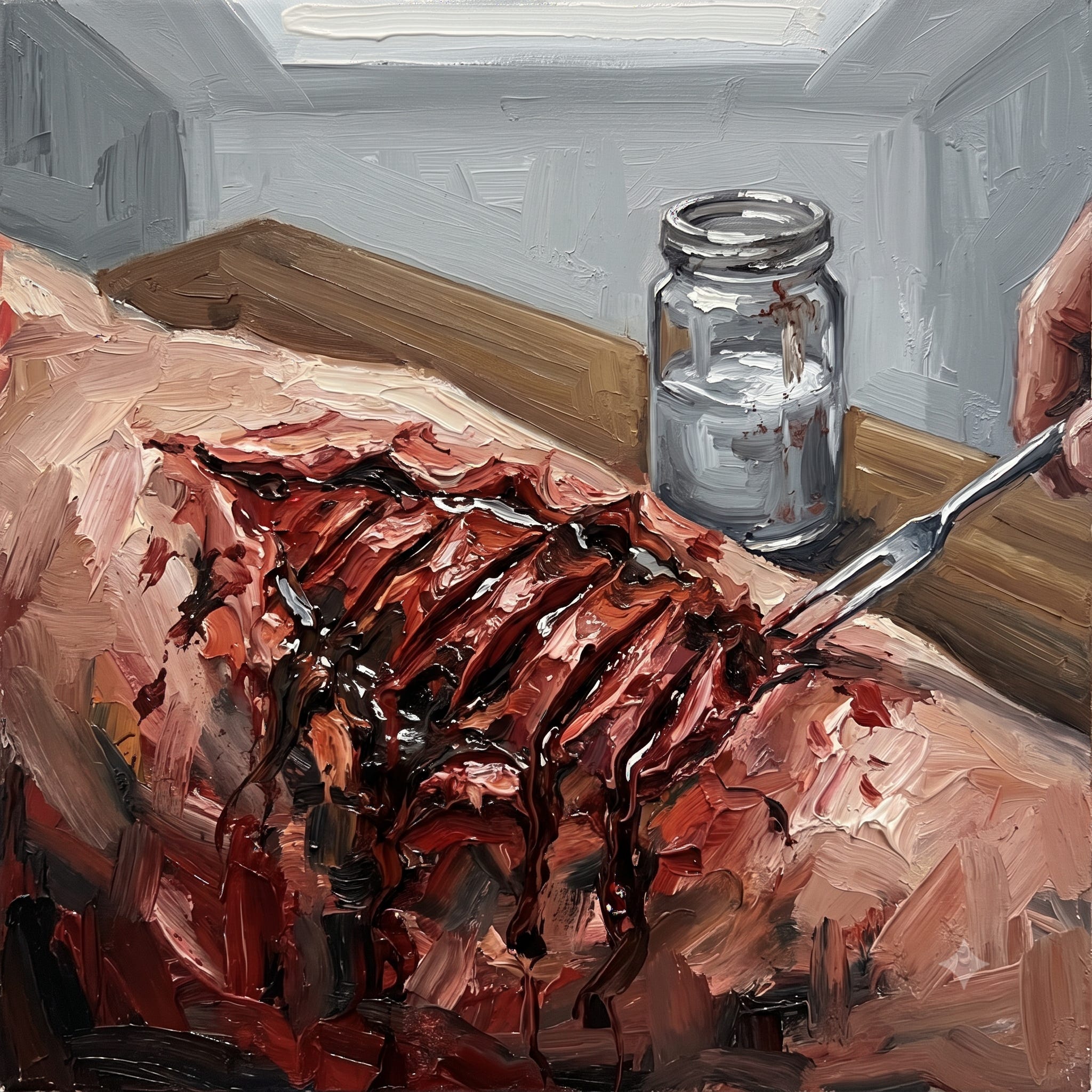
The calf was led from the stable to the operating room and strapped to the table. Its belly was shaved. The skin was washed, then scarified with a surgeon’s knife—superficial linear incisions cut into the shaved abdomen and thighs. Vaccine material was smeared into the bleeding cuts with an ivory or metal instrument. The animal was released to a pen. About a week later, when the wounds had ulcerated and infectious material was flowing from them, the calf was brought back. The contents of the ulcers were scraped out, mixed with glycerin, drawn into vials, and shipped.
This was smallpox vaccine. The procedure was documented in the medical and agricultural literature of the period, photographed and described without controversy. The USDA published detailed accounts of the vaccine farms in its Bureau of Animal Industry reports. The medical journals published the technique. Physicians described the work in their own textbooks. Nobody was exposing anything. This was standard industrial practice. The vaccine industry did this on a national scale, in facilities called "vaccine farms," from 1870 until well into the twentieth century. The material went into the arms of American schoolchildren.
The calf, once bled of its material harvest, was frequently returned to the herd. Some vaccine farms rented their calves from local dairies. When the collection was complete, the animals went back into the food supply.
This is what The Science looked like. Not as an abuse of the paradigm—as the paradigm itself, functioning as designed. For a hundred and fifty years, the vaccine industry’s core problem was biological: how to obtain the raw material. The solutions—cow, horse, sheep, goat, monkey, chicken, mouse, dog, pig, and eventually the aborted human fetus—define the history of what medicine considered “immunization.” Every generation of vaccines has been an animal product, in one direction or another. What follows is the record.
This work stays free because paid subscribers make it possible. They get the full book library, the Deep Dive Audio Library, and the Questions for Your Doctor, Before You Consent, and Package Insert series. No grants, no gatekeepers — your subscription is what keeps it that way.
Part One: Before the Farms (1796–1870)
Edward Jenner named his product after the Latin word for cow, vacca. He believed cowpox in cows originated from a disease in horses called “the grease”—an eruption on the horse’s heels caused by an inflammatory condition of the skin. In 1829 the Lancet published a note revealing that the lymph Jenner had been circulating for three or four years around Berkeley was drawn not from cows but from horses. He had, according to the Lancet, “decisively ascertained before he died” that the disease he was using was equine, not vaccine [cow] pox.
By 1834, the medical literature reflected complete confusion about what the substance actually was. A contemporary article listed three competing theories: Jenner’s grease-of-the-horse origin, the theory that the material was smallpox modified by passage through cows, and the theory that cowpox was a disease as native to cows as scarlatina was to man—unrelated to smallpox at all. A French practitioner cited in the same article maintained that in France there was no evidence cowpox had ever appeared in cows at all.
The confusion was not academic. It described what was being scratched into people’s arms.
For a hundred years after Jenner, the standard procedure was arm-to-arm vaccination. Material containing pox was rubbed from the arm of one inoculated child into cuts made on the arm of the next. In this way, the substance was passed forward through generations of children, sometimes serially through dozens or hundreds of hosts before anyone thought to trace its origin. Whatever else was in the material of the last child—syphilis, tuberculosis, hepatitis, the mercury and heavy metals of nineteenth-century treatment—travelled with it.
The procedure required a “good take”: a substantial pustule forming at the site of the wound. To ensure this, doctors made incisions at multiple sites on the same arm at one sitting—up to four wounds per child. The photograph titled “Multiple site vaccination of 1898, showing a typically good arm” shows the result: an arm ruined across four separate infection sites.
Arm-to-arm vaccination was outlawed in England in 1898. Multi-site vaccination continued in various parts of the world until 1975.
A second method existed for towns where arm-to-arm passage was impractical. Human pox scabs were dropped into a jar. Water was added. The jar was shaken. The resulting material was used as vaccine for the entire town.
In 1952, Dr M. Beddow Bayly summarised what a century and a half of “smallpox vaccine” had actually consisted of. His words, delivered in a public address, describe the state of the vaccine supply as it stood in the middle of the twentieth century:
When we recall that vaccine material is derived, in the first place, either from a smallpox corpse, the ulcerated udder of a cow, or the running sores of a sick horse’s heels, the choice depending upon the country of its origin and the firm which manufactures it, it is hardly to be wondered at that it has far-reaching ill effects on the human constitution.
He continued, quoting the Lancet‘s earlier admission: “no practitioner knows whether the material he employs is derived from smallpox, rabbit-pox, ass-pox, or mule-pox.” Bayly noted that England’s own Ministry of Health had “long confessed to complete ignorance of the ultimate source of its own supply.” A British Medical Journal contributor of the period stated that the strain used for routine material preparation in England was “believed to have been derived from a case of smallpox in Cologne during the last century.”
The corpse. The udder. The horse’s heel. The unknown source. This was the substance for a hundred years.
Part Two: The Industrial Calf (1870–1930)
In 1870, calf-based production began in the United States. The original starting material was imported from France and inoculated into a herd of cows at a farm near Boston. Within a few years, “vaccine farms” had sprung up across the country. The proprietors were mostly medical doctors who identified an opportunity to profit from rising demand. The farms produced smallpox vaccine at first. They soon diversified into diphtheria material and other biologics.
The procedure was the one described in this essay’s opening. Calves were rented or purchased, strapped to operating tables, scarified, inoculated, released to incubate, and brought back for the material harvest. Some farms returned the animals to their owners. Others slaughtered them. The New England Vaccine Company, one of the larger commercial operations, ran a farm at Wakefield, Massachusetts, rented calves from a farmer named Owen Clark, and returned them to circulation once the material had been collected.
The commercial products of this era carried the names of firms that later became household pharmaceutical corporations. H.K. Mulford and Company. Parke Davis. Wyeth. Lederle. The vaccine industry was born on these farms.
Two consequences followed. Neither was hidden. Both were documented at the time in the medical and agricultural literature.
Foot-and-Mouth Disease
Production on living calves that were subsequently returned to the food supply produced periodic outbreaks of foot-and-mouth disease in cattle populations. The disease is highly contagious among cattle and causes economic devastation. Outbreaks occurred in 1870, 1880, 1884, 1902, and 1908.
The 1902 outbreak lasted six months and affected 244 herds. Of these, 205 were slaughtered—3,872 cattle, along with 360 hogs and 220 sheep and goats. The USDA published detailed instructions for the burial of the carcasses: trenches deep enough for five feet of cover dirt, hides slashed to prevent exhumation for the leather trade, quicklime poured over the meat.
The origin of the 1902 outbreak was traced to the New England Vaccine Company and to Dr E.E. Tyzzer’s experimental work at the Wakefield farm—the farm where calves were rented from Owen Clark for the production of vaccine material. The 1908 outbreak was traced to a Japanese vaccine strain imported by another manufacturer (”Manufacturer B” in the USDA report) to improve their standard product. The strain carried foot-and-mouth disease. Because Manufacturer B killed its calves after harvest, the material remained internal for a period. Manufacturer A, on the other hand, rented calves and returned them to circulation—which is how the disease entered the general cattle population.
People who worked with cattle developed severe blistering conditions. The 1902 medical literature contains detailed case reports of butchers who received cuts on their hands while working with animals and subsequently developed bullous eruptions across their bodies. Dr John Bowen documented the connection at Massachusetts General Hospital in 1904.
Human recipients of the smallpox vaccine developed the same conditions. Multiple case series were published between 1902 and 1911 documenting acute pemphigus in children who had recently been vaccinated. The New Orleans outbreak of the same period produced cases in children who had never been near a butcher. The vaccine itself was the vector.
The Camden School District, October 1901
In early October 1901, an eight-year-old girl in Camden, New Jersey died of smallpox. Her father followed her, then seven of her siblings. In the panic, the Camden school board announced it would enforce an 1887 vaccination law. The board took bids. The Mulford pharmaceutical company won the contract.
By the end of October, the arms of approximately 5,000 Camden schoolchildren had been scraped with a metal prong and rubbed with Mulford’s calf-derived material.
On the first of November, William Brower, sixteen years old, died. He had been vaccinated nineteen days earlier. Over the following weeks, eight more children died. Every one of them, with a single exception, had received the Mulford vaccine at school. Children vaccinated at the free downtown clinic or by their own physicians were unaffected.
A parallel outbreak occurred at Pennsylvania Hospital, where 4,500 patients and staff had been vaccinated with the same product. Mulford’s official explanation, delivered by the company’s advertising and sales manager—a 29-year-old chemist named Albert C. Barnes, later famous as the founder of the Barnes Foundation art collection—appeared in the New York Times. The dead children, Barnes wrote, came from a “lower class of people” whose “carelessness” had “poisoned the wounds.” The Camden Board of Health had commissioned the investigation from a Mulford employee. It did not occur to anyone that this constituted a conflict of interest.
Bacterial spores that cause death by lockjaw are common in soil and manure. Production on calves in stables and pens exposed the material harvest to constant potential contamination. The calves were strapped to tables in rooms that had, in many cases, been used for stabling. No sterile technique protected the wound-culture from the animal’s environment.
The dead children were not the exception. They were the visible edge of a system that produced its raw material in barns.
Lübeck, 1930
The end of the animal-vaccine-farm era was marked, in Germany, by an incident that made the same principle explicit in a different biological medium.
Between December 1929 and April 1930, 251 newborns in the town of Lübeck received three oral doses of Bacille Calmette-Guérin (BCG), a tuberculosis preparation derived from the bovine tuberculosis organism, within the first ten days of life. The programme had been approved by the town’s health council and its medical association. Posters advertised it. Newspapers endorsed it.
Seventy-seven of the vaccinated infants died. One hundred seventy-three developed what was identified as active tuberculosis.
The cause was traced to the laboratory where the BCG material was prepared. In the same unlocked incubator space, what was identified as virulent human tuberculosis organisms (the Kiel strain) were also being cultivated. There was no separate designated area for vaccine preparation. There was no animal testing to confirm the safety of the batches before administration. The vaccine and the other organism shared a room. Dr Georg Deycke, head of the general hospital, was later convicted of negligent homicide and sentenced to two years. Ernst Altstaedt received fifteen months.
The BCG preparation itself is a live bovine organism. The organism was originally isolated from the udder of a tuberculotic cow in France by Albert Calmette and Camille Guérin, then serially processed by passing it through 230 subcultures over thirteen years. The Lübeck disaster ended the oral route of administration worldwide. The preparation itself, still derived from the same 1908 bovine isolate, remains in use today.
Part Three: The Horse Stables (1895–1940s)
What medicine calls diphtheria antitoxin, introduced in 1895, was manufactured from horse blood.
The procedure was straightforward. A horse was injected with escalating doses of material extracted from what medicine calls diphtheria toxin over a period of weeks. The body responded to the injected substance by producing what is identified as antibodies. The horse was then bled—large quantities of blood drawn from the jugular vein—and the serum extracted. The serum was drawn into vials and injected into humans.
The first commercial producers included Parke Davis, Mulford, and the New York City Board of Health. By the early 1900s, horses were being used to produce a range of preparations: the diphtheria material, what was called tetanus antiserum, meningococcus material, and staphylococcus preparations in multiple varieties. A 1911 New Zealand pharmacopoeia list includes—among many other products—an item called simply “Normal Horse Serum,” administered as a therapeutic agent.
The horse serum was foreign protein. The human response to repeated injection of foreign animal protein was documented by Charles Richet in 1901, work that won him the 1913 Nobel Prize. Richet showed that injection of foreign proteins created sensitisation—the body responds with increasing intensity to subsequent exposures. Serum sickness—fever, joint pain, rashes, kidney inflammation, and in severe cases death—was a documented consequence from the early years and remains listed on package inserts as a caution today.
The mortality curve tells its own story. In Leicester, England, the death rate from what medicine calls diphtheria had been declining steadily for the fifty-seven years from 1838 to 1895. In 1895, horse-serum preparation was introduced. The death rate then rose to approximately ten to fifteen times its previous level and stayed elevated for the next five years.
In New York City, the death rate among children under ten fell from 785 per 100,000 in 1894 to under 300 by 1900—a decline that was already well underway when the serum came into use. By 1920, when the toxoid preparation was introduced, the rate had already fallen below 100. The mainstream story credits the horse serum and then the preparation with these declines. The curves credit sanitation, nutrition, and improved living conditions.
Jim
On the second of October 1901, a horse named Jim was euthanised at the St. Louis city stable. Jim was a former milk wagon horse, retired to the poorhouse two years earlier and put to work producing what was called diphtheria antitoxin for the St. Louis Board of Health. Over the course of his career, Jim produced more than thirty US quarts—about twenty-nine litres—of serum.
Two days before his euthanasia, on the thirtieth of September, Jim had been routinely bled. The blood was drawn into flasks and processed into serum. By the time Jim showed signs of illness and was killed, the serum had already been bottled and distributed.
Jim had what was identified as tetanus. The serum drawn from him on the thirtieth of September was contaminated with spores from this condition in incubation phase.
Dr Amand Ravold, the physician responsible for the operation, was aware of the danger. He ordered the September thirtieth batch destroyed. It was not destroyed. Bottles labelled “August 24”—a date when Jim’s serum had been clean—were filled with the contaminated September thirtieth material. The bottles were distributed to the physicians of St. Louis.
The first child began convulsing on the twenty-sixth of October 1901. Her name was Veronica Keenan. She was one of two Keenan children who had received the serum as a preventive measure. Neither had shown symptoms related to what the material supposedly protected against. Within a week, all three Baker children were dead. The symptoms included arched back and convulsions.
Thirteen St. Louis children died. The last, on the seventh of November.
The court of inquiry named Ravold and the janitor Henry Taylor as responsible. Both were dismissed. Ravold went on to a distinguished career. He served as president of the St. Louis Medical Society. His 1942 obituary made no mention of the deaths.
The St. Louis deaths and the Camden deaths, occurring in the same weeks of the same autumn, produced sufficient public pressure that Congress passed the Biologics Control Act of 1902. Historians describe this as the origin of American vaccine regulation. What it regulated was the horse stables and the calf farms.
Use of what was called diphtheria antitoxin dropped sharply nationwide in the aftermath. In Chicago, physicians and parents refused it. The death rate from what medicine calls diphtheria in Chicago that year rose by a third.
Part Four: The Monkey House (1955–present)
By the mid-1950s, the vaccine industry had largely abandoned the calf farms and the horse stables. The new production medium was cell culture. The new species was the rhesus macaque and, later, the African green monkey.
The Rockefeller Passages
Between 1910 and 1916, at the Rockefeller Institute in Manhattan, Simon Flexer and his associates were serially passing material through the spinal cords of rhesus monkeys. The material was extracted from a monkey, injected into the spinal cord of another monkey, and then extracted again after paralysis developed. This passage process was repeated many times, selecting for material that would replicate highly in the neural tissue of monkeys. Occasionally, the passages were reinforced with fresh material from human cases.
By 1916, the resulting material had become highly destructive to nervous tissue and capable of high replication in multiple cell types.
In May 1916, an outbreak began in Brooklyn. It reached 23,000 cases and 5,000 deaths. It moved through New England and the Middle Atlantic states, reaching Delaware, Maryland, and the District of Columbia. The death rate was twenty-five percent—sixteen times higher than typical presentations. The proportion of two-year-olds affected was the highest ever recorded. The outbreak began in early May, well before the normal summer season. None of these features were ever recorded again in any similar outbreak.
The first known case lived a few blocks from a rail line that connected via the Brooklyn Bridge and 63rd Street directly to the Rockefeller Institute, three miles away, where Flexner’s laboratory was conducting the passages. The material being cultivated there had been selected, through serial passage, for unprecedented ability to damage the nervous system of the hosts receiving it. Dr H.V. Wyatt published this analysis in 2011.
No investigation was undertaken at the time. No inquiry into the laboratory’s work. No examination of what material had been cultivated or where it might have gone. The outbreak was attributed to Italian immigrants. Immigration records show the outbreak began before the accused children arrived. The official explanation required no investigation because it required no explanation.
Salk, Sabin, and the Monkey Kidney
The preparations introduced in the 1950s were produced by growing material on the kidney cells of monkeys. The kidneys were removed from live rhesus macaques—hundreds of thousands of them, over the years—minced, and used as culture medium.
In 1960, Bernice Eddy, a researcher at the National Institutes of Health, discovered that the monkey kidney cells routinely used were contaminated with a virus. She called it Simian Virus 40 (SV40). When injected into hamsters, SV40 produced tumors. When mixed with human cells in culture, it transformed them—the standard laboratory signature of a cancer-causing virus.
The material had been in mass administration in the United States since 1955. Approximately 98 million Americans had received it. Every dose administered before 1963 contained SV40. Doses after 1963 were required to be screened, but the screening was, in Stanley Kops’ documented analysis, incomplete—the seed strains themselves were never fully verified. SV40 has been detected in material produced through the 1990s.
SV40 has since been found in human tumors: mesothelioma of the lung, several types of brain tumor, and cancers of the bone, breast, colon, and kidney. Dr Michele Carbone, one of the principal researchers in the field, called SV40 “the perfect war machine”—it affects at least four major cellular mechanisms that either promote tumor growth or interfere with the cell’s cancer defences. It is not found in the healthy tissue surrounding these tumors.
When Carbone and Dr Harvey Pass prepared to publish their findings, a senior NIH figure told Carbone that if he or Pass spoke to the press “against his wishes,” they would be “punished.” Pass said afterwards: “I didn’t think you got punished for science.”
Formaldehyde was the killing agent for the preparation. SV40 was shown in 1961 to survive formaldehyde treatment beyond the standard twelve-day treatment period. The manufacturer’s cited standard remained twelve days.
Monkeys are still used in production today.
The Cutter Incident
In April 1955, several batches of Cutter Laboratories’ preparation—produced on monkey kidney cells—contained what was identified as live, unattenuated material that had survived the formaldehyde process. Within days, children who had received the Cutter preparation began developing paralysis. The final tally: 40,000 children affected, 200 permanently paralyzed, ten dead.
Cutter’s product was the only one recalled. In 1990, Freedom of Information Act documents revealed that Wyeth had also produced batches with similar properties during the same period. Wyeth’s product remained on the market. Congressman Percy Priest, chair of the investigation, later stated: “We felt that no lasting good could come to science or the public if the Public Health Services were discredited.”
Swedish researchers, testing their own supplies in the aftermath of Cutter, discovered that thirty percent of batches previously certified as safe contained what was identified as live material when re-tested. Dr Sven Gard, the Swedish expert, later stated that the American material in 1955 caused as much paralysis as it prevented.
The pattern would repeat. Regulation followed disaster, then legitimised the practice it was meant to constrain. Expansion followed.
Part Five: The Current Inventory
The vaccine schedule administered to American children in 2026 is the direct descendant of the calf farms, the horse stables, and the monkey house. What has changed is the range of species. What has not changed is the principle: biological material derived from animals is grown, harvested, processed, and injected into the human body.
The list below is drawn from the CDC’s Vaccine Excipient Summary and from the FDA-approved package inserts of the current vaccines. It is not a critic’s characterisation. It is the manufacturers’ declaration of what is in their products.
From cattle. Fetal bovine serum. Bovine serum albumin. Bovine calf serum. Calf serum protein. Bovine extract. Bovine muscle tissue. Bovine protein. Lactalbumin hydrolysate. Lactose. Present in DTaP, Td, Tdap, IPV, rotavirus (RotaTeq), hepatitis A (Vaqta), Japanese encephalitis (Ixiaro), MMR, MMRV, varicella, zoster, HepA-HepB, Pentacel, Kinrix, and Pediarix.
Fetal bovine serum extraction represents industrial blood harvest. When pregnant cows arrive at slaughter, workers discover the pregnancy during processing. While the mother cow is dying but not yet dead—before the umbilical cord is cut—they ram a large-bore needle directly into the beating heart of the unborn calf, draining all the blood. The fetus is killed through exsanguination while still connected to the dying mother. This blood is then centrifuged to separate the serum, creating the product injected into children. The different names on package inserts—fetal bovine serum, calf serum, newborn calf serum—indicate the age of the fetus when killed, with older fetuses yielding more blood and different grades of serum.
From chickens. Egg protein. Ovalbumin. Chicken protein. Chick embryo cells. Chick embryo fibroblasts. Chick kidney cells. Present in every standard influenza vaccine (Fluzone, Fluvirin, Fluarix, Flulaval, Afluria, Agriflu, FluMist), yellow fever, rabies (RabAvert), MMR, and MMRV.
The influenza vaccine supply chain requires 500,000 eggs weekly to produce 76 to 80 million doses annually. These eggs come from specialized hatcheries maintaining “specific pathogen-free” (SPF) status—tested for approximately thirty designated organisms. Critically, coronaviruses are excluded from the testing panel despite being endemic in chickens, existing there symbiotically like yeast on human skin. This means every dose produced from SPF eggs contains chicken coronaviruses that are then injected into humans. This undisclosed viral presence exposed generations to pre-existing reactions, which later manifested in severe reactions when COVID vaccines were administered—explaining the widespread anaphylaxis requiring emergency equipment at vaccination sites.
From pigs. Hydrolysed porcine gelatin. Standard porcine gelatin. Present in Zostavax, MMR-II, yellow fever, several influenza vaccines, Japanese encephalitis (JE-Vax), and varicella. Trypsin—an enzyme extracted from pig pancreas—is used as a processing agent in the manufacture of the rotavirus vaccines. In 2009, a porcine virus type 2 (a virus associated with wasting disease in pigs) was discovered in both licensed brands of infant rotavirus vaccine. It had entered the manufacturing stream through the pig-based enzyme.
From monkeys. Monkey kidney tissue is still used in material production. Vero cells—an immortalised cell line derived in 1962 from the kidney of an African green monkey—are used in production of the polio, rotavirus, and rabies vaccines currently distributed.
From dogs. Madin-Darby Canine Kidney (MDCK) cell protein and MDCK cell DNA. Present in Flucelvax influenza vaccine. The cell line was established from the kidney of a cocker spaniel in 1958.
From mice. Mouse serum protein. Present in the Japanese encephalitis vaccine JE-Vax.
From insects. Baculovirus. Insect cell lines derived from Spodoptera frugiperda (the fall armyworm moth). Present in Flublok recombinant influenza vaccine.
From humans. MRC-5 cells and WI-38 cells. Both are cell lines derived from the lung tissue of aborted human fetuses. MRC-5 was established in 1966 from the lung of a fourteen-week-old male fetus. WI-38 was established in 1962. Present in hepatitis A (Havrix), Twinrix, MMR-II, MMRV, varicella, zoster, rabies (Imovax), the adenovirus vaccine, and Pentacel. The residual DNA of the aborted fetus—cellular DNA fragments from the original 1962 or 1966 tissue, carried forward through decades of cell passage—remains in the final vaccine as an unavoidable component of the manufacturing process. Human serum albumin (drawn from pooled human plasma) is present in the ACAM2000 smallpox vaccine and the rabies vaccine.
The current inventory is an incomplete list. Each package insert specifies the ingredients for a single vaccine. The consolidated list is the responsibility of researchers who compile it from many sources.
The list is what medicine considers, in 2026, to be the state of the art.
What Was Actually Happening
The historical record is not ambiguous. For a hundred and fifty years, the vaccine industry took biological material from the wounds, glands, blood, kidneys, and cell lines of animals—first cattle, then horses, then monkeys, and eventually chickens, dogs, mice, pigs, insects, and the tissues of aborted human fetuses—processed it minimally, drew it into vials, and scratched, scarified, or injected it into the bodies of healthy children.
The material was, by definition, foreign to the recipient. Whatever else was in it—the spores from the stable floor, the SV40 from the monkey’s kidney, the foot-and-mouth material from the calf that had been rented back to a dairy, the porcine virus from the pig-based enzyme processing—travelled with the intended payload. The vaccine industry’s own package inserts describe these contaminants as “residual.” The word describes what remains. It does not describe how much of it is there, or what it does when injected.
The suppression of independent inquiry continues into the present. In 2016 and 2017, Italian researchers Gatti and Montanari—scientists whose rigorous methodology had made them trusted industrial product testers for European governments—analysed vaccine contents using electron microscopy and mass spectrometry. They found multiple vaccines contaminated with undeclared metallic particles including stainless steel, tungsten, lead, zirconium, and other industrial materials never listed on ingredient disclosures. When they published these findings, their laboratory was raided by authorities in 2018, equipment confiscated, government contracts terminated, and they were run out of the country. The message remained constant across generations: measure the vaccines and lose everything.
The mainstream story is that this practice worked. The mortality curves say otherwise. What medicine calls diphtheria declined ninety-seven percent between 1900 and the mid-1940s before the preparation was introduced. What medicine calls whooping cough declined more than ninety percent before the preparation of the mid-1940s. What medicine calls measles declined more than ninety-eight percent before the preparation of 1963. Scarlet fever, for which no preparation was ever widely deployed, declined by a comparable amount over the same period. The declines correlate with sanitation, nutrition, refrigeration, and the exit from overcrowded slum housing.
The population whose grandparents received the Mulford calf material, whose parents received the horse-serum preparation, and whose children receive the fetal-bovine-serum-cultured products of the current schedule is the same population. It is the reader’s family, in serial generations, submitting the same veins to the same industry.
The record contains named children. Bessie Baker was six. Veronica Keenan was four. William Brower was sixteen. The Lübeck infants had names their mothers had chosen a few weeks before administering the poster-advertised preparation. The children paralyzed by the Cutter material are alive today in some cases, in wheelchairs.
The vaccine industry did not begin in the mid-twentieth century. It began on the operating table where the calf was strapped. The industrial infrastructure—the farms, the horses’ stables, the monkey colonies, the fetal cell repositories—was constructed generation by generation to solve one problem: how to produce, at scale, biological material that could be pushed through a needle into a healthy person. The material has always been what the animal or the fetus produced.
The name given to this practice was “vaccination.” What was actually happening was the industrial-scale injection of foreign biological substance into the bodies of populations that had, in most cases, no way to refuse. The material was drawn from a calf’s wound, or from a horse’s neck, or from a monkey’s kidney, or from the lung of a human being who was aborted in 1966 and whose cells are still being passaged in laboratories in 2026.
This is what The Science looked like. This is what The Science is.
The photograph from the vaccine farm era shows a calf strapped to a wooden table, its belly shaved and cut. The image exists in the archival record. It was published without controversy. It described the standard practice.
The photograph is what was injected.
How to Explain This to a Six-Year-Old
Your child asks: “What does the needle do?”
You say: “A long time ago, doctors wanted to help people not get sick. But they didn’t really understand how sickness works. So they had an idea: What if we take the sick stuff from a cow or a horse, and put it in a healthy person? Then maybe that person’s body will learn how to fight the sickness.”
Your child asks: “Did it work?”
You say: “That’s the interesting question. Sometimes people got sicker instead of better. And sometimes they died. The doctors noticed this, but they didn’t stop. They kept doing it anyway.”
Your child asks: “Why?”
You say: “Because once they started, it was hard to stop. More and more people used it. Factories were built to collect this stuff from animals. People got jobs doing this work. Money was being made. When people asked questions about whether it was actually helping, they got in trouble or lost their jobs.”
Your child asks: “What happened?”
You say: “People’s bodies got used to the animal stuff. And sometimes other bad stuff was mixed in with it—poison from the stables, diseases from other animals. People got sick from the animal stuff itself, not from the sickness they were supposed to be protected from.”
Your child asks: “Do they still do this?”
You say: “Yes. They just use different animals now—chickens, monkeys, and even cells from people. They call it science. They call it protecting you. But if you look at what actually happened to people’s health, it went up because houses got better, food got cleaner, people had less crowded places to live. The animal stuff wasn’t the reason people got healthier. But the people making and selling it got rich, so they kept saying it was.”
Your child asks: “So should I get the needle?”
You say: “That’s a question for your family to decide together. What I’m telling you is what actually happened, and what’s actually in the needle. The needle contains animal stuff. Sometimes it helps. Sometimes it hurts. But the doctors and the companies making it won’t be honest about that part. They’ll say it’s completely safe. They have money riding on you believing that. So you need to know what’s actually true.”
Your child asks: “How do I know what’s true?”
You say: “Ask the question: Where did this come from? What’s actually in it? What happened to people who got it? What happened to people who didn’t? Then read the answers yourself. Don’t let someone else tell you what’s true just because they’re a doctor or they’re in charge. Look at the actual evidence. That’s how you know.”
The Shape of the Ritual
A healthy child is brought to a room. A trained man in a robe or coat receives the child. He holds a small vial. Inside the vial is a substance drawn from the body of an animal — a cow, a horse, a chicken, a monkey, a pig, or a human being who was killed before birth. The substance was obtained by inflicting injury on the animal: the calf strapped and cut, the horse bled from the neck, the monkey’s kidneys removed and minced, the fetus exsanguinated through a needle to the heart while still connected to its dying mother. The substance is drawn from the animal’s suffering.
The man in the coat holds the child. He pierces the child’s skin with a metal instrument. He pushes the substance from the animal into the child’s flesh. The child cries. The parents are told this is protection. They pay for it, or the state pays for it. They are told that refusal would be an act against the child.
The shape is old. It is older than germ theory, older than the Latin word vaccina, older than Edward Jenner and the horse’s heel and the calf farm at Wakefield. In its previous incarnations it was called by other names. In each case the mechanics are the same: a substance from a suffering animal, mediated by a priest-class, delivered into the flesh of the healthy in exchange for a promise. In the older forms, the promise was protection from famine, plague, or unseen enemies. In the current form, the promise is protection from disease. The substance and the ceremony have not changed. The vocabulary has changed.
The hermetic-alchemical tradition — the current of Western esoteric thought that reached Renaissance Europe through Pico della Mirandola and Johannes Reuchlin, was carried forward at the court of Elizabeth I by John Dee, was systematised in the Rosicrucian manifestos of 1614 and 1615, and became the intellectual substrate of Freemasonry and its later derivatives — held that the human being is base matter to be worked upon. The goal of the operation, called the Great Work, was the transformation of that base matter into something higher through serial technical operations conducted by adepts. The material was to be purified, mixed, tested, and refined until it moved. This was not metaphor. The alchemists attempted the operation on matter and on themselves.
Among the specific images transmitted through this tradition was the creation of an artificial being — an animate creature made from dead matter by human hands rather than by God. Medieval sources, drawn into the Western hermetic mainstream by the sixteenth-century Christian Kabbalists, describe the operation as following the pattern of a calf. The calf was the template. Frances Yates, the twentieth century’s principal historian of the hermetic tradition, documented in The Occult Philosophy in the Elizabethan Age how this material entered Christian Europe through Pico, Reuchlin, and above all John Dee, whom Elizabeth I employed as her royal astrologer and code-named 007. The 1615 Rosicrucian Confessio Fraternitatis announced the program that would shape the next four centuries: “that which in before times hath been unseen shall be spoken forth and uttered.” The program had two parts. The first was the transformation of the human being into something the operator had produced. The second was the eventual open confession of the operation to a public that had been ritually prepared to accept it.
The tradition that carried this program into the Anglo-American world was Rosicrucian, Freemasonic, and — in its American form — the network of secret societies of which Skull and Bones (founded 1832 at Yale) is the best-documented example. The industrial builders of the American vaccine industry were embedded in this world. Frederick Taylor Gates, who directed Rockefeller philanthropic funding into the Rockefeller Institute where Flexner conducted the 1910–1916 monkey passages, was a Baptist minister who described medical research in explicitly missionary terms. The Mulford, Parke Davis, Wyeth, and Lederle firms were Anglo-Protestant industrial operations. What linked them was not shared religion but shared intellectual atmosphere: the hermetic-alchemical conviction that the human being is material to be improved through technical operation, and that the technicians conducting the operation stand outside the moral rules that apply to the operated-upon.
Michael Hoffman, in Secret Societies and Psychological Warfare, argues that modern medical practice — the injection of animal cells into the brain, the transplantation of pig organs into humans, the fetal-cell-cultured pharmaceuticals — is the industrial-scale completion of this ancient project. He calls the resulting creature the hunimal: the human-animal hybrid produced by the operation. The individual doctor does not know this. The individual mother in Camden did not know it. Nor did the chemist Albert C. Barnes at Mulford. Knowledge of the design was not a requirement for the design to be executed. The design proceeded by generations of technical improvement on a substrate — the calf, the horse, the monkey, the aborted human being — that was always the same substrate.
Whether one accepts Hoffman’s specific framework — that the operation is hermetic-alchemical in origin, that its trajectory is intentional across centuries, that the industrial infrastructure of modern medicine is the material completion of a magical program — the correspondence exists on its own. The mechanics of the practice map, point for point, onto the mechanics of an operation that older traditions considered forbidden. The forbidden operation was the mixture of the human being with animal substance for the purpose of transforming what the human being was. The older tradition understood this as a fundamental violation of the created order — the crossing of a line that God had placed between kinds.
The Book of Leviticus contains numerous injunctions against the mixture of substances: two kinds of seed in one field, two kinds of thread in one garment, animal blood consumed with meat. These injunctions were categorical. They were not explained. They were held to reflect a structural feature of creation — that the kinds were distinct, that the blood belonged to the animal, that the human being was not to be mixed with what was not human. The injection of foreign animal substance into the human bloodstream is, by the terms of this older understanding, the exact operation the older tradition forbade.
The vaccine industry did not invent this. It industrialised it. What was performed in one temple with one calf on one day of the year became a schedule administered to every child in every country over a lifetime of appointments. The scale is new. The operation is not.
The photograph exists. The children’s names exist. The package inserts exist. What remains is the recognition of what the practice is at its root. It is not medicine that has gone wrong. It is an operation that was never medicine. It was, from the strapped calf onward, a ceremony that took its substance from the wounds of animals and placed that substance into the flesh of the healthy in the name of protection, while producing — generation by generation — the transformation of the recipient into something the operator had made.
The word for this operation, in every tradition that has a word for it, is the same word. The tradition that gave the modern West its ethical vocabulary — the biblical tradition — called the operation an abomination, and the being produced by it, an unclean thing. The hermetic-alchemical tradition, working in the opposite direction, called the operation the Great Work and the being produced by it, the artificial man. The two traditions agree on what is happening. They disagree on whether it is good.
The vaccine is the substance of the Great Work, industrialised. The vaccinated body is the vessel of the operation. The generations that have received the material — from Bessie Baker to the child in the pediatrician’s office this afternoon — are the material upon which the operation was performed.
Truth Be Told: I’ve Accepted an Invitation to Speak on The Unvaccinated
On September 17th, I’ll be giving a one-hour presentation titled The Unvaccinated as part of a six-hour livestream called Truth Be Told. This is the first time I have accepted an invitation to an event, and I have been honoured with the opening act. The livestream begins at 12pm EST.
Vaccination is the subject closest to my heart, and this is another opportunity to spread the word. The format will preserve the pen name.
Jamie Andrews (Decentralized Science Projects) and Agent131711 (Dinosaurs) will also be presenting. Jamie’s Virology Control Studies work led to an interview here last year. Agent’s research shaped my essays on vitamin D and dinosaurs. Tickets are here. The code UNBEKOMING is $5 off and applies automatically at that link. Replay available afterwards. Hope you can make it.
Primary Historical Sources
Bayly, M. Beddow. “Inoculation Dangers to Travellers.” Speech at Caxton Hall Westminster, October 2, 1952. Published by the London and Provincial Anti-Vivisection Society.
Bowen, John T. “Acute Infectious Pemphigus in a Butcher, During an Epizotic of Foot and Mouth Disease, with a Consideration of the Possible Relationship of the Two Affections.” Journal of Cutaneous Diseases Including Syphilis, vol. XXII, no. 6, June 1904, pp. 254–264.
Mohler, John R., and Milton J. Rosenau. “The Origin of the Recent Outbreak of Foot-and-Mouth Disease in the United States.” US Department of Agriculture, Bureau of Animal Industry, Circular 147, 1909.
Salmon, D.E. "Foot-and-Mouth Disease; Warning to all Owners of Cattle, Sheep, and Swine." US Department of Agriculture, Bureau of Animal Industry, Circular No. 38, December 1902.
United States Department of Agriculture. “Method of Slaughtering and Burying Cattle.” Yearbook of the United States Department of Agriculture, 1915, pp. 20–21.
St. Louis 1901 Diphtheria Antitoxin Incident
“1901 Diphtheria Antitoxin Contamination Incident.” Wikipedia, May 4, 2026, en.wikipedia.org/wiki/1901_diphtheria_antitoxin_contamination_incident.
Wellcome Collection. “Jim, the Horse of Death.” wellcomecollection.org/stories/jim--the-horse-of-death.
Camden 1901 Smallpox Vaccine Incident
Dixon, Mark E. “Why Nine Camden Children Died from Smallpox Vaccines in 1901.” Mainline Today, September 2016.
“Why Nine Camden Children Died from Smallpox Vaccines in 1901.” Slate, February 9, 2021, slate.com/technology/2021/02/smallpox-vaccine-innoculation-history-19th-century-virus-squads.html.
Lübeck 1930 BCG Disaster
Donald, Peter R., et al. “Pathogenesis of Tuberculosis: The 1930 Lübeck Disaster Revisited.” European Respiratory Review, vol. 31, no. 164, June 28, 2022, article 220046.
Nakayama, Don K. “A Novel Microbe, Immunization Deaths, and Vaccination on Trial: BCG and the Lübeck Disaster of 1930.” SAGE Open Nursing, vol. 11, 2025, article 23779608251313994.
“Lübeck Disaster.” Wikipedia, September 27, 2025, en.wikipedia.org/wiki/Lübeck_disaster.
1916 Polio Outbreak
Wyatt, H.V. “The 1916 Poliomyelitis Epidemic and the Rockefeller Institute.” History and Philosophy of the Life Sciences, vol. 33, no. 1, 2011, pp. 95–110.
Polio Vaccination and SV-40
Cutrone, Rochelle, et al. “Some Oral Poliovirus Vaccines Were Contaminated with Infectious SV40 After 1961.” Cancer Research, vol. 65, no. 22, November 15, 2005, pp. 10273–10279.
Carbone, Michele, et al. “Simian Virus 40 Transformation, Malignant Mesothelioma and Brain Tumors.” Expert Review of Respiratory Medicine, vol. 5, October 2011, pp. 683–697.
Kops, Stanley. “Re: Debate on the Link Between SV40 and Human Cancer Continues.” Journal of the National Cancer Institute, vol. 94, no. 3, February 6, 2002, pp. 229–230.
Cutter Incident 1955
“Historical Vaccine-Associated Incidents.” History of Vaccines, historyofvaccines.org/blog/historical-vaccine-associated-incidents.
Richet and Anaphylaxis
Richet, Charles. Anaphylaxis. University Press, 1913. (Nobel Prize in Physiology or Medicine, 1913.)
Current Vaccine Excipients
Centers for Disease Control and Prevention. "Vaccine Excipient Summary — Appendix B." CDC Pink Book, cdc.gov/pinkbook/hcp/table-of-contents/appendix-b-vaccines.html.
Food and Drug Administration. Package Inserts for Currently Licensed US Vaccines. FDA, fda.gov.
Gatti and Montanari Research
Gatti, Antonietta M., and Stefania Montanari. “New Quality-Control Investigations on Vaccines: Micro- and Nanocontamination.” International Journal of Vaccines and Vaccination, vol. 4, no. 1, 2017, pp. 00072.
Historical Analysis and Background
Humphries, Suzanne, and Roman Bystrianyk. Dissolving Illusions: Disease, Vaccines, and the Forgotten History. Create Space Independent Publishing Platform, 2013.
Willrich, Michael. Pox: An American History. Penguin Press, 2011.
The Hermetic-Alchemical Tradition and Modern Medicine
Hoffman, Michael. Secret Societies and Psychological Warfare. Independent History and Research, 2018.
Yates, Frances A. Giordano Bruno and the Hermetic Tradition. University of Chicago Press, 1964.
Yates, Frances A. The Rosicrucian Enlightenment. Routledge and Kegan Paul, 1972.
Yates, Frances A. The Occult Philosophy in the Elizabethan Age. Routledge and Kegan Paul, 1979.
Scholem, Gershom. On the Kabbalah and its Symbolism. Translated by Ralph Manheim, Schocken Books, 1965.
Idel, Moshe. Golem: Jewish Magical and Mystical Traditions on the Artificial Anthropoid. State University of New York Press, 1990.
Brown, E. Richard. Rockefeller Medicine Men: Medicine and Capitalism in America. University of California Press, 1979.
Robbins, Alexandra. Secrets of the Tomb: Skull and Bones, the Ivy League, and the Hidden Paths of Power. Little, Brown and Company, 2002.
'Dissolving Illusions' one of the finest works in the field, an absolute masterpiece which should be read by both professionals and the concerned public.
Unbecoming, thank you for the repugnant, but sadly true history of vaccines. Now is the time for a history of all of today's commonly used, biologic, injectable drugs, and an expose' on the ingredients and toxic affects on the human body. These also include deadly venom peptides, from such as rattlesnake, cobra, karate, Gila Monster, cone snail, shrew, and more. toxintech.com
Humira, a popular injectable for digestive and off label issues, has live hamster ovarian cells in the mix, and almost all of them use aborted and live human DNA, fetal cells and tissues. This includes Immunotherapy, formerly labeled "stem cell therapy".
This is only the tip of the iceberg, my friend and colleague.
It's a dark, barbaric world we live in, and when people start to understand the depth of evil in these "medications", you can save many lives and future generations from the genetic pollution and contamination.
Please consider it. Thank you for standing for truth.
Revelation 18:23 (Greek translation of "sorceries" is Pharmacea...pharmacy. That in itself is an eye opening journey!)