

Preface
This essay draws from Virus Mania: Corona/COVID-19, Measles, Swine Flu, Cervical Cancer and Other Viral Diseases—Why Vaccination, Pandemic Policies and Other Interventions by Authorities Pose a Danger to Public Health (3rd edition, 2021) by Torsten Engelbrecht, Claus Köhnlein, Samantha Bailey, and Stefano Scoglio. The book examines fundamental questions about viral detection methods, particularly the antibody testing framework that has shaped AIDS diagnosis and treatment for four decades. The analysis presented here focuses specifically on Chapter 3’s documentation of HIV antibody test problems, supplemented by the scientific sources cited in the original text.
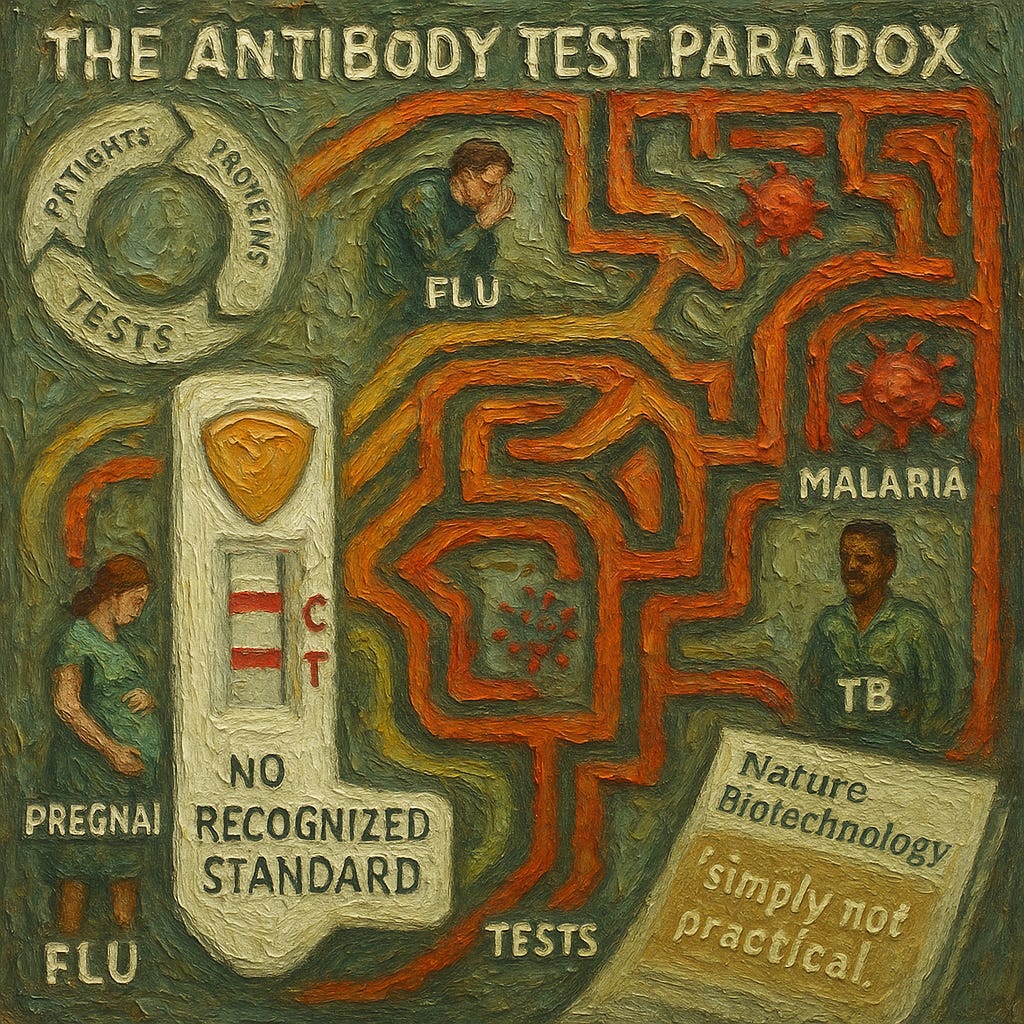
The package inserts for HIV antibody tests contain a remarkable admission: “There is no recognized standard for establishing the presence or absence of antibodies to HIV-1 and HIV-2 in human blood.” This statement appears in documents from major test manufacturers, including Abbott Laboratories. The tests that have determined the HIV status of millions of people worldwide operate without a recognized standard for what they claim to measure.
The implications extend beyond a single diagnostic tool. In 1993, the Australian Perth Group published findings in Nature Biotechnology demonstrating fundamental problems with HIV antibody testing. Their work revealed that we still cannot definitively state what these tests detect. This uncertainty persists despite decades of testing and billions of dollars in treatment decisions based on test results.
Traditional immunology operates on a clear principle: antibodies indicate successful immune response. When the body encounters a pathogen, it produces antibodies that provide protection against future infection. A measles antibody test showing positive means immunity to measles. A hepatitis B antibody test showing positive means protection from hepatitis B. Throughout the history of immunology, antibody presence has signaled victory over infection.
HIV testing inverted this principle. In HIV theory alone, the presence of antibodies became interpreted as a death sentence rather than protection. People with positive antibody tests were told they carried a lethal virus and faced inevitable progression to AIDS without aggressive pharmaceutical intervention. This reversal occurred without the underlying viral isolation that would justify such a radical departure from established immunological understanding.
The Circular Reasoning at the Foundation
The calibration problem reveals how these tests were created. In the mid-1980s, researchers selected proteins from blood samples of severely ill AIDS patients—people with Kaposi’s sarcoma, pneumocystis carinii pneumonia, and other conditions already grouped under the AIDS diagnosis. These proteins caused the strongest reactions when mixed with other blood samples from AIDS patients. Based on this correlation, the proteins were designated as HIV-specific antigens and used to calibrate the antibody tests.
This process contains a logical circle. The tests were calibrated using samples from people already diagnosed with AIDS-related conditions. The assumption that these proteins came from HIV, or had any connection to a retrovirus, was never proven through virus isolation. The tests measure reaction to proteins, but the identity and origin of those proteins remains unestablished.
Standard antibody test development requires a different sequence. First, researchers must isolate and purify the pathogen in question. They characterize its specific proteins. These characterized proteins serve as antigens to create the test. When blood samples react to these known antigens, the test indicates exposure to that specific pathogen. Each step depends on the previous one being completed with scientific rigor.
For HIV antibody tests, this sequence was never followed. The virus was not isolated and purified according to classical virology standards. Its proteins were not characterized independent of patient samples. The antigens used in testing were derived from the very patients the tests would later be used to diagnose. The Perth Group articulated this problem clearly: if HIV has not been properly isolated, the antibody tests cannot be calibrated for HIV, because there is no independently verified standard against which to calibrate them.
Thomas Zuck of the FDA acknowledged the problem directly in 1986. At a World Health Organization meeting, he warned that these tests were not designed specifically to detect HIV. They needed screening for resistance to false-positive reactions from other conditions and contaminants. Blood could react positively due to tuberculosis recovery, pregnancy, recent vaccination, or simple flu—dozens of conditions unrelated to any retrovirus.
Zuck’s conclusion carried implications that were quietly set aside. He stated that abandoning the HIV tests was “simply not practical.” The medical establishment had already identified HIV as a sexually transmitted infectious agent. Public pressure for a test had become too strong. Scientific validity gave way to political and social demands for a diagnostic tool, regardless of what that tool actually measured.
The Cross-Reactivity Problem
The German weekly Die Woche ran a headline in 1993 calling the situation “The AIDS Test Lottery.” The article reported on the Perth Group’s Nature Biotechnology paper, noting that antibody tests “do not measure what they should: HIV infection.” The tests reacted to people who had overcome tuberculosis infections. Leading AIDS researchers at the Institut Pasteur in Paris reviewed the study before publication, yet no corrections to testing protocols followed.
Christine Johnson documented at least 60 conditions that could trigger positive HIV antibody test results. Her 1996 article “Whose Antibodies Are They Anyway?” compiled scientific literature showing reactions from pregnancy, influenza, recent vaccination, hepatitis, tuberculosis, malaria, and many other common conditions. Each of these conditions produces antibodies as part of normal immune response to stress, infection, or vaccination.
The Essex and Kashala study published in the Journal of Infectious Diseases in February 1994 examined leprosy patients and their contacts. The research found correlation between HIV-1 cross-reactivity and antibodies to lipoarabinomannan, a component of mycobacterial cell walls. People who had been exposed to leprosy-causing bacteria showed positive reactions on HIV tests, not because of any retrovirus exposure, but because their immune systems had produced antibodies to bacterial components that cross-reacted with the test proteins.
This cross-reactivity pattern appears across multiple studies. Antibodies form in response to many different challenges to the immune system. The proteins used in HIV tests are not unique to any specific pathogen. They represent stress responses, inflammatory processes, and immune activation from various sources. A positive reaction indicates immune system activity, but cannot specify the cause without independent verification of the pathogen’s presence.
Pregnancy produces particularly clear evidence of this problem. Pregnant women undergo significant immunological changes. The presence of fetal tissue requires immune system adjustments to prevent rejection of the developing fetus. These adjustments can trigger antibody production that cross-reacts with HIV test proteins. Women who test negative before pregnancy may test positive during pregnancy, then negative again after delivery. No viral infection explains this pattern. The test responds to immunological changes associated with normal pregnancy.
Vaccination creates a similar situation. Vaccines deliberately stimulate immune response by introducing antigens. The body produces antibodies as intended. But some of these antibodies cross-react with HIV test proteins. People can test positive shortly after vaccination for flu, hepatitis, or other diseases. The positive test reflects successful immune response to the vaccine, not infection with any retrovirus.
The tuberculosis connection deserves particular attention. TB affects millions of people worldwide, especially in regions with high rates of poverty and malnutrition. Recovery from tuberculosis involves producing antibodies to mycobacterial proteins. These antibodies persist for years after successful treatment. In populations where both TB and HIV testing occur frequently, the overlap creates diagnostic chaos. People who have recovered from TB may test positive for HIV indefinitely, despite never having encountered any retrovirus.
Die Woche’s reporting noted that the world’s leading AIDS researchers reviewed the Perth Group’s findings before publication. The peer review process confirmed the scientific validity of the cross-reactivity problem. Yet testing continued without modification. No warnings were added to test kits. No alternative diagnostic criteria were required. The acknowledgment of the problem changed nothing in clinical practice.
What the Tests Actually Detect
The proteins used in HIV testing come from blood samples of severely ill patients. These patients had consumed immunosuppressive drugs, suffered from malnutrition, or experienced other conditions that stress the immune system. Their blood contained particles and proteins produced by cells under extreme stress.
When cells face oxidative stress, chemical poisoning, or malnutrition, they produce various particles as part of breakdown and repair processes. Some of these particles contain proteins and genetic material. Orthodox virology interprets these particles as viruses invading from outside. An alternative interpretation suggests they represent endogenous cellular debris—material produced by the cells themselves in response to stress.
Research shows that stress factors can trigger reorganization of genetic sequences within cells. Drug use, malnutrition, and chemical exposure can cause cells to produce particles containing RNA and proteins. These particles share characteristics with what virologists call retroviruses, but their origin is cellular stress response rather than external infection.
The antibody tests may be detecting immune response to this cellular stress and debris. When someone experiences immune system challenge from drugs, malnutrition, pregnancy, or infection with bacteria or parasites, their cells produce stress proteins. Antibodies form against these proteins. The tests react to these antibodies, but the reaction indicates stress response, not infection with a specific exogenous virus.
This interpretation explains why the same conditions that cause immune suppression also cause positive HIV tests. Heroin use, cocaine, poppers (nitrite inhalants), and other recreational drugs damage the immune system while also causing cellular stress that triggers antibody production. Malnutrition depletes the resources needed for healthy immune function while causing cellular breakdown. Medical drugs like antibiotics and antivirals create additional stress on cells already compromised by other factors.
The geographic distribution of positive HIV tests correlates with poverty, malnutrition, parasitic infections, tuberculosis, and other conditions that stress the immune system. These correlations appear in both industrialized countries (among drug users and marginalized populations) and in Africa (among populations facing multiple infectious diseases and inadequate nutrition). The correlation does not require a transmissible virus. It only requires conditions that stress cells and trigger antibody production.
Malaria provides another instructive example. In regions where malaria is endemic, particularly in sub-Saharan Africa, populations experience repeated malarial infections throughout their lives. Each infection triggers immune responses and antibody production. The immune system develops antibodies not just to the malaria parasites but to various proteins released during infection and cell breakdown. These antibodies can persist for years.
When HIV testing was introduced to these same populations, high rates of positive results appeared. The conventional explanation attributed this to sexual transmission of HIV. But the pattern of positive tests correlated more strongly with malaria exposure than with sexual behavior patterns. Areas with highest malaria burden showed highest HIV test positivity, even when sexual practices were similar to areas with lower positivity rates.
The overlap between malaria exposure and HIV test positivity suggests cross-reactivity. Antibodies produced in response to malaria may react with the proteins used in HIV tests. This would explain why populations with high malaria burden test positive at high rates, why test positivity correlates geographically with malaria rather than solely with sexual behavior, and why individual test results do not reliably predict disease progression.
Similar patterns emerge with other parasitic infections. Schistosomiasis, trypanosomiasis, and various helminthic infections all trigger chronic immune activation. The body produces antibodies to parasites, to damaged tissue, and to inflammatory byproducts. These antibodies can cross-react with test proteins, producing positive results that reflect parasitic disease burden rather than retroviral infection.
The Immunology Inversion and Its Consequences
Reinhard Kurth, former director of the Robert Koch Institute in Germany, made a revealing admission to Der Spiegel in 2004: “To tell the truth, we really don’t know exactly what has to happen in a vaccine so that it protects from AIDS.” This statement, from a leading figure in German public health, acknowledges a fundamental problem.
Vaccines work by stimulating antibody production. If antibodies indicate deadly infection rather than protection, the entire vaccine approach collapses logically. The hunt for an HIV vaccine has consumed billions of dollars and decades of research without producing a successful candidate. This failure is not surprising if the underlying premise is wrong.
In traditional immunology, vaccine development follows clear steps. Identify the pathogen. Characterize its antigens. Create a vaccine containing those antigens or similar structures. Test whether the vaccine produces antibodies. Verify that people with those antibodies resist infection. For diseases from smallpox to polio to measles, this process worked because antibody presence correlated with protection.
HIV theory inverts this relationship without providing evidence for the inversion. People with antibodies are considered infected and at risk of disease progression. People without antibodies are considered uninfected and healthy. This is precisely backwards from every other antibody test in medical practice.
The inversion creates an impossible situation for vaccine development. A successful HIV vaccine would produce antibodies in recipients. By the logic of HIV testing, those vaccinated individuals would then test positive and be diagnosed as infected with the very disease the vaccine was meant to prevent. No vaccine can succeed when antibody production—the goal of vaccination—gets interpreted as disease rather than protection.
Some researchers have attempted to resolve this paradox by distinguishing between “protective antibodies” and “non-protective antibodies.” But no HIV study has demonstrated what protective antibodies would look like, how they would differ from current test results, or how to generate them. The distinction remains theoretical because the virus itself has not been isolated and characterized in ways that would allow such differentiation.
The vaccine failure reflects a deeper problem. If HIV antibodies truly indicated infection with a lethal virus, people with antibodies should progress to illness at predictable rates. But antibody-positive individuals include people who remain healthy for decades, people who become ill quickly, and people who become ill only after taking immunosuppressive medications. The antibody presence does not predict outcomes with any reliability.
The Unreliability of Supporting Tests
PCR viral load testing faces similar foundational problems. The polymerase chain reaction technique amplifies tiny amounts of genetic material to detectable levels. For HIV viral load testing, PCR supposedly measures the amount of HIV in blood by detecting and amplifying HIV RNA sequences.
But PCR requires knowing what sequences to amplify. The primers—short DNA sequences that initiate the amplification process—must be designed to match the target. If HIV has not been properly isolated and its genetic sequence has not been characterized independent of patient samples, the PCR primers cannot be known to be specific for HIV.
Heinz Ludwig Sänger, professor of molecular biology and 1978 winner of the Robert Koch Prize, stated directly: “HIV has never been isolated, for which reason its nucleic acids cannot be used in PCR virus load tests as the standard for giving evidence of HIV.” Without proper isolation, PCR may be amplifying genetic sequences from cellular debris, stress-induced particles, or other sources unrelated to any exogenous virus.
Studies confirm this unreliability. A 1994 paper in Annals of Internal Medicine titled “Misdiagnosis of HIV Infections by HIV-1 Viral Load Testing: A Case Series” documented multiple instances where PCR gave false results. In 2006, the Journal of the American Medical Association published research that shook the foundation of viral load testing.
Benigno Rodriguez and Michael Lederman of Case Western Reserve University led a nationwide team studying 2,800 people who had tested HIV-positive by antibody tests. Their findings showed that viral load measurements failed to predict or explain immune status in more than 90 percent of cases. The viral load—which had been used since 1996 to assess patient health, predict disease progression, and approve new medications—proved unreliable as a diagnostic tool.
Rodriguez’s group concluded that viral load could predict progression to disease in only 4 to 6 percent of HIV-positive individuals studied. This challenges the entire basis for current treatment policies, which often use viral load numbers to determine when to start medication, how aggressive treatment should be, and whether drugs are working effectively.
CD4 helper cell counts face equally severe problems. The HIV=AIDS theory assumes that HIV destroys CD4 cells through infection. Lower CD4 counts supposedly indicate more advanced disease. Yet no study has confirmed this central principle—that HIV destroys CD4 cells by means of infection.
The 1994 Concorde study, one of the largest AIDS trials ever conducted, questioned the use of helper cell counts as a diagnostic method. Many subsequent studies have corroborated this skepticism. A 1996 paper in Annals of Internal Medicine titled “Surrogate Endpoints in Clinical Studies: Are We Being Misled?” examined CD4 counts in the HIV setting and concluded they were as uninformative as “a toss of a coin.”
The Journal of Infectious Diseases reported findings from a World Health Organization study in Africa that revealed additional problems. So-called HIV-negative populations could have T-cell counts below 350—a number that would qualify for AIDS diagnosis in HIV-positive populations according to WHO guidelines. This means the same CD4 count gets interpreted differently depending on antibody test results, not based on any objective measure of immune function.
The same WHO study found that HIV-positive people who started drug treatment with low helper cell counts had the same survival outcomes as HIV-positive people who began treatment with high T-cell counts. If CD4 counts actually measured immune system health and predicted disease progression, these outcomes should have differed significantly. The equivalence suggests that CD4 counts do not measure what they are claimed to measure.
The Serono Case Study
The biotechnology company Serono provides a concrete example of how surrogate marker tests can be deliberately manipulated. In the late 1990s, Serono faced declining revenue for Serostim, a medication marketed to counteract weight loss in AIDS patients. The company responded by redefining the condition.
Serono developed a computerized medical test claimed to determine “body cell mass.” Doctors began ordering Serostim when tests showed patients had lost body cell mass. The treatment could cost more than $20,000 per patient. The problem emerged when investigators examined actual patient outcomes.
Patients diagnosed with reduced body cell mass by the Serono test had not actually lost weight. Some had gained weight. The test measured something, but that something bore no relationship to actual body mass or weight loss. The test existed primarily to create a market for Serostim prescriptions.
Legal investigation revealed that more than 80 percent of Serostim prescriptions had been ordered based on this fraudulent testing. Michael Sullivan, the attorney handling the case, called the tests “voodoo.” Serono ultimately paid more than $700 million in criminal fines—the third-highest sum in such judicial proceedings at that time.
The Serono case demonstrates how surrogate markers can be designed to produce desired results rather than accurate medical information. The body cell mass test was not a random error or honest mistake. It was a deliberate creation of a diagnostic criterion that would increase medication sales regardless of patient need.
HIV antibody tests, PCR viral load tests, and CD4 counts all function as surrogate markers. They do not measure direct clinical endpoints like symptoms, organ function, or disease severity. They measure laboratory values that are assumed to correlate with health status. But when the underlying assumptions are wrong—when we do not actually know what these tests detect—surrogate markers become tools for manufacturing diagnoses rather than identifying real disease processes.
Erwin Chargaff, long-time professor at Columbia University’s Biochemical Institute, warned about this problem: “One of the most spiteful and most unhealing properties of scientific models is their capability to strike down truth and take its place. And often, these models serve as blinkers, by limiting attention to an excessively narrow area.”
The model of HIV as a sexually transmitted lethal virus detected by antibody tests has served as precisely these kinds of blinkers. It has directed attention away from the actual causes of immune suppression—drugs, malnutrition, chemical exposures, multiple infections, poverty, and medical interventions themselves. It has prevented investigation of what the antibody tests actually detect. It has blocked consideration of alternative explanations for the conditions grouped under the AIDS diagnosis.
What Remains Unproven
After more than four decades of HIV research, certain fundamental questions remain unanswered. HIV has not been isolated and purified according to classical virology standards—seeing the virus in pure form under electron microscopy, characterizing its proteins independently, and confirming that the isolated virus causes disease when introduced to new hosts. The Perth Group has documented this extensively.
The antibody tests have not been validated against a gold standard of direct virus isolation. Their calibration remains circular—defined by reactions in patient populations rather than by reactions to a characterized pathogen. The cross-reactivity with at least 60 different conditions has been documented but never addressed through improved testing methods.
The immunological inversion—treating antibodies as indicators of disease rather than protection—has never been justified scientifically. No mechanism has been demonstrated by which HIV antibodies would uniquely signify infection while all other antibodies signify immune response. The failure to develop an effective vaccine after decades of effort reflects this unresolved contradiction.
PCR viral load testing operates without proven specificity for HIV. The sequences being amplified have not been verified as unique to an exogenous virus. The lack of correlation between viral load numbers and actual health outcomes suggests these measurements detect something other than what they claim to measure.
CD4 cell counts as disease indicators have been contradicted by studies showing no correlation between counts and outcomes. The WHO findings that HIV-negative populations can have the same low counts as HIV-positive populations diagnosed with AIDS expose the arbitrariness of using these numbers as diagnostic criteria.
The package insert admission—that no recognized standard exists for determining the presence or absence of HIV antibodies—remains true. This is not a minor technical limitation. It is an acknowledgment that the entire testing framework operates without scientific validation of what it measures.
In traditional medicine, diagnostic tests are tools for identifying disease processes that can be verified through other means. A chest X-ray showing pneumonia can be confirmed by clinical symptoms, by culture of bacteria from sputum, by patient response to antibiotics. The diagnosis does not rest solely on the X-ray image.
HIV diagnosis rests almost entirely on antibody tests and supporting surrogate markers. No direct observation of the virus. No culture of the virus from patient samples. No demonstration that the virus, when isolated, causes the diseases attributed to it. The tests have become the disease rather than tools for identifying an independently verifiable disease process.
The implications extend to every person ever diagnosed HIV-positive based on antibody testing. Millions of people have been told they carry a lethal virus based on tests that measure antibody reactions to uncharacterized proteins. Many have taken immunosuppressive medications—first AZT, later protease inhibitors and combination therapies—to fight an infection that was never proven to exist.
The medications themselves carry severe consequences. AZT, the first widely prescribed AIDS drug, is a DNA chain terminator originally developed as cancer chemotherapy. It prevents DNA replication in all cells, not just supposedly infected ones. The drug causes anemia, muscle wasting, liver damage, and suppression of bone marrow function. These side effects mirror the symptoms attributed to AIDS itself.
Protease inhibitors introduced in the mid-1990s brought different toxic effects: lipodystrophy (abnormal fat distribution), insulin resistance, increased cardiovascular risk, and kidney damage. Combination therapy regimens require taking multiple drugs daily, each with its own toxicity profile. The cumulative burden on the body is substantial.
The cross-reactivity evidence suggests that many positive results reflect normal immune responses to pregnancy, vaccination, recovery from tuberculosis, or other common conditions. The circular calibration means the tests may be detecting cellular stress responses rather than any specific pathogen. The immunological inversion means that even genuine antibody production has been misinterpreted as disease rather than protection.
What we have is not a validated diagnostic system for a proven infectious agent. What we have is a circular structure of assumptions, each depending on others that remain unproven. The manufacturer’s admission of no recognized standard encapsulates the entire problem. After forty years and billions in research funding, we still do not know what HIV antibody tests detect.
References
Abbott Laboratories. HIV-1/HIV-2 ELISA Test Kit Package Insert. Abbott Park, IL.
Chargaff, E. (1978). Heraclitean Fire: Sketches from a Life Before Nature. Rockefeller University Press.
Essex, M., & Kashala, O. (1994). Infection with human immunodeficiency virus type 1 (HIV-1) and human T-cell lymphotropic viruses among leprosy patients and contacts: correlation between HIV-1 cross-reactivity and antibodies to lipoarabinomannan. Journal of Infectious Diseases, 169(2), 296-304.
Johnson, C. (1996). Whose antibodies are they anyway? Continuum, September/October, 4-5.
Papadopulos-Eleopulos, E., & Turner, V. (1993). Is a positive Western Blot proof of HIV infection? Nature Biotechnology, 11(6), 696-707.
Rodriguez, B., et al. (2006). Predictive value of plasma HIV RNA level on rate of CD4 T-cell decline in untreated HIV infection. Journal of the American Medical Association, 296(12), 1498-1506.
Sänger, H. L. (1978). Interview regarding HIV isolation and PCR testing. Robert Koch Prize recipient statement.
Turner, V. F., et al. (1996). Surrogate endpoints in clinical studies: Are we being misled? Annals of Internal Medicine, 125(7), 605-613.
Die Woche. (1993, August 5). Glücksspiel AIDS-Test [The AIDS test lottery].
World Health Organization. (2007). CD4 cell counts in HIV-negative and HIV-positive African populations. Journal of Infectious Diseases, 195(10), 1390-1397.
New Biology Clinic
For those of you looking for practitioners who actually understand terrain medicine and the principles we explore here, I want to share something valuable. Dr. Tom Cowan—whose books and podcasts have shaped much of my own thinking about health—has created the New Biology Clinic, a virtual practice staffed by wellness specialists who operate from the same foundational understanding. This isn’t about symptom suppression or the conventional model. It’s about personalized guidance rooted in how living systems actually work. The clinic offers individual and family memberships that include not just private consults, but group sessions covering movement, nutrition, breathwork, biofield tuning, and more. Everything is virtual, making it accessible wherever you are. If you’ve been searching for practitioners who won’t look at you blankly when you mention structured water or the importance of the extracellular matrix, this is worth exploring. Use discount code “Unbekoming” to get $100 off the member activation fee. You can learn more and sign up at newbiologyclinic.com.
I appreciate you being here.
If you’ve found the content interesting, useful and maybe even helpful, please consider supporting it through a small paid subscription. While 99% of everything here is free, your paid subscription is important as it helps in covering some of the operational costs and supports the continuation of this independent research and journalism work. It also helps keep it free for those that cannot afford to pay.
Please make full use of the Free Libraries.
Unbekoming Interview Library: Great interviews across a spectrum of important topics.
Unbekoming Book Summary Library: Concise summaries of important books.
Stories
I’m always in search of good stories, people with valuable expertise and helpful books. Please don’t hesitate to get in touch at unbekoming@outlook.com
Baseline Human Health
Watch and share this profound 21-minute video to understand and appreciate what health looks like without vaccination.
This is an extremely important article that highlights a major flaw in modern medicine: Laboratory testing (with some rare exceptions) doesn’t define a disease in the absence of a symptomatic patient. A positive PCR test in an asymptomatic person is meaningless, yet is labeled as a “case.”
Elevated serum cholesterol, or a borderline HbA1c, are now labeled as diseases: Hyperlipidemia and pre-diabetes. A slightly low bone density on DEXA scanning is now osteopenia. “Risk factors” are now considered diseases that require pharmaceutical treatment, often for life.
All those deaths from the treatments given! The fear porn spewed out of TVs, newspapers, posters, etc., certainly affected everyone. I was doing some admin agency work in a blood testing unit of the local hospital. Job was manual sorting of test results into pigeon holes for wards and all GP Surgeries in the area which the hospital serviced. The amount of HIV+ results was shockingly high, and at that time, patient's names were hidden for HIV tests. It scared me. I didn't know any gay people at that time, but later worked with 2 in a different job. One of them later died of AIDS, many years later, I attended his funeral, he was 46 when he died. I've no idea about the other man today, who also attended the funeral. I did a trip to Uganda early 2000s and visited an orphanage which was full of abandoned HIV+ kids. It saddened me seeing them and, at the time, believing any could get full blown AIDS. At least they were fed and had a bed, which their HIV+ mothers could not provide. All the lies, too many, too big, no wonder many people cannot understand, or even try to comprehend the evil, so go along with the official version. Personally, for older people experiencing the AIDS years, I think knowing the truth of that crisis, is the way for them to see the tricks for Covid.