

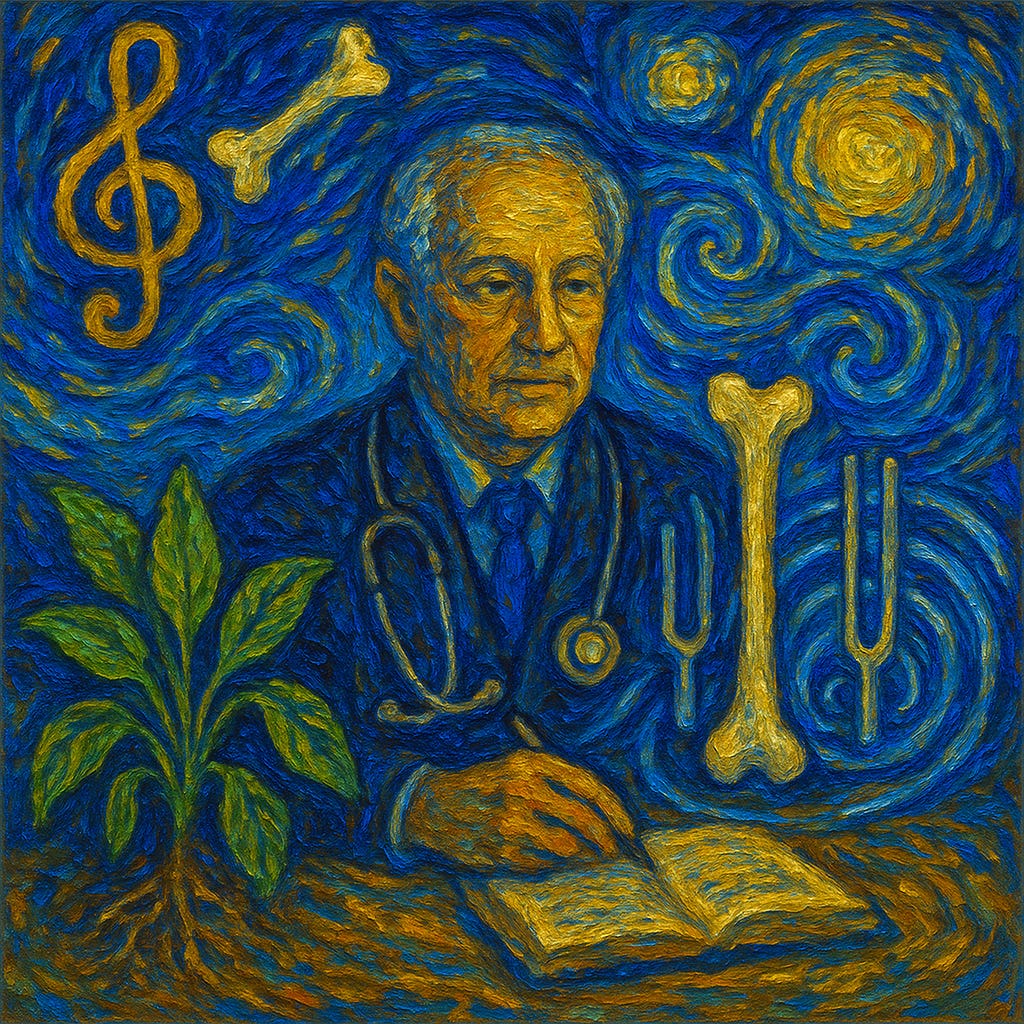
Dr. Thomas Cowan stands as one of the most profound medical thinkers of our time, consistently challenging the foundational assumptions that underpin modern medicine. In this comprehensive Q&A summary of his podcast from 9 July 2025, he reveals how the manipulation of scientific language serves to obscure truth, demonstrates the complete absence of true viral isolation, and explains the body's intelligent responses to environmental challenges. Cowan dismantles the edifice of virology while offering insights into healing—from the remarkable bone-healing properties of comfrey to the use of tuning fork therapy based on the understanding that bones are literally "frozen music" with harmonic structures that can be restored through sound. His teachings continue to illuminate new pathways for those seeking to understand health beyond the constraints of conventional medical dogma.
For those who have followed Cowan's work, his influence extends far beyond any single topic—he serves as a mentor to countless individuals seeking truth in medicine, myself included. Before he led the charge against the fraud of virology, his work awakened many to the dangers of childhood vaccination. Since then, he has guided me through the untruths of genetics and the legitimate questioning of DNA as officially presented, while revolutionizing my understanding of the heart and the true causes of heart attacks. Each podcast episode offers fresh revelations, and this latest session exemplifies why his regular broadcasts remain essential listening. The journey from accepting medical orthodoxy to questioning its very foundations requires guides who combine scientific rigor with intellectual courage, and Cowan embodies both qualities in abundance.
Those who want to comprehend the frauds of virology must spend time with Cowan's work, allowing his systematic dismantling of medical orthodoxy to reshape their understanding. His revelation about bones as crystallized music represents the kind of paradigm-shifting insight that characterizes his teaching—revealing deeper truths about our bodies that conventional medicine cannot even conceptualize.
With thanks to Dr. Thomas Cowan.
How words are manipulated to promote the cult of scientism & Q&A- 7/9/ – Dr. Tom Cowan
Central Analogy
Imagine your body as a pristine mountain lake that has been receiving various forms of pollution - industrial runoff, emotional sewage, and energetic static - for years. The lake has natural cleaning systems: streams that carry away debris (elimination pathways), beneficial organisms that break down waste (microbiome), and a natural crystalline structure that maintains clarity (structured water).
When pollution overwhelms these systems, the lake doesn't just become uniformly dirty. Instead, it intelligently collects the worst contamination into specific areas - like lily pads of concentrated gunk (tumors) - to prevent the entire lake from becoming toxic. Modern medicine sees these lily pads as diseases attacking the lake and tries to cut them out or poison them. But removing them without addressing the incoming pollution or improving the outflow streams just causes the lake to create new collection points.
True healing means stopping the pollution at its source, improving all the drainage streams, and supporting the lake's natural cleaning organisms by creating the right conditions. When you do this, the lily pads dissolve naturally as the lake no longer needs them. The lake even has its own vibrational frequency - like the sound of mountain streams - that maintains its structure. Restore this natural frequency, provide the right minerals from natural salt deposits, and trust the lake's billion-year-old wisdom to restore itself to pristine clarity.
The One-Minute Elevator Explanation
Everything your body does is an attempt to heal itself. When we get sick, develop tumors, or have symptoms, these aren't attacks by invisible enemies or genetic mistakes - they're your body's intelligent responses to challenges. Modern medicine has it backwards, trying to stop these healing responses instead of supporting them.
Think about it: viruses have never been properly isolated or proven to spread disease between people naturally. What we call contagion is really our bodies going through similar detox processes at similar times. Tumors? They're your body's way of containing toxins it can't eliminate fast enough. Bacteria in your gut? They change based on conditions - improve the environment and different, healthier bacteria naturally appear.
Your body is made of structured water - a gel-like fourth phase that's different from regular liquid water. This structure depends on having the right minerals from real salt, removing toxins instead of adding more drugs, and supporting your natural elimination pathways. We've been tricked by changed definitions and complex terminology into forgetting simple truths our ancestors knew.
The path to health isn't through fighting disease but through supporting your body's wisdom. This means eating real food like bone broth, using natural approaches like herbs and sound therapy, and most importantly, trusting your body's intelligence instead of fearing it.
[Elevator dings]
Want to dig deeper? Look into the work on water by Gerald Pollack, investigate why isolation experiments in virology always use cell cultures instead of direct separation, and research pleomorphism to understand how microorganisms really work. The truth is simpler and more empowering than we've been told.
12-Point Summary
1. The Manipulation of Scientific Language The redefinition of scientific terms represents a fundamental tool of deception in modern medicine. When virologists change "isolation" to mean something entirely different from its common understanding - observing cell breakdown rather than separating one thing from all others - they create a false impression of scientific accomplishment. This linguistic manipulation extends throughout medical science, where complex terminology often serves to obscure rather than clarify, separating people from their innate ability to understand their own bodies. The example of redefining "moron" to mean "someone whose last name is a color" perfectly illustrates how changing definitions while retaining original associations creates confusion that serves those in power while disempowering those seeking truth.
2. The Absence of Contagion Evidence Despite over a century of germ theory dominance, there exists no proper scientific study demonstrating that sick individuals make healthy individuals sick through natural contact. The studies that do exist, like the Rosenau study and work from cold research units, consistently show failure of disease transmission even under conditions designed to facilitate it. What virologists present instead are artificial experiments injecting cell culture materials into animals, then claiming positive PCR results prove contagion. This fundamental absence of evidence for the cornerstone of modern medicine - that diseases spread from person to person - represents one of the greatest unexamined assumptions in science.
The Truth About Contagion (2021) - Lies are Unbekoming
3. The Isolation Problem in Virology True isolation means separating one thing from all other things, a prerequisite for scientific study recognized in every other field. Virologists admit they cannot isolate viruses by this standard definition, yet claim viruses travel through air between hosts, creating an irreconcilable contradiction. If viruses cannot exist outside cells, airborne transmission is impossible; if they can travel between hosts, they should be isolatable. This logical impossibility at the heart of virology has never been addressed, with practitioners instead redefining isolation to mean cytopathic effects in cell culture, knowing the public assumes they mean actual separation.
4. Understanding Water's Fourth Phase Water exists in four phases, not three: ice, liquid, vapor, and most importantly, gel or structured water. This fourth phase makes up the majority of water in living systems, explaining why we don't leak liquid when pricked. This gel phase water can be created, observed, and isolated by mixing water with proteins and cooling it, proving its existence as a distinct phase with unique properties including different pH, electrical charge, and molecular organization. Understanding this fourth phase revolutionizes our comprehension of biological systems, as proper gel formation is essential for cellular function and health.
5. The Body's Intelligent Response to Toxins Tumors represent the body's intelligent solution to accumulated debris it cannot eliminate through normal channels. When toxins - whether physical substances, electromagnetic frequencies, emotions, or unprocessed trauma - cannot be metabolized and excreted through bowels, kidneys, skin, or lungs, the body organizes this material into contained areas to prevent systemic poisoning. This understanding completely reframes cancer from a disease attacking the body to the body's attempt to protect itself from overwhelming toxic burden, suggesting treatment should focus on improving elimination rather than attacking tumors.
Cancer and the New Biology of Water - Lies are Unbekoming
6. Bones as Crystallized Music The structure of human bones embodies the mathematical ratios of musical octaves, with arm and leg bones displaying the same proportional relationships as notes on the Western musical scale. This isn't metaphorical but represents actual structural correspondence, making bones literally "frozen music." When bones are damaged or fail to grow properly, their harmonic structure is disrupted. This understanding opens therapeutic possibilities through sound therapy and tuning forks, which can restore proper vibrational patterns to promote healing by addressing the energetic blueprint rather than just the material structure.
7. The Pleomorphic Nature of Microorganisms Microorganisms change form based on their environment, meaning the bacteria, fungi, and parasites in our bodies are determined by tissue conditions rather than external infection. Improve the terrain by removing heavy metals, restoring proper pH, and eliminating toxins, and the microbiome naturally shifts to a healthier composition. This pleomorphic understanding eliminates the need for probiotic supplementation or antimicrobial treatments, instead focusing on creating optimal conditions that naturally support beneficial organisms while making the environment inhospitable to pathogenic forms.
8. Comprehensive Approaches to Healing True healing requires addressing physical, energetic, and emotional levels simultaneously. For bones, this means providing physical building blocks through collagen-rich bone broth, using herbal medicines like comfrey that have specific affinity for bone tissue, and restoring energetic patterns through sound therapy. For tumors, it involves improving elimination pathways, using solvents like DMSO or turpentine to mobilize debris, and addressing emotional and energetic blockages. This multi-level approach recognizes that lasting healing must address all aspects of dysfunction, not just physical symptoms.
9. The Problem with Molecular Reductionism Modern medicine's obsession with molecular pathways, receptors, and biochemical mechanisms separates people from understanding their own bodies. When someone with bone problems is told they need to regenerate epiphyseal plates through chondrocyte stimulation, they lose connection with simple realities: bones need nutrition, proper energetic patterns, and time to heal. This complexity serves to create dependence on experts rather than empowering individuals to understand and support their own healing through observable phenomena and traditional wisdom.
10. Salt and Mineral Wisdom Unrefined salts provide essential minerals needed for proper water crystallization and cellular charge maintenance in the body. Using various salts - bamboo, Celtic, Himalayan, Redmond - ensures diverse mineral intake supporting the formation of structured water throughout our tissues. The body's need for salt reflects its requirement for the full spectrum of trace minerals that facilitate water's organization into the gel phase maintaining cellular integrity. Proper salt consumption is guided by taste and instinct, varying with individual needs, activity, and climate.
11. Supporting Versus Suppressing The fundamental paradigm shift involves recognizing that most of what medicine calls disease actually represents the body's healing responses. Fever mobilizes immune function, inflammation brings resources to damaged areas, mucus production eliminates toxins, and tumors contain debris that would otherwise poison the system. Treatment should support these intelligent responses rather than suppress them. This means improving elimination, providing proper nutrition, removing obstacles to healing, and trusting the body's inherent wisdom rather than forcing it to stop its healing activities.
12. Education for Empowerment The new biology curriculum aims to restore people's ability to think clearly about health and disease from first principles. Rather than memorizing complex pathways and disease names, students learn to observe what the body is actually doing and why. They develop skills in critical thinking, evidence evaluation, and recognition of linguistic manipulation. The commitment is complete understanding - not just information transfer but genuine comprehension of how to think about life and health in fundamentally different ways. This educational approach creates independent thinkers capable of reasoning through health challenges rather than dependent followers of questionable protocols.
The Golden Nugget
The most profound and least known idea is that bones are literally crystallized music, with the mathematical ratios of musical octaves embedded in their physical structure. The proportions of arm and leg bones mirror the exact mathematical relationships between notes on the musical scale. This isn't poetic metaphor but measurable physical reality - making the human skeleton a three-dimensional musical instrument frozen in time. When bones break or fail to develop properly, their harmonic structure is disrupted, which explains why sound therapy using tuning forks can facilitate healing by restoring the proper vibrational blueprint. This reveals a deeper truth: our bodies are organized by sound and vibration first, with physical matter following these energetic patterns, not the other way around.
30 Questions and Answers
1. Why does changing the definition of scientific terms matter, and how does this relate to the virus debate?
Changing definitions is described as the preferred technique of fools and tyrants because it creates confusion and prevents clear understanding of reality. When virologists change the definition of "isolation" to mean seeing cell breakdown in culture rather than separating one thing from all others, they trick people into believing they've actually isolated viruses when they haven't. This manipulation of language allows them to make claims about viruses without having to meet the standard requirements of scientific proof.
The example given illustrates this perfectly - if someone redefined "moron" to mean "person whose last name is a color," they could call Jeff Green a moron while technically being accurate according to their new definition. Over time, people forget the redefinition and associate it with the original meaning, creating confusion. This is exactly what has happened with virology terms, where the public believes viruses have been isolated in the common sense of the word, when virologists are using an entirely different definition that doesn't involve actual separation.
2. What specific evidence would be needed to prove contagion between sick and healthy individuals?
The evidence required would be a properly designed study showing that sick people or animals can make healthy ones sick through normal contact. This means taking genuinely sick individuals, having them interact naturally with healthy individuals, and demonstrating disease transmission without any artificial interventions. The RO study and Daniel's Reuters book "Can You Catch a Cold?" are cited as examples of research showing this doesn't happen.
What wouldn't count as evidence are the ferret studies where cell culture material is squirted down ferrets' throats and then PCR tests show certain findings. This isn't natural transmission - it's artificial introduction of foreign material that may cause reactions unrelated to contagion. Despite repeated requests for studies showing natural transmission, none have been provided that demonstrate sick individuals making well individuals sick through normal contact.
3. How should virus isolation be properly defined, and why is this definition crucial?
Isolation means separating one thing from all other things, just as you would separate a frog from a pond to study it, or a hammer from a toolbox to use it. This is the common understanding found in dictionaries and used in everyday life. For viruses, this would mean separating the alleged viral particles from all cellular material, proteins, and other components to study them in pure form.
This definition is crucial because it's a prerequisite for studying anything scientifically. You cannot characterize something's properties, prove it causes disease, or develop accurate tests without first having it in pure, isolated form. The fact that virologists admit they cannot isolate viruses by this standard definition, yet claim viruses fly through the air between people (obviously not inside cells), reveals a fundamental contradiction in their theory. Without proper isolation, all subsequent claims about viral behavior, disease causation, and testing are built on assumptions rather than demonstrated facts.
4. What contradictions exist in current virology regarding virus isolation and transmission?
Virologists simultaneously claim that viruses cannot be isolated (separated from cells) because they're obligate intracellular parasites that can only exist within cells, yet they also claim viruses transmit between people by flying through the air. This presents an obvious contradiction - if viruses can exist outside cells during transmission, they should be isolatable in pure form. If they truly cannot exist outside cells, then airborne transmission would be impossible.
Additionally, virologists use a completely different definition of isolation (seeing cell breakdown in culture) while knowing the public understands isolation in its common meaning. They reference procedures like "first you get an isolate" in electron microscopy protocols, implying they have isolated viruses, when their own literature admits true isolation has never been achieved. These contradictions reveal fundamental flaws in the logical foundation of virology that practitioners refuse to address directly.
5. Why would a conversation with a virologist potentially last only five minutes?
The conversation would be brief because it would focus on establishing agreed-upon definitions and examining evidence, with no tolerance for deflection or redefinition of terms. Starting with the definition of contagion and asking for evidence of natural disease transmission, the virologist would either have to admit no such evidence exists or present the inadequate ferret studies. Upon insisting on proper studies showing natural transmission, they would have nothing to offer.
Moving to virus definition and isolation, the conversation would require agreement on standard definitions before proceeding. Once established that isolation means separation from all other materials, examining any virology paper (Enders, Cayley, or modern ones) would reveal that true isolation has never been achieved. Since this is the foundation of virology - their "gold standard" - acknowledging this fact would essentially end the scientific basis for the field. Rather than engage with these fundamental challenges, most virologists would likely end the conversation, making it last only minutes.
6. What is DMSO, and how does it function as a therapeutic agent in the body?
DMSO (dimethyl sulfoxide) is described as a distillate of wood pulp that acts as a solvent and carrier, helping transport other substances into the body. Its therapeutic action appears to work by dissolving debris that is difficult for the body to mobilize on its own, such as buildup in joints, tissues, or cataracts. Like turpentine (another wood distillate), it can penetrate tissues and act as a solvent for accumulated unwanted material.
The mechanism helps the body excrete debris that has accumulated where normal elimination pathways have failed. When applied to areas with buildup of unwanted tissue, DMSO dissolves it into a form the body can then eliminate through normal channels. While personal experience with intravenous DMSO for cancer patients showed little effect beyond a strong garlic smell, other practitioners report positive results, suggesting it can be a valuable addition to therapeutic options for conditions involving tissue accumulation or debris.
7. How are tumors formed according to the healing perspective presented?
Tumors begin with the introduction of unwanted material into the body - this can be physical toxins, toxic debris, toxic thoughts, toxic emotions, or unprocessed traumas. These are things that enter your being which you cannot properly metabolize, meaning you can't digest them, use what's useful, and excrete what's not. This unwanted material can be non-physical, like electromagnetic impulses, thoughts, feelings, or trauma.
When normal elimination pathways (bowels, kidneys, sweat, mucus) are overwhelmed or not functioning properly, the body faces a situation where unwanted debris clogs up the body and especially the energetic pathways. The body's solution is to organize this debris into a receptacle - a tumor. This perspective sees tumors not as disease but as the body's attempt to contain and isolate harmful material it cannot otherwise eliminate, representing an intelligent response to prevent greater systemic damage.
8. What role do toxins, emotions, and unprocessed trauma play in tumor formation?
Toxins, emotions, and unprocessed trauma are all forms of unwanted material that the body must process and eliminate. Physical toxins are obvious, but toxic thoughts, toxic emotions, and unprocessed traumas from childhood or adulthood are equally real burdens on the system. These non-physical toxins can be as damaging as physical ones, disrupting the body's energetic pathways and normal functioning.
When these materials cannot be properly metabolized and eliminated, they accumulate in the body's tissues. The body recognizes these accumulated materials as not contributing to the greater wholeness and attempts to eliminate them. When elimination fails due to pathway blockage or overwhelming amounts, the body organizes this debris - whether physical or energetic - into tumors. This explains why emotional healing and trauma resolution can be as important as physical detoxification in addressing tumor formation.
9. What are the three main approaches recommended for bone healing and regeneration?
The first approach is consuming collagen through bone broth - specifically thick, gelatinous broth that's solid enough for a toothpick to stand upright in it. This should be consumed once or twice daily, providing the raw materials needed for bone regeneration. While collagen supplements can serve as a backup, homemade bone broth is strongly preferred as the primary source of healing nutrients for bones.
The second approach involves using comfrey (Symphytum, also called "knit bone") both internally as a homeopathic remedy (3x or D6 potency) and externally as compresses. Fresh comfrey leaves are blended with water into a thick pulp, placed on cheesecloth, and wrapped around the affected area for at least an hour daily for two weeks. The third approach is sound therapy using tuning forks, based on the understanding that bones are "frozen music" with octave ratios embedded in their structure, making sound an effective healing modality for bone issues.
10. How does comfrey (Symphytum) work for bone healing, and how should it be prepared?
Comfrey works by helping to "knit" bones back together, earning its traditional name "knit bone." It's used both internally as a homeopathic remedy and externally as a compress, providing a dual approach to bone healing. The plant has specific properties that support bone regeneration and has been used traditionally for this purpose across many cultures.
For external preparation, fresh comfrey leaves are gathered (noting that comfrey grows prolifically and can be hard to eliminate from gardens). The leaves are blended with water until forming a thick pulp, which is then spread on cheesecloth. This is wrapped around the affected bone area with gauze or a loose ace bandage, left in place for at least an hour daily for approximately two weeks. The compress delivers the healing properties directly to the affected area while the internal homeopathic remedy works systemically.
11. What is the relationship between bones, music, and octave ratios?
Bones are described as "frozen music" with the mathematical ratios of musical octaves literally embedded in their structure. The bones of the arm and leg have the same proportional relationships as the notes on the Western octave scale - the same number of segments and the same mathematical relationships between them. This isn't metaphorical but represents an actual structural correspondence between skeletal anatomy and musical harmony.
This understanding explains why sound therapy can be effective for bone healing. When a bone is cracked or not growing properly, its musical harmony has been disrupted. By applying the correct sounds through tuning fork therapy, the proper vibrational patterns can be restored, helping the bone return to its natural harmonious state. This represents a completely different paradigm from thinking about bones merely as calcium structures, instead recognizing them as crystallized sound patterns.
12. How does tuning fork therapy support bone healing?
Tuning fork therapy works by restoring the proper sound frequencies to bones that have lost their natural harmonic structure through injury or disease. Since bones embody musical ratios and can be understood as frozen music, introducing the correct vibrational frequencies helps reestablish their proper energetic pattern. This isn't just about mechanical vibration but about restoring the fundamental organizational pattern of the bone.
The therapy has a long history in human healing traditions, recognizing that sound can influence physical structure. When applied to damaged or improperly growing bones, tuning forks help restore the disturbed musical toning of the body. This approach addresses the energetic and vibrational aspects of healing rather than just the material components, working with the body's inherent organizational intelligence to promote proper bone regeneration and growth.
13. What are the four phases of water, and how can structured water be isolated?
The four phases of water are ice (solid), liquid water, gel/structured water, and steam (vapor). To demonstrate these phases can be isolated, you would place each form in a separate container with a cap or hood. Ice can be kept frozen in one jar, liquid water in another, steam in a third container, and gel water (made by mixing water with gelatin proteins, heating, then cooling) in a fourth. Each form has distinct properties you can observe and measure.
The gel phase is particularly important because it's the form of water in living tissues. You can test each phase for different properties - pH, charge, density, bond angles, consistency. The gel water will feel different, have different electrical properties, and behave differently than the other forms. This proves that water exists in more than the commonly recognized three phases, with the fourth phase (gel/structured water) being crucial for biological function.
14. What is gel phase water, and why is it important for human tissues?
Gel phase water is the structured form of water that exists in our bodies, explaining why we don't squirt out liquid water when pricked with a pin. Our tissues are composed almost entirely of this gel phase water intermixed with proteins and other cellular components. This isn't liquid water but water in a semi-solid, organized state with different properties than bulk liquid water.
This form of water is crucial because it provides the proper crystalline structure needed for biological function. It has different pH, electrical charge, and molecular organization than regular water. The proper gel structure is essential for normal cellular function, energy production, and maintaining the correct charge differential across membranes. When this gel structure is disturbed by toxins, heavy metals, or other insults, it leads to disturbed tissue function and disease states.
15. How does deuterium depletion potentially affect the body's water structure?
Deuterium is described as a heavier, denser form of water that, when present in excess, interferes with the body's ability to form proper crystalline gel phase water. Our tissues require pure, light water to create the correct structured water that makes up our cells and intercellular matrix. When heavier deuterium-rich water is incorporated, it disrupts this delicate crystalline structure.
The disruption of proper gel formation leads to tissues with altered charge, different pH, and abnormal bond angles. The body recognizes these disturbed areas as not having the right form, leading to dysfunction in whatever tissue is affected. By consuming deuterium-depleted water (light water), the theory suggests you can restore proper gel formation, leading to normalized tissue function, better energy production, and reduced susceptibility to degenerative diseases characterized by loss of cellular charge.
16. What were the results of the six-week deuterium depletion experiment?
The personal experiment involved drinking water with 70-90 parts per million deuterium for approximately six weeks. Despite consistent consumption of deuterium-depleted water, no noticeable changes were observed in physical functioning, energy levels, sleep patterns, or any measurable health parameters. The experiment didn't include dietary changes to a ketogenic diet, which is typically recommended as part of a deuterium depletion protocol.
Several factors may have affected the results: the duration might have been insufficient, deuterium levels weren't tested before and after, the standard deuterium-depleting diet wasn't followed, and there may not have been significant health issues to track improvement. While no negative effects occurred, the lack of positive results doesn't necessarily invalidate the approach, as studies have shown benefits for certain conditions. The experience suggests that individual results may vary and longer trials with more comprehensive protocols might be needed.
17. What alternatives exist for someone who has had a complete thyroidectomy?
After total thyroid removal, most people require some form of replacement therapy to function well. The safest option is desiccated thyroid glandular supplements without hormones, though this alone is usually insufficient. The next best option is natural desiccated thyroid prescriptions like Armour or Westroid, which contain standardized amounts of thyroid hormones from animal glands, combined with non-hormonal glandular support.
The approach involves using small doses of prescription desiccated thyroid along with hormone-free glandular supplements, supported by a good diet including bone broth and energetic therapies. This often allows people to use much lower doses than synthetic medications like Levothyroxine. While theoretically someone might restore thyroid function through other means (fasting, energy work, specific nutrition), no verified cases exist of people maintaining normal function without any thyroid hormone replacement after complete thyroidectomy.
18. How do glandular supplements differ from synthetic thyroid hormones?
Glandular supplements are whole, desiccated organ tissues with hormones removed, providing the complete array of nutrients, enzymes, and cofactors naturally present in the gland. They represent the whole food approach to supporting organ function, offering the body the raw materials it needs to support its own hormone production and glandular health. These supplements work more gently and holistically than isolated hormones.
Synthetic thyroid hormones like Levothyroxine are isolated chemical compounds - essentially the chemical distillate of the gland. While they can replace the hormone function, they lack all the supporting nutrients and cofactors present in whole glandular tissue. The preference is to use glandular supplements as the foundation, adding small amounts of natural desiccated thyroid (which contains hormones) only as needed, rather than relying solely on synthetic hormone replacement.
19. What is pleomorphism, and how does it relate to the microbiome?
Pleomorphism is the concept that microorganisms can change form based on their environment - the type of bacteria, fungi, and parasites present in your body depends entirely on the conditions in that organ or tissue. If your bowels have certain pH, nutrients, and toxic loads, specific organisms will develop. Change the conditions, and the organisms will transform or "pleomorph" into different types suited to the new environment.
This understanding completely reframes the microbiome discussion. Rather than thinking about good or bad bacteria that need to be added or eliminated, pleomorphism suggests that the organisms present are simply responding to existing conditions. Improve the terrain - remove heavy metals, restore proper pH, eliminate toxic debris - and the microbiome will naturally shift to a healthier composition. The organisms aren't the problem; they're adapting to the environment we've created.
20. Why is testing the microbiome considered less useful than assessing overall bowel health?
Testing the microbiome provides a snapshot of which organisms are currently present, but since these organisms are merely responding to bowel conditions, the test doesn't address root causes. The presence of certain bacteria or parasites simply indicates the current state of the bowel environment. Changing the organisms without changing the conditions that created them is futile, as new organisms suited to those conditions will simply develop.
More useful indicators of bowel health include the character, frequency, smell, and consistency of bowel movements, along with overall vitality and regular daily elimination. These practical observations tell you whether the bowel environment is healthy. When you achieve healthy, normal, regular bowel movements, the appropriate microorganisms will naturally be present. This approach focuses on creating optimal conditions rather than trying to manipulate the ever-changing population of microorganisms.
21. What types of salt are recommended, and how much should be consumed?
Multiple types of unrefined salt are recommended to provide a full spectrum of minerals: bamboo salt, Celtic sea salt, Redmond salt, Himalayan salt, and Hawaiian potassium salt. These salts haven't been refined down to pure sodium chloride and contain various trace minerals in different proportions. Using multiple types ensures a diverse mineral intake rather than relying on a single source.
Consumption should be guided by taste and instinct - salting food to taste without making it overly salty. Additionally, especially on hot days or when sweating heavily, mixing half a teaspoon of salt in warm water with lemon juice once or twice daily provides electrolyte support. The approach is described as using "the right amount," like watering plants - this varies by individual, activity level, and climate. The goal is supporting proper mineral balance for water crystallization and cellular charge.
22. How does salt consumption relate to mineral intake and water crystallization?
Salt provides the essential minerals and electrolytes needed to properly crystallize and charge water in our bodies. These minerals aren't just for fluid balance but are crucial for creating the structured, gel-phase water that makes up our tissues. Without adequate minerals, the body cannot properly organize water into its crystalline form, leading to poor cellular function and reduced electrical charge.
Good salts make food more digestible and taste better, indicating their biological necessity. The various minerals in unrefined salts support the formation of properly structured water throughout the body. This isn't about sodium intake alone but about providing the full spectrum of trace minerals that facilitate water's organization into the gel phase that maintains cellular integrity and function. Depleting yourself of salt means depleting yourself of the raw materials needed for proper water structuring.
23. What distinguishes the body's healing responses from actual diseases?
The fundamental principle is that everything the body does is directed toward healing. What we call diseases are often the body's attempts to deal with insults, toxins, or imbalances. For example, a tumor isn't a disease but the body's way of organizing and containing debris it cannot eliminate through normal channels. Similarly, fever, inflammation, and mucus production are healing responses, not pathologies.
True insults come from outside - like rubbing your foot raw and getting a blister. This is simple cause and effect from external impingement. But most of what medicine calls disease - from tumors to digestive issues - represents the body's intelligent response to challenging conditions. This perspective radically changes treatment approaches, supporting the body's healing efforts rather than suppressing symptoms that are actually therapeutic responses.
24. How do elimination pathways work, and what happens when they're overwhelmed?
The body has multiple elimination pathways: bowels (via gallbladder and bile), kidneys (urine), skin (sweat), and lungs (mucus/coughing). These systems continuously work to remove metabolic waste, toxins, and anything that doesn't contribute to the body's wholeness. Under normal conditions, these pathways efficiently process and remove unwanted material, maintaining clean internal terrain.
When too many toxins enter, elimination occurs too frequently, or pathways become blocked or dysfunctional, the body faces accumulation of unwanted debris. This debris clogs tissues and especially energetic pathways. Unable to eliminate normally, the body's solution is to organize this material into contained areas - cysts, tumors, or deposits in joints. These formations represent the body's attempt to prevent systemic poisoning by isolating what it cannot immediately eliminate.
25. What role does fasting play in dissolving and eliminating unwanted debris?
Fasting works by stopping the input of new material, allowing the body to focus entirely on breaking down and eliminating stored debris. Without the constant work of digestion and processing new substances, the body's energy can be redirected toward internal housecleaning. This includes dissolving accumulated materials in tissues, tumors, and joints that normal elimination couldn't handle.
During fasting, the body systematically breaks down stored materials for energy, starting with the least essential tissues. This process naturally targets areas of accumulation and debris, dissolving them for elimination through the standard pathways. Intermittent fasting provides similar benefits on a smaller scale, giving the body regular periods to catch up on elimination without the extreme commitment of extended fasting. Both approaches support the body's natural mechanisms for maintaining clean internal terrain.
26. Why is staying with direct experience preferred over abstract molecular explanations?
Abstract molecular explanations separate people from their intuition and ability to understand their own bodies. When discussing epiphyseal plates, chondrocytes, and complex pathways, people lose connection with what they actually want - healthy, functioning bones. These technical terms create a barrier between individuals and their innate understanding of health and healing, making them dependent on experts rather than their own reasoning.
Direct experience means focusing on what you can see, feel, and understand: bones need collagen (bone broth), healing herbs (comfrey), and proper sound vibration (tuning forks). These are tangible approaches anyone can grasp and implement. By staying with observable phenomena rather than theoretical molecular mechanisms that may not even exist as described, people maintain agency over their health and can reason through problems using common sense and traditional wisdom.
27. What criticisms are made about functional medicine's approach to pathways and receptors?
Functional medicine often goes "deeply into the weeds" of supposed metabolic pathways, focusing on specific receptors, oxidative reduction states, and molecular mechanisms. Articles frequently discuss regenerating specific nerve pathways or correcting particular biochemical imbalances. However, much of the evidence for these pathways and receptors even existing is described as "shaky at best," yet practitioners build entire treatment protocols around these theoretical constructs.
This approach has the same fundamental flaw as conventional medicine - it separates people from understanding their own bodies by creating layers of complex, abstract explanations. Instead of asking "how do I heal my bones?" the question becomes "how do I regenerate my epiphyseal plates through the proper stimulation of chondrocyte receptors?" This complexity serves to mystify rather than clarify, making people dependent on experts to interpret increasingly abstract mechanisms rather than empowering them to understand and support their body's healing processes.
28. What is included in the new biology curriculum, and how is it structured?
The curriculum consists of curated lectures, books, and papers covering all aspects of medicine and biology from a new perspective. Topics include germ theory, cancer, metabolism, viruses, diet, and therapeutics. The materials come from both personal lectures and trusted, respected sources, compiled into a series of modules that students work through systematically.
The structure includes group participation with typically 5-20 participants, regular Zoom calls for discussion and questions, and direct email access for personal conversations when needed. This interactive format ensures students don't just consume information but truly understand and can apply the principles. The curriculum represents a comprehensive rethinking of biology and medicine, providing alternative perspectives to mainstream medical education while maintaining scientific rigor.
29. What commitment is made to students regarding understanding new biology principles?
The commitment mirrors what was offered to medical patients: by the end, you will know exactly what the instructor thinks about biology and health, and what approaches are recommended. This doesn't guarantee the approaches will work or are always correct, but ensures complete clarity about the new biology perspective. If students don't fully understand after completing the curriculum, conversations continue until they do.
This commitment has been honored with hundreds of students who've completed the program. The goal isn't just information transfer but genuine understanding of how to think about life, biology, and medicine in a fundamentally different way. Students learn not just facts but a new framework for understanding health and disease, with ongoing support to ensure they can apply these principles in their own lives and work.
30. How does the teaching approach differ from conventional medical education?
Rather than memorizing pathways, drug interactions, and disease classifications, this approach teaches students to think from first principles about what the body is actually doing. Instead of learning to suppress symptoms, students learn to recognize healing responses and support them. The emphasis is on understanding observable phenomena rather than theoretical molecular mechanisms, maintaining connection with intuitive understanding.
The teaching method encourages questioning fundamental assumptions, like whether viruses exist as described or whether diseases are actually healing responses. Students learn to evaluate evidence critically, understand the importance of proper definitions, and recognize when language is being manipulated to obscure rather than clarify. This produces practitioners who can reason through health challenges using logic and observation rather than simply following protocols based on questionable theoretical foundations.
I appreciate you being here.
If you've found the content interesting, useful and maybe even helpful, please consider supporting it through a small paid subscription. While 99% of everything here is free, your paid subscription is important as it helps in covering some of the operational costs and supports the continuation of this independent research and journalism work. It also helps keep it free for those that cannot afford to pay.
Please make full use of the Free Libraries.
Unbekoming Interview Library: Great interviews across a spectrum of important topics.
Unbekoming Book Summary Library: Concise summaries of important books.
Stories
I'm always in search of good stories, people with valuable expertise and helpful books. Please don't hesitate to get in touch at unbekoming@outlook.com
Baseline Human Health
Watch and share this profound 21-minute video to understand and appreciate what health looks like without vaccination.
The simple, common-sense approach by Tom Cowan is impressive in the context of the modern excessively complicated medicine. If our health and the body were dependent on different explanations (like, allopatic) - how would it be possible for the human being to survive thousands of years before 1900, when nothing like "the doctor" existed in Nature?
Until I hear a cogent explanation for how chicken pox occurs within families you can't convince me there is no such thing as contagion. It may be that colds aren't contagious, it Mat be that our whole theory of viruses is incorrect. But I still haven't heard anyone give me an explanation for how each of my children from 2 years to 9, one by one came down consecutively with chicken pox. Also, the eldest had a long exposure to it at 1 years old whilst still being breastfed but never got it (consistent with immunity via breast milk antibodies). But at 9 years he caught it (after his 3 siblings). But none of the adults around the children ( grandparents included) caught chicken pox, consistent with the concept of immunity gained from previous childhood illness. I have other family experiences related to norovirus and covid that convince me that there are diseases that are contagious.