

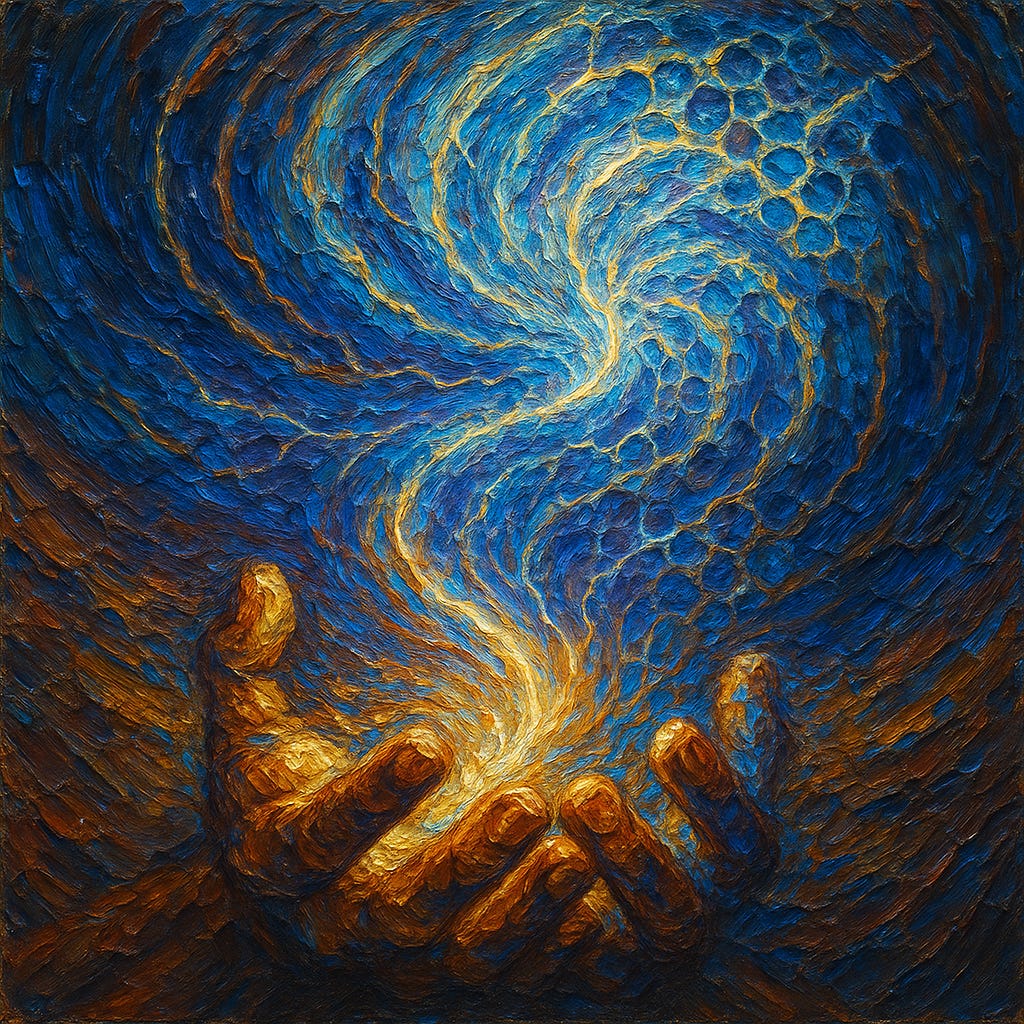
In 1975, a sociology professor placed his hands on a cage of mice injected with mammary adenocarcinoma—a cancer that had killed every single laboratory mouse within twenty-seven days for as long as anyone had been keeping records. The mice developed tumors as expected, ulcerated, appeared to be dying on schedule. Then something happened that wasn’t supposed to be possible: they got better. Not just better—completely cured, living out normal two-year lifespans, and when reinjected with the same lethal cancer, they proved immune. This wasn’t a fluke or a mistake in protocol. The experiment would be replicated ten times across five universities with an 87.9 percent cure rate. The professor, William Bengston, hadn’t believed in energy healing when he started. He’d been trying to debunk it. Instead, he’d accidentally provided some of the most rigorous scientific proof that hands-on healing works, and in the process, discovered something even more unsettling: the control mice, locked in a separate room, receiving no treatment whatsoever, were also remitting from cancer at unprecedented rates.
Four years before those first mice were cured, Bengston was a twenty-one-year-old lifeguard who didn’t believe in psychics, faith healing, or anything that couldn’t be explained by a sociology textbook. Then he met Bennett Mayrick, a cynical, arrogant man who’d recently discovered he could dissolve clouds with his mind and cure diseases by accident. Mayrick didn’t want these abilities—he correctly predicted they’d make him a freak, that sick people would resent him even when he helped them, that the medical world would treat him like a charlatan. But something in Bengston recognized something in Mayrick, and they developed an unlikely partnership. Together they created a mental technique called “cycling” that could teach anyone—even hostile skeptics—to cure cancer. The technique was absurdly simple: make a list of everything you selfishly want, turn it into mental pictures, and cycle through them so fast your conscious mind can’t interfere while your hands do the work. It shouldn’t have worked. Bengston spent thirty-five years proving that it did.
The implications cascade outward like ripples from a stone dropped in still water. If untrained college students who think energy healing is nonsense can cure cancer in mice after six weeks of reluctant practice, what does that say about human potential? If control groups separated by walls and distance somehow participate in healing through invisible bonds Bengston calls “resonant bonding,” what does that mean for every medical trial ever conducted? If patients’ brain waves sync with healers’ brain waves at exactly 7.81 hertz—the same frequency of electromagnetic waves circling Earth powered by lightning strikes—are we discovering that consciousness itself is tuned to planetary frequencies? And if mice cured of cancer can transfer their immunity to other mice through their blood and tissue, why aren’t we developing vaccines from energy-healed subjects? The answer to that last question reveals everything wrong with how science actually works: when Bengston presented his results at medical conferences, audiences sat in perfect silence, unable to dispute his methods or reproduce his results, but equally unable to accept findings that shouldn’t exist.
This is the story of how a skeptical sociology professor stumbled into proving that everything we think we know about healing, consciousness, and the nature of reality might be wrong. It’s about mice that shouldn’t have lived, patients who got better against all medical odds, and a scientific establishment so invested in its worldview that it would rather ignore reproducible cures for cancer than admit that a discredited practice from the age of Hippocrates actually works. But mostly it’s about an ability that might be as natural to humans as singing or dancing—an ability we’ve been trained to believe doesn’t exist, even as the evidence accumulates in laboratory after laboratory that not only is energy healing real, but it might be teachable, transferable, and could revolutionize medicine if we could just get out of our own way long enough to look at the data. The mice didn’t care whether it was supposed to work. They just lived.
With thanks to William Bengston.
The Energy Cure: Unraveling the Mystery of Hands-On Healing: William Bengston
Deep Dive Conversation Library (Bonus for Paid Subscribers Only)
This deep dive is based on the book:
Discussion No.148:
Insights and reflections from “The Energy Cure: Unraveling the Mystery of Hands-On Healing”
Thank you for your support.
Analogy
Imagine you’re trying to tune an old radio to find a distant station broadcasting vital emergency information. Most people are frantically turning the dial, adjusting the antenna, even hitting the radio, desperately trying to force it to work through conscious effort and technical manipulation. But what actually works is something counterintuitive: you have to stop trying so hard, step back, and let your hands find the right frequency almost by accident while you’re distracted thinking about your grocery list. The radio was always capable of receiving the signal—in fact, the signal has been broadcasting constantly all around you, powered by the planet’s own electromagnetic field created by lightning strikes. You don’t generate the signal or even understand how radio waves work; you just need to get yourself out of the way enough to let the natural connection happen. The healing energy is like that emergency broadcast—always available, infinitely powerful, carrying exactly the information needed for survival—and your body is already built to receive it. The trick isn’t in trying harder or believing more; it’s in learning to fiddle with the dial while thinking about something else entirely, letting your hands find the frequency while your conscious mind is busy cycling through images of things you want for lunch.
The One-Minute Elevator Explanation
Here’s something that sounds impossible but has been proven in laboratory experiments at five major universities: cancer can be cured through a hands-on energy technique that anyone can potentially learn. A sociology professor named William Bengston stumbled into this discovery through a psychic healer who could dissolve clouds with his mind and cure diseases doctors called incurable. When Bengston took this into the laboratory, he cured cancer-injected mice that had a 100 percent death rate within 27 days—not just once, but in ten controlled experiments where 87.9 percent of the mice went into complete remission and developed lifelong immunity. Even more remarkably, many of the untreated control mice also remitted, revealing that the classic scientific method has a major flaw: separate groups aren’t actually separate but connected through invisible bonds. The technique involves distracting your conscious mind by rapidly cycling through mental images while your hands channel healing energy that seems to come from the planet’s own electromagnetic field. The implications are staggering—not just that alternative healing works, but that consciousness itself plays a fundamental role in physical reality, and that the medical establishment’s rejection of these findings may be preventing millions from accessing a natural healing ability we all potentially possess.
[Elevator dings]
Want to dive deeper? Look up “resonant bonding” and “placebo effect problems in medical trials,” or search for Bernard Grad’s experiments at McGill University with healer Oskar Estebany.
12-Point Summary
1. The Accidental Discovery of a Natural Healer William Bengston was a twenty-one-year-old lifeguard and sociology student when he met Bennett Mayrick, a man in his late forties who had recently discovered he could read objects psychometrically with 100 percent accuracy and dissolve clouds by staring at them. Mayrick discovered his healing abilities accidentally when holding a letter gave him the exact migraine headache of the letter writer 600 miles away, and when he made his own pain disappear, hers vanished simultaneously. This chance encounter led to Bengston’s thirty-five-year journey investigating the mysteries of energy healing, transforming from skeptical observer to accomplished healer and researcher, though the two men would eventually part ways bitterly over Mayrick’s refusal to submit his abilities to laboratory testing.
2. The Development of the Cycling Technique Bengston and Mayrick developed a unique mental distraction technique called “cycling” that involves creating a list of at least twenty selfish desires, translating them into vivid mental images, and rapidly cycling through them at speeds up to twenty per second while healing. This technique emerged from Mayrick’s observation that he healed better while having unrelated conversations, suggesting that conscious focus actually interfered with the healing process. The method treats emotion as neutral fuel—whether anger or joy—to power the rapid mental imaging that keeps the conscious mind occupied while the hands work automatically, allowing healers to maintain “focused detachment” and access what they called “the Source” of healing energy.
3. Laboratory Breakthrough with Cancer-Injected Mice In 1975, Bengston conducted his first controlled experiment at Queens College, treating mice injected with mammary adenocarcinoma that had produced 100 percent fatality within 14-27 days in all previous scientific literature. Despite all five mice developing large tumors that blackened and ulcerated—appearing to be dying—they all survived past day 28, their tumors completely disappeared, and they lived normal two-year lifespans cancer-free. This experiment was replicated nine more times across five universities with an overall 87.9 percent remission rate, and cured mice proved immune to cancer reinjection, suggesting the development of a biological immunity that had never before been documented with this lethal cancer strain.
4. The Revolutionary Discovery of Resonant Bonding After years of puzzlement, Bengston had a eureka moment realizing why 69.2 percent of control mice kept in separate locations also remitted from cancer despite receiving no treatment: spatial separation doesn’t mean independence. His theory of “resonant bonding” proposes that invisible connections exist between experimental and control groups, allowing untreated subjects to share in healing effects—a finding that challenges the fundamental assumption of the scientific method used for 200 years. This discovery was supported by placebo effect research showing that dummy pill effectiveness increases from 35 percent to sometimes 80 percent when drug trials are repeated, forcing pharmaceutical companies to abandon proving superiority over placebos, as control groups are somehow participating in treatment effects through these invisible bonds.
5. Clinical Patterns in Human Cancer Treatment Through decades of treating human cancers, Bengston identified clear patterns: the youngest patients with the most aggressive cancers had the best prognosis for cure, completely contrary to conventional medical wisdom. His two absolute conditions for success were that patients complete the full course of treatment and come to him before radiation or chemotherapy, which he found destroyed something “energetic” that made energy healing impossible—like trying to charge a dead battery. To his knowledge, based on self-reporting, no person he successfully treated for cancer ever experienced a recurrence, and his most dramatic failures came from patients who abandoned treatment partway through or those who chose conventional treatment despite successful initial healing sessions.
6. The Measurable Physics of Healing Multiple measurement devices revealed dramatic physical changes during healing: fMRI scans showed Bengston’s brain activity increasing 25 percent versus normal 2-3 percent changes; EEG readings demonstrated “impossible” simultaneous fast and slow brain waves with spikes at 7.81 hertz matching Schumann’s resonance, the planetary electromagnetic frequency generated by lightning; geomagnetometer readings showed micropulsations changing from randomness to coherent waves during treatment. Hearts synchronized between healer and patient in separate rooms, Kirlian photography showed healers’ auras growing more intense rather than depleting after treatment, and one physicist measured electrostatic surges from healers one hundred thousand times higher than normal, suggesting healing involves measurable physical phenomena that connect to planetary electromagnetic fields.
7. Teaching Skeptics to Heal Successfully Bengston’s most counterintuitive discovery was that complete skeptics could learn to heal cancer as effectively as believers, demonstrated when students who laughed at him and accused him of deception successfully cured mice after six weeks of reluctant training. These students felt nothing in their hands, remained convinced the experiment would fail even as their mice healed, and wrote detailed logs revealing persistent pessimism and fear throughout—what Bengston called “hope against hope.” This proved that faith plays no role in healing effectiveness; in fact, patients who began with “I think this is a bunch of crap, but I have nowhere else to turn” often healed faster than believers, leading Bengston and Mayrick to joke about running a “faithless healing” practice.
8. Institutional Resistance and Scientific Heresy Despite initial enthusiasm including standing ovations from medical researchers, Bengston encountered systematic institutional rejection, particularly at UConn where he was frozen out, denied workspace, and ultimately escorted from the building after his successful experiments. This followed the pattern of other researchers like J.B. Rhine driven from Duke for ESP research and Bernard Grad ostracized at McGill for healing experiments, revealing how science operates as a faith-based orthodoxy that actively persecutes heretics who threaten paradigms. The standard advice among anomalous researchers became “Get tenure first!” because producing data that “shouldn’t exist” can destroy careers, with even successful results dismissed as “too good to be true” rather than examined for their revolutionary implications.
9. The Mystery of Patient Psychology More than half of patients experiencing dramatic improvement never returned for follow-up treatments, revealing complex psychological responses to healing that Bengston named after patients: the “Walter Effect” (trying to make cured pain return because healing challenged worldview), the “Pauline Effect” (choosing death over accepting “impossible” healing), and one patient refusing treatment for her husband because “then both of us would owe you our lives.” Many people appeared dependent on illness as identity, with circulating among healers becoming purposeful activity they couldn’t relinquish, while the psychiatric literature confirms many patients have emotional rather than physical problems, going through motions of seeking treatment while unconsciously resisting cure.
10. Secondary Healing Carriers: Cotton and Water Bengston discovered he could charge cotton by holding it while walking for thirty minutes, creating a therapeutic tool patients could use independently, with remarkable results like foot-long gashes healing completely within days while untreated minor scratches took weeks and left scars. Critically, charged cotton must be discarded after a week because it can absorb illness from patients—discovered when old cotton Ruby handed him to recharge caused him to feel her year-old cancer symptoms. Water could also be charged, with mice drinking only treated water achieving complete cancer remission, and these findings aligned with Bernard Grad’s discoveries that healer Oskar Estebany could transfer healing effects to cotton and water, suggesting healing energy can be stored in materials for later use.
11. The Source: A Theory of Healing Consciousness Bengston conceptualizes healing as accessing “the Source”—a realm of pure potential where all possibilities exist simultaneously, like white light containing all colors before they’re separated into individual hues. Disease represents subtraction from perfect health just as creation is subtraction from the perfection of Nothingness, and healing involves offering patients the full spectrum of possibilities from which they can extract what they need for health. This framework suggests healing doesn’t change physical reality but rather guides consciousness through concurrent existences to one where the body prefers to be—transporting someone from illness to health like moving an asthmatic to a beneficial climate, with the healer serving as guide rather than the source of healing power.
12. The Teachable Future of Energy Medicine The evidence strongly suggests healing ability is distributed throughout populations like musical or artistic talent, waiting to be uncovered through proper training rather than being limited to special individuals, as demonstrated by the independent emergence of healing traditions in most cultures. With skeptical students successfully learning to heal cancer, groups showing exponentially amplified healing effects, and people treated by healers temporarily acquiring healing abilities themselves, the potential exists for energy healing to become a teachable skill that could revolutionize medicine. The implications extend beyond healthcare to fundamental questions about consciousness, reality, and human potential, suggesting we all possess untapped abilities to influence physical matter through focused intention combined with practiced detachment, awaiting only the right techniques and cultural permission to emerge.
The Golden Nugget
The most profound and least-known insight from Bengston’s research is that successful energy healing appears to create heritable immunity that can potentially be transferred between organisms. When mice cured of lethal mammary cancer were reinjected with the same cancer, they didn’t develop the disease—they had become permanently immune. More remarkably, when tumor tissue from successfully treated mice was surgically implanted into cancer-injected mice, five out of eight didn’t develop tumors despite receiving double the lethal dose of cancer cells, suggesting they acquired immunity through the donor tissue. This finding implies that the blood or tissue of energy-healed subjects might contain transferable factors that could be developed into a cancer vaccine, meaning energy healing might not just cure individuals but could potentially create a biological immunity that could be synthesized and distributed to prevent cancer in others. This represents a potential bridge between energy medicine and conventional medicine that could revolutionize cancer prevention, yet it remains virtually unknown because the scientific establishment refuses to investigate findings that originate from “impossible” healing methods.
30 Questions and Answers
Question 1: How did William Bengston first encounter Bennett Mayrick and what unusual abilities did Mayrick demonstrate?
Answer: In the summer of 1971, when Bengston was twenty-one and working as a lifeguard at a pool in Great Neck, Long Island, another lifeguard pointed out a man she identified as a psychic. Bengston introduced himself to Bennett Mayrick during a break, expecting to meet someone full of exaggerated claims, but instead found a dark-haired, deeply tanned man in his late forties who spoke in a soft, deep voice and seemed bemused by Bengston’s interest. Mayrick had only recently discovered his abilities eight months earlier at a party where a psychic entertainer pressured him to hold objects and tell stories about their owners—to his shock, everything he invented turned out to be accurate, including detailed information about secret affairs that he couldn’t have known.
When Bengston tested Mayrick by handing him his wallet, Mayrick described a specific conversation between Bengston’s mother and sister that had just occurred in their kitchen, details about Bengston’s car breaking down (the exhaust system fell out hours later), and then demonstrated the ability to dissolve clouds. Bengston picked four similar clouds and asked Mayrick to dissolve only the bottom-right one—within twenty seconds, that specific cloud had vanished while the others remained unchanged, leaving Bengston stunned by witnessing what he considered the most amazing thing he’d ever seen, though he walked away still trying to rationalize it as a trick.
Question 2: What specific technique did Bengston and Mayrick develop for mental distraction during healing, and why was this necessary?
Answer: Bengston and Mayrick developed a two-step method called “cycling” designed to distract both healer and patient from focusing on the affliction being treated. The technique requires creating a list of at least twenty personal, selfish desires translated into vivid mental images suggesting each wish has already been granted—visualizing not money but the yacht it would buy, not healing a bad knee but playing tennis. These images must be memorized so thoroughly they can be run in any order—backward, forward, or randomly—then cycled through at increasing speeds until reaching about twenty images per second, creating a mental blur powered by whatever emotion the person is experiencing, whether positive or negative.
This distraction technique emerged from Mayrick’s belief that he wasn’t the origin of healing power but rather a conduit for energy from what they called “the Source.” Unlike other healers who stressed positive thinking and visualization of healthy outcomes, Mayrick discovered he healed better while carrying on unrelated conversations, letting his hands work unimpeded by intellect or ego. The cycling technique serves to occupy the conscious mind’s tendency to interfere, allowing the unconscious healing process to flow naturally—like giving a guard dog raw steak to keep it busy while the real work proceeds unobstructed.
Question 3: What were the results of the first controlled mouse experiments at Queens College, and how did they challenge existing medical knowledge?
Answer: The initial experiment at Queens College used mice specifically bred for research that were injected with mammary adenocarcinoma (code H2712), a particularly lethal strain that had resulted in 100 percent fatality within fourteen to twenty-seven days in all previous scientific literature. Bengston treated five mice daily for an hour by placing his hands on their cage, and though all developed large external tumors that ulcerated with blackened spots, appearing to be dying, by day twenty-eight all five mice were still alive—already making history. The tumors then turned white inside the ulcerations, completely disappeared, the mice’s fur regrew, and they went on to live normal two-year lifespans completely cancer-free.
This experiment was replicated at Queens College with the same 100 percent success rate, then eight additional times with minor variations at four other biological and medical laboratories, producing an overall remission rate of 87.9 percent in treated mice. Even more remarkably, when cured mice were reinjected with cancer, they didn’t develop the disease, suggesting they had developed immunity—something never before documented with this type of cancer. The biology associate who had been conducting traditional studies on these mice for twenty years had never seen anything approaching remission, and when she saw Bengston’s results, she literally begged the department chair to explain what had been done to achieve them, deeply shaken by results that contradicted decades of established research.
Question 4: What is resonant bonding and how does it explain the unexpected remission of control mice?
Answer: Resonant bonding is Bengston’s breakthrough theory that emerged after years of puzzling over why 69.2 percent of on-site control mice remitted from cancer despite receiving no treatment, while 100 percent of off-site control mice died as expected. The theory proposes that spatial separation doesn’t always mean independence—something unseen connects experimental and control groups so that whatever happens to treated subjects also affects most of the controls. This challenges the fundamental assumption of the classic experimental design used by scientists for two hundred years, which presumes that dividing test subjects into comparable groups creates distinct, independent populations where only the treated group should show effects.
The bonding appears to operate through multiple channels: empathy between healers and all mice they become aware of, shared consciousness among the healers themselves, and possibly connections among the mice due to their shared genetic background and upbringing. When healers visited control mice out of curiosity or compassion, those mice seemed to join the bonded group and subsequently healed, while mice sent off-site remained outside this field of connection and died. This discovery has profound implications for all medical research, as demonstrated by the placebo effect increasing from 35 percent to sometimes 80 percent in drug trials when repeated—suggesting that control groups are actually receiving some form of treatment through resonant bonding with the experimental groups.
Question 5: How did Bennett Mayrick discover his healing abilities, and what was his initial reaction to them?
Answer: Mayrick’s healing abilities emerged accidentally when a friend handed him a letter from a cousin in Dallas requesting a psychic reading. As soon as Mayrick touched the letter, he experienced an excruciating headache that disappeared when he put the letter down and returned when he picked it up again. Determined to make the pain go away, he went to his bedroom and lay down with the letter for fifteen minutes, working to dissolve the pain like he dissolved clouds, finally returning exhausted but triumphant that he’d eliminated the headache. Only when his friend called the Dallas cousin did they discover that she had been suffering a migraine at the exact time Mayrick held the letter, and her pain had mysteriously vanished when his did—though Mayrick’s intention had only been to rid himself of discomfort, not to cure anyone else.
Mayrick’s reaction to becoming a healer was predominantly melancholic rather than excited, displaying remarkable foresight about what this development would mean for his life. He told Bengston that healing opened a Pandora’s box he wasn’t sure was worth opening, predicting that people with terrible diseases would seek him out and he wouldn’t be able to ignore them, even though many sick people don’t really want to get better despite what they say. He anticipated that successfully treated patients would resent him, the medical profession would scorn him, he’d be regarded as a freak, and he’d end up spending his life being aggravated when all he really wanted was to be left alone—predictions that proved accurate on all counts.
Question 6: What patterns did Bengston observe regarding which cancer patients had the best prognosis for healing?
Answer: The most striking pattern Bengston observed was that younger patients with the most aggressive cancers had the best prognosis for cure—completely counterintuitive to conventional medical wisdom. Four-year-old Ryan with retinoblastoma, a particularly nasty cancer usually requiring removal of both eyes followed by brain tumors and death, was cured in just a few sessions, with Ryan instinctively grabbing Bengston’s healing hand and placing it against his eye. Aggressive cancers like blastoma remitted faster than slowly developing ones like prostate cancer, both in humans and in laboratory mice where mammary cancer with its fourteen to twenty-seven day fatality window remitted more quickly than sarcoma with its forty-five to fifty day timeline.
The two absolute conditions Bengston identified for success were that patients complete the full course of treatment without abandoning it partway through, and critically, that they come to him before having radiation or chemotherapy. Bengston discovered that conventional treatments intended to kill cancer cells also destroy something “energetic” in patients that he described as diametrically opposed to the nurturing effect created by energy healing. After radiation or chemotherapy, attempting hands-on treatment felt like trying to activate a dead battery, with Bengston unable to get the energy moving despite treating patients like eight-year-old Jenny with chemotherapy-treated optic nerve tumors for months without success.
Question 7: Why did Bengston conclude that radiation and chemotherapy interfere with energy healing?
Answer: Bengston’s conclusion came from consistent clinical failures with every cancer patient who had undergone radiation or chemotherapy before seeking energy healing, contrasting sharply with his perfect success rate with untreated patients. He observed that these conventional treatments, designed to kill both cancerous and healthy cells in hopes that cancer cells die faster, seemed to deplete patients’ energy systems beyond his ability to restore them. When treating post-chemo patients like eight-year-old Jenny with an optic nerve tumor or Kyle with metastatic bone cancer who had tried multiple experimental treatments, Bengston found he simply couldn’t get the healing energy moving despite months of attempts, describing the sensation as trying to activate a dead battery.
The contrast became especially clear through cases like Marie, whom Bengston successfully treated for brain cancer at a distance without her knowledge before she received radiation, achieving complete remission that doctors dismissed as spontaneous. However, doctors didn’t believe their own tests and gave her radiation anyway “just to be on the safe side,” rendering her sterile but unable to undo the healing that had already occurred. This suggested that radiation and chemotherapy work in direct opposition to energy healing’s mechanism—while conventional treatments destroy cells hoping to kill cancer faster than healthy tissue, energy healing appears to work by nurturing and strengthening the body’s own immune system to fight disease naturally.
Question 8: What happened to Lillian, and how did her case demonstrate the conflict between energy healing and conventional medicine?
Answer: Lillian was a twenty-two-year-old operating room nurse whose cancer had metastasized into all her major organs after previous precancerous lesions had been removed three years earlier. When Bengston treated her intensively for two hours on the first day, she began breathing easier and felt hungry for the first time in weeks; after three days of treatment she was bowling with her husband and feeling like a new person. When her radiologist examined her with X-rays and CAT scans to map her tumors’ progression, he found no cancer at all, checking with different machines and blood tests that all confirmed complete remission. However, when Lillian excitedly told him about the energy healing, he dismissed it as worthless and insisted on proceeding with the maximum possible radiation and chemotherapy doses according to protocol for her original diagnosis.
Despite Bengston’s attempts to dissuade her, Lillian decided to undergo the treatments “just to be on the safe side,” behaving like an obedient nurse accepting whatever doctors ordered. The radiation and chemotherapy were so toxic that one of her lungs stopped functioning and was surgically removed, and she died hours later of heart failure without serious attempts to revive her. The final pathology report on her removed lung was negative for cancer, confirming she had been cancer-free when the conventional treatments killed her. This case profoundly affected both Bengston and Mayrick, demonstrating how the medical establishment’s knee-jerk dismissal of “spontaneous remission” and rigid adherence to protocols could prove fatal, leading Mayrick to drastically change his practice by requiring all patients to get their doctors’ knowledge of his treatments.
Question 9: How were skeptical students able to successfully heal cancer in mice despite not believing in the process?
Answer: Bengston deliberately selected students who laughed in his face when asked to participate in healing experiments, including two who accused him of using the mouse experiment as cover for some other undisclosed study. Despite their complete disbelief in hands-on healing, after six weeks of reluctant training in the cycling technique, these skeptical students successfully remitted cancer in mice with the same effectiveness as believers. Cathy’s detailed log revealed her dominant feelings throughout were pessimism, fear of failure, and conviction the experiment wouldn’t work—she wrote entries like “The longest hour of my life” and “I really want them to live” while being certain they would die, representing what Bengston called “hope against hope.”
The students couldn’t feel anything in their hands, didn’t understand how cycling images of personal desires could relate to healing, and remained convinced they were wasting their time even as their mice developed tumors, ulcerated, and then completely healed. When Bengston tested their hands during training, he could feel heat radiating from deep within their left palms—something qualitatively different from normal skin temperature—even though the students themselves felt nothing. This demonstrated that faith or belief played no role in the healing process; in fact, Bengston and Mayrick had observed that patients who started with “I think this is a bunch of crap, but I have nowhere else to turn” often healed faster than believers, leading them to joke about running a “faithless healing” practice.
Question 10: What brain wave patterns and frequencies were observed during Bengston’s healing sessions?
Answer: When Bengston was first tested on an EEG machine at the American Society for Psychical Research while treating with Mayrick, the technician observed something supposedly impossible: Bengston’s beta brain waves (normal waking consciousness of 15+ cycles per second) increased in activity while simultaneously a portion of his occipital lobe generated theta waves (4-7 cycles associated with deep meditation). The technician insisted this couldn’t happen—you can’t have highly active beta occurring with the diminished theta state—and attributed it to machine malfunction, though the machine tested normal on everyone else. Years later, Bengston learned that some Indian yogis and Buddhist monks achieve previously unknown gamma states up to 200 hertz where fast and slow brain waves synthesize, confirming what the ASPR had dismissed as impossible.
During EEG experiments in Phoenix, Bengston’s brain would produce sudden dramatic spikes at approximately 7.81 hertz, particularly in the back of his head, which would then appear seconds later in the same brain area of a target person in another room. This frequency turned out to be Schumann’s resonance—a long electromagnetic wave continuously circling Earth between its surface and the ionosphere, generated by constant lightning strikes hitting the planet. The correlation suggested that Bengston’s brain was entering resonance with this planetary frequency and triggering his target’s brain to do the same, raising the speculative possibility that the power source for healing might somehow be connected to global lightning activity.
Question 11: What is the significance of Schumann’s resonance in relation to healing?
Answer: Schumann’s resonance, discovered by physicist Winfried Otto Schumann, is an electromagnetic wave of approximately 7.81 hertz that continuously circles the planet between Earth’s surface and the ionosphere, powered by the relatively constant rate of lightning strikes bombarding Earth. During EEG experiments, researchers discovered that Bengston’s brain would produce sudden spikes at precisely this frequency when attempting to connect with patients for healing, followed seconds later by the same spike appearing in the identical brain region of his target person in another room. This suggested that his brain was somehow latching onto this planetary frequency as a carrier wave for healing information or energy, creating a resonance between healer and patient through this global electromagnetic phenomenon.
The discovery raised profound questions about the mechanism of healing and its relationship to natural planetary forces. If Schumann’s resonance serves as the carrier wave for healing energy, it would explain how distant healing can work regardless of distance—the wave circles the entire planet continuously, making it accessible anywhere. However, this remains highly speculative since researchers still can’t prove that the brain spikes actually correspond with healing events, and even if Schumann’s resonance is involved, the mystery remains of how consciousness can intentionally access and utilize this natural frequency for healing purposes, or how it carries the specific information needed to cure particular ailments.
Question 12: How does charged cotton work as a healing tool, and what precautions must be taken with it?
Answer: Bengston discovered he could charge cotton by holding it between his palms while walking or pacing for about thirty minutes, causing it to heat up in a way unrelated to friction, then mail it in plastic bags that seemed to hold the energy. Patients would apply this charged cotton to affected areas, producing remarkable results like Irene’s foot-long gashes from a cat attack healing completely within days when treated with cotton, while a minor untreated scratch on her palm took weeks and left a scar. The effectiveness was dramatically demonstrated when Ruby, a breast cancer patient, handed Bengston a piece of old cotton to recharge—as soon as his fingers touched it, he felt a palpable lump and pain in his own armpit that disappeared when he put the cotton down, discovering it was cotton she’d used over a year earlier that had absorbed her cancer symptoms.
This discovery led to the critical precaution that charged cotton must be discarded after about a week’s use or after major health improvement, as it can become negatively conditioned by absorbing illness from the patient. George, a railroad worker with leukemia who claimed to see auras, could identify charged cotton in sealed envelopes every time, describing them as “leaking chi,” confirming that the cotton retained measurable healing properties. Bengston became so sensitized to cotton that he couldn’t turn off his healing hand when touching it, with the energy automatically activating, and he found it particularly effective for treating his own conditions like detached corneas where the pain made it impossible to maintain the detachment necessary for self-healing.
Question 13: What were the results when healing was attempted on organisms without immune systems, like carrot slices?
Answer: When Bengston and biology department chair Carol Hayes designed an experiment using carrot slices infected with cancer in petri dishes, all attempts to cure the cancer through hands-on healing failed completely, despite volunteers being indoctrinated to believe success was possible based on previous experiments. The carrot slices developed elaborate root systems as if trying to grow back into full carrots, indicating that something was being affected by the treatment, but the cancer itself remained unchanged. This failure was actually good news for Bengston’s developing theory, as it demonstrated by default that the laying-on of hands had not directly killed cancer in organisms lacking an immune system.
The carrot experiment provided crucial evidence that energy healing works by stimulating immune response rather than directly destroying cancer cells. Plants can develop cancer defined as uncontrolled cell growth that draws nutrients from the host, but unlike animals, this isn’t lethal because plants don’t have vital organs to destroy. Since the healing energy affected the carrots’ growth patterns but couldn’t eliminate their cancer, this suggested that all the successful mouse and human healings had worked by strengthening the body’s own immune system to fight disease, not by the energy directly attacking cancer cells—a finding with profound implications for understanding healing mechanisms and potentially developing vaccines from successfully treated subjects.
Question 14: How does distant healing work, and what evidence supports its effectiveness?
Answer: Distant healing demonstrated the same effectiveness as hands-on treatment in Bengston’s experiments, with mice in Indiana successfully treated from New York and Sedona, Arizona showing complete cancer remission. During remote viewing experiments with David Krinsley, Bengston discovered that information could be exchanged across both space and time—Krinsley accurately drew and described scenes Bengston had viewed three hours earlier, suggesting that consciousness operates outside normal temporal boundaries. When treating cancer patients remotely using photographs or hair samples, Bengston found the treatment was actually stronger when he moved around while holding the image, though sleeping on photos drained him completely as if something took over while his conscious guard was down.
Margaret Moga’s geomagnetometer measurements at Indiana University provided hard data for distant healing effects, showing that geomagnetic micropulsations changed from randomness to coherent waves during remote treatments. Remarkably, these waves were even more pronounced when Bengston treated from Sedona than when physically present in Indiana, with wave fluctuations corresponding exactly to his subjective experiences of connection with the mice—he would note times like 11:17 and 11:44 when he felt barriers dissolving between himself and the mice, and these matched precisely with recorded geomagnetic changes. The evidence suggests that distance is irrelevant for healing effects, consistent with quantum physics principles where entangled particles remain connected regardless of spatial separation.
Question 15: What role does emotion play in the cycling technique?
Answer: Emotion serves as neutral fuel for the cycling technique, with Bengston and Mayrick discovering that any feeling—whether rage or love, frustration or joy—powers the rapid mental imaging process equally well. The technique requires practitioners to ride emotions rather than replace them, using feelings as energy for multitasking while cycling through twenty or more mental images at increasing speeds. Students typically preferred cycling during negative emotions like anger or boredom as a displacement technique, while choosing to fully experience positive emotions without the distraction of cycling, though the distinction breaks down as multitasking becomes more natural and automatic.
The stronger the emotion, the more effective the cycling becomes, with practitioners instructed to begin cycling whenever experiencing any feeling until it becomes automatic. Bengston found that boredom from standing with hands on someone for an hour provided excellent emotional fuel, as did resentment toward demanding patients who kept asking “How long will this take?” as if he were a nuisance to endure. The key insight was recognizing emotion as pure energy, like electrical current that powers a toaster—neither positive nor negative in itself, but simply available force that can be harnessed to maintain the mental distraction necessary for healing while paradoxically maintaining focused detachment from the outcome.
Question 16: Why did Bernard Grad’s pioneering work at McGill University matter for the field of energy healing?
Answer: Bernard Grad, a research oncologist at McGill University, conducted the first rigorously scientific experiments on energy healing during the 1960s and 1970s, testing Hungarian healer Oskar Estebany who had discovered his abilities while curing sick horses in the cavalry. Grad’s experiments followed strict laboratory protocols that proved surgically wounded mice held by Estebany for fifteen minutes twice daily healed significantly faster than untreated controls, mice with induced goiters developed them at significantly slower rates when treated, and remarkably, cotton and wool that Estebany had charged produced the same healing effects when placed near mice. His work demonstrated that healing energy could be scientifically measured, replicated, and even transferred to secondary substances—revolutionary findings that provided the template for legitimate laboratory investigation of energy healing.
Despite his groundbreaking discoveries that should have revolutionized medicine, Grad was so severely ostracized by the McGill academic community that he couldn’t bear to drive by the institution after retirement. His experiments, while occasionally referenced in alternative medicine literature, produced strangely little impact on the scientific community—when presented at biological conventions, audiences remained silent without disputing his methods or conclusions, as if unable to process information that challenged their worldview. Bengston considered Grad’s courage in pursuing this research despite professional persecution to be heroic, calling him “the Great Grad” and treasuring both his mentorship and a bag of Estebany-charged cotton Grad gave him as a museum piece representing the lonely pioneering of genuine scientific investigation into healing phenomena.
Question 17: What happened during the failed experiment at Arizona State University, and what was learned from it?
Answer: During what was supposed to be Bengston’s fifth controlled experiment with David Krinsley treating mice at Arizona State University, a catastrophic success occurred: not only did all one hundred experimental mice remit from cancer, but the healing effect spread throughout the entire laboratory. The control mice remitted, the gerbils with cancer remitted, the hamsters remitted, and the effect continued up through all the mammals in the facility. This ruined the tumor study that Krinsley’s biophysicist colleague had been conducting with a large National Science Foundation grant, destroying his research on the electrical conductivity of tumors across multiple species from mice to chimpanzees.
The disaster taught two crucial lessons about energy healing that couldn’t have been learned any other way. First, that mass matters—the larger the animal, the longer remission takes, with the effect moving progressively up the food chain from smallest to largest mammals. Second, and more importantly, it demonstrated the uncontrollable nature of resonant bonding and the need to keep healing hands away from other researchers’ experiments. The incident showed that healing energy doesn’t respect experimental boundaries or laboratory walls, spreading through unknown mechanisms to affect all susceptible organisms in proximity, turning what should have been a controlled experiment into an unintended demonstration of healing’s potentially unlimited reach.
Question 18: How did the placebo effect findings support Bengston’s resonant bonding theory?
Answer: The placebo effect, traditionally dismissed as mere suggestibility where 35 percent of patients improve when given dummy pills they believe are medicine, revealed patterns that perfectly aligned with resonant bonding. Researchers discovered that when drug trials are repeated, the placebo effect actually increases, commonly reaching 80 percent effectiveness in duplicated studies—not because people become more suggestible, but because control groups somehow participate in the treatment effect. Even more remarkably, the effect is proportional: if researchers secretly increase the dose of the actual drug, control patients on dummy pills react as if their placebos were also strengthened, forcing pharmaceutical companies to abandon proving superiority over placebos and instead merely demonstrate equivalence to existing treatments.
This phenomenon parallels exactly what Bengston observed with his control mice achieving 69.2 percent remission despite no treatment—they were somehow sharing in the healing received by treated mice through invisible bonds. The German researchers from Freiburg who shouted “You’ve solved the placebo problem!” during Bengston’s presentation recognized that resonant bonding explains why separation into discrete control and experimental groups is an illusion. The implications are staggering for all medical research: the fundamental experimental design scientists have used for two hundred years assumes independence between groups that doesn’t actually exist, meaning control groups have been receiving a form of treatment all along through their connection to experimental groups.
Question 19: What is “the Source” and how does it relate to the healing process?
Answer: The Source represents Bengston’s conception of a place of pure potential where all possibilities exist simultaneously—a realm of Nothingness that paradoxically contains Everything, which he compares to white light containing all colors before they’re subtracted into individual hues. During healing, Bengston experiences traveling past his cycling images and ordinary consciousness into superconsciousness, then past that into peace, and finally into this Nothing/Everything state where the less he feels, the more potential becomes available. Three psychics independently told him “You’ve touched Source energy,” recognizing his ability to access this infinite supply of healing potential that exists beyond time, space, and individual existence.
In this framework, disease represents a subtraction from perfect health just as creation is a subtraction from the perfection of Nothingness, and healing involves offering patients the full spectrum of possibilities—metaphorical white light—from which they can subtract what they need to return to health. The Source doesn’t do anything; it just is, like a place containing infinite simultaneous existences where there’s a reality where you crushed your finger and one where you didn’t, one where cancer exists and one where it doesn’t. By accessing the Source, a healer may be able to guide consciousness through these concurrent existences to a place where the body would prefer to be, transporting someone from illness to health like moving an asthmatic to a beneficial climate, with healing occurring not through the healer’s power but through accessing this infinite field of potential.
Question 20: Why do many successfully treated patients never return for follow-up treatments?
Answer: More than half of patients who experienced dramatic improvement with cancer, diabetes, arthritis, and debilitating symptoms never returned after initial treatments, even when cure required multiple sessions. Bengston and Mayrick concluded that many people don’t actually want to get well despite desperately seeking relief, having grown dependent on their ailments as part of their identities after years of sickness. Life without illness was inconceivable to them, and circulating among doctors, chiropractors, and healers had become an end in itself—a purposeful activity they couldn’t easily relinquish. The psychiatric literature confirms this pattern, with many doctors suspecting a high proportion of patients have emotional rather than physical problems, going through the motions of seeking treatment to satisfy others and maintain their self-deception.
Another subset of successfully treated patients abandoned treatment out of psychological discomfort with the implications of energy healing, displaying what Bengston called various “Effects” named after patients. Walter from Nigeria, cured of crippling leg pain in one session, tried to make the pain return because accepting the cure meant confronting his rejection of his culture’s belief in magic; Pauline, a college administrator who had supported Bengston’s research, giggled nervously and chose traditional treatment leading to death rather than accept healing that didn’t fit her worldview. One patient whose breast cancer was cured snapped that she didn’t want her husband treated because “Then both of us would owe you our lives!”—revealing how accepting healing creates a psychological debt some find unbearable.
Question 21: What were the specific characteristics that made Bennett Mayrick an effective healer despite his difficult personality?
Answer: Mayrick’s effectiveness stemmed from a paradoxical combination of megalomaniacal confidence and profound detachment from outcomes, believing he was smarter than everyone else while simultaneously seeing himself as an alien tourist from Alpha Centauri just passing through Earth. His galloping arrogance meant he was never threatened by others’ perceived superiority—nuclear physicist or shoe-shine boy were the same to him—so if someone else could heal, he assumed he could do it better, approaching healing with a child’s sense of limitless possibility. This supreme self-confidence was balanced by an unusual ability to get out of the way, treating his abilities as something happening to him rather than through him, carrying on unrelated arguments while healing because emotional engagement actually improved his performance.
Mayrick’s effectiveness was enhanced by his cynical wisdom about human nature, predicting accurately that patients wouldn’t really want to get better, would resent him for success, and that the medical profession would scorn him—insights that prepared him for the realities of healing work. He healed through detachment rather than compassion, intention without attachment, accessing profound connection to the Source while maintaining distance from earthly commitments. His joke about being from another star system contained truth about his alien feelings in a world he didn’t understand, with boundaries between inner and outer reality so eroded he couldn’t distinguish between spoken words and thoughts, yet this very disconnection may have enabled his extraordinary ability to channel healing energy without interference from ordinary consciousness.
Question 22: How did institutional resistance at UConn manifest, and what does this reveal about scientific orthodoxy?
Answer: At UConn, despite initially receiving a standing ovation from medical researchers and an invitation from the head of the Center for Immunotherapy, Bengston encountered systematic institutional freezing out that included being unable to find a workspace, having to beg daily for bench space only to be asked to move, and the French researcher who had been his most effusive convert literally backing away in alarm when asked to collaborate. The overseer of his experiments repeatedly failed to show for appointments, his mice were killed without collecting promised data, and ultimately he was escorted from the building after forty-three days when experiments were shut down due to alleged conflicts with the animal protection committee that had never approved his work. Despite his mice successfully remitting from sarcoma—something never before seen at UConn—no blood samples or photographs were preserved, and all attempts to retrieve frozen samples were ignored.
This treatment reveals how scientific orthodoxy operates as a faith-based system that actively persecutes heretics who threaten established paradigms, following the pattern experienced by other researchers like J.B. Rhine driven from Duke University for ESP research and Bernard Grad ostracized at McGill for healing experiments. The standard advice among anomalous researchers is “Get tenure first!” because science, despite its claims to objectivity, protects its beliefs as fiercely as any religion, with the added power of career destruction for those who produce data that “shouldn’t” exist. Bengston’s experience confirmed what Mayrick had predicted decades earlier after successfully treating Walter’s leg injury: if you understand why someone educated in Western rationalism can’t accept healing that challenges their worldview, you’ll understand why the scientific and medical communities will never accept it either.
Question 23: What evidence suggests that energy-healed organisms develop lifelong immunity to cancer?
Answer: Multiple lines of evidence across both human patients and laboratory mice demonstrated that successful energy healing produces lifelong immunity to cancer. In Bengston’s clinical practice spanning thirty-five years, no person he successfully treated for cancer ever reported a recurrence, based on self-reporting from dozens of patients with various cancer types. Laboratory evidence was even more definitive: mice cured of mammary adenocarcinoma that normally killed 100 percent within twenty-seven days went on to live normal two-year lifespans, and when Carol Hayes secretly reinjected cured mice from previous experiments with the same lethal cancer dose, the cancer didn’t take—the mice had developed complete immunity to reinfection.
At Indiana University’s Terre Haute campus, Margaret Moga surgically implanted tumor fragments from treated mice into eight mice that had already been cancer-injected with double the normal lethal dose of two hundred thousand cells. Remarkably, only three of the eight developed tumors when it should have been 100 percent, suggesting the other five had acquired immunity through the implanted tissue from treated mice. This finding brought Bengston closest to his dream of developing a preventative vaccine, indicating that immunity might be transferable through blood or tissue from cured organisms, with profound implications for creating a cancer vaccine that could provide the same immunity achieved through energy healing without requiring the healing process itself.
Question 24: How does group healing differ from individual healing sessions?
Answer: Group healing sessions create dramatically amplified energy fields that participants can physically feel building in the room as multiple pairs practice together, with effects intensifying when groups of four combine into eights and ultimately everyone joins into a single healing circle. The energy increase isn’t merely additive but exponential, supporting findings from Princeton’s PEAR laboratory where emotionally bonded pairs produced results seven times greater than individuals working separately. When groups practice cycling together with a leader drumming the rhythm from one beat per second up to a drumroll over five minutes, participants report the sensation of energy becoming almost palpable, especially when everyone focuses on a single person in the center of the circle.
During Mayrick’s biweekly healing forums, he would treat up to fifteen patients simultaneously, moving from person to person with all participants practicing the cycling technique together, creating a shared field that seemed to enhance individual treatments. The mysterious dynamics of group consciousness in healing raised fundamental questions about whether all Bengston’s student healers had individually cured mice or whether they formed a collective healing consciousness where one person’s ability spread to all. Groups of healers may continuously attune and reinforce each other by creating a group frequency, though some healers believe multiple healers can interfere with each other—conflicting claims that remain unresolved in the absence of systematic research comparing individual versus group healing outcomes.
Question 25: What were the cloud-dissolving demonstrations, and how did they relate to weather manipulation theories?
Answer: During Bengston’s first meeting with Bennett Mayrick, Mayrick claimed he could dissolve clouds by staring through them for a few seconds, demonstrating by making specifically selected clouds disappear while leaving adjacent ones unaffected. When Bengston picked four similar clouds and asked Mayrick to dissolve only the bottom-right one, that exact cloud vanished within twenty seconds while the others remained unchanged, with Bengston observing its edges dissolve while its center grew transparent before completely disappearing. Mayrick approached cloud-busting casually, saying he’d discovered the ability only days earlier, describing it as “the damnedest thing” without understanding the mechanism, though he later explained he dissolved clouds using the same mental technique of imagining dissolution that he applied to pain and disease.
This ability connected to Wilhelm Reich’s theories about manipulating orgone energy to affect weather, for which Reich invented a “cloudbuster” made of metal tubes that he used to end droughts in 1950s Maine, convincing skeptical journalists on multiple occasions. Psychiatrist Richard Blasband replicated Reich’s cloudbuster and successfully demonstrated it to his Yale mentor, who was so disturbed he told Blasband never to do it again, never speak of it, and never tell anyone—the same response Bengston initially had to Mayrick’s demonstration. The cloud-dissolving ability suggested that the same consciousness-based energy used for healing could affect atmospheric conditions, with Mayrick explaining he sped up radioactive decay in laboratory tests by imagining dissolving clouds and slowed it by imagining frozen rock, demonstrating conscious control over physical processes through mental imagery.
Question 26: What happened during Bennett Mayrick’s death, and what did Bengston experience at that moment?
Answer: After nearly thirty years without contact following their bitter split over Mayrick’s refusal to participate in laboratory research and his creation of a quasi-religious ministry, Bengston finally called Mayrick in 2004 finding him frail and defensive at age eighty-one, immediately launching into justifications for abandoning his family decades earlier. When Bengston sent charged cotton to help Mayrick’s breathing problems, Mayrick entered the hospital and fell into a coma in intensive care. His partner arrived with the cotton just as he woke up, but Mayrick’s immediate response was annoyance: “What am I still doing here?” When told about the cotton, he shouted “Get that stuff out of the room! If I touch it I can’t leave, and it’s time for me to go.”
The night Mayrick died, Bengston was in London unable to sleep for thirty-six hours through his flight home, finally falling into bed at 5 p.m. but accidentally setting his alarm for 7 a.m. instead of 7 p.m. At exactly 11 p.m., he jolted awake to find his room filled with light that seemed to hover in the middle with a powerful sense of presence. Spontaneously reaching out to the light, Bengston shocked himself by calling out “Ben!” twice, suddenly feeling an overwhelming sense of love stronger than anything he’d ever experienced—completely different from any feelings he’d had around Mayrick in life. In that moment, all antagonism between them dissolved, and Bengston later learned this was the exact moment of Mayrick’s death, with Mayrick’s son Stuart and others reporting similar strange dreams and visitations, confirming Mayrick’s connection to forces most people only glimpse.
Question 27: How does the image cycling list need to be constructed, and why must it be completely selfish?
Answer: The list must contain at least twenty specific personal desires translated into vivid mental images showing each wish already granted—visualizing not money but the yacht it would buy, not healing but playing tennis, each image representing an end rather than means. Every item must be completely selfish without altruistic notions about family, friends, or world peace, because Bengston and Mayrick recognized that self-sacrifice carries complicated agendas and that sustained lack of self-interest builds resentment over time. Each image requires at least five minutes of investment using all senses to make it real and present, then all items must be memorized so thoroughly they can be run backward, forward, or randomly, with every item regarded as equal whether it’s desiring a new computer or becoming a world champion.
The selfish nature serves to feed the ego everything it secretly wants in order to get it out of the way, like diverting a guard dog with raw steak until it becomes satiated and stops interfering with the unconscious healing process. Generic desires like “health” or “wealth” imply lack and float negative ideas while attempting to control the universe, whereas specific images keep the conscious mind occupied cycling through them at increasing speeds up to twenty per second. The list must be reviewed weekly and updated as desires change, with fulfilled wishes immediately removed to avoid expressing unconscious fear of loss, and involving other people requires their explicit permission except for those unable to consent like children, comatose patients, or animals—strict ethical rules that acknowledge the complex reality of human desires.
Question 28: What historical figures and researchers laid the groundwork for understanding universal life energy?
Answer: Hippocrates, the father of Western medicine around 460 BCE, observed that “there were some strange property in my hands to pull and draw away from the afflicted parts aches and diverse impurities,” establishing hands-on healing within medical rather than magical practice. In the sixteenth century, Paracelsus described a magnetic healing force called “Munia” that swept through the universe, radiated around humans in a luminous shield, and could be transmitted at distance, while Franz Anton Mesmer in the 1700s achieved startling cures like ridding a Munich scientist of paralysis simply by passing his hands over him, though his work was dismissed as suggestion. Luigi Galvani in 1791 wrote of life-force similar to electricity that pulsated through the body via breath and streamed from fingertips; Karl von Reichenbach discovered “od” energy that radiated from the body in luminous glow; and Otto Rahn in 1936 noted biochemical radiation from living cells crucial for growth and wound healing.
Wilhelm Reich, the most persecuted researcher, discovered “orgone” energy in free circulation that entered bodies through breath, developing an orgone accumulator box that successfully treated “hopeless” cancer patients and a diagnostic blood test predating the Pap smear by twelve years. For identifying immunological breakdown as cancer’s cause rather than viruses, and for challenging the medical establishment with his energy theories, Reich’s books were burned under federal supervision and he died in prison in 1957 at age sixty. Modern researchers like Fritz-Albert Popp discovered all living organisms emit “biophoton” light communications, while Harold Burr at Yale demonstrated electromagnetic “L-fields” controlling all living systems that could diagnose disease before symptoms appeared, collectively establishing scientific evidence for the universal energy that ancient traditions had always recognized.
Question 29: What specific measurable physical changes occur in both healer and patient during treatment sessions?
Answer: During healing sessions, Bengston’s left hand heats up dramatically from a spot off-center toward the thumb, radiating energy that both he and patients can feel, while hot spots appear on patients’ bodies indicating areas needing treatment, sometimes corresponding to known problems but often revealing unknown issues. fMRI brain scans showed Bengston’s visual cortex activity increasing by 25 percent when cycling compared to normal 2-3 percent shifts, and when holding envelopes containing pictures of cancerous animals, his brain automatically responded differently even without conscious awareness of the contents. EEG measurements revealed his brain generating “impossible” simultaneous fast beta waves and slow theta waves, with sudden spikes at 7.81 hertz (Schumann’s resonance) appearing first in his brain then seconds later in the same location in patients’ brains in other rooms.
Geomagnetic measurements showed micropulsations changing from randomness to coherent waves lasting seconds during healing, with waves even more pronounced during distant healing from Sedona than when physically present, corresponding exactly to subjective feelings of barriers dissolving between healer and patient. Kirlian photography revealed both Bengston’s and Mayrick’s auras extending a quarter-inch from their fingers compared to normal eighth-inch, and after treating patients, instead of diminishing as expected, their auras grew to half an inch and turned white with intensity while patients’ weak auras dramatically improved. Heart rates synchronize immediately between healer and patient even in separate rooms, blood samples from treated patients show increased hemoglobin even in those receiving drugs that cause anemia, and physicist Elmer Green measured healers producing electrostatic surges one hundred thousand times higher than normal emanating from the abdomen.
Question 30: How can the healing ability potentially be taught to others, and what evidence supports this possibility?
Answer: The strongest evidence comes from Bengston’s mouse experiments where he successfully trained complete skeptics—including students who laughed at him and accused him of deception—to cure cancer in mice after just six weeks of instruction in the cycling technique. These students felt nothing in their hands, didn’t believe in the process, yet achieved the same remission rates as experienced healers, with their detailed logs revealing persistent pessimism even as their mice healed completely. The widespread emergence of hands-on healing traditions independently in most cultures suggests this ability is distributed throughout populations like musical or artistic talent, waiting to be uncovered through proper training and encouragement rather than being limited to special individuals.
Teaching involves mastering the mechanical technique of cycling twenty mental images at increasing speeds while placing hands on subjects and allowing energy to flow without conscious interference, with emotion serving as neutral fuel for the process. Group training sessions show energy building exponentially as people practice together, with participants potentially creating group frequencies that continuously attune and reinforce each other. Many healers report that people they treat temporarily acquire healing abilities lasting five to seven days, suggesting attunement can be passed person-to-person, while some believe healing ability can be activated through intention, attending workshops, or even reading instructional materials. The evidence indicates healing is a natural ability that can be learned by anyone willing to master the technique of getting consciousness out of the way, though individuals vary in their natural talent just as with any other skill.
I appreciate you being here.
If you’ve found the content interesting, useful and maybe even helpful, please consider supporting it through a small paid subscription. While 99% of everything here is free, your paid subscription is important as it helps in covering some of the operational costs and supports the continuation of this independent research and journalism work. It also helps keep it free for those that cannot afford to pay.
Please make full use of the Free Libraries.
Unbekoming Interview Library: Great interviews across a spectrum of important topics.
Unbekoming Book Summary Library: Concise summaries of important books.
Stories
I’m always in search of good stories, people with valuable expertise and helpful books. Please don’t hesitate to get in touch at unbekoming@outlook.com
Baseline Human Health
Watch and share this profound 21-minute video to understand and appreciate what health looks like without vaccination.
As doctors, we have been invited into this form of healing as the sick come to us.
I have crawled into bed, stethoscope and while coat included, and held patients when their Cheyne-Stokes alerted me to hold them through their final transition. It is a form of SPIRITUAL healing. This is the bottom line of all healing is the spiritual energy, aura, magnetic field. It cannot be quantified as it comes from the unnamable Source/God for me
100%!! there’s so much we don’t know about the air between us. It’s not nothing. It’s something. And it connects everyone and everything.