

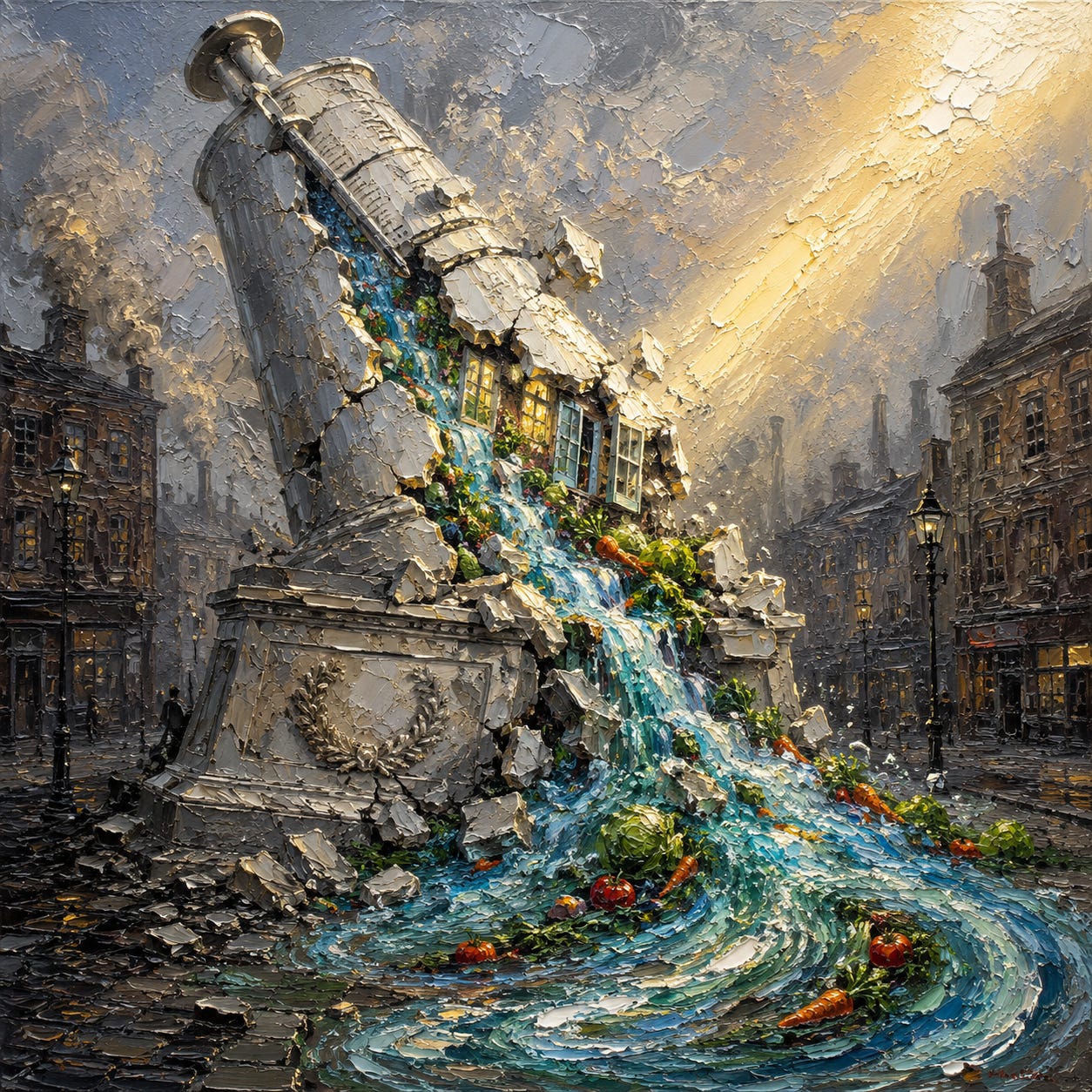
The hepatitis B vaccine was licensed without a randomised placebo-controlled pre-licensure trial. Stanley Plotkin acknowledged this under oath in January 2018, in the nine-hour deposition that forms the spine of Vaccines, Amen: The Religion of Vaccines (2025). Plotkin developed the rubella vaccine, edits the textbook treated as the bible of vaccinology, and has shaped six decades of childhood vaccination policy from his seat at the Advisory Committee on Immunization Practices. In the same deposition he confirmed receiving a share of $182 million in royalties from a single Merck product while serving as the father’s expert witness in a custody dispute about whether to put a child on the CDC schedule. Asked whether the royalties were relevant to his expert opinion, he said he did not see them as relevant.
Aaron Siri spent the first phase of his career litigating high-stakes business cases at major firms before founding his own practice. He pivoted to vaccine law after learning about the 1986 National Childhood Vaccine Injury Act, the federal statute that grants pharmaceutical manufacturers indemnification against civil liability for injuries caused by routine childhood vaccines. His firm has grown to over a hundred professionals, deposed the leading figures in vaccinology, and prosecuted more than a hundred lawsuits against federal and state health agencies. Most vaccine commentary turns on credentials; Siri’s evidentiary record is different. It consists of sworn testimony, FOIA productions, and primary documents produced in litigation, often the result of years-long legal battles. The book is built from that record.
By the time Vaccines, Amen appeared in 2025, the post-COVID landscape had made certain questions impossible to suppress. Roughly half of American children were not on the full CDC schedule, and at least one in eighty-eight toddlers had received no doses at all. The demographic skewed educated, scientifically literate, and included medical professionals. Public health authorities characterised this dissent as misinformation and a threat to public health. Rarely mentioned in that campaign: the 1986 statute that had indemnified manufacturers against civil liability, the abandonment of inert-placebo trials in pre-licensure testing, and the fact that the committee setting the national schedule had named its gavel after the man Siri was about to depose.
Siri does not write from the terrain framework; he writes from the legal record. What his decade of depositions and FOIA litigation has surfaced converges with what terrain practitioners have documented for over a century: that the products marketed to protect children belong to the broader category of toxic exposure, and that the regulatory apparatus has been constructed to prevent honest accounting of what these injections do. The full piece unpacks the nine-hour Plotkin deposition in detail: the mapping of his consulting and royalty arrangements with the four manufacturers behind almost every product on the CDC schedule; his point-by-point fit with the catalogue of academic-industry corruption that former NEJM editor Marcia Angell published as her account of how clinical research has been corrupted; the moment he conceded the hepatitis B vaccine had been licensed without a randomised placebo-controlled trial. It also covers the demographic data on the parents leaving the schedule and the structural reasons no proper safety study will be done on a product once it is licensed. The committee that sets the childhood schedule named its gavel after him — Stanley A. Plotkin.
The rest of this summary — the analogy, one-minute elevator explanation, 12-point summary, Q&As, and Golden Nugget — is for paid subscribers.
Your subscription also unlocks every other book summary in the library, the Deep Dive Audio Library, my original books (new ones added monthly), and three series for the moments when a real decision is in front of you: Questions for Your Doctor, Before You Consent, and Package Inserts.
The Unvaccinated — Live This Thursday
Truth Be Told airs this Thursday, September 17th. It’s a six-hour livestream. My one-hour presentation, The Unvaccinated, opens it.
About forty-five minutes on the question the medical establishment has treated as settled for a century, and never actually asked: are the vaccinated healthier than the unvaccinated?
Vaccination is the subject closest to my heart, and this is another chance to spread the word. The format preserves the pen name.
Five parts. The four studies that have quietly demolished the mainstream story. Why the question was avoided for a hundred years. What is actually in the vials. A different way of seeing cancer. And why the vitamin K shot — the first injection most children ever receive — matters more than any single argument I can make.
Start times: 12pm EST / 11am CT / 10am MDT / 9am PST / 6am HST / 4pm UTC — use timeanddate.com if you need to convert to your local time.
Tickets are here. Use code UNBEKOMING for $5 off (applies automatically at the link). Replay available afterwards, so timing isn’t a barrier.
If you already have a ticket, log in at that same link on the day to watch.
See you Thursday.