

Author’s note
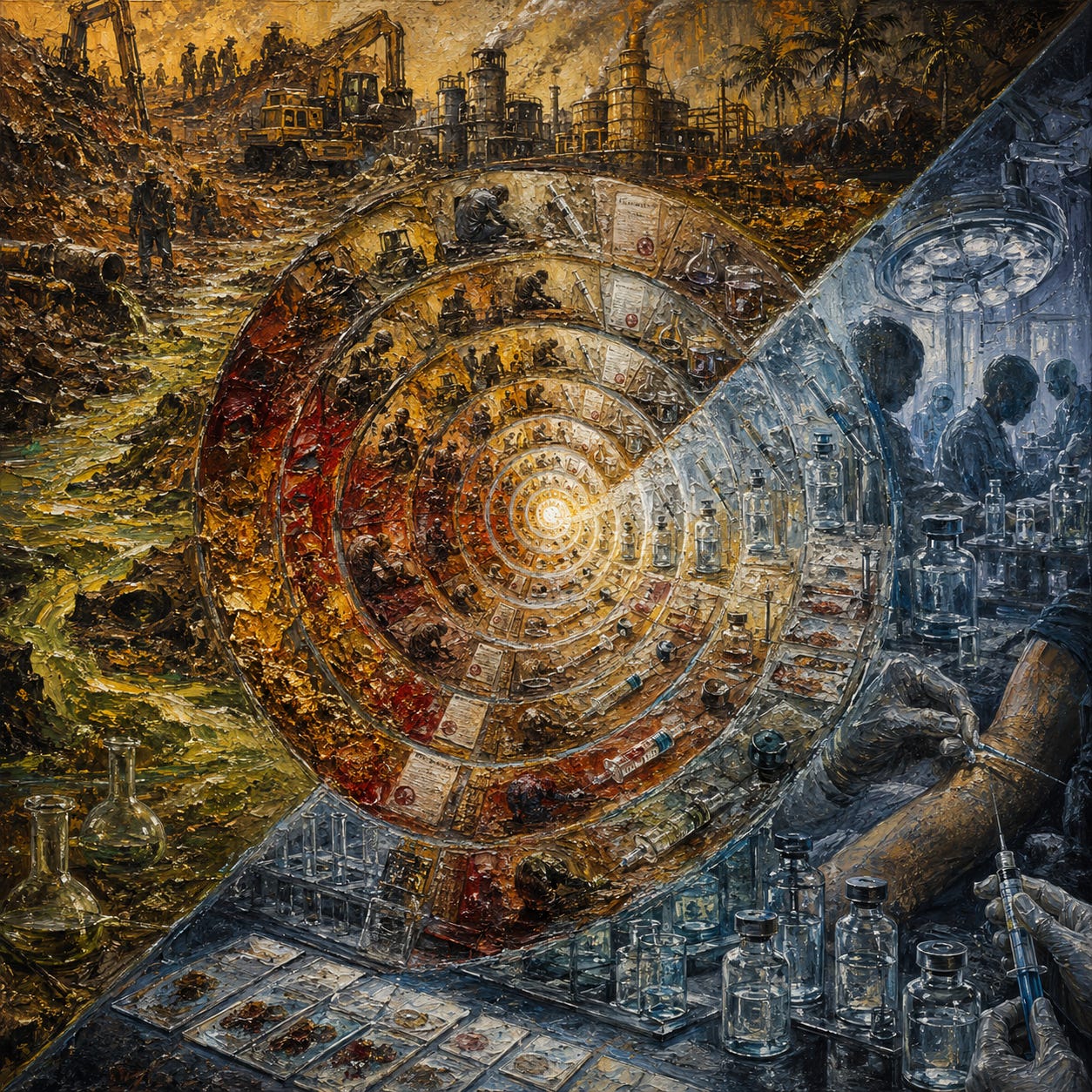
This essay operates in two registers. Where the establishment’s own terminology appears — virus, infection, outbreak, immune response — I am examining what the establishment claims, using their language to expose the contradictions within their own framework. Where I state what the condition actually is, I shift to terrain language: toxic exposure, pharmaceutical injury, malnutrition, the body’s intelligent response to insult. The two registers serve different functions. The first prosecutes the establishment from inside its own case file. The second tells you what happened.
The Declaration
On 16 May 2026, the World Health Organization declared the Ebola outbreak in the Democratic Republic of Congo a public health emergency of international concern.¹ Eighty-two confirmed cases. Two hundred thirty-six suspected cases. At least one hundred eighty-six deaths. The epicentre: Ituri Province, with cases reported in and around the gold-mining towns of Mongbwalu and Rwampara.
Of thirteen samples tested, eight returned positive on PCR.² The test method was not stated by the WHO but PCR has been the standard diagnostic for declared Ebola events since 2014. The April 2025 WHO fact sheet names three variants capable of causing “large Ebola outbreaks.” The 2026 event is attributed to Bundibugyo virus.
Hold those facts alongside another set. Ituri Province is among the most historically important gold-mining regions in northeastern DRC. Artisanal and small-scale gold mining is the dominant economic activity. The WHO’s own document on artisanal gold mining acknowledges that miners are exposed to mercury used to amalgamate the gold, cyanide used to extract gold from tailings, and other chemicals contained in dust and processing fumes.³ In March 2026, two months before the WHO declaration, an armed raid on a mining site in eastern DRC killed multiple workers. Humanitarian agencies described the incident as deepening an already severe crisis for civilians in Ituri.⁴
This is the fifth time the configuration has appeared since 1976. Mineral-rich African region. Population exposed to industrial toxins, pharmaceutical interventions, and armed conflict. Cluster of fever and bleeding cases. PCR-positive results. Viral emergency declared. International response brings vaccines, drugs, foreign personnel, and political attention. The resources beneath the soil remain accessible to the operators who were already extracting them.
The pattern matters because the pattern is the argument. What follows is an examination of how the architecture works in this particular configuration — what I described in Narratives of Extraction as the fundamental sequence: empire identifies or creates a crisis, offers a solution that requires surrendering autonomy, then extracts resources while victims thank them for help.⁵ Ebola is one such configuration. It has now run, in recognisable form, five times.
This work stays free because paid subscribers make it possible. They get the full book library, the Deep Dive Audio Library, and the Questions for Your Doctor, Before You Consent, and Package Insert series. No grants, no gatekeepers — your subscription is what keeps it that way.
What Is “Ebola”?
The clinical picture is non-specific
The CDC defines Ebola virus disease by a constellation of symptoms: fever, fatigue, muscle pain, headache, sore throat, vomiting, diarrhoea, rash, impaired kidney and liver function, and in severe cases internal and external bleeding.
None of these symptoms is unique to the alleged disease. The differential diagnoses that must be ruled out before Ebola can be declared, according to the establishment’s own clinical literature, include malaria, dengue fever, typhoid fever, shigellosis, rickettsial diseases, cholera, sepsis, borreliosis, Enterohemorrhagic E. coli, enteritis, leptospirosis, scrub typhus, plague, Q fever, candidiasis, histoplasmosis, trypanosomiasis, visceral leishmaniasis, measles, and viral hepatitis. The list also includes acute promyelocytic leukemia, hemolytic uremic syndrome, snake envenomation, clotting factor deficiencies, thrombotic thrombocytopenia purpura, hereditary haemorrhagic telangiectasia, Kawasaki disease, and warfarin poisoning.⁶
That list is the establishment’s own. It includes drug poisoning. It includes a snake bite. It includes hereditary conditions that produce hemorrhagic symptoms with no microbe involved.
The WHO has also acknowledged that the symptoms of Ebola are quite similar to the symptoms of pregnancy.⁷ This similarity produced extraordinary diagnostic confusion during the 1976 Zaire outbreak, where the highest incidence was in women aged 15–29 attending prenatal clinics — a finding the WHO reported without examining what the clinics had been administering.
What “isolation” means in virology
Most readers will assume the word isolation means what it does in ordinary English: separating the thing in question from everything else. In virology, it means the opposite.
The CDC names three methods by which Ebola is “isolated.” Method one: a crude human sample is mixed with monkey kidney cells (typically Vero cells, derived from African green monkey kidney) to see if the cells react. Method two: the sample is injected into the brains and abdomens of baby mice to see if it kills them. Method three: the sample is injected into the abdomens of young guinea pigs to see if it kills them.⁸
Each procedure adds material rather than separating it. The patient sample is combined with monkey kidney cells, broad-spectrum antibiotics (used to prevent bacterial contamination, often nephrotoxic to the very kidney cells being used), antifungals (often also kidney-toxic), fetal bovine serum, and trypsin. The mixture is then observed for what virologists call cytopathic effects — the breakdown of the cells — and the breakdown is attributed to a virus.
The control experiment that would distinguish the supposed virus from the toxic effects of the procedure itself — performing the same steps with no patient sample, to see whether the cells break down anyway — is not standardly performed. When John Enders and Thomas Peebles performed an analogous control experiment in 1954 during their measles work, the control cells broke down indistinguishably from the inoculated cells. They admitted in their own paper that they could not distinguish the supposed virus from whatever cytopathic agent was already present in the culture.⁹
This is the methodology that produced the discovery of Ebola in 1976. It has not been replaced. It has only been supplemented by PCR, a tool that detects short genetic sequences and is matched against a reference genome that was itself assembled from cell-culture material of the kind just described. The circle closes on itself. The virus is what the test detects. The test detects what the virus is said to contain. The actual particle, purified directly from a sick person’s bodily fluid and shown to cause disease in a healthy host through controlled experiment, has never been demonstrated.
Marburg and Ebola — the same particles
When the 1976 Zaire outbreak occurred, three laboratories examined the samples in parallel: Antwerp, Porton Down in the UK, and the CDC in Atlanta. The particles they observed under electron microscopy were morphologically indistinguishable from those previously associated with Marburg virus. The filamentous structures, the dimensions, the appearance under the microscope — identical.
What separated “Ebola” from “Marburg” was not the particles. It was the Indirect Fluorescent Antibody (IFA) test, which produced different reactions for sera from the two patient groups. The WHO’s own 1978 Bulletin report on the outbreak admitted that the IFA data were doubtful because samples from unrelated populations also showed antibodies to Ebola. The specificity of the reactions was, by the WHO’s own admission, uncertain. A better method for measuring Ebola antibodies, the report stated, was needed.¹⁰
Fifty years later, the antibody test remains. Two morphologically identical filoviruses are kept distinct on the strength of laboratory reactions that the agency declaring them distinct admitted, at the moment of declaration, were not reliably specific.
The FOI record
The Canadian researcher Christine Massey has submitted Freedom of Information requests to government agencies around the world seeking records of the isolation and purification of various alleged viruses, with isolation defined as physical separation of the particle from other material sufficient to characterise it and demonstrate it causes disease.
In response to her March 2021 request, the CDC informed her that a search of its records failed to reveal any documents pertaining to her request regarding Ebola virus.¹¹ Seven other FOI requests to various national agencies have returned the same answer. No records exist. The Public Health Agency of Canada acknowledged in its response that the isolation of a virus cannot be completed without the use of another medium — that is, the agency cannot produce evidence of isolation in the conventional scientific sense because what virology calls isolation does not involve separating the virus from anything.¹²
So the position from which the WHO declares each new emergency is this. A clinical picture that overlaps with twenty other conditions including drug poisoning. A diagnostic methodology that is circular by the regulatory agencies’ own descriptions. Particles indistinguishable from those of another named “virus” separated only by an antibody test the WHO itself called doubtful. And no records, anywhere, of the alleged causative agent ever having been isolated.
This is what the world has been told to fear since 1976.
The Template, Run Five Times
1976 — Yambuku Mission Hospital, Zaire
The first declared Ebola outbreak began at Yambuku Mission Hospital in northern Zaire in late August 1976. The official record: 318 cases of acute hemorrhagic fever between September and October, 280 deaths, an 88 percent case fatality rate described at the time as the highest mortality on record for any disease except rabies.¹³
The independent researcher Mike Stone, in a two-part investigation, has reconstructed what the WHO’s own 1978 report on the outbreak documents but did not emphasise.¹⁴
The index case was a man treated at the Yambuku Mission Hospital outpatient clinic with an injection of chloroquine for presumed malaria. The hospital used five syringes and five needles for the entire daily patient load. Between patients the syringes were rinsed in warm water. They were not sterilised. Of the 288 cases with sufficient data in the WHO investigation, 85 had as their single common risk factor the receipt of one or more injections at the hospital. No person whose contact with the disease was exclusively through parenteral injection survived.
Chloroquine in toxic doses causes gastrointestinal bleeding. The CDC’s own documentation confirms that chloroquine overdose is fatal. The other medications administered at Yambuku included aspirin, broad-spectrum antibiotics, corticosteroids, immunoglobulin, and the experimental antiviral moroxydine. Beta-lactam antibiotics had been documented as far back as 1986 in the Annals of Internal Medicine to impair normal hemostasis, producing template bleeding times greater than 20 minutes and, in severe cases, dangerous bleeding due to impaired platelet aggregation.¹⁵
The Bumba Zone in which the outbreak occurred is a dense tropical rainforest controlled, at the time, by corporate agro-industrial operations. The primary commercial force in the region was Lever Plantations in Zaire (PLZ), a massive subsidiary of Unilever. PLZ managed vast concessions of coffee, cocoa, rubber, rice, and oil palm plantations. The administrative headquarters of PLZ was located in Ebonda, approximately ten kilometres from Bumba and in immediate proximity to the Yambuku epicentre. The Yaligimba plantation, one of PLZ’s largest holdings, spanned roughly 3,700 hectares of industrial palm oil mills with an integrated processing capacity of approximately 78,615 tons per year. The working conditions on these plantations were notoriously severe, involving intensive manual labour, substandard housing in isolated labour camps, and direct exposure to raw plantation waste and industrial processing effluents.
In September 1976, precisely as the outbreak peaked, the Zairean government enacted a national retrocession decree, de-nationalising these agricultural enterprises and returning them to their original foreign corporate shareholders — Unilever chief among them. The timing is not coincidental. The outbreak provided cover for a massive reversal of Mobutu’s earlier nationalisation policy, allowing the resumption of foreign capital investment in the region under the protection of military-enforced quarantine. One consequence: the infrastructure and labour force that had been disrupted by the mid-1960s Simba Rebellion and subsequent national economic collapse could be rebuilt and stabilised with foreign money while local populations were confined to their villages under quarantine orders.
The plantations relied on extensive agrochemical applications to manage the tropical insects and maximise yields from cocoa, coffee, and oil palm crops. Organochlorine and organophosphate compounds were standard. The acute toxicological profile of these pesticides includes severe gastrointestinal distress, vomiting, bleeding, and neurological symptoms — overlapping substantially with the clinical picture attributed to Ebola. No environmental toxicology monitoring was conducted in the Bumba Zone at the time of the outbreak, leaving the volume and chemical composition of agrochemical discharges into local soils and waterways entirely undocumented.
The WHO’s own 1978 report conceded that women aged 15–29 showed the highest incidence of disease and that this was strongly related to attendance at the hospital’s prenatal and outpatient clinics, where they received injections. The report did not investigate whether the symptoms were drug-induced rather than viral. It did not investigate whether exposure to pesticides, heavy metals from industrial processing, or malnutrition in a population working in arduous plantation labour camps accounted for the hemorrhagic symptoms.
The outbreak ended when Yambuku Mission Hospital closed for lack of staff. The WHO report, in language that should have ended the story, stated that virus transmission was interrupted by stopping injections and isolating patients in their villages. The injections were the route of harm. When the injections stopped, the harm stopped.
The three laboratories — Antwerp, Porton Down, the CDC — observed particles indistinguishable from Marburg and declared a new virus on the strength of antibody tests they admitted were not reliably specific. The new pathogen was christened Ebola, after the Ebola River near Yambuku. The methodology that produced this declaration has not been corrected since.
What followed the declaration: a new viral entity entered the establishment’s catalogue. A research field opened. Funding flowed to filovirus laboratories in the US, UK, and Belgium. The Yambuku Mission Hospital injection practices were not investigated as the cause of the deaths. The chloroquine was not investigated. The bleeding was attributed to the virus. The case was closed before it had been opened.
1995 — Kikwit, Zaire
In May 1995, the US CDC sounded the alarm on what it described as an imminent Ebola virus pandemic. A cluster of fever cases in Kikwit, in what was then Zaire, was declared an Ebola outbreak.¹⁶
The timing is not incidental. Kikwit and the Kwilu/Bandundu region constitute the historical heartland of the Belgian Congo’s industrial oil palm extraction industry, centred around the Huileries du Congo Belge and the successor Plantations Lever au Zaïre (PLZ). The regional headquarters was located in Lusanga, formerly Leverville, within immediate vicinity of Kikwit. During the 1980s, the World Bank and the International Development Association (IDA) had financed a multi-million dollar Zaire Oil Palm Development Project, structured to rehabilitate and expand PLZ’s commercial plantations and processing mills in Bandundu. The project was designed to achieve its peak incremental production — estimated at 36,000 tons of palm oil per annum — precisely by 1995. The heavy industrial processing of palm fruit at the rehabilitated mills involved significant occupational hazards, including exposure to chemical solvents, heavy machinery, and high concentrations of organic processing waste. No environmental toxicology assessments were conducted to measure chemical runoff, pesticide concentrations in local drinking water, or soil contamination in the Kikwit peri-urban agricultural zones prior to the outbreak.
Time magazine ran photographs of CDC staff in spacesuit-grade protective equipment alongside electron-microscope images of what was claimed to be the dangerous pathogen. The director of the UN AIDS programme issued a public statement imagining a hypothetical scenario in which an infected person from Kikwit might fly to New York and pose a risk to the USA.
Within a month, Ebola was no longer a problem in Africa. Not one case appeared in Europe or North America.
The standard explanation: public health containment worked. The same containment that has not worked for any other declared infectious disease worked perfectly for the most contagious one ever described. The alternative explanation: there was nothing to contain. A cluster of fever cases in a region with widespread malaria, malnutrition, polluted water, and unregulated pharmaceutical access produced exactly the resolution one would expect when the cases ran their course. The CDC arrived in spacesuits. The cases resolved. The CDC departed.
The 1995 declaration produced no Nobel-quality publication demonstrating the existence of the alleged virus. The methodology remained the methodology of 1976. The diagnostic remained the antibody test the WHO had already called doubtful seventeen years earlier.
What followed the declaration: continued expansion of the filovirus research field. Increased CDC, USAMRIID, and Porton Down funding for viral hemorrhagic fever research. The first scenarios that would eventually become tabletop pandemic exercises. The 1995 event taught the public health apparatus that a single declared outbreak could generate global media attention and sustain ongoing funding even when no transmission occurred outside the original location.
2014–2016 — West Africa
The 2014 West African outbreak was the largest declared Ebola event in the official record. Cases were concentrated in Guinea, Liberia, and Sierra Leone.
Months before the declared outbreak, the Royal Society published a survey of pesticide use across nineteen locations in five West African countries. The paper, by P.C. Jepson and colleagues, documented extensive use of carbofuran, chlorpyrifos, dimethoate, endosulfan, and methamidophos.¹⁷ These are organophosphate and carbamate compounds whose acknowledged toxicological profile includes bleeding, vomiting, diarrhoea, rash, neurological symptoms, and in severe cases coma — the entire clinical picture of declared Ebola. The paper noted that pesticide imports to West Africa grew at an estimated 19 percent a year in the 1990s, and that the distribution and sale of pesticides in West Africa was not effectively regulated. Banned compounds were being repackaged and sold under different labels.
Beta-lactam antibiotic use was widespread and unregulated. A 2013 survey of pharmacies in Sierra Leone documented routine over-the-counter sale of beta-lactams. The Voice of America reported in February 2014 that across West Africa antibiotics had become the automatic choice for treating a child with a fever.¹⁸ The drugs that the 1986 Annals of Internal Medicine paper had identified as causing dangerous bleeding were being given for the bleeding they caused.
Vaccination campaigns were active throughout the affected region. Adenovirus vaccines used in Liberia, Guinea, and Sierra Leone list among their documented adverse effects blood in the urine or stool, and diarrhoea.
On 14 October 2014, the Liberian Daily Observer reported that a man in Schieffelin, Margibi County, had been arrested for attempting to put formaldehyde into a community well. He told the community he had been paid to do this and that he was not the only one. State radio reported at least ten deaths in the Dolostown community after drinking water from poisoned wells.¹⁹ The ATSDR lists formaldehyde poisoning symptoms as including nausea, vomiting, pain, bleeding, CNS depression, and coma.
Then there was Firestone. The Firestone Natural Rubber Company has run a plantation in Liberia for nearly a century and controls roughly 10 percent of the country’s arable land. Independent toxicology monitoring by Swedwatch documented severe contamination of the Farmington River, which borders the plantation, with heavy metals — iron and manganese at concentrations far exceeding both Liberian water quality guidelines and WHO drinking water safety limits. Air quality monitoring in the neighbouring community of Owensgrove recorded inhalable particulate matter (PM10), ammonia at four times background levels, and hydrogen sulphide at twice background levels, all significantly above international standards and directly attributable to the Firestone wastewater treatment facility.²⁰ Workers and their families, without alternative drinking water, drew from creeks contaminated with these metals and chemicals. The BBC investigation traced high levels of orthophosphate in waterways to Firestone processing operations southeast of Monrovia. Residents reported rashes, eye damage, nausea, and gastrointestinal illness. Fish stocks were depleted. Concurrently, gold mining operations in western Liberia by the Bea Mountain Mining Corporation were discharging cyanide and arsenic into local water sources — a processing defect in March 2016 released a massive plume of cyanide and arsenic, causing acute systemic poisoning and severe fevers in over twenty-five nearby residents.
Against this backdrop — saturated organophosphate exposure, indiscriminate antibiotic use, formaldehyde-contaminated wells, industrial pollution of drinking water, and vaccination programmes producing adverse effects identical to “Ebola symptoms” — the WHO declared a viral epidemic.
The Craig Spencer case is the test for whether the contagion claim survives contact with evidence. Spencer was a New York physician who worked with Doctors Without Borders in Guinea in October 2014. He returned to New York and, before reporting symptoms, spent six days moving through Manhattan. The New York Times reconstructed his timeline: subway rides on the 1, A, and L lines, a meal at the Meatball Shop, a stop at Blue Bottle Coffee, a walk on the High Line, a three-mile run along the Westside Highway, a CSA pickup, a bowling alley in Williamsburg, an Uber back to Harlem.²¹
Not one other person in New York developed Ebola.
The official explanation: people infected with Ebola cannot transmit the disease until they begin showing symptoms. This is a precise claim about a disease the WHO had simultaneously described as one of the most infectious ever known. The Manhattan timeline ought to have ended the contagion hypothesis. It did not, because the contagion hypothesis was never empirically tested. It was assumed, and the parameters were adjusted whenever data contradicted it.
What followed the declaration: USAID and the Department of Defense deployed approximately 2,800 US military personnel to Liberia under Operation United Assistance, building treatment centres and providing logistical support. The rVSV-ZEBOV (recombinant vesicular stomatitis virus) vaccine moved into accelerated trials in Guinea in 2015 under a ring vaccination protocol. ZMapp, Brincidofovir, and other experimental compounds were administered. Pharmaceutical companies and foundations announced contributions. Surveillance infrastructure was constructed across the three affected countries. None of this infrastructure was dismantled when the declared outbreak ended.
2018–2020 — North Kivu and Ituri
In early 2018, an outbreak of Ebola was reported in the Democratic Republic of Congo. A newly developed vaccine — rVSV-ZEBOV, manufactured by Merck under the trade name Ervebo — was deployed in a ring vaccination protocol.²² By July 2018, GAVI reported that 3,300 people had received investigational doses of the vaccine, and the outbreak was declared over. On 1 August 2018, the DRC Minister of Health announced a new outbreak. The vaccination programme was expanded.²³
The region in which the August 2018 outbreak occurred was North Kivu. The DRC holds significant quantities of cobalt, copper, diamond, tantalum, tin, and gold. Many international mining companies operate in North Kivu. Artisanal mining of cobalt and coltan is among the most hazardous occupations on the continent, with documented exposures to heavy metals, sulphuric acid, and processing chemicals.²⁴
The 2018–2020 event ran for two years across North Kivu and Ituri Provinces — both mineral-rich, both subject to active armed conflict, both home to substantial displaced populations. The gold-mining town of Mongbwalu, located north of Bunia in Ituri, represents a major extraction hub. Artisanal miners routinely utilized massive quantities of liquid mercury for gold extraction, resulting in severe, unregulated mercury vapour exposure and widespread contamination of local water bodies. Industrial and artisanal runoff heavily degraded the Ituri River, causing siltation, deforestation, and heavy metal accumulation. The local population suffered from chronic heavy metal toxicity, which clinically presents with severe neurological deficits, kidney damage, and gastrointestinal bleeding.
The vaccine campaign continued throughout. The investigational doses became licensed product. Merck’s Ervebo received FDA approval in December 2019. Johnson & Johnson’s two-dose regimen (Ad26.ZEBOV / MVA-BN-Filo) received expanded use authorisation in late 2019. The Janssen trial documented systemic adverse events in approximately 77 percent of recipients following the first dose of Ad26.ZEBOV — injection site pain, headache, and fatigue — significantly higher than rates reported for standard childhood vaccines. These trial populations, recruited from areas near the Rwandan border, were not in a position to give the kind of informed consent that would be required of trial subjects in Boston or London. A pharmaceutical asset that had been in development since the 1990s achieved commercial product status through trials conducted on populations in active conflict zones experiencing documented mercury and cyanide exposure, severe malnutrition, and displacement.
What followed the declaration: Ervebo entered the WHO emergency stockpile. The vaccine became a routine response component for any subsequent declared Ebola event. Mining operations in North Kivu and Ituri continued. AFRICOM presence in the region expanded under cooperation and training frameworks. The pattern of declaring health emergencies in mineral-rich conflict zones, and using those emergencies to deploy pharmaceutical products and foreign personnel, became institutional.
2026 — Ituri
Which brings us back to where we began. The WHO declaration of 16 May 2026. Eighty-two confirmed cases. Two hundred thirty-six suspected cases. At least one hundred eighty-six deaths. Ituri Province. Bundibugyo variant attributed.
The affected areas — Mongbwalu, Rwampara — are among the most historically important gold-mining zones in northeastern DRC. Artisanal and small-scale gold mining is the dominant economic activity. Industrial operations are held by Mongbwalu Gold Mines (MGM) and the state-owned Société Minière de Kilo Moto (SOKIMO), alongside extensive illegal artisanal cooperatives. Liquid mercury is sold openly without any regulatory oversight and is used in massive quantities to process gold ore, discharging highly toxic residues directly into the Ituri River and municipal water sources. Artisanal miners utilize a destructive “under-current” (sous courant) system that physically alters riverbeds, clogs local waterways, and causes widespread flooding in villages. Satellite imagery reveals extensive deforestation and ecological degradation driven by these mining operations. The chronic toxic load from mercury and cyanide — used extensively by industrial miners and informal operators — has caused severe systemic illness, malnourishment, and immunological suppression in local populations, particularly among children.
The conditions are intensified by long-running armed conflict over control of the mineral resources. Ethnic Lendu and Hema militias, including groups such as CODECO and FNI, contend for control over the lucrative gold mines. A March 2026 raid on a mining site killed multiple workers and was described by humanitarian agencies as deepening an already severe crisis for civilians.
PCR is the diagnostic tool. PCR detects short genetic sequences matched to a reference genome assembled from cell-culture material that has never been independently isolated. Eight of thirteen samples returned positive. The samples were drawn from a population suffering documented mercury exposure, cyanide exposure, displacement, malnutrition, contaminated water, and pharmaceutical interventions of multiple kinds. Any number of these exposures, individually or in combination, produces the clinical picture attributed to Ebola.
What follows the 2026 declaration is being written as this essay is published. Vaccine deployment. International personnel. Humanitarian funding. Surveillance expansion. The mineral resources remain accessible to the operators who were already extracting them. The pattern, in its fifth iteration, is no longer hypothetical.
Who Benefits
A declared public health emergency of international concern activates a sequence. The WHO releases emergency funds. The World Bank’s Pandemic Emergency Financing Facility activates. USAID, the Bill and Melinda Gates Foundation, the Wellcome Trust, GAVI, and CEPI announce contributions. Vaccine procurement contracts are signed. Pharmaceutical companies whose products are approved or trialled receive payments. Diagnostic manufacturers receive bulk orders. PPE manufacturers receive bulk orders. Foreign personnel deploy. Foreign militaries provide logistics. AFRICOM bases its activity on humanitarian justification.
The agencies that have failed to isolate the alleged pathogen are the agencies that declare its emergence. The pharmaceutical companies whose products produce symptoms identical to the declared disease supply the products marketed as treating it. The international financial institutions that profit from the emergency response are the institutions that disburse it. The militaries that gain regional access during the response are the militaries seeking that access for unrelated reasons.
This is the configuration described in Narratives of Extraction operating in its viral-emergency form. The arrangement is structural rather than conspiratorial. A small group of named individuals does not need to coordinate in secret. The incentives are aligned structurally: the same foundations that fund vaccine development fund the institutions that declare pandemics and the media platforms that legitimize those declarations. This structural alignment means the financial incentives reward crisis declaration regardless of actual epidemiological thresholds.
Consider the institutional circuit. Craig Spencer, the New York physician who became the public face of the 2014 West African Ebola response, exemplifies the structure. His academic position at Brown University is secured through research grants funded by the Peter G. Peterson Foundation — established by a Blackstone co-founder and former Secretary of Commerce. His media prominence during the 2014 response (he won an Emmy for pandemic commentary) made him a trusted voice. His policy analyses are published in Think Global Health, the official publication of the Council on Foreign Relations, where he holds membership. Think Global Health is jointly operated by the CFR and the Institute for Health Metrics and Evaluation — an institution founded with a $105 million grant from the Bill & Melinda Gates Foundation and sustained by hundreds of millions in annual Gates funding. The statistical models that populate Spencer's analyses are generated by IHME. The academics publishing in Think Global Health hold positions on CFR boards and advisory committees. The media platforms amplifying their work during declared emergencies (Emmy-winning documentaries, op-eds in major outlets, real-time dispatch narratives from crisis zones) are sustained by advertising and institutional partnerships dependent on foundation funding flows. Spencer's career trajectory, institutional security, research funding access, publication platform, and public credibility all converge on the same financial source: the foundations that profit from the declaration of viral emergencies and the deployment of their pharmaceutical solutions.
The structure does not require conspiracy. A public health emergency declaration triggers funding flows from the World Bank, USAID, Gates Foundation, Wellcome Trust, GAVI, and CEPI. Vaccine procurement contracts follow. The institutions that declare the emergency, the institutions that fund the research that shapes the declaration, the institutions that publish the analysis justifying the declaration, and the institutions that manufacture and distribute the response products are financially integrated. An epidemiological threshold low enough to declare a crisis also low enough to justify vaccine trials in conflict zones, foreign military deployment, and biosecurity legislation all converge on the same policy recommendations. No backroom coordination is required.
The incentives are aligned. Declaring a viral emergency produces useful outcomes for every party with the authority to declare it — and every party with the institutional capacity to declare it is funded by the same foundations that profit from the declaration.
The Goldman Sachs analyst question from 2018 applies. Is curing patients a sustainable business model? The analyst’s own answer was that it is not, and that the financial logic of pharmaceutical revenue runs against cures. Substitute finding non-viral causes for curing patients and the same logic operates. A finding that what is being called Ebola is in significant part industrial poisoning, drug injury, and malnutrition-driven hemorrhagic disease would unwind the structure of vaccine development, emergency response funding, biosecurity legislation, and international military positioning that has been built on the assumption of viral causation. There is no agency with both the authority and the incentive to produce that finding.
The questions therefore remain unasked. Every few years a new outbreak is declared in a new mineral-rich region. The template runs.
Explain It To A 6 Year Old
In some parts of Africa, the ground holds gold and copper and other valuable things. Big companies come to take them out. The work makes the water and the air full of poisons. The people who live there breathe the poisons and drink the water.
When the people get sick — when they get hot fevers and bleed and feel terrible — doctors say a tiny invisible thing made them sick. They call it Ebola. They send people in spacesuits. They give shots and pills.
But nobody has ever actually shown the tiny invisible thing exists. They have looked for it for fifty years. They cannot find it. The tests they use cannot find a thing that has never been seen by anyone.
The people are sick because of the poisons, the hunger, and the fighting. The shots and pills often make them sicker. When the doctors stop coming, the people get better.
Every time the doctors say “Ebola is here” it happens to be in a place where the ground holds something valuable. The doctors come because of the sickness. But other people come too, and what they want is what is under the ground.
It is sad. It has been happening for a long time. The first step to making it stop is for people to know what is actually happening.
What Has Been Documented
The clinical picture attributed to Ebola overlaps, by the establishment’s own admission, with malaria, dengue, typhoid, snake envenomation, warfarin poisoning, and a list of twenty other conditions including hereditary bleeding disorders.
The diagnostic methodology — Vero monkey kidney cell culture, antibody tests of admitted doubtful specificity, PCR matched to never-isolated reference material — is circular by the regulatory agencies’ own descriptions. The CDC has acknowledged in FOI responses that no records exist of Ebola virus isolation in the conventional scientific sense. Other national agencies have given the same answer.
The morphologically identical “Marburg” particles are kept distinct from “Ebola” particles on the strength of antibody tests the WHO admitted were not reliably specific at the moment of declaration.
Five declared Ebola events since 1976 — Yambuku, Kikwit, West Africa, North Kivu and Ituri, Ituri again — have occurred in regions experiencing intensive industrial extraction, agrochemical exposure, pharmaceutical overuse, contaminated water, vaccination campaigns producing identical adverse effects, and armed conflict. The Yambuku outbreak ended when the hospital closed and injections stopped. The 1995 Kikwit pandemic that was about to leave the jungle did not leave the jungle. The Craig Spencer Manhattan timeline produced no secondary cases. The 2018–2020 DRC event served as the clinical trial that licensed Ervebo. The 2026 declaration is unfolding in gold-mining country during active armed conflict.
What is being called Ebola is, in significant part, pharmaceutical injury and industrial poisoning misattributed to a virus that has never been demonstrated to exist. The exposures that produce the symptoms are documented in the peer-reviewed toxicological literature. The injection practices, drug regimens, vaccine adverse-event profiles, and water contamination records are documented in the establishment’s own reports. The pattern across five events is documented in the WHO’s own outbreak archives. The absence of isolation is documented in the agencies’ own FOI responses.
The configuration is what Narratives of Extraction described: a crisis identified or created, a solution that requires the surrender of autonomy, resources extracted while the victims are told the operator has come to help. In its viral-emergency form, the configuration has now appeared five times. It will appear again, in another mineral-rich region, with another PCR-positive cluster, and another vaccine to deploy.
What changes the configuration is people recognising it. The documents exist. The pattern repeats. The fifth declaration sits in the WHO’s archive alongside the previous four. The next one will not be the last, but each recognition makes the next one harder to land.
References
World Health Organization, “Ebola Disease — Democratic Republic of the Congo,” Disease Outbreak News, 16 May 2026.
World Health Network, Public Health Alert on the 2026 Ituri Ebola declaration, May 2026.
World Health Organization, Artisanal and Small-Scale Gold Mining and Health (Geneva: WHO).
“Deadly raid on mining site in eastern Democratic Republic of Congo deepens security and humanitarian crisis,” news reporting, March 2026.
Unbekoming, “Narratives of Extraction: From ‘Overpopulation’ to ‘Safe and Effective’,” Lies are Unbekoming Substack, 1 November 2025.
“Ebola virus disease,” Wikipedia, citing the establishment’s own clinical literature on differential diagnosis.
World Health Organization, 1978 Bulletin of the World Health Organization 56(2), full report on the 1976 Zaire outbreak; see also Mike Stone, “The Ebola ‘Virus’ Part 1” and “Part 2,” ViroLIEgy.
“Ebola (Ebola Virus Disease) — Diagnosis,” Centers for Disease Control and Prevention, archived.
Enders, J., and Peebles, T., “Propagation in tissue cultures of cytopathogenic agents from patients with measles,” Proceedings of the Society for Experimental Biology and Medicine, 1954; see also Daniel Roytas, Can You Catch a Cold? and Tom Cowan, The Contagion Myth.
World Health Organization, Bulletin of the World Health Organization 56(2) (1978).
CDC FOIA response to Christine Massey, March 2021; archived at fluoridefreepeel.ca.
Public Health Agency of Canada FOIA response to Christine Massey, December 2021.
Bowen, E. et al., “Viral Haemorrhagic Fever in Southern Sudan and Northern Zaire,” The Lancet, 12 March 1977.
Mike Stone, “The Ebola ‘Virus’ Part 1” and “The Ebola ‘Virus’ Part 2,” ViroLIEgy.
“Potential for bleeding with the new beta-lactam antibiotics,” Annals of Internal Medicine 105(6) (December 1986): 924–31.
Engelbrecht, T., Köhnlein, C., and Bailey, S., Virus Mania, 3rd edition (2021), chapter on 1995 Kikwit.
Jepson, P.C. et al., “Measuring pesticide ecological and health risks in West African agriculture to establish an enabling environment for sustainable intensification,” Philosophical Transactions of the Royal Society B, 17 February 2014.
Voice of America reporting, February 2014; American Association of Pharmaceutical Scientists publications on West African over-the-counter antibiotic distribution.
Daily Observer (Liberia), “Breaking: Formaldehyde in Water Allegedly Causing Ebola-like symptoms,” 14 October 2014.
IRIN news service, “LIBERIA: Community demands answers on rubber pollution,” 4 June 2009; BBC News investigation into Firestone Liberia, 2014.
“What the New York City Ebola Patient Was Doing Before He Was Hospitalized,” New York Times, 24 October 2014.
Mark Bailey, The Final Pandemic: An Antidote (2022), chapter on Ebola.
Dawn Lester and David Parker, What Really Makes You Ill? Why Everything You Thought You Knew About Disease Is Wrong, chapter on Ebola and the 2018 DRC outbreak.
Pure Earth and Green Cross Switzerland, World’s Worst Pollution Problems: The Toxics Beneath Our Feet (2016).
Dawn Lester, “Move Over Hanta — It’s Ebola’s Turn Now!” Dawn’s Writings Substack, 18 May 2026.
Jon Rappoport, “Ebola: shattering the lies and the fakery,” NoMoreFakeNews.com, 12 January 2022, drawing on his earlier 2014 and 2017 investigations.
Virology covers up the real causes of diseases.
Polio covered up for DDT.
Aids covered up for harmful drugs.
Ebola covers up for toxic dumping in Africa.
Spectacular expose! Praying that more and more people see through the lies…and the immoral, criminal behavior.