

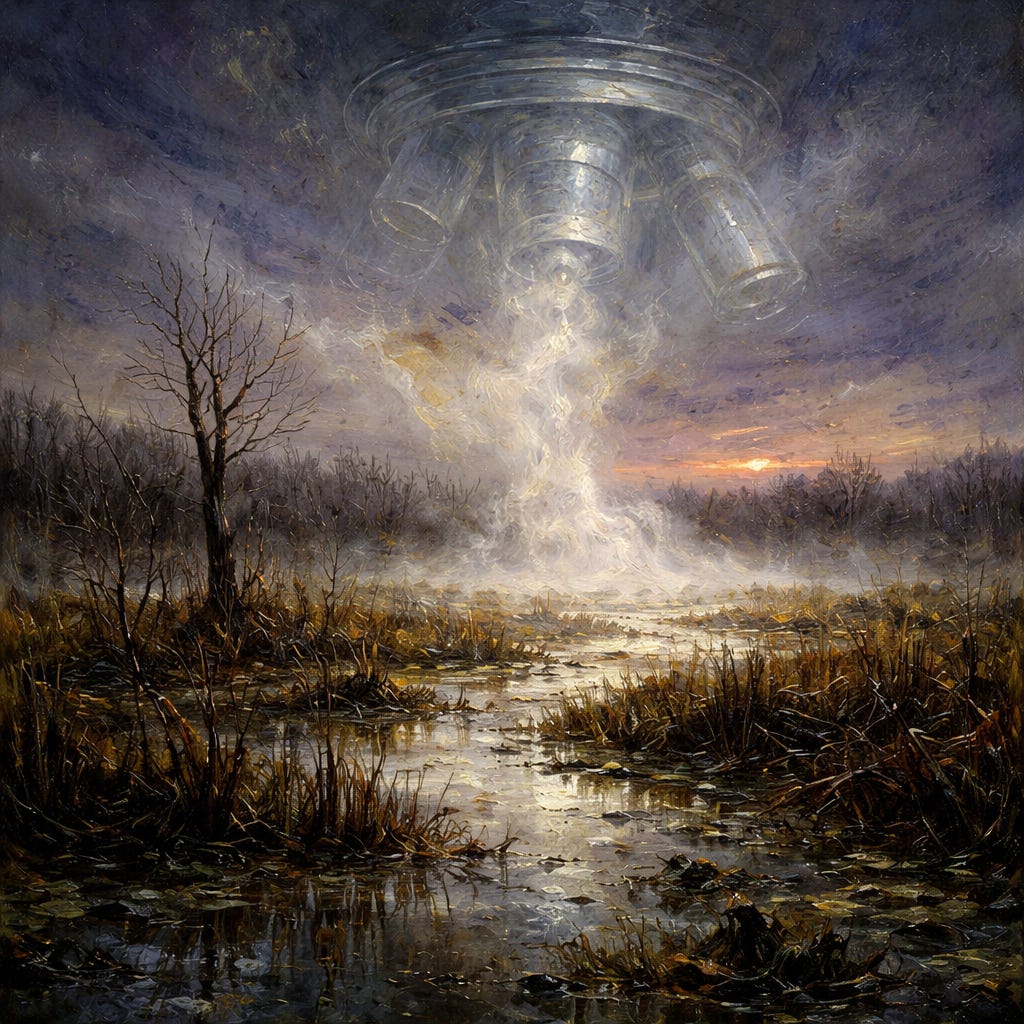
The disease was named for the marsh. Mal’aria is Italian for bad air — the vapour rising from stagnant water, the smell of decay in low-lying wetlands. For 2,500 years, from Hippocrates onward, the medical literature traced the fever, chills, enlarged spleen, and anaemia to the terrain where they occurred.¹ Physicians who had never heard of a protozoan parasite or a female Anopheles mosquito could predict with precision where the illness would appear: in the Fens of eastern England, in the marshes of Kent and Essex, in the Roman Campagna, in the swamps of the American South, in the Finnish peat bogs. The geography was the diagnosis.
Then a French army officer looked into a microscope in Algeria in 1880 and saw something moving in the blood of a sick man. He called it a parasite. Within twenty years, the terrain-based understanding that had guided medical practice for more than two millennia was replaced by a theory built on two experiments with no controls, six earlier microscopists whose observations were overwritten, and a scaffold of inferences drawn from birds and monkeys. The replacement was not the product of superior evidence. It was the product of the rising institutional power of germ theory and the need of an industrialising pharmaceutical industry for a target its products could be sold against.
This essay examines the evidentiary foundations of what is now called malaria. It follows the subject chronologically: from the pre-parasite era of marsh fever, through the flawed foundational experiments of Laveran and Ross, through a century of toxic treatments marketed as cures, through the mid-century “eradication” campaigns that took credit for retreats already underway, and into the present — where a twenty-one-year-old soldier in Texas can be diagnosed with COVID, then with a viral infection, then with malaria, for the same symptoms, depending on which test is run.
The finding is not that illness at the places and times called malarial is fictional. The finding is that the illness is real, the causes are multiple and environmental, and the parasite theory is a nineteenth-century hypothesis that was never demonstrated and has been preserved by institutional inertia and pharmaceutical revenue. The disease was named for the marsh. It has always been marsh fever. The parasite is a co-traveller with the conditions that produce illness — not their cause.
Support This Work
This work remains free because paid subscribers make it possible. If you find value here, consider joining them.
Paid subscribers get access to all books — including The DMSO Book, The Kitchen Remedies Guide, Chlorine Dioxide, The PSA Trap, Breast Cancer, and more — with 1-2 new books added each month. Plus the Deep Dive Audio Library: 180+ in-depth audio book summaries and discussions.
Pricing Update: The annual subscription moves from $50 AUD to $50 USD on May 1 — the first change in five years. Current paid subscribers keep their existing rate. Free subscribers can lock in the current price by upgrading before May 1.
The Disease Before the Parasite
Shakespeare mentions ague in eight of his plays.² In Twelfth Night, Sir Andrew Aguecheek embodies the pale, chronically enfeebled phenotype that Elizabethans recognised without needing a laboratory. The disease was common in England during the Little Ice Age — the period from roughly 1550 to 1850 when the Thames froze solid enough to host Frost Fairs. The CDC’s own pages admit this: “From 1564 to the 1730s — the coldest period of the Little Ice Age — malaria was an important cause of illness and death in several parts of England.”³
The admission undermines the modern paradigm on its own terms. The CDC elsewhere states that Plasmodium cannot mature in the mosquito vector at temperatures below 20°C, because sporogony requires sustained warmth.⁴ The Fens in the sixteenth century did not provide sustained warmth. Winters were severe enough that the Thames carried the weight of full-scale market fairs. Yet the disease was endemic. Death rates in the Essex marsh parishes during this period were comparable to those measured by the WHO in malaria-endemic sub-Saharan Africa in the 1970s.⁵
The temperate-zone problem extends further. Huldén, Huldén, and Heliövaara reconstructed Finnish parish death records from 1750 to 1870 and documented endemic malaria reaching 68°N latitude — well inside the Arctic Circle — where summer temperatures only irregularly exceeded the 16°C threshold the modern theory requires.⁶ Transmission in these sub-arctic cabins was sustained through winter by Anopheles messeae hibernating in the heated indoor environment of Finnish peasant dwellings. Endemic malaria appeared in Scandinavia, Russia, northern Canada, and the northern United States through the nineteenth century. Holland was declared malaria-free only in 1970.⁷ The Balkans in 1975. These regions are not tropical. They never were. The disease did not respect the thermal niche the modern parasite theory requires it to respect.
The retreat of the disease from these regions is equally inconvenient for the dominant narrative. Malaria began to decline in England in the early nineteenth century, well before quinine was widely distributed, more than a century before chloroquine, and a full generation before DDT.⁸ By 1900, the coastal marsh ague of Kent and Essex was essentially extinct. The 1890 United States Census attributed 2.1 percent of all deaths to malaria, peaking above 10 percent in Arkansas.⁹ By 1933, when the Tennessee Valley Authority began its formal control programme, 30 percent of the valley’s population was affected. By 1947, before DDT’s national rollout, the disease was essentially eliminated from the United States.¹⁰ In Europe, endemic malaria was gone from most parts by the 1930s.
Drainage did the work. Wetland reclamation for agriculture. Window-screening. Rural electrification. Better housing. Improved nutrition. The mechanised replacement of rice-paddy and subsistence farming removed the illness from the temperate world. Dr M L Johnson, writing in the mid-twentieth-century periodical New Biology and cited by Herbert Shelton, documented the point: “Where social conditions have been improved, malaria has gradually receded before any special measures have been taken to conquer it.”¹¹ The disease tracked the condition of the terrain. When the terrain improved, the disease retreated. Pesticides and antimalarial drugs arrived late and took credit for work already done.
There is a further contradiction the modern paradigm cannot absorb. Anopheles mosquitoes capable of transmitting malaria still inhabit England, Europe, and the United States in enormous numbers. An. atroparvus breeds in English salt-marshes. An. quadrimaculatus is common across the American South. These are the same species, in the same places, that once carried endemic malaria. The literature has a name for this: “anophelism without malaria.”¹² The vectors are present. The disease is not. The probability that every Plasmodium parasite was exterminated while not every mosquito was exterminated is zero. Either the vectors lost their parasites through some unspecified process that has never been documented, or the parasite was never the controlling factor in the first place.
Laveran Sees Something in a Drop of Blood
On 20 October 1880, a French army physician named Charles Louis Alphonse Laveran examined the blood of a feverish patient in Constantine, Algeria, and noticed among the red blood cells certain elements that he decided were parasites.¹³ He described three forms, numbered them 1, 2, and 3, and proposed that their presence in the blood was probably the principal cause of malaria. The Academy of Sciences in Paris elected him to honorary membership. In 1907 he received the Nobel Prize.
What the paper actually established is narrower than the award citation suggested. Laveran examined the blood of 44 malaria patients and found his “parasites” in 26 of them — a little over half.¹⁴ He acknowledged this directly in his own paper. He asserted that the elements were not found in patients who were not ill with malaria. Subsequent research has shown this claim to be false.
The reasoning in the paper is inferential rather than experimental. Laveran posited that his elements were parasites for three reasons. First, they were always found in malaria cases — a claim his own data contradicts, since he failed to find them in 18 of 44 patients. Second, they disappeared from the blood after long treatments with quinine sulfate, and these patients were then considered cured. Third, similar elements were found in the blood of patients who had died of pernicious fever — which, far from strengthening the parasitic hypothesis, demonstrated that the elements were not specific to malaria.
Laveran closed his paper with three questions that he did not answer: Where did these parasitic elements come from? How did they enter the human system? How did they cause intermittent fever and the other signs of malaria?¹⁵ He did not demonstrate causation. He described correlation, in about 59 percent of his sample, between the presence of certain microscopic bodies and the clinical diagnosis of malaria. He then asserted a causal role for these bodies without experimental support.
It is rarely mentioned that Laveran was not the first to observe microorganisms in the blood of malaria patients. Meckel had done so in 1847. Furichs in 1858. Planer in 1854. Delafield in 1872. Jones in 1876.¹⁶ None of these earlier observers had developed their findings in the direction of a parasitic theory of disease causation. Laveran’s elements won by default, at the moment when germ theory had gained sufficient institutional momentum to promote a microscopic observation to a causal agent. The Academy rewarded the finding that fit the paradigm. The prior observations that did not fit were not rewarded, and are now footnotes.
Ross and Two Brown Mosquitoes
Laveran’s paper left open the question of how the parasite entered the human body. For seventeen years, the question remained unanswered. Then, in August 1897, a British military physician named Ronald Ross, working in Secunderabad, India, dissected the stomach of a mosquito and believed he had found the answer. He was awarded the Nobel Prize in 1902.
Ross’s own description of his methodology is candid. Writing in The British Medical Journal in December 1897, he acknowledged that the study was difficult because “there is no a priori indication of what the derived parasite will be like precisely, nor in what particular species of insect the experiment will be successful.”¹⁷ He did not know what he was looking for. He did not know which mosquito might contain it. He set out with the assumption that something would eventually be found, and arranged his study to confirm that assumption when anything sufficiently suspicious appeared.
For two years, Ross fed mosquitoes of various species on the blood of malaria patients and dissected their bodies. He found six different microorganisms in mosquito tissue — a nematode, a fungus, a gregarine, a sarcosporidium, a coccidium, and some swarm spores — none of which he could connect to the ingestion of malarial blood. Finally, working with a “new, brown species” of mosquito that he described as extremely rare, he found in the stomachs of two specimens certain “remarkable and suspicious cells containing pigment identical in appearance to that of the parasite of malaria.”¹⁸
Two mosquitoes of a rare species. No controls. No replicates. No mosquitoes from the same source fed on blood from a healthy volunteer and examined for the same pigmented cells. The paper was sent to The British Medical Journal, which circulated it to three reviewers — Dr Thin, Mr Bland Sutton, and Dr Patrick Manson — before publication. Manson, who went on to become the father of tropical medicine and a fierce advocate of Ross’s findings, wrote in his review that “until these cells have been stained and their exact structure more carefully studied, it is impossible to say if they contain parasites.” He raised four possibilities: the cells might contain the malaria parasite; they might contain a different parasite; they might be normal structures in that species of mosquito; or the pigment might be dead material taken up by the insect’s stomach cells, with no living parasite involved at all. His conclusion was that “more work is required before the matter can be finally settled.”¹⁹
The second reviewer, Bland Sutton, was blunter. “I see no trace of the parasite of malaria itself in these preparations,” he wrote. He considered that the changes Ross attributed to parasitic development could be produced in mosquito stomach contents by the simple addition of distilled water. “I have not been able to satisfy myself that these preparations show any development of the parasite of malaria in the mosquito’s stomach.”²⁰
The paper was published anyway. A century later, a 2007 bulletin from the World Health Organization looked back at Ross’s methodology with uncommon candour. The bulletin asked: “Imagine today sending an article to a leading medical journal in which you describe observations on novel objects found on the midguts of just two ‘brown’ mosquitoes, obtained from larvae of natural origin, that you had previously fed on a naturally infected patient — with no appropriate controls and no replicates! What hope would it have of getting past the editor and reviewers?” The bulletin characterised the study as “hardly conforming to the concept of a controlled and replicated study.”²¹
Two mosquitoes. Pigmented cells whose parasitic nature was doubted by the paper’s own reviewers. No controls. No replication. A journal that admits, with the benefit of hindsight, that the work would not survive editorial review today. The Nobel Prize was awarded in 1902. Every subsequent claim about mosquito transmission of malaria was built upon it.
The elucidation of the parasite’s full life cycle took another eighty-five years, and it was not achieved through direct observation in humans. F E G Cox’s 2010 historical review acknowledges the scaffolding plainly: “apart from the initial discovery of parasites in the blood, every subsequent discovery has been based on studies on non-human malaria parasites and related organisms.”²² The sexual stages were identified in crows infected with Haemoproteus columbae. The transmission cycle was demonstrated in birds infected with Plasmodium relictum. The liver stage was discovered in 1948 in monkeys infected with Plasmodium cynomolgi. The dormant hypnozoite was demonstrated in primate models only in 1982. The human malaria parasite’s life cycle, in other words, was assembled by analogy from avian and simian observations. It was never directly observed in isolation within a human host.
The Parasite Without the Disease
A theory of disease causation requires that the proposed cause be present in those who are ill and absent in those who are not. On this point, the establishment literature has conceded the case without apparently realising it has done so.
A 2013 review found that between 73 and 98 percent of Plasmodium falciparum infections are asymptomatic, across seven studies.²³ Five studies examining P. vivax found 64 to 100 percent of infections to be asymptomatic. A 2020 study stated that “the majority of the population in malaria endemic areas (>60%) is asymptomatic (without overt symptoms), even in high transmission areas.”²⁴ A nationally representative 2015-16 Malawi survey found 31.1 percent PCR-prevalence of P. falciparum among asymptomatic adults, with most infections below ten parasites per microlitre of blood.²⁵
The WHO itself states this clearly in technical documents, though rarely in public communications: “the vast majority of all malaria-infected patients in the world produce few (if any) symptoms in the human.”²⁶ The CDC website on malaria diagnosis contains the same admission: “In some malaria-endemic areas, malaria transmission is so intense that a large proportion of the population is infected but not made ill by the parasites.”²⁷ The Atlas of Human Malaria states explicitly: “The presence of malaria parasites in a blood sample is an indication of infection, but not necessarily of disease.”²⁸
These are not the statements of an organism that causes disease. They are the statements of an organism that is present in healthy people. In sub-Saharan African populations where the parasite is endemic, it is found in most people most of the time. Most of those people are not ill. The institutional explanation is that these populations have developed “partial immunity” through lifelong exposure — a post-hoc rescue of a theory whose central premise has been refuted by its own evidence.
The WHO’s own Malaria factsheet contains an admission that goes further: “Adults who have lived in areas with high malaria transmission since childhood and remain resident in such areas are generally not at risk of death from malaria.”²⁹ The disease that kills half a million people a year, according to the same organisation’s estimates, does not kill the adults who have lived their entire lives surrounded by its supposed cause. The WHO’s explanation invokes “partial immunity” developed through repeated exposure. A terrain reading explains it more parsimoniously: the cause of death in those who die is not the parasite, and the reason long-term residents survive is that they have adapted to the local environmental burden and are less likely to encounter the specific acute insults — drug toxicity, severe malnutrition, dehydration, co-infection — that transform a terrain imbalance into fatal illness.
The parasite, then, is present in most healthy Africans and was absent in 18 of Laveran’s 44 malaria patients. It is neither necessary nor sufficient for the disease. It is associated, in some cases, with illness; it is associated, in many more cases, with no illness at all. The foundational requirement for a causal relationship has never been met.
The Diagnostics Cannot Diagnose
If the parasite’s presence does not reliably indicate disease, the tests used to confirm malaria diagnoses should at minimum be accurate about the parasite’s presence. They are not.
Rapid diagnostic tests (RDTs), the dominant field tool in sub-Saharan Africa, have documented false-positive rates of 26.8 percent and false-negative rates of 48.6 percent in one study.³⁰ The positive predictive value was 58.1 percent; the negative predictive value was 67.6 percent. The researchers concluded that the tests “should not be used as a stand-alone test kit.” The HRP2 antigen the tests detect persists in the blood for weeks or months after the parasite has been cleared, producing false positives. Up to 27 percent of false negatives in African populations are now attributable to pfhrp2 gene deletions in the parasite itself — a population that the test cannot detect at all.³¹
Microscopy, described in the literature as the “gold standard,” performs no better in practice. One study found that 37 percent of patients diagnosed with malaria by blood smear did not have the disease by more rigorous criteria.³² When US Peace Corps volunteers were diagnosed by blood smear in local clinics in sub-Saharan Africa, the diagnosis could be confirmed in only 25 percent of cases.³³ Three out of four diagnoses were wrong.
This is before the problem of diagnostic substitution is considered. The symptoms of malaria — fever, chills, headache, muscle pain, fatigue, nausea, vomiting — are identical to the symptoms of dozens of other conditions. The CDC itself states that “clinical manifestations of malaria are non-specific.”³⁴ In practice, this means the diagnosis depends on which label the clinical system assigns. In Africa during the COVID era, the WHO data showed the continent reporting the fewest COVID cases globally, while malaria cases remained high.³⁵ A 2022 review in the peer-reviewed literature admitted the two diseases share common presentations at the clinical, pathological, and immunodeterminant levels, and that “malaria cases might be misdiagnosed as COVID-19 or vice versa in both malaria-endemic and malaria-free zones.”³⁶ The label followed the expectation of the laboratory, not any fixed biological reality.
In 2022, Christine Massey submitted a Freedom of Information request to the CDC’s Roger Andoh, acting as FOIA Officer in the Office of the Chief Operating Officer, asking for any records describing controlled experiments proving that parasites cause malaria.³⁷ The CDC’s response cited five papers. None tested causation. One involved inoculating monkeys intrahepatically with crushed mosquito salivary glands and monkey serum-saline. Another inoculated infected blood intravenously into splenectomised monkeys. None had adequate controls. None isolated the parasite from other variables. The CDC could not produce, on demand, a single controlled experiment demonstrating that the parasite causes the disease.
Fredericks and Relman admitted the broader point in a 1996 review in Clinical Microbiology Reviews: “Organisms such as Plasmodium falciparum and herpes simplex virus or other viruses cannot be grown alone, i.e., in cell-free culture, and hence cannot fulfill Koch’s postulates, yet they are unequivocally pathogenic.”³⁸ Koch’s postulates — the classical requirements for establishing microbial causation — cannot be satisfied by this organism. The authors assert pathogenicity anyway, unequivocally, on authority. This is not science. It is the preservation of a paradigm by fiat.
Quinine and the Poisons That Looked Like the Cure
The first widely deployed antimalarial was quinine, isolated from cinchona bark in 1820 and deployed for the following century as the primary treatment. The medical establishment does not dispute that quinine is toxic. Its adverse effects include hepatotoxicity, neurotoxicity, optic neuritis, sensorineural hearing loss, cardiac arrhythmia, thrombocytopenia, and a syndrome called cinchonism characterised by tinnitus, headache, nausea, and vertigo.³⁹ Herbert Shelton, writing in the natural hygiene tradition, called quinine a “protoplasmic poison” and stated: “Untold thousands of nervous systems have been wrecked by quinine; deafness and blindness have been caused by it and no case of malaria was ever cured by it.”⁴⁰
The clearest indictment of the drug comes from the condition called blackwater fever — a syndrome of acute intravascular haemolysis with dark, haemoglobin-laden urine, high mortality, and a geographical distribution that has tracked quinine prescription more closely than parasite distribution. The establishment definition of blackwater fever, as published in medical references, is striking: it is “probably brought on by inadequate treatment with quinine.”⁴¹ Shanks, reviewing the history in a 2017 paper in the American Journal of Tropical Medicine and Hygiene, stated plainly: “Neither quinine nor falciparum malaria individually usually cause massive hemolytic episodes.”⁴² The syndrome was the product of the interaction. During the Second World War, when British West African troops were switched from quinine to quinacrine, blackwater fever rates collapsed. The disease “became rare after 1950 with the replacement of quinine by chloroquine.” It “reappeared in 1990, following the re-utilization of quinine because of resistance to chloroquine.”
Blackwater fever tracked the prescription, not the parasite. It is iatrogenic. The establishment definition admits as much, then buries the admission under the qualifier “inadequate” — as though the solution would have been more of the poison, not less.
Quinine was not the only toxic treatment. Through the nineteenth century, “ague” was routinely treated with arsenic. Fowler’s Solution — a one percent potassium arsenite preparation — was so widely prescribed for periodic fevers that it earned the nickname “Therapeutic Mule.”⁴³ Paul Ehrlich’s arsenical Salvarsan 606 was deployed for syphilis and associated fevers. Strychnine was used as a “tonic” for ague sufferers. The effects of chronic arsenic poisoning — anaemia, malaise, abdominal pain, enlarged spleen, dark urine — are substantially indistinguishable from the clinical picture of severe malaria. An unknown but significant fraction of nineteenth-century “malaria deaths” were deaths by prescribed poisoning.
The twentieth and twenty-first centuries continued the pattern with different molecules. Chloroquine overdose is fatal, as the CDC admits.⁴⁴ Mefloquine (Lariam) received an FDA black box warning in 2013 for “serious psychiatric and nerve side effects,” and European regulators have acknowledged “permanent brain damage” as a recognised outcome.⁴⁵ Remington Nevin, formerly of the US Army Medical Corps, has documented mefloquine-induced psychoses, suicides, and chronic vestibular and limbic symptoms indistinguishable from post-traumatic stress disorder.⁴⁶ Amodiaquine produces hepatotoxicity and agranulocytosis. Sulphadoxine-pyrimethamine is teratogenic in the first trimester and produces Stevens-Johnson syndrome. Primaquine and tafenoquine cause haemolytic crisis in patients with G6PD deficiency — that is, in a significant fraction of the African population the drugs are aimed at. Artemisinin-based combination therapies cause nausea, vomiting, and diarrhoea, which the medical literature attributes to the body’s recognition of the compounds as toxic.⁴⁷
The pharmaceutical cascade has produced, over one hundred and fifty years, a series of substances whose toxic profiles overlap substantially with the symptoms they are prescribed to treat. Where the “disease” presents with fever, anaemia, vomiting, and cognitive impairment, the treatments reliably produce fever, anaemia, vomiting, and cognitive impairment. A meaningful portion of what is labelled severe malaria is drug injury, administered to a host whose underlying illness was environmental or nutritional and required no pharmaceutical intervention at all.
DDT and the Elimination That Was Already Underway
The mid-twentieth-century campaign to eradicate malaria through the mass application of dichlorodiphenyltrichloroethane — DDT — is presented in institutional histories as a triumph of modern public health. The data tell a different story. In the United States, 15,000 malaria cases were reported in 1947. By 1950, only 2,000. By 1951, the disease was declared eliminated.⁴⁸ The Public Health Service takes credit in CDC historical documents.
What the institutional history does not emphasise is that the 1947 baseline was the endpoint of a much larger decline that had already occurred. Malaria in the United States had been falling steadily since the late nineteenth century, driven by the same factors that removed the disease from Europe: drainage, sanitation, housing improvement, nutritional advance. By the time the Tennessee Valley Authority began its formal control programme in 1933, malaria affected 30 percent of the valley’s population. By 1947, before DDT’s national rollout, the Public Health Service was reporting the disease “essentially eliminated.” The heavy lifting was complete before the sprayers arrived.
The same is true of Europe. Endemic malaria was gone from most parts of the continent by the 1930s.⁴⁹ The disappearance preceded the era of synthetic insecticides. The disease retreated from England without DDT, from Holland without DDT, from the American South without DDT. What DDT did in the late 1940s was spray four million American homes with a neurotoxin that accumulated in fat, concentrated up the food chain, and has a biological half-life of ten to twenty years.⁵⁰
Morton Biskind, testifying before Congress in the 1950s, documented a parallel phenomenon that the institutional history prefers to leave aside. The period of peak DDT application coincided with an epidemic of paralytic illness in American children that was being attributed to a virus. Biskind, working from NIH research showing that DDT damaged the same part of the spinal cord as polio, proposed that a significant portion of what was being diagnosed as polio was in fact DDT neurotoxicity.⁵¹ His work was suppressed. His professional reputation was destroyed. The 1944 and 1947 NIH studies he cited, showing that DDT produced degeneration of the anterior horn cells of the spinal cord in exposed animals, were quietly stopped. The viral narrative prevailed because it was the narrative the pharmaceutical and agricultural industries required to prevail.
The current generation of vector-control chemicals is the same story in modern dress. Pyrethroid-treated bed nets are distributed by the hundreds of millions across sub-Saharan Africa. The chemicals — permethrin, deltamethrin, lambda-cyhalothrin — are marketed as synthetic versions of a chrysanthemum extract, but as the Beyond Pesticides factsheet documents, they are “chemically designed to be more toxic with longer breakdown times, and are often formulated with synergists, increasing potency and compromising the human body’s ability to detoxify the pesticide.”⁵² Children sleep under these nets every night of their lives. The cumulative dose of neurotoxin over a childhood in an endemic region is substantial and largely unstudied in the long term. The WHO’s concern, as expressed in its Malaria Report, is not the health effects of lifelong pyrethroid exposure in children. The concern is that mosquitoes are developing “resistance” to the chemicals.⁵³ The target is the insect. The children are incidental.
Indoor residual spraying — another current programme — uses carbamates, organophosphates, and organochlorines, including DDT itself, which the WHO continues to endorse for malaria-control applications despite its being banned under the Stockholm Convention for most other uses.⁵⁴ The toxicological profile of these compounds is not in dispute. What is contested is only the political willingness to attribute the resulting illness to the toxins rather than to the parasite the toxins are supposedly controlling.
The Mortality That Cannot Be Verified
The WHO estimates between 435,000 and 600,000 annual deaths from malaria, with 92 to 93 percent of these in the WHO African Region. These are the figures that drive funding, policy, and the moral justification for the vaccine and drug programmes. Both numbers are described in the WHO’s own documents as “estimated.”⁵⁵ How they are estimated matters.
In regions without adequate laboratory infrastructure — which is most of sub-Saharan Africa — deaths are often classified by Verbal Autopsy: a standardised interview with grieving relatives about the symptoms of the deceased. Studies comparing Verbal Autopsy to Minimally Invasive Tissue Sampling, where actual post-mortem examination is conducted, have shown high rates of misclassification.⁵⁶ Deaths attributed to malaria by VA frequently prove, on tissue examination, to have been due to other causes — pneumonia, sepsis, malnutrition, drug toxicity. The malaria figure is generated by a method that misclassifies deaths. The magnitude of the misclassification is not precisely known, which has not prevented the figures from being reported to the tenth of a percentage point.
The supplementary method is the cartographic risk-based approach used by the Malaria Atlas Project and the WHO, which converts parasite prevalence maps into estimated case numbers. The WHO itself acknowledges this method is “particularly weak” where data is only available at high administrative levels — which, again, describes most of the endemic region.⁵⁷ The figures are assembled by multiplying prevalence estimates by population estimates by case-fatality estimates, each derived from its own uncertain process, and producing a final number presented with the confidence of a census.
None of this means that children in sub-Saharan Africa are not dying. Children in sub-Saharan Africa are dying. The question is from what. And on this question, the environment is overdetermined. The populations most affected suffer chronic malnutrition, protein deficiency, contaminated drinking water, poor sanitation, cumulative pyrethroid exposure from nightly bed-net use, nightly indoor residual spraying with organophosphates and organochlorines, intensive pharmaceutical administration during pregnancy (IPTp with sulphadoxine-pyrimethamine), during infancy (IPTi with the same), and through childhood (Seasonal Malaria Chemoprevention with amodiaquine plus SP). They receive multiple vaccines whose long-term outcomes have not been studied in these populations. They live in environments where soil, water, and air carry the accumulated residue of decades of insecticide application. They experience the stresses of poverty, displacement, and conflict.
The terrain reading does not require the parasite to explain the mortality. The environment explains the mortality. The parasite is present in most of these populations, usually without causing illness, because it is part of the biological background of the environment, not the distinct infectious agent the paradigm requires it to be. The establishment programme responds to child deaths in these populations by administering more pharmaceuticals, more insecticides, more vaccines, and more tests — each of which adds to the toxic load the body is already managing, and each of which is then credited with whatever reduction in reported cases follows, as reporting systems shift and diagnostic categories are tightened or loosened.
The Vaccine
In 2019, the RTS,S/AS01 vaccine, marketed as Mosquirix, began its rollout in Ghana, Kenya, and Malawi. It is the first malaria vaccine approved for use in children. The Phase 3 trial data showed efficacy against clinical malaria of approximately 39 percent, waning rapidly over four years of follow-up.⁵⁸ The pivotal trial produced several safety signals the manufacturer and the WHO have characterised as “likely chance findings.”
A statistically significant imbalance in meningitis cases was observed in the vaccinated group compared with the controls. Cerebral malaria was more frequent in the RTS,S group — 43 cases versus 10 in the control arm.⁵⁹ A re-analysis found that all-cause mortality was higher in vaccinated girls than in the control group, with the ratio approaching two to one. The WHO and GSK have treated these as statistical noise. The rollout has proceeded. The RTS,S vaccine has since been joined by R21/Matrix-M, its successor.
A vaccine against a disease whose parasite is present in healthy people, whose diagnostics fail more often than they succeed, and whose mortality figures are generated by methodologies the issuing organisation acknowledges as weak, is not a clear intervention into a clear problem. It is an addition to the toxic load of the most vulnerable population in the world, justified by figures that cannot be verified, administered in pursuit of an organism whose causal role was never established. The vaccine’s adjuvant, AS01, contains monophosphoryl lipid A and QS-21 — compounds designed to provoke inflammatory responses in the injected child, which is the mechanism of vaccination and also a known mechanism of sensitisation to subsequent exposures.⁶⁰
The business case for the vaccine is straightforward. The Bill & Melinda Gates Foundation, the Global Fund, the President’s Malaria Initiative, and the pharmaceutical industry have constructed an economic architecture around malaria — diagnostics, drugs, insecticides, bed nets, and now vaccines — that represents a multi-billion-dollar annual market. The research questions that receive funding are the questions whose answers maintain this market. The research questions that do not receive funding include: what proportion of diagnosed malaria cases are misdiagnosed? What is the cumulative toxicity of the interventions? What is the all-cause mortality effect of the full regime? What would happen in these populations if the environmental, nutritional, and sanitary causes of illness were addressed directly without pharmaceutical or chemical intervention?
These questions do not receive funding because they cannot be answered profitably. The parasite paradigm is preserved not because it is supported by evidence but because the evidence that would complicate it is not gathered.
The Terrain Reading
The four categories of insult apply to malaria with unusual clarity. The disease that bore the name marsh fever for 2,500 years was, at root, an environmental syndrome. The body, placed in a compromised terrain, responds with compromised function.
The first insult is toxic exposure. Wetlands produce swamp gases — hydrogen sulfide, methane, carbon dioxide. Methane poisoning produces fever, headaches, muscle weakness, nausea, vomiting, and asphyxiation symptoms.⁶¹ Hydrogen sulfide at sustained low-level exposure produces fatigue, respiratory irritation, and neurological symptoms. These gases are capable of causing haemolysis — the destruction of red blood cells that produces the dark urine and anaemia attributed to the parasite. Thomas Cowan, in The Contagion Myth, locates the shared feature of malarial regions across history and climate in the ecology of swamps and wetlands, and in the toxic gases those environments release.⁶² The specific toxic exposures have multiplied since the nineteenth century: arsenic and strychnine in the early medicines, quinine and its derivatives through the twentieth century, DDT and its successors through the mid-century eradication campaigns, pyrethroids and organophosphates in the current era, and the pharmaceutical cascade administered to pregnant women and children in endemic regions.
The second insult is nutritional deficiency. The populations most affected by the disease called malaria are universally those with inadequate food, inadequate clean water, and inadequate sanitation. This has been the case since the Fens of Elizabethan England. The Roman Campagna peasants of the seventeenth century suffered what was called malaria; the aristocrats in the same region, eating different food and drinking cleaner water, did not. Livingstone, describing his African travels, wrote: “I have drunk water swarming with insects, thick with mud and putrid with rhinoceros urine and buffaloes’ dung, and no stinted drafts of either.”⁶³ The conditions of his exposure explain his symptoms without the parasite. Contemporary sub-Saharan African children are developmentally stunted by protein-energy malnutrition and micronutrient deficiencies on a scale that would produce chronic illness even in the absence of any specific pathogen.
The third insult is environmental burden. This includes the legacy of a century of agricultural and public health chemistry, the current burden of vector-control insecticides, the indoor pollution of cooking fires in poorly ventilated dwellings, the exposure to contaminated water sources, and the specific environmental stresses of the ecosystems in which the disease has historically appeared. The 1918-19 El Niño Southern Oscillation produced one of the strongest droughts of the twentieth century, and the malaria “epidemic” that followed in affected regions was attributed to mosquitoes.⁶⁴ A terrain reading connects the illness more directly to the drought itself, to the nutritional collapse it produced, and to the displacement and stress it created.
The fourth insult is psychological and physiological stress. War, displacement, famine, poverty, and the chronic stress of living in conditions the body cannot sustain without compensation. The military campaigns of the twentieth century produced regular malaria “epidemics” in the troops deployed to endemic regions, and the troops returned home carrying the fevers, which were then attributed to transmission rather than to the cumulative stresses of war, poor rations, contaminated water, and prophylactic quinine dosing. The stress reading is not separable from the toxic and nutritional readings. They compound. A well-fed, well-hydrated, well-rested adult in a clean environment rarely develops the symptoms of malaria, even in an area where the parasite is endemic. A malnourished, dehydrated, exhausted child in the same environment regularly does. The difference is not the parasite. The difference is the child.
The parasite exists. The books accept that Plasmodium is a real organism that lives in a real way in certain blood and certain mosquito stomachs. What the books reject is that the parasite causes the disease. The parasite is a co-traveller with the conditions that produce illness — a biological companion to the swamps, the poverty, the malnutrition, and the toxic load. When those conditions are remedied, the illness retreats, whether or not the parasite is present. When those conditions are not remedied, no amount of parasite-directed intervention will produce lasting health, because the cause has not been addressed.
The Soldier in Texas
On 26 June 2023, the CDC issued a Health Alert Network advisory announcing the first locally-acquired malaria cases in the United States in twenty years.⁶⁵ Four cases in Florida, one in Texas. The Texas case was Christopher Shingler, a twenty-one-year-old National Guard member stationed near the Mexico border.
Shingler’s diagnostic journey illustrates the argument of this essay with uncomfortable precision. He presented with fever, vomiting, and difficulty eating. He was first tested for COVID-19. He was then told he likely had a viral infection. Further testing — Shingler’s account does not specify what kind, and the public reporting does not clarify it — produced a malaria diagnosis.⁶⁶ The same symptoms, in the same body, received three different labels within days. His entire National Guard unit had been “getting torn up” by mosquitoes and chiggers during their border deployment, in his own words, for the preceding days. None of them developed symptoms. Only Shingler did. The mosquitoes did not carry a disease to the unit; something acted specifically on Shingler and not on his colleagues exposed to the same insects.
The peer-reviewed literature has acknowledged, in fragments, what the Shingler case demonstrates in the field. A 2022 review of COVID-19 and malaria documented that the two conditions share overlapping clinical, pathological, and immunodeterminant features, and that “malaria cases might be misdiagnosed as COVID-19 or vice versa in both malaria-endemic and malaria-free zones.”⁶⁷ Africa’s reportedly low COVID case counts through the pandemic years were, in substantial part, the product of the diagnostic categories used. A patient presenting in Lagos with fever and respiratory symptoms was likely to receive a malaria diagnosis. The same patient in London received a COVID diagnosis. The labels followed the expectation of the clinical system. The symptoms, and whatever was producing them, did not care about the labels.
This is what the terrain framework has always claimed. The symptoms called malaria are not specific to a parasite. They are the body’s response to a range of insults that produce similar clinical patterns. The diagnostic system assigns names to these patterns based on what the system is looking for. When the system is looking for a virus, it finds viruses. When it is looking for parasites, it finds parasites. When it is looking for something new, it finds something new. The symptoms remain the same. The body is responding to conditions.
The disease was named for the marsh. The swamps of Elizabethan England, the marshes of the Roman Campagna, the wetlands of the American South, the peat bogs of Finnish Lapland, and the flooded agricultural lands of Central Africa are connected by the condition of the terrain and the burden it places on the people who live in it. A French army physician saw something in a blood sample in 1880 and called it a cause. The edifice rose from a correlation in 26 of 44 patients, extended through a scaffolding of inferences drawn from birds and monkeys, stabilised by a parasite theory that its own literature acknowledges cannot fulfil Koch’s postulates, and defended by diagnostics whose error rates exceed their accuracy. The disease remains real. The cause is not what the establishment has claimed.
Explain It to a Six Year Old
Imagine you live near a swamp. The water does not move. Things die in it and rot. The air smells bad. When the weather gets warm, the smell gets worse. People who live near the swamp get sick. They shake. They are too tired to work. Their stomachs hurt. Sometimes they die.
People have known about this sickness for a very long time. In England, a long time ago, they called it the shakes, or ague, or marsh fever. They knew that if you moved away from the swamp, the sickness got better. If you drained the swamp — if you took the bad water away — the sickness went away. They did not know why the swamp made people sick. They just knew that it did.
A long time later, a doctor in Algeria looked at the blood of a sick man through a microscope. He saw tiny things moving around in it. He decided these tiny things were what made the man sick. He looked at the blood of lots of other sick people. He found the tiny things in some of them. He did not find them in others, but he was sure the tiny things were the cause anyway.
Another doctor, in India, cut open mosquitoes and looked inside them. He found two mosquitoes that had something in their stomachs that looked a little bit like what the first doctor had seen. Two mosquitoes. Out of all the mosquitoes in the world. Both doctors won big prizes and their ideas were put in all the books.
Since then, people have given the swamp sickness the name the doctors chose. They have made medicines for it. The medicines make people sick too, sometimes in ways that look exactly like the swamp sickness. They have sprayed chemicals to kill the mosquitoes. The chemicals make people sick in other ways. They have given children medicines and vaccines for the swamp sickness, and the children get sick from those as well. The sickness is still there. The mosquitoes are still there. The tiny things are still there. In most of the people who have the tiny things inside them, there is no sickness at all — they are walking around, working, living, not sick.
The simplest story is the oldest one. The swamp is not good for people. The bad water and the bad air make people sick. If you take away the swamp, the sickness goes away. If you give people clean water and good food and a dry house to sleep in, they do not get sick, even if there are mosquitoes and tiny things all around them. If you do not give people those things, they get sick, no matter how many mosquitoes you spray or how many medicines you give them. The sickness is the body’s way of saying the place is not right for it. The cure is to make the place right.
The doctors have been very sure of themselves for a very long time. But the swamp was there first, and the swamp was always the answer.
References
Cox, F.E.G. (2010). “History of the discovery of the malaria parasites and their vectors.” Parasites & Vectors, 3:5.
Reiter, P. (2000). “From Shakespeare to Defoe: Malaria in England in the Little Ice Age.” Emerging Infectious Diseases, 6(1). https://wwwnc.cdc.gov/eid/article/6/1/00-0101_article
Ibid.
CDC. Where Malaria Occurs. https://www.cdc.gov/malaria/about/distribution.html
Reiter, P. (2000), op. cit.
Huldén, L., Huldén, L., Heliövaara, K. (2005). “Endemic malaria: an ‘indoor’ disease in northern Europe. Historical data analysed.” Malaria Journal, 4:19.
Ibid.
Reiter, P. (2000), op. cit.
US Census Bureau mortality data, 1890, cited in multiple historical analyses of US malaria elimination.
CDC. Elimination of Malaria in the United States (1947-1951). https://www.cdc.gov/malaria/about/history/elimination_us.html
Johnson, M.L. (mid-20th century). New Biology, cited in Shelton, H. Natural Hygiene: Man’s Pristine Way of Life.
Hackett, L.W. (1937). Malaria in Europe: An Ecological Study. Oxford University Press. Concept of “anophelism without malaria” developed therein.
Laveran, C.L.A. (1880). “A Newly Discovered Parasite in the Blood of Patients Suffering from Malaria. Parasitic Etiology of Attacks of Malaria.” Bulletin de l’Academie de Medecine, 19:1235-1236. Reprinted in translation: https://pubmed.ncbi.nlm.nih.gov/6750753/
Ibid. Laveran’s own text: “I have examined the blood of 44 malaria patients; in 26 cases, these same elements were present.”
Ibid. “From where come these parasitic elements found in the blood of malaria patients? How do they get into the human system? How do they cause intermittent fever and other signs of malaria? Only now is one able to pose these important questions.”
Editor’s notes to the 1982 reprinting of Laveran’s 1880 paper, documenting prior observations by Meckel (1847), Furichs (1858), Planer (1854), Delafield (1872), and Jones (1876).
Ross, R. (1897). “On Some Peculiar Pigmented Cells Found in Two Mosquitos Fed on Malarial Blood.” British Medical Journal. https://www.ncbi.nlm.nih.gov/pmc/articles/PMC2408186/
Ibid.
Manson, P. (1897). Review of Ross’s submission, published in the same BMJ issue as the Ross paper.
Sutton, B. (1897). Review of Ross’s submission, published in the same BMJ issue as the Ross paper.
Sinden, R.E. (2007). “Malaria, mosquitoes and the legacy of Ronald Ross.” Bulletin of the World Health Organization. https://www.ncbi.nlm.nih.gov/pmc/articles/PMC2636258/
Cox, F.E.G. (2010), op. cit.
Lindblade, K.A., Steinhardt, L., Samuels, A., Kachur, S.P., Slutsker, L. (2013). “The silent threat: asymptomatic parasitemia and malaria transmission.” Expert Review of Anti-Infective Therapy, 11(6):623-639.
Chen, I., et al. (2016). “’Asymptomatic’ Malaria: A Chronic and Debilitating Infection That Should Be Treated.” PLoS Medicine, 13(1):e1001942. Updated data 2020.
Walldorf, J.A., et al. (2015). “School-Age Children Are a Reservoir of Malaria Infection in Malawi.” PLoS ONE, 10(7):e0134061. National Malaria Indicator Survey 2015-16.
World Health Organization. Malaria Pathogenesis. Cited in Cold Spring Harbor Perspectives in Medicine. https://www.ncbi.nlm.nih.gov/pmc/articles/PMC5749143/
CDC. Malaria Diagnosis (United States). https://www.cdc.gov/malaria/diagnosis_treatment/diagnosis.html
Chai, J.Y. (2008). Atlas of Human Malaria. Korean Journal of Parasitology, 46(2):113.
WHO. Malaria Factsheet, multiple editions. https://www.who.int/news-room/fact-sheets/detail/malaria
Study data on RDT false-positive and false-negative rates summarised in Stone, M. (2023). “The Malaria Malady.” ViroLIEgy Newsletter, 8 July 2023.
Watson, O.J., et al. (2017). “Modelling the drivers of the spread of Plasmodium falciparum hrp2 gene deletions in sub-Saharan Africa.” eLife, 6:e25008.
Blood smear diagnostic accuracy data cited in Stone, M. (2023), op. cit.
US Peace Corps diagnostic confirmation data cited in Stone, M. (2023), op. cit.
CDC Health Alert Network. (2023). “Locally Acquired Malaria Cases Identified in the United States.” 26 June 2023. https://emergency.cdc.gov/han/2023/han00494.asp
WHO COVID-19 regional case data, 25 July 2022, cited in the review below.
Aborode, A.T., et al. (2022). “The striking mimics between COVID-19 and malaria: A review.” Frontiers in Immunology. https://www.ncbi.nlm.nih.gov/pmc/articles/PMC9445119/
Massey, C. (2022). Freedom of Information request to CDC FOIA Officer Roger Andoh, response dated 5 December 2022. Full documentation: https://www.fluoridefreepeel.ca/wp-content/uploads/2023/03/CDC-parasites-causing-malaria-PACKAGE-redacted.pdf
Fredericks, D.N., Relman, D.A. (1996). “Sequence-based identification of microbial pathogens: a reconsideration of Koch’s postulates.” Clinical Microbiology Reviews, 9(1):18-33. https://pubmed.ncbi.nlm.nih.gov/8665474/
Quinine adverse effect profile summarised in the FDA prescribing information for quinine sulfate and in Lester, D. & Parker, D. (2019). What Really Makes You Ill? Why Everything You Thought You Knew About Disease Is Wrong.
Shelton, H. Natural Hygiene: Man’s Pristine Way of Life. Cited in Lester & Parker (2019), op. cit.
Establishment medical definition of blackwater fever, cited in Lester & Parker (2019), op. cit.
Shanks, G.D. (2017). “The Multifactorial Epidemiology of Blackwater Fever.” American Journal of Tropical Medicine and Hygiene, 97(6):1804-1807.
Fowler’s Solution historical use documented in Whorton, J. (2011). The Arsenic Century. Oxford University Press.
CDC Malaria Treatment guidance, multiple editions.
US FDA (2013). Boxed warning update for mefloquine hydrochloride (Lariam). European Medicines Agency review, 2013.
Nevin, R.L. (2017). “Mefloquine and posttraumatic stress disorder.” Pharmacology Research & Perspectives, 5(4):e00328.
Adverse effect profiles of ACTs documented in WHO Guidelines for the Treatment of Malaria, multiple editions.
CDC (1951 data). Elimination of Malaria in the United States (1947-1951). https://www.cdc.gov/malaria/about/history/elimination_us.html
Huldén et al. (2005), op. cit.
Engelbrecht, T., Köhnlein, C., Bailey, S. (2021). Virus Mania, 3rd edition. Chapter on DDT.
Biskind, M.S. (1953). Congressional testimony and associated research publications, cited in Engelbrecht et al. (2021), op. cit., and in Cowan, T. (2020). The Contagion Myth.
Beyond Pesticides. Pyrethroids Fact Sheet. https://www.beyondpesticides.org/
WHO (2018). World Malaria Report 2018. https://www.who.int/malaria/publications/world-malaria-report-2018/en/
Stockholm Convention on Persistent Organic Pollutants. DDT exemption for malaria vector control, ongoing.
WHO Malaria Factsheet, op. cit. Mortality estimates described as “estimated.”
Studies comparing Verbal Autopsy with Minimally Invasive Tissue Sampling, summarised in Bassat, Q., et al. (2017). Lancet Global Health series on post-mortem methods.
WHO Malaria Atlas Project methodology documents.
RTS,S Clinical Trials Partnership. (2015). “Efficacy and safety of RTS,S/AS01 malaria vaccine with or without a booster dose in infants and children in Africa: final results of a phase 3, individually randomised, controlled trial.” The Lancet, 386(9988):31-45.
Ibid. Safety signal data, including meningitis imbalance and cerebral malaria case counts.
GSK. RTS,S/AS01 prescribing information. Adjuvant composition.
Toxicological profile of methane and hydrogen sulfide, summarised in Cowan, T. (2020). The Contagion Myth.
Cowan, T. (2020), op. cit.
Livingstone, D. Journals, quoted in “What is David Livingstone’s legacy, 200 years after his birth?” (2013), cited in Lester & Parker (2019).
“Malaria’s contribution to World War One — the unexpected adversary” (2014). Cited in Lester & Parker (2019), op. cit.
CDC Health Alert Network (2023), op. cit.
Shingler’s account, reported in NBC News and New York Daily News, 1 July 2023.
Aborode et al. (2022), op. cit.
Lies are Unbekoming is supported by readers.
Lots of America is swampy....including my lot in north NY. I do have a warm dry dwelling at least. I am glad to know about the issues with quinine, thanks. Have my herbal treatment for Lyme protocol ready as well. (from Buhner's Healing Lyme book). I used his protocol and healed Lyme once already, without antibiotics. It works. I felt great after, as well, having avoided the gut killing drugs.
Has it ever occurred to anyone why the treatment for malaria is what the Front Line doctors recommend for COVID? Cuz it is the same disease. Why does it work for heartworm? Cuz it is the same disease. The use of ivermectin has skyrocketed and the goverrnment's attempt to limit its use has moved the major production offshore, mostly India. Why? Cuz all these diseases have the same cause. Including cancer. Does this mean that cancer is a parasite? Possibly. More likely the toxins affect the ACE2 receptors, the nicotinic receptors that ivermectin with zinc block from the toxins. Should give people a good clue as to what the issue really is. It isn't a pathogen, or a parasite. It is the ingestion of a substance the binds your nicotinic receptors.or ACE2 receptors.