

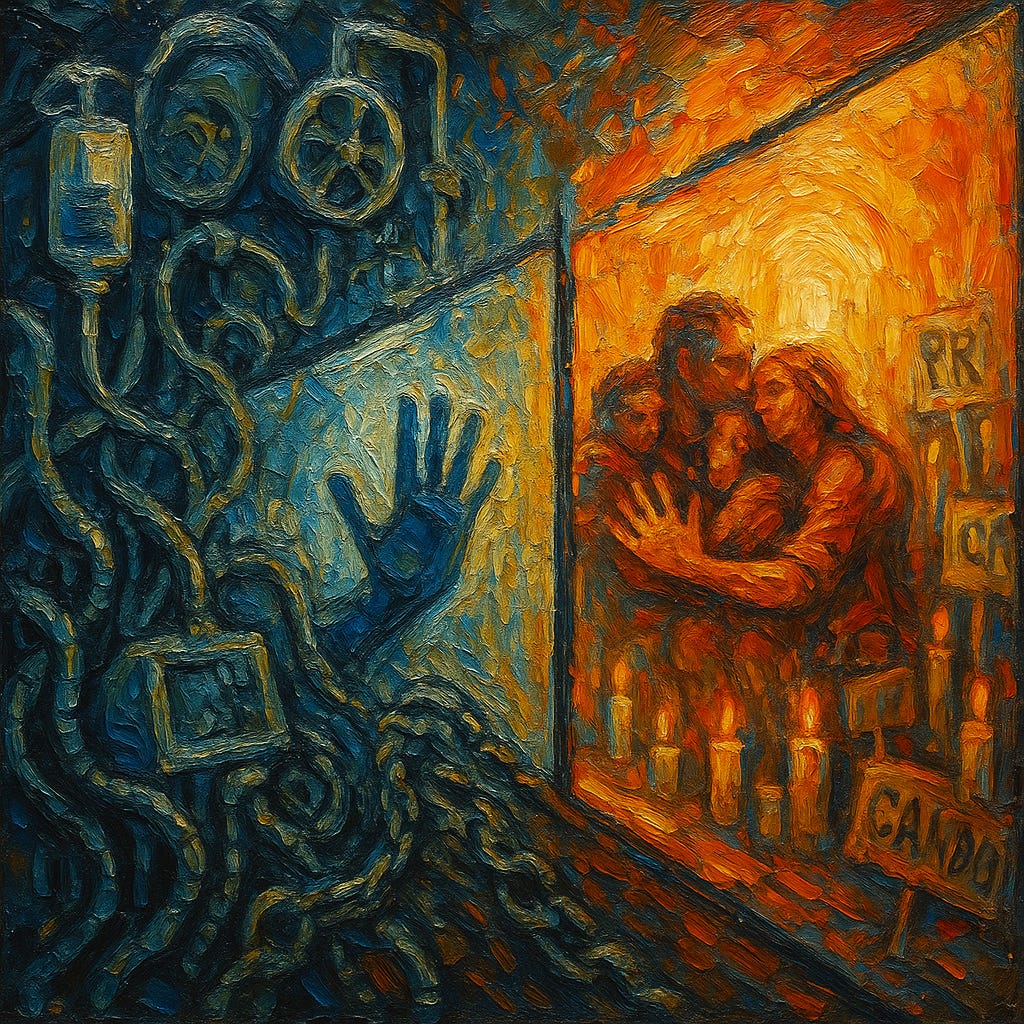
In December 2022, my 75-year-old mother lay in an Australian hospital bed with a mild sniffle when two nurses in hazmat suits approached her with a rapid antigen test. When it came back positive, they looked at each other with fear in their eyes, as if death itself had entered the room. The doctors wanted to give her antivirals—Remdesivir or Paxlovid—but I told them they weren't allowed to give her anything without my approval. When the Iranian-Australian doctor called me, I was blunt: "Under no circumstance whatsoever are you allowed to give her either of those drugs." He surrendered without protest, later confessing, "I've had four doses of the vaccine and had covid twice, so I don't know what to think anymore." Two days later she was fine. But reading Michelle Tavares's testimony, I realize how differently this could have ended. Fifteen months before my mother's close call, Michelle's Portuguese father entered a Florida emergency room with a diabetic attack—not COVID, not a cough, not a fever—but the hospital labeled him positive anyway, locked the family out, sedated him until his tongue swelled bloody, and when he managed to cry out "Vem cá"—come here—they sedated him more. Despite having over 100 protesters outside, despite the backing of Tenpenny, McCullough, and Renz, despite proving he tested negative for COVID multiple times, Michelle watched through glass as they killed him with their protocols, then shipped his body home like cargo.
What Michelle witnessed wasn't an isolated tragedy but part of a systematic pattern that Denis Rancourt’s research has now proven with devastating clarity: the excess deaths of 2020 weren't caused by a spreading virus but by the protocols themselves. His analysis of mortality data across Europe and North America reveals that death spikes occurred simultaneously within three weeks of the WHO's pandemic declaration on March 11, 2020—with virtually no excess deaths anywhere before that date. Cities with the most flights from China, like Rome and Los Angeles, had minimal mortality, while areas that aggressively expanded ICU capacity and implemented experimental treatments saw catastrophic death rates. Eighty-eight percent of patients put on ventilators in New York died—not from a “virus,” but from the treatments. The geographic patchiness of deaths—some regions experiencing 200% excess mortality while neighboring areas with similar populations remained unaffected—defies any model of infectious disease spread. Instead, it maps perfectly onto areas where hospitals implemented what they called "standard of care": Remdesivir, mechanical ventilation, and experimental drug combinations at doses ten times normal levels.
This wasn't ignorance—it was knowing homicide dressed as medicine. Dr. Fauci had personally overseen the 2019 Ebola trial where Remdesivir killed 54% of patients, the highest death rate among all drugs tested, causing multiple organ failure and acute kidney failure so severe the safety board pulled it from the trial. Yet barely a year later, he announced with great fanfare that this same poison would be America's "standard of care" for COVID, sitting on an Oval Office couch as he declared victory for a drug that had failed every legitimate trial. The financial architecture of this slaughter was elegant in its depravity: the 1986 National Childhood Vaccine Injury Act had already removed liability from manufacturers, the PREP Act extended that protection to COVID treatments, and hospitals received massive bonuses for every COVID diagnosis, every dose of Remdesivir administered, every ventilator deployed. As Dr. Tenpenny documents in "Zero Accountability in a Failed System," they'd spent decades perfecting this model—from HIV/AIDS where AZT killed more patients than the disease, to the 2003 bird flu where they turned three dairy workers with mild conjunctivitis into justification for culling millions of animals. The system had learned to transform isolated cases into global emergencies, fear into compliance, and compliance into profit. Michelle's father, labeled and isolated, sedated and silenced, represents millions who entered hospitals for routine conditions—diabetic attacks, broken bones, anxiety—only to be swept into protocols that turned healers into executioners.
Michelle's testimony transcends mere documentation of medical murder—it becomes a spiritual reckoning with evil itself, what she and Tenpenny recognize as pharmakeia, the biblical sorcery that uses fear to drive people from divine protection toward medical idolatry. "We bowed a knee to the pharmaceutical industry," Michelle writes, describing how Americans abandoned their God-given immune systems for what Tenpenny reveals as ritualistic blood sacrifice: fetal bovine serum extracted from the beating hearts of unborn calves, aborted fetal tissue, aluminum that manufacturers admit after 100 years they still don't understand, all injected into God's temple. Yet Michelle transforms her bottomless grief into iron purpose. Since her father's murder, she has saved other families, helped them escape the hospitals, fought the beast head-on. When she raises her glass—"To my dad. To your dad. Your mom. Your sister. Your son"—she speaks for millions who discovered that the real virus was institutional trust, that the deadliest disease was compliance, that the only pandemic was orchestrated fear. Her father's last words, "Vem cá"—come here—echo as both plea and command: come close enough to see what really happened, to name it truthfully, to ensure that those who architected this massacre through protocols and policies, through Remdesivir and ventilators, through lockdowns that created the stress-induced pneumonias Rancourt documents, face the reckoning that must come. "Merry Christmas, Dad," Michelle writes. "You taught me to fear nothing. And to risk everything. I'm still standing."
With thanks to Michelle Tavares.
Zero Accountability, Infinite Grief
“I stood with you in your grief and terror, because I was living it too.
Four years later, we still face the beast—but I still stand: with you, for you, and for all of us.”-by Michelle Tavares
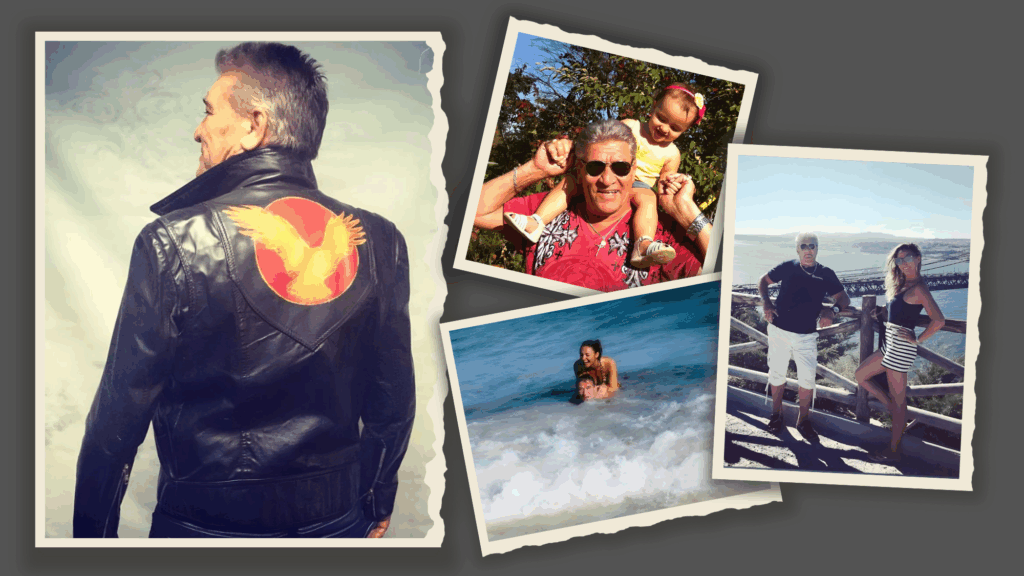
Four years ago, I lost my father.
Actually, I didn’t lose him—he was taken. Taken by a system that promised care but delivered cruelty. A system that stripped us of agency, voice, and presence. A system that lied.
In 2021, we faced a moment every family dreads—the decision to bring him to the hospital. Not for COVID. Not for a cough, not a fever. It was a diabetic attack. A diagnosis he didn’t even know he had, because like so many others during lockdown, routine care had disappeared. People were too afraid—or prevented—from seeing their doctors. We were discouraged from taking care of our health. We were told to stay home.
But our fear wasn’t just about his health. It was the hospital itself. We had seen what they were doing. Everything was labeled COVID. People were silenced. Families shut out. Lives erased under the banner of public safety.
I was terrified they would label him too. That they would mark him. That he would be placed on the list of those they would not let out alive. And that’s exactly what happened.
The moment he entered the ER, they told us he tested positive for COVID. But I knew better. I demanded to see the test. They refused. I asked for the CT value—the cycling threshold used in PCR testing. They looked at me like I was speaking a foreign language. They had no idea what I was asking. Because it was never about accuracy. It was about protocol. Coding. Dollars.
We knew the script: label the patient as COVID-positive, isolate them from family, push sedation, push the ventilator, push death, collect the check. They wouldn’t let us see him. They said we were a danger. Even though we were willing to wear full PPE. Even though their staff moved freely in and out of his room, home to families, parties, restaurants. But we were the threat?
No—we were the threat to their control. Because we asked too many questions. Because we knew too much. Because we were the ones who might expose what they were doing.
So they locked us out. And locked him in. Then the real fight began.
A nurse told us he tried to hit them. My father—a man who was talking to us days earlier, coherent, breathing on his own. Their response? Sedation. The kind that suppresses your breathing. Slows your system. Steals your voice.
His tongue became swollen. Bloodied. He couldn’t speak. But we saw him on Zoom. His eyes were wide. Terrified. With what little strength he had left from the sedation, he spoke to us. Not just with his eyes, but with his voice—strained, desperate. He said, “Vem cá.” Come here. In Portuguese.
A plea we will never forget.
We threw everything we had at it. Called in experts. Friends. Fighters in medical freedom.
Tenpenny. McCullough. Nepute. Renz. Ardis. Barke. Sweetin.
And it wasn’t just the medical warriors.
Pastors from across the country called us daily to pray with us. Prayer groups were formed. People we didn’t even know lifted us up. Their voices, their kindness, their unwavering faith—that was a light in the darkest moments. A gesture of love I will never forget. We had people most families could only pray for. And yet even we couldn’t break through.
They lied. Over and over. No nutrition plan. No diabetic care. And then finally—on record—they admitted: he didn’t have COVID.
But by then, their grip was too tight. We protested. Over 100 people joined us outside the hospital. We forced a meeting. They allowed us five minutes—behind a glass door. We saw him.
Alone. Sedated. Still.
Then came the call: “Cardiac arrest. Come now. Do you want to ventilate?” We said no. Because we knew what that vent meant. It meant the end.
We raced to the hospital. Watched from the hallway as they pumped his chest. We were begging—pleading with staff, with anyone who would listen, to let us in. Our family was on the phone, sobbing, as we begged them together. Our main nurse, who had walked this tragic path with too many families before us, brought out the hospital’s iPad—one they routinely used for these heartless goodbyes. He put my two brothers—both living in Canada—on FaceTime so they could say goodbye the best they could. A goodbye through a screen. Through glass. Through heartbreak.
That same nurse stood beside us, tears in his eyes, and whispered, “So many deaths. I’m so tired.”
They got his numbers up. But my heart knew the truth: he was already gone. They finally let us in. In PPE. After it was too late. I held his hand as his monitor flatlined.
And in that moment, a part of me died too.
He wasn’t just my dad. He was our rock. Our laughter. Our comfort. Our protector. His death wasn’t natural. It wasn’t peaceful. It was engineered.
They listed cardiac arrest. Not COVID. Not sedation. Not starvation. Not abandonment.
We did an autopsy. Pulled every record. Found repeated negative COVID tests. They kept testing him, over and over, because they didn’t like the answer.
The truth didn’t serve their agenda.
He was buried in September. Cleared. But even then, we couldn’t fly with him. He was shipped like cargo, alone in a box, beneath the plane. Because, apparently, a dead man without COVID was no longer a threat.
I didn’t grieve right away. I couldn’t. I was in survival mode. Trying to hold my mother. Trying to hold my daughter. Trying to hold myself.
And even now, four years later, I wonder: did I do enough? Could I have saved him?
The pain lives in my chest. In my bones. In the spaces where his laughter used to echo.
I collapsed once during those hospital days. Sobbing. Screaming. Hyperventilating. It was my mother who picked me off the floor. And I stood. Wiped my tears. And went back to war.
Because I knew I couldn’t let his death be in vain.
Since then, we’ve saved lives. Helped other families escape. Fought the beast head-on.
Spoken truth. Exposed lies.
What Dr. Tenpenny wrote in her new book Zero Accountability in a Failed System are not just words on a page. It’s lived reality. It’s what we faced. It’s what millions faced.
This isn’t just about medicine. It’s about money. Power. Corruption. And when those things align, humanity suffers.
I live with that suffering every day. But I also live with purpose. To fight. To speak. To remember.
We moved to the ocean for a time. To the place he loved. Where we could feel the sun on our faces and pretend, for a moment, that we were still whole.
He’s in every dinner. Every joke. Every toast. “Merry Christmas, my boy,” he’d say. Even in July. He made every day feel like a celebration.
So today, I raise a glass. To my dad. To your dad. Your mom. Your sister. Your son. To every life taken too soon.
We are still here. We are still grieving. We are still fighting.
And we will not stop.
Merry Christmas, Dad. You taught me to fear nothing. And to risk everything. I’m still standing.
For you. For them. For us all.
I appreciate you being here.
If you've found the content interesting, useful and maybe even helpful, please consider supporting it through a small paid subscription. While 99% of everything here is free, your paid subscription is important as it helps in covering some of the operational costs and supports the continuation of this independent research and journalism work. It also helps keep it free for those that cannot afford to pay.
Please make full use of the Free Libraries.
Unbekoming Interview Library: Great interviews across a spectrum of important topics.
Unbekoming Book Summary Library: Concise summaries of important books.
Stories
I'm always in search of good stories, people with valuable expertise and helpful books. Please don't hesitate to get in touch at unbekoming@outlook.com
Baseline Human Health
Watch and share this profound 21-minute video to understand and appreciate what health looks like without vaccination.
We saw this early on and so my husband and I had a pact during Covid to stay away from the hospital no matter what. It was a very tough call when my husband got terrifyingly sick but by the grace of God we managed at home. He's been on a road back ever since and is arguably healthier than ever at 56 bc of rejecting all pharma and relying on more natural remedies and resources (and "biohacking", I guess they call it nowadays) I It was a clarion call for so many of us.
Whatever it was that gripped some of the medical personnel in the mad, mad days of late 2019 and forward to the present, it was, and still is, WRONG !