

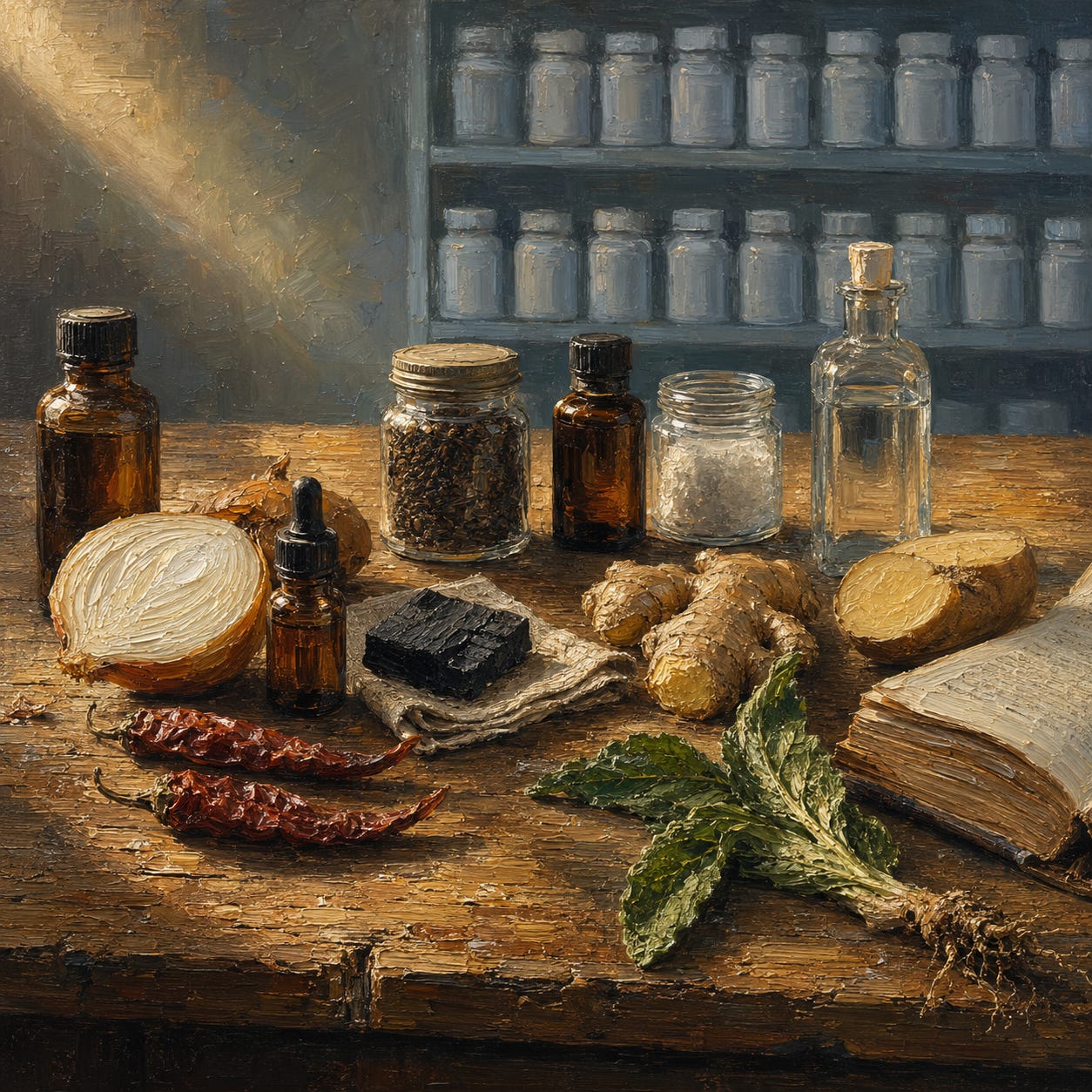
Author’s Note
This essay operates in two registers. When the subject is patent law, drug-trial economics, and the conduct of the pharmaceutical industry, the establishment’s own terms and admissions are used directly, because the case is most powerful made in their language. When the subject is what these substances do in the body, terrain language replaces medical language, because that is what is actually happening. The body is a self-regulating organism that draws, eliminates, repairs, and restores when given support. Substances that aid those functions are aids; they do not “treat diseases” or “fight pathogens.” The author is a researcher writing about the documented history and economics of natural remedies. He is not a clinician. Nothing in this essay is medical advice. Readers interested in any substance discussed here should consult the source books cited at the close, find a practitioner with experience in their use, and rely on their own judgement.
Patent law excludes naturally occurring substances. You cannot own ricinoleic acid, gingerol, allicin, or capsaicin. What can be owned is a synthetic analogue, a delivery system, a novel formulation. A pivotal Phase 3 trial of the kind required to make a treatment “evidence-based” costs between twenty million dollars for a small indication and three hundred million or more for cardiovascular and oncology endpoints. The total capitalised cost of taking a new compound from discovery to approved drug runs between one and two and a half billion dollars. No rational actor spends that capital on a substance any competitor can also sell. The result is structural. The trials that would establish efficacy for unpatentable remedies do not get funded. No trials, no “evidence.” No evidence, “unproven.” Unproven, absent from clinical practice. The absence is then read as proof the substance does not work, when it is in fact proof the substance could not be sold.
Castor oil sits in every pharmacy in the country. It has been in continuous medicinal use for at least three thousand years. It costs eight dollars. It is currently prescribed for nothing it actually does. The drawing action that filled folk medicine cabinets for centuries is not on the label. The lymphatic effect documented through decades of clinical use is not mentioned. The packaging recommends it as a laxative, a use it serves badly. Ask where the rest of it went, and the answer turns out to be the same answer for the other eleven substances that follow. Nobody owned it.
Support This Work
The essays are free and will stay free. What paid subscribers get is the library that surrounds them: the full digital book catalogue, audio deep dives, archived, and embedded in each essay, and the Questions for Your Doctor, Before You Consent, and Package Insert series. Platinum Supporters also receive the digital edition of every paperback on the day it’s published.
Whichever tier suits, thank you for being here. If you’d like to become a paid subscriber, upgrade a tier, or gift a subscription to someone who might value the work, the options are below.
Audio Deep Dive (for Paid Subscribers)
The Erasure Mechanism
The patent system has one rule for what can be owned. The substance must be novel, useful, and non-obvious. A naturally occurring molecule fails the first test by definition. The Supreme Court restated the principle in Association for Molecular Pathology v. Myriad Genetics (2013): a naturally occurring segment is a product of nature, and “not patent eligible merely because it has been isolated.”¹ The same logic applies to castor oil, ginger, garlic, comfrey, iodine, and every plant compound or mineral that existed before a chemist looked at it. Synthetic derivatives can be owned. The natural substance itself cannot.
The economics follow from the law. The Tufts Center for the Study of Drug Development put the total capitalised cost of bringing a new drug to market at $2.558 billion in 2014.² Wouters and colleagues, working from publicly reported figures, produced a median of $985 million in 2020.³ The range is debated; the order of magnitude is not. A Phase 3 trial alone, the one that confers the “evidence-based” label, routinely runs into the hundreds of millions for chronic conditions. No company spends that money on a compound any competitor can also sell. The trials get funded for what can be exclusively marketed. The trials do not get funded for what cannot.
This produces a specific epistemic shape. The medical literature is not neutral with respect to the natural and the synthetic. It is dense where the money is and sparse where the money is not. When the establishment says a traditional remedy “lacks evidence,” the statement is accurate in a narrow sense and misleading in the larger one. The evidence was not gathered. The trials were not run. The studies were not funded. The absence is structural, not empirical. The streetlight effect is the standard formulation: you search where the light is, and the light is wherever someone paid to install it.
The pattern then uses the absence as proof. Substance X “lacks evidence,” therefore substance X does not work, therefore substance X should not be used, therefore substance X is not prescribed, therefore substance X disappears from clinical practice. The original premise, the absence itself, is the step nobody examines.
Erasure runs along a spectrum.
At the passive end sits simple neglect. The substance is not banned, not warned against, not denounced. It is not mentioned. Doctors do not learn it in medical school. Pharmacists do not recommend it. Insurance does not reimburse it. The substance continues to exist; nobody points to it. Castor oil, potato, onion, charcoal, milk thistle, MSM, cayenne, ginger, and the older general uses of iodine sit at this end.
The middle is official warning. Comfrey, used for fractures and ulcers for fifteen centuries, was warned against for internal use after pyrrolizidine alkaloid findings in the 1980s. Iodine doses safely consumed in Japan for generations were declared “excessive” once the synthetic thyroid hormone market was established. These substances are not prohibited. They are marked with a flag that any cautious doctor or careful layperson reads as “do not use.”
The active end is restriction and prohibition. DMSO was approved by the FDA for one rare bladder condition, despite a clinical record across pain, inflammation, tissue repair, and stroke recovery running to thousands of papers. Hydrogen peroxide is the subject of FDA warnings, and intravenous and high-concentration oral uses have been prosecuted. At this end of the spectrum, the substance competes directly with patented products, and the regulatory and informational machinery moves from indifference to active suppression.
What gets ignored cannot be sold. What gets banned cannot be sold either. The difference between the two ends of the spectrum is the size of the threat to what is being sold instead.
The Draws
These four substances work at the surface. They pull what is stagnating or burning outward, toward the skin and its routes of elimination. None of them act by killing anything. None of them fight an invader. They support a direction of flow the body is already trying to take.
1. Castor Oil
Ricinoleic acid, which makes up roughly ninety percent of castor oil, is unusually polar for a triglyceride. Applied to the skin as a pack with heat, it moves through the dermis into the underlying tissue. What it does there is what folk medicine has named for three thousand years: it draws. Lymph flows. What was stagnating moves outward.
The substance appears in the Edwin Smith and Ebers papyri at roughly 1500 BCE. Pliny and Dioscorides describe it. Edgar Cayce, between the 1920s and 1940s, gave thousands of readings recommending castor oil packs for conditions ranging from adhesions to cysts to liver congestion. William McGarey, Cayce’s medical interpreter, spent decades of clinical practice at the ARE Clinic in Phoenix documenting the results.⁴ The Oil That Heals runs to several hundred pages of case histories. D. C. Jarvis, the Vermont physician whose folk-medicine practice is documented elsewhere in this collection, devoted a chapter of Folk Medicine to castor oil’s external uses — for warts, for ulcers, and as an application to the breast that increased the flow of milk.⁵
A sixteen-ounce bottle of cold-pressed organic castor oil costs eight dollars.
The substance cannot be patented and the application (a cloth, oil, and heat source) cannot either.
What replaced castor oil packs is the most telling feature of the case. For the laxative use, which the bottle still names, the market provides polyethylene glycol, lactulose, and senna preparations. For the drawing and lymphatic use, the actual reason castor oil was carried in every household, nothing replaced it. The function was abandoned. The lymphatic system itself is barely acknowledged as a treatable target in conventional practice. Where castor oil packs once handled stagnation, the modern protocol is to wait until the stagnation produces a diagnosable condition, then operate on it.

2. Potato
A raw potato, grated or sliced, draws heat and inflammation from skin. A slice applied to a sty draws it. A poultice over an inflamed joint cools it. The mechanism is partly osmotic, partly enzymatic. Starch and potassium-rich tissue applied to an inflamed surface pulls fluid through the gradient; catalase and peroxidase at the cut surface act on tissue exudate. None of this needs a clinical trial to verify. It is what happens when you do it. Jethro Kloss gives the method plainly: grate a raw potato, apply it to any feverish part — a carbuncle, a boil — and replace it with fresh potato as it dries.⁶
Documentation is in folk medicine across northern Europe, eastern Europe, and Andean South America. The potato’s medicinal uses are catalogued in older herbals and in nursing manuals from before the era of topical pharmaceuticals.
A potato costs less than a dollar.
It cannot be patented because it is a potato.
The replacement is topical corticosteroids (hydrocortisone, betamethasone, clobetasol), topical antibiotic ointment (neomycin, bacitracin) for what gets labelled infection, and over-the-counter NSAID gels (diclofenac) for pain. Each is a patented or patent-derived product. Each carries side effects (skin atrophy, contact dermatitis, photosensitivity) absent from a slice of potato.

3. Onion
An onion sliced in half, wrapped in cloth, and held against a painful ear draws the pain out within hours. The mechanism involves volatile sulphur compounds (allyl propyl disulphide, thiosulfinates) passing through the skin at body temperature. The same poultice on the chest moves congestion.
The European folk record is dense. Pliny, Dioscorides, the Anglo-Saxon Leechbook, central European and Russian peasant medicine all carry the onion ear poultice for what is now called otitis media. It appears in early twentieth-century paediatric nursing manuals. Kloss carries the onion poultice for indolent sores and boils, made the same way as a carrot poultice.⁶ It still works.
An onion costs a dollar.
It cannot be patented.
Modern paediatric practice for the same complaint dispenses antibiotic ear drops (ofloxacin, ciprofloxacin with dexamethasone) and a course of oral amoxicillin, despite multiple establishment reviews acknowledging that the great majority of “ear infections” resolve without antibiotic intervention.⁷ A vegetable held against the side of a child’s head was replaced by a course of broad-spectrum antimicrobials with documented consequences for the gut.

4. Comfrey
Comfrey leaves and root contain allantoin, a compound that drives cell proliferation at wound sites. Applied to fractures, ulcers, burns, and chronic non-healing wounds, comfrey accelerates closure. The plant’s English name, knitbone, records the use plainly.
The Anglo-Saxon Leechbook of Bald (tenth century) names comfrey for fractures and wounds. C. J. MacAlister published a paper in the British Medical Journal in 1912 identifying allantoin as the active principle.⁸ Kloss records a man who, told the leg should come off, applied a comfrey root poultice instead and kept the leg.⁶ Lawrence Hills, an English horticulturalist, founded the Henry Doubleday Research Association around comfrey trials in the 1950s and 1960s; his Comfrey: Past, Present and Future (1976) compiles centuries of use.
A jar of comfrey salve costs twelve dollars. If you grow comfrey, which is easy, it costs nothing.
The plant cannot be patented. Allantoin itself, however, was synthesised and is now an ingredient in cosmetic and OTC skin products. The plant gets ignored; the molecule was extracted and sold separately.
What replaced comfrey is the entire wound-care industry: silver sulfadiazine creams (Silvadene) for burns, hydrocolloid dressings, prescription corticosteroid creams for inflammation, NSAID gels for pain, and surgical interventions for chronic wounds.
Comfrey for internal use is also the first official-warning case in the spectrum. In the 1980s, pyrrolizidine alkaloids in comfrey roots and young leaves were identified as hepatotoxic at high doses in rat studies. The FDA issued a warning. Health Canada banned internal use. Germany restricted external use to short-term application. Subsequent work showed that the medicinal hybrid (Symphytum × uplandicum) contains pyrrolizidine alkaloids below the limit of detection, and that human skin permeability to the alkaloids in the wild species is less than one percent over twenty-four hours.⁹ The warning was not updated to reflect the data. The flag remains in place.

The Eliminators
These four substances support what the body is already doing to clear toxic and metabolic burden. They do not “detoxify” in the cosmetic sense the wellness industry uses the word. They support the organs of elimination doing their actual work.
5. Charcoal
Activated charcoal is carbon processed to maximise surface area. A single gram presents roughly five hundred to one thousand square metres for adsorption. In the gut, it binds toxins, drugs, alkaloids, mycotoxins, and the products of bacterial fermentation, and carries them out. Kloss describes charcoal adsorbing many times its own volume in gases, used it internally for the colic of fermenting food and in poultices over the bowels and for gangrenous sores, and observed the same pattern in his own time: after charcoal served in the gas masks of the First World War, its medicinal use in the United States, in his words, “was largely neglected.”⁶
The compound has been in continuous medical use since Hippocrates. Nineteenth-century physicians considered it essential. It is still used in every emergency room in the country for acute poisoning and oral overdose; major position statements from the American Academy of Clinical Toxicology list activated charcoal as first-line care in the ingestions where it is still indicated.¹⁰ The substance is also used in dialysis cartridges, where its capacity to bind uraemic toxins is acknowledged in the engineering literature.
A bottle of one hundred 600 mg capsules costs ten dollars.
Activated charcoal cannot be patented. The activation process can be, but the product is competed on price.
What is missing is any acknowledgement of charcoal’s role between the emergency and the funeral. The acute use is established. The chronic use, against ongoing low-level toxic exposure (mycotoxins from damp housing, glyphosate residue, pharmaceutical metabolites, ambient industrial chemistry), is not on the table. The establishment uses the substance to save lives in emergencies and pretends it has no role on Tuesday morning. The replacement, for ongoing toxic burden, is no treatment.

6. Milk Thistle
The seeds of Silybum marianum yield a complex of flavonolignans (silybin, silydianin, silychristin) collectively called silymarin. Silymarin stabilises hepatocyte membranes against toxic insult and supports the liver’s regeneration of glutathione, the body’s primary detoxification antioxidant.
European clinical use is extensive. The Madaus formulation Legalon is administered intravenously in European hospitals for Amanita phalloides mushroom poisoning, which destroys the liver and has no other effective antidote.¹¹ Hundreds of trials in chronic hepatitis, cirrhosis, and drug-induced liver injury have been conducted. The compound is taken seriously by European internists in a way it is not in North America.
A bottle of one hundred capsules costs fifteen dollars.
Silymarin is naturally occurring. The compound cannot be patented; the extract preparation can be.
What replaces milk thistle for chronic liver burden is “monitoring.” Once the liver crosses into measurable failure, the replacement is transplant. For the long terrain between healthy and failing, where milk thistle quietly supports the organ that handles the modern toxic load, mainstream medicine offers nothing. The intravenous emergency use in Europe demonstrates that the substance works. The absence of an everyday clinical role demonstrates that working is not what determines clinical adoption.

7. Iodine
Iodine is a halogen and an element. Every cell in the body uses it. The thyroid concentrates iodine — roughly half the body’s store sits there — and so do the breasts, ovaries, prostate, stomach, salivary glands, and skin. At a structural level, iodine displaces the toxic halogens (fluoride, bromide, chloride) from binding sites where they accumulate when iodine is scarce.
Lugol’s solution, a mixture of iodine and potassium iodide in water, was formulated in 1829 and used routinely as a general tonic and antiseptic well into the twentieth century. Albert Szent-Györgyi, who won the Nobel Prize for the isolation of ascorbic acid, kept Lugol’s on his shelf and wrote that “if in doubt, give Lugol’s.”¹² D. C. Jarvis built much of his folk practice on iodine in this older general sense: drops of Lugol’s in apple-cider vinegar and water taken to relax the body and reduce nervous tension, and a skin test — paint a small patch of tincture and judge sufficiency by how quickly it fades.⁵ Traditional Japanese intake, derived from seaweed, runs between five and thirteen milligrams per day. American intake, after the iodisation of salt in 1924 and the subsequent shift toward non-iodised forms, runs below 150 micrograms. That is roughly a hundredth of the historical Japanese intake.
A bottle of Lugol’s solution costs twenty dollars and lasts years.
Iodine is an element. You cannot patent an element.
The replacement is levothyroxine (Synthroid), among the top three most-prescribed compounds in the United States for decades. Levothyroxine addresses one consequence of iodine insufficiency (low circulating thyroid hormone) without addressing the deficit. It is taken for life. Around the central displacement sits the broader machinery: the Wolff-Chaikoff threshold, derived from acute high-dose iodide experiments in rats in 1948, became the basis for declaring milligram-range iodine “excessive” — including the five-to-thirteen-milligram intakes the Japanese consumed for generations without harm. The reach of the threshold is the construct, not the existence of an upper bound. Paul Bergner, surveying the mineral literature, holds that iodine is safe across a wide range of doses while noting that it can suppress the thyroid if genuinely overdone.¹³ Both can be true. The boundary is real, and it sits well above the traditional range; the “excessive” label was applied to intakes far below where any real risk begins. David Brownstein’s Iodine: Why You Need It and David Derry’s Breast Cancer and Iodine document the displacement in detail.¹⁴ ¹⁵

8. MSM
Methylsulfonylmethane is a small organosulphur molecule found in plants, animals, and humans. It donates sulphur, an element essential to connective tissue, joint cartilage, glutathione synthesis, and methylation. Soils have been depleted of sulphur since superphosphate fertilisation replaced compost and animal manure in the 1940s, and a population eating food grown on those soils gets less sulphur than its grandparents did.
Stanley Jacob and Robert Herschler at Oregon Health Sciences University did most of the original modern work on MSM, alongside their work on DMSO (MSM is the oxidation product of DMSO). The Miracle of MSM by Jacob, Lawrence, and Zucker documents the clinical record across joint pain, allergic conditions, and tissue repair.¹⁶
A kilogram of pure MSM powder costs twenty dollars.
MSM is naturally occurring. It cannot be patented.
The replacement is the NSAID category (ibuprofen, naproxen, celecoxib) for joint and connective tissue pain, biologic injections (Humira, Enbrel, Cosentyx) for what gets labelled inflammatory arthritis, and hyaluronic acid injections for the joint surface. These products generate tens of billions of dollars annually. A daily teaspoon of sulphur powder addresses the underlying terrain deficit they manage symptomatically.

The Movers
These three substances change the flow of blood and oxygen. Vasodilation, capillary tone, oxygen delivery. The body cleanses and repairs in the presence of movement, and the substances in this group keep movement going.
9. Cayenne
Capsaicin and the broader capsaicinoid family in cayenne pepper act on circulation directly. Applied or ingested, cayenne opens capillaries, supports blood pressure regulation, and produces vasodilation that reaches into the territory the cardiovascular drug categories spend billions targeting. It is also styptic. A wound packed with cayenne powder stops bleeding within seconds; the mechanism involves a rapid local vasoconstrictive-then-coagulant sequence. Kloss, drawing on a tradition older than the modern herbalists, names capsicum the purest stimulant that can be taken into the body, one that promotes circulation in every part of it, and records that red pepper packed into an open wound is healing rather than irritating — checking a bleed by letting a clot form around the ruptured vessel.⁶
The clinical use that drew most attention is the testimony of John Christopher and Richard Schulze, herbalists who reported reversing in-progress heart attacks with cayenne tincture under the tongue.¹⁷ This is anecdote, but it is anecdote across many cases and several decades, with a mechanism that is biologically coherent. The Cayenne Pepper Papers and related literature catalogue dozens of such reports.
A jar of dried cayenne costs three dollars.
It cannot be patented. It is pepper.
What replaced cayenne is the entire cardiovascular drug edifice: statins (Lipitor, Crestor) for what is framed as cholesterol-driven vascular risk, blood thinners (Eliquis, Xarelto) for clot prevention, beta blockers and calcium channel blockers for the rhythm and pressure side, antihypertensives across several categories. For the styptic use, where cayenne stopped a bleed in the field, modern emergency medicine offers tranexamic acid, itself off-patent and inexpensive, but requiring intravenous access and a trained paramedic to deliver it.

10. Ginger
The gingerols and shogaols in Zingiber officinale act on the gastrointestinal tract directly to reduce nausea. They reduce inflammation through the prostaglandin pathway, warm the periphery, and support circulation. They are gentle enough to be used in pregnancy and powerful enough to match or outperform pharmaceutical anti-emetics in head-to-head trials.
Indian and Chinese traditional medicine carry ginger for more than two thousand years; Kloss lists it among the standard remedies for nausea and vomiting.⁶ Modern trials have placed ginger against ondansetron (Zofran) in chemotherapy-induced nausea and against pharmaceutical anti-emetics in pregnancy, with ginger performing competitively or better, and with a gentler side-effect profile.¹⁸
Fresh ginger root costs two dollars. A pound of dried ginger powder costs ten.
A root cannot be patented.
The replacement is the anti-emetic drug category (Zofran, Phenergan, prochlorperazine, metoclopramide) and the NSAIDs and biologics that cover the anti-inflammatory range. Zofran alone, before generic erosion, generated more than a billion dollars annually. Tens of thousands of women have taken ondansetron during pregnancy under obstetric recommendation, while the obstetrician did not mention ginger. In the head-to-head trials available, ginger matched the anti-emetics it was tested against with a gentler side-effect profile.

11. Hydrogen Peroxide
Hydrogen peroxide is two hydrogen, two oxygen. In dilute solution it acts as an oxygen donor at tissue level. The body produces it endogenously and uses it across white blood cells, the gut, and the lungs. Its function in the body is well-established in mainstream biochemistry. Its use as a therapy is a different matter.
The medical use of hydrogen peroxide runs from the late nineteenth century. Charles Farr in the United States and a number of European physicians used intravenous food-grade peroxide in dilute solution for chronic conditions through the 1980s. William Campbell Douglass collected the clinical history in Hydrogen Peroxide: Medical Miracle.¹⁹ The 35% food-grade preparation, diluted to therapeutic concentrations in protocols developed by Bill Munro and others, has been used orally for decades by a population that finds it useful.
A bottle of 3% drugstore peroxide costs two dollars. A bottle of 35% food-grade costs fifteen.
H₂O₂ cannot be patented. It has no patentable feature.
The replacement is the antibiotic category for the bacterial conditions (which the terrain framework reframes as conditions of damaged terrain rather than pathogen invasion), and supplemental oxygen for acute oxygenation deficits. For the chronic oxygenation work, in the protocols its users credit with raising tissue oxygen tension, mainstream medicine offers hyperbaric chambers (expensive, restricted to a narrow set of approved indications) and, for the territory peroxide most directly threatened, nothing.
This is the active-suppression end of the spectrum, alongside DMSO. The FDA has issued warnings against the ingestion of hydrogen peroxide. Practitioners who used it intravenously have been prosecuted. The substance is freely sold for cleaning teeth and bleaching hair.

The Carrier
DMSO sits in a category of its own. It is not a single-purpose remedy; it is a vehicle and a modulator. It is also the cleanest single case of regulatory suppression among the twelve.
12. DMSO
Dimethyl sulfoxide is a small polar molecule that crosses cell membranes freely and carries other dissolved substances across with it. Applied topically with the right co-solute, it delivers the co-solute into deep tissue. On its own, it has anti-inflammatory, analgesic, and free-radical-scavenging effects documented across thousands of clinical reports.
Stanley Jacob at Oregon Health Sciences University began clinical work with DMSO in 1961. The list of conditions in which it produced documented benefit reads like the table of contents of a pain clinic: musculoskeletal injury, arthritis, scleroderma, interstitial cystitis, herpes outbreaks, spinal cord injury, stroke (intravenous DMSO administered within hours of stroke onset produced striking results in Jacob’s reported cases), burns, and severe head injury. Pat McGrady’s 1973 book The Persecuted Drug: The Story of DMSO recorded the clinical record and the regulatory war already in progress.²⁰ Morton Walker’s DMSO: Nature’s Healer and The Magic of DMSO extended the documentation.²¹ Archie Scott’s The DMSO Handbook is the practical reference.
A kilogram of pharmaceutical-grade DMSO costs twenty-five dollars.
DMSO is synthesised from common materials (it is a byproduct of paper-pulp processing). It was characterised in the nineteenth century. The compound cannot be patented because it predates any patentable claim.
The FDA approved DMSO in 1978 for one indication: interstitial cystitis, instilled by catheter into the bladder. Every other use, despite the clinical record, is “off-label.” The agency has issued repeated warnings against unapproved DMSO use. Veterinary DMSO, sold as a horse-leg liniment, remains widely available; human medical DMSO is restricted in proportion to the threat it poses to the patented alternatives.
Those alternatives constitute the entire pain-management economy. Opioids (the US prescribed opioid market exceeded ten billion dollars annually at its peak before generic erosion and the overdose-driven decline), NSAIDs across the OTC and prescription range, lidocaine patches, capsaicin patches, gabapentin, pregabalin, duloxetine, the biologics for inflammatory pain. For the territory where a topical DMSO with a co-solute might have replaced four prescriptions, the FDA’s restriction holds.
DMSO is also the clearest illustration of the central economics laid out at the beginning. The clinical record is enormous. The mechanism is biologically coherent. The substance is cheap, safe in human use (its side-effect profile is dominated by garlic-like body odour and transient warmth), and broad-spectrum. None of that is enough. What it lacks is the one feature that would permit its development: ownership.

Fortifying the Argument
The closest objection is the one that says: these are anecdotes, not trials. It is the correct objection for some of the twelve and the wrong one for others. There are no large randomised controlled trials of castor oil packs in lymphatic congestion, of onion poultices in otitis media, of comfrey in fracture healing, of cayenne in haemorrhage — those trials do not exist because nobody would pay to run them, and the absence is the evidence, not the disproof. But the claim of blanket absence is itself false. Ginger has been tested head-to-head against ondansetron and held its ground. Silymarin has hundreds of trials behind it and is used intravenously in European hospitals for the deadliest poisoning a liver can face. Charcoal is first-line toxicology in every emergency room. For these, the evidence exists, it is positive, and the neglect persists anyway. That is the more damning finding: where the trials were run, they did not change clinical adoption, because adoption does not track evidence. It tracks ownership.
The second objection, raised against every entry on the warning or banned end, is that the substance is dangerous. Comfrey contains pyrrolizidine alkaloids. Hydrogen peroxide at high concentration is corrosive. DMSO carries co-administered substances into tissue, which means it carries contaminants into tissue too. These are real considerations and the risk profile of each substance should be understood. What is missing from the establishment’s framing is the comparison. The risk of comfrey in its medicinal form has been measured and is minimal at therapeutic dose. The risk of the substances that replaced comfrey (NSAID-induced gastric haemorrhage kills tens of thousands of Americans annually, and long-term corticosteroid use produces a documented catalogue of consequences) is rarely weighed beside the comfrey warning. Risk labels are applied to natural substances and absent from products that have killed far more people.
A third objection, raised against the structure of the case, is cherry-picking. Twelve substances are named here; an honest critic could probably name twelve traditional remedies that do not work, or whose claimed effects do not stand up. The answer is that the twelve here were not picked because they support the argument. They were picked because each has a substantial documented record, each is genuinely cheap, each is genuinely unpatentable, and each has a clearly identifiable patented replacement. The pattern across all twelve is the argument. One coincidence is anecdote. Twelve, across substances unrelated in chemistry and origin, is a structure.
The final objection is that this analysis requires medical or pharmacological expertise. It does not. The patent law is public. The Supreme Court rulings are public. The drug-development cost estimates are published in JAMA and elsewhere. The traditional use of each substance is in books anyone can read. The FDA warnings, restrictions, and approvals are publicly searchable. The argument here rests on documents, not on credentials.
Closing
Twelve substances, unrelated in chemistry, origin, mechanism, or culture of use, sharing one fate.
Castor oil, used since the Egyptian dynasties, sits unmentioned in every pharmacy in the country. The potato slice that drew heat and swelling from inflamed skin, replaced by hydrocortisone. Onion, used by every grandmother in Europe for a child’s earache, replaced by ofloxacin. Comfrey, knitbone, restricted. Iodine, demonised, replaced by a synthetic thyroid hormone marketed for life. MSM, the sulphur the soil lost, replaced by Humira. Ginger, gentler than Zofran, replaced by Zofran. Cayenne, which could stop the bleeding, replaced by an intravenous medication delivered by a trained paramedic in an ambulance. Charcoal, kept in every emergency room, refused everywhere else. Milk thistle, taken seriously in Italian hospitals, ignored in American ones. Hydrogen peroxide, warned against. DMSO, approved for one rare bladder condition out of the hundreds of indications its clinical record covers.
These are not twelve coincidences. The ones that were merely neglected can be explained by oversight, by inertia, by the slow forgetting that follows when nobody talks about a thing. The ones that were warned against, restricted, and prosecuted cannot. Neglect is what happens to what cannot be sold. Prohibition is what happens to what competes with what is being sold.
The FDA has approved DMSO for a single indication. The clinical record of DMSO covers thousands of indications. The difference between the two numbers is not a scientific finding. It is a measure of how dangerous a substance can be to the patented alternatives, before the regulatory machinery moves from indifference to active suppression.
The pattern is the case.
Explain It To A 6 Year Old
When you go to the doctor and they give you medicine, the medicine usually has a name on the box and it usually costs a lot of money. The reason it costs a lot of money is that the company that made it has a special permission from the government saying nobody else is allowed to sell that exact medicine for a long time. So if you want it, you have to buy it from them.
There is a rule about this special permission. You can only get it for things you invented yourself. You can’t get it for things that grew in the ground all by themselves, like an onion, a piece of ginger, a potato, a leaf from a plant, or a mineral that comes out of the sea. So nobody has the special permission for onions, for ginger, for castor oil, for comfrey, for charcoal, for milk thistle, for cayenne, for iodine, for sulphur powder, for hydrogen peroxide, or for the other simple things that used to live in everybody’s kitchen and medicine cabinet.
Before a doctor will say something is a real medicine, somebody has to do a very big and very expensive test on it. The tests cost hundreds of millions of dollars. The only people who can afford the tests are the companies that can sell the medicine afterwards and make all that money back. So the companies test the medicines they own. They don’t test onions. They can’t own onions. They can’t make their money back on onions.
The simple things, the cheap things, the things your grandma used, don’t get tested. And then the doctor says, “There’s no evidence that the onion works.” But the only reason there’s no evidence is that nobody paid to look. The onion still works. It’s just that nobody’s selling it.
That’s what this essay is about. Twelve simple, cheap things that work, and the medicines that took their place, and why.
In Print
The Unbekoming library is available in paperback, printed to order through Lulu and shipped worldwide. The shelf begins with the paradigm question underneath everything else — No Virus, the isolation problem, the collapse of virology’s foundational claims, and a disease-by-disease reappraisal — and moves through the suppressed compounds mainstream medicine set aside: The DMSO Book, Chlorine Dioxide: The Forbidden Remedy, The Iodine Book, and The Hydrogen Peroxide Book. Two more recover what’s still on the kitchen shelf: Baking Soda and The Castor Oil Book. Two more recover the minerals modern soil, water, and processing quietly stripped from the diet: The Magnesium Handbook and The Boron Book. Sitting alongside these is No Contagion, co-authored with Jamie Andrews — the case against germ theory itself, catalogued through 258 failed contagion experiments.
The critique books cover what medicine, dentistry, psychiatry, and veterinary practice have become. The Unvaccinated treats the completely unvaccinated as a comparison group across twenty chapters and five appendices. Medicalized Motherhood follows a woman through 123 documented interventions from teenage pill to postpartum discharge. Drilling for Profit treats cavities, gum disease, and crooked teeth as the dietary problem they are. What Your Vet Can’t Tell You applies the same critique to pets. Escape from Psychiatry documents the fabrication of the DSM and the specific damage of every major psychiatric drug class. The Vitamin K Injection covers what happens in the first hours of a newborn’s life.
The full shelf is at lulu.com/spotlight/unbekoming. A physical book reaches the person a Substack post never will — the skeptical relative, the friend who won’t click a link but might open a book, the visitor whose eye lands on a coffee table. Buy one to keep, and one to give away.
References
¹ Association for Molecular Pathology v. Myriad Genetics, Inc., 569 U.S. 576 (2013). The Supreme Court’s ruling that naturally occurring DNA segments are products of nature and not patent-eligible. The same logic applies to all naturally occurring substances.
² DiMasi, J. A., Grabowski, H. G., and Hansen, R. W. “Innovation in the pharmaceutical industry: New estimates of R&D costs.” Journal of Health Economics 47 (2016): 20–33. The Tufts Center for the Study of Drug Development estimate of $2.558 billion (capitalised cost) per approved drug.
³ Wouters, O. J., McKee, M., and Luyten, J. “Estimated Research and Development Investment Needed to Bring a New Medicine to Market, 2009–2018.” JAMA 323, no. 9 (2020): 844–853. Median investment estimate of $985 million across publicly reported figures.
⁴ McGarey, William A. The Oil That Heals: A Physician’s Successes with Castor Oil Treatments. A.R.E. Press, 1993. The clinical compendium drawn from decades of practice at the ARE Clinic in Phoenix.
⁵ Jarvis, D. C. Folk Medicine: A Doctor’s Guide to Good Health. Pan Books, 1961. Chapter 12 (”Castor Oil and Corn Oil”) for the external uses of castor oil — warts, ulcers, and the application to the breast to increase the flow of milk; the chapters on the thyroid and iodine for the apple-cider-vinegar-and-Lugol’s protocol, iodine’s effect in lessening nervous tension, and the skin-painting test for iodine sufficiency.
⁶ Kloss, Jethro. Back to Eden. Back to Eden Publishing. Capsicum (cayenne) as the purest circulatory stimulant and as a healing styptic in open wounds; the raw potato poultice for feverish and inflamed parts; the onion poultice for indolent sores and boils; the comfrey root poultice for wounds, including the leg saved from amputation; charcoal as an adsorbent of gases and toxins, its internal use for fermentation and its poultice use for inflammation and gangrene, and the observation that medicinal charcoal was largely neglected in the United States after the First World War; ginger among the remedies for nausea and vomiting.
⁷ Venekamp, R. P., Sanders, S. L., Glasziou, P. P., Del Mar, C. B., and Rovers, M. M. “Antibiotics for acute otitis media in children.” Cochrane Database of Systematic Reviews (multiple updates, most recent 2015). The Cochrane review documents that most cases resolve without antibiotic intervention.
⁸ MacAlister, C. J. “An Ancient Medicinal Remedy: Symphytum officinale (Comfrey).” British Medical Journal, 1912. The initial report identifying allantoin as the cell-proliferant principle of comfrey.
⁹ Heinrich, M., Frei Haller, B., and Leonti, M. “Safety of medicinal comfrey cream preparations (Symphytum officinale s.l.).” Regulatory Toxicology and Pharmacology, 2020. Reports 0.6% ± 0.4% pyrrolizidine alkaloid penetration through human abdominal skin over 24 hours, and confirms Symphytum × uplandicum contains alkaloids below the limit of detection.
¹⁰ American Academy of Clinical Toxicology and European Association of Poisons Centres and Clinical Toxicologists. “Position Paper: Single-Dose Activated Charcoal.” Clinical Toxicology 43, no. 2 (2005): 61–87. The standard toxicology reference establishing charcoal as first-line care in the acute ingestions where it remains indicated.
¹¹ Hruby, K., Csomos, G., Fuhrmann, M., and Thaler, H. “Chemotherapy of Amanita phalloides poisoning with intravenous silibinin.” Human Toxicology 2, no. 2 (1983): 183–195. Documents the clinical use of intravenous silymarin in European hospitals for liver-destroying mushroom poisoning.
¹² Szent-Györgyi, Albert. Quoted in Brownstein, Iodine: Why You Need It, and in correspondence reproduced in iodine literature of the period. (The remark is widely repeated; a primary published source has not been established.)
¹³ Bergner, Paul. The Healing Power of Minerals, Special Nutrients, and Trace Elements. Prima Lifestyles, 1997. Iodine deficiency and its dietary and soil origins; the 1924 introduction of iodized salt; the thyroid’s concentration of roughly half the body’s iodine; and the observation that iodine is safe across a wide range of doses while capable of suppressing the thyroid if substantially overdone.
¹⁴ Brownstein, David. Iodine: Why You Need It, Why You Can’t Live Without It. Medical Alternatives Press, 2004.
¹⁵ Derry, David. Breast Cancer and Iodine: How to Prevent and How to Survive Breast Cancer. Trafford Publishing, 2001.
¹⁶ Jacob, Stanley W., Lawrence, Ronald M., and Zucker, Martin. The Miracle of MSM: The Natural Solution for Pain. Penguin / Berkley Books, 1999.
¹⁷ Schulze, Richard. Natural Healing. Catalogues the cayenne tincture cases within the John Christopher tradition. See also The Cayenne Pepper Papers.
¹⁸ Lete, I., and Allué, J. “The Effectiveness of Ginger in the Prevention of Nausea and Vomiting during Pregnancy and Chemotherapy.” Integrative Medicine Insights 11 (2016): 11–17. Reviews head-to-head studies of ginger against pharmaceutical anti-emetics.
¹⁹ Douglass, William Campbell. Hydrogen Peroxide: Medical Miracle. Rhino Publishing, 1995. Collects the clinical history including Charles Farr’s intravenous work.
²⁰ McGrady, Pat. The Persecuted Drug: The Story of DMSO. Doubleday, 1973. The first comprehensive account of the DMSO clinical record and the regulatory war already in progress at the time of publication.
²¹ Walker, Morton. DMSO: Nature’s Healer. Avery, 1993. Extended documentation of the clinical record, including Stanley Jacob’s work at Oregon Health Sciences University.
Additional Sources
Hills, Lawrence D. Comfrey: Past, Present and Future. Faber and Faber, 1976. The horticultural and clinical history of comfrey, written by the founder of the Henry Doubleday Research Association.
Dinsley, John. Charcoal Remedies.com: The Complete Handbook of Medicinal Charcoal and Its Applications. Gatekeeper Books, 2005. The most comprehensive single-volume treatment of charcoal as a domestic and clinical remedy.
Scott, Archie H. The DMSO Handbook. AuthorHouse, 2013. The practical reference for DMSO preparation, dilution, and topical and oral use protocols.
Christopher, John R. School of Natural Healing. BiWorld Publishers, 1976. The foundational text of American clinical herbalism, including the cayenne protocols.
Hills, Lawrence D. Comfrey: Report on the Effectiveness of Comfrey for Tissue Repair. Henry Doubleday Research Association, 1953–1976 (various editions of trial summaries).
The only thing missing from the list, that I can think of, is sunshine. Prior to the Rockefeller’s creation of the industrial medical complex in the early 1900’s, natural medicine was the norm. When people were hospitalized, they would be submitted to sunshine daily. Sunlight has powerful healing properties. Why do you think we have been told that sunshine is harmful to our health?
Thanks! always handy to have all the home remedies together. I already knew quite a few and thanks to you I gather more all the time! Trying to stay away from the doc as much as possible!