

Author’s Note
This essay uses the establishment’s clinical terminology — gonococcal ophthalmia neonatorum, conjunctivitis, infection, prophylaxis — strategically, because much of the case against the practice comes from inside the establishment’s own literature. Where I describe what is actually done to a newborn, I shift to terrain language: the body responds to insult, the lymphatic system cleanses, the conjunctival surface establishes its commensal microbiome from contact with the mother. The two registers serve different argumentative functions. When the CDC, the AAP, and the New England Journal of Medicine are quoted, it is the establishment being examined. When I describe the body, it is the body being described.
I. The Act
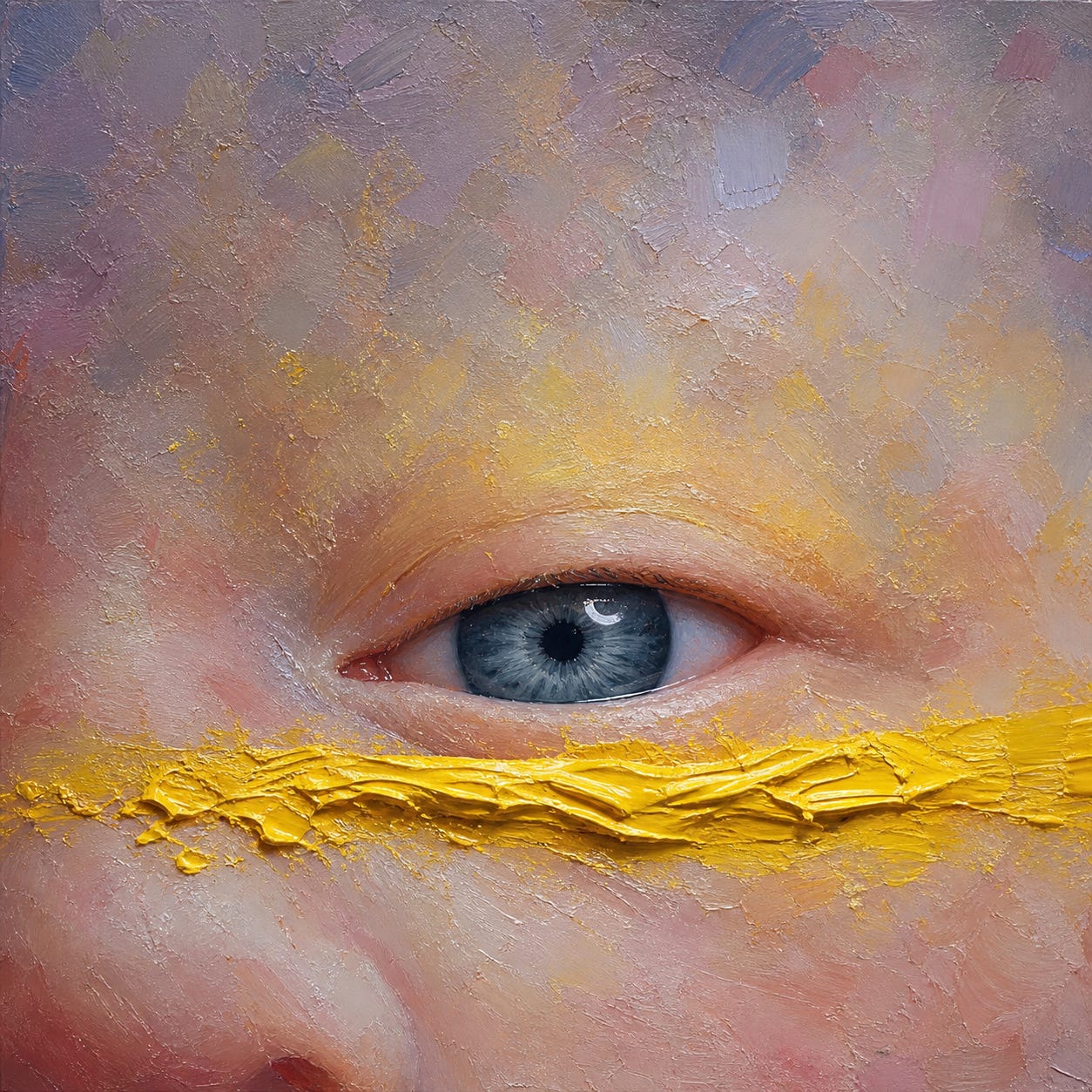
A baby is born. Within the first hour — sometimes within the first minutes — a gloved finger pulls back the eyelids, and a 1 cm ribbon of yellow ointment is laid across each eye. The substance is 0.5% erythromycin in a petrolatum base. The eyes blur. The newborn, which has spent nine months in darkness and has just opened its eyes for the first time, sees the world through a film of antibiotic and oil.
The practice is universal in the United States. It is required by law in nearly every state. It is performed on roughly 3.6 million newborns per year. The condition it claims to prevent — gonococcal ophthalmia neonatorum — is documented in CDC surveillance at a rate of approximately 0.4 cases per 100,000 live births.<sup>1,2</sup>
That figure is not in dispute. It is the United States Preventive Services Task Force’s own number, published in JAMA in 2019. At a national birth rate of 3.6 million, 0.4 per 100,000 amounts to roughly fourteen cases per year. Erythromycin ointment is administered to all 3.6 million.
Support This Work
This work remains free because paid subscribers make it possible. If you find value here, consider joining them.
Paid subscribers get access to all books — including The DMSO Book, The Kitchen Remedies Guide, Chlorine Dioxide, The PSA Trap, Breast Cancer, and more — with 1-2 new books added each month. Plus the Deep Dive Audio Library: 180+ in-depth audio book summaries and discussions.
I do this work independently, outside the institutions these books so often describe. No foundation grants, no academic approval, no editorial gatekeepers deciding what’s acceptable to publish. Your subscription makes that independence possible.
II. What It Claims to Prevent
The condition is described by the CDC as a neonatal conjunctival infection acquired during passage through the birth canal of a mother with active, untreated Neisseria gonorrhoeae infection.<sup>3</sup> The clinical picture, in the establishment’s framing, is severe: corneal ulceration, perforation of the globe, blindness within twenty-four hours of birth in untreated cases. Transmission rates from mother to newborn, in the establishment’s risk model, are estimated at 30 to 50 percent in the absence of prophylaxis or treatment.<sup>1</sup>
The case the establishment makes for universal application turns on these two claims: that the consequences of a missed case are catastrophic, and that the intervention is cheap. The USPSTF concluded in 2019 that “the net benefit of topical ocular prophylaxis of all newborns to prevent gonococcal ophthalmia neonatorum is substantial.”<sup>1</sup> The CDC’s 2021 STI Treatment Guidelines state that the prophylaxis is “required by law in most states and is recommended because of safety, low cost, and ease of administration.”<sup>3</sup>
The reasoning is worst-case insurance against the risk picture the establishment paints. Fourteen babies a year set against 3.6 million applications, at $1.94 per infant — a small surcharge against a catastrophic tail risk. On the page, the trade looks favourable.
III. Where the Practice Came From
In 1880, in the obstetric clinic of the University of Leipzig, Carl Siegmund Franz Credé began applying drops of 2 percent silver nitrate solution to the eyes of every newborn delivered in his hospital. He was sixty-one years old. The condition he was attempting to prevent was, in his clinic, common: ophthalmia neonatorum occurred in roughly one in ten of the live births in his maternity hospital, producing corneal damage in 20 percent of affected infants and blindness in approximately 3 percent.<sup>4</sup> The figures were not unusual for late-nineteenth-century European maternity hospitals. Speer’s 1957 review estimated that gonorrhoeal ophthalmia accounted for 25 to 40 percent of all childhood blindness in nineteenth-century Germany.<sup>4</sup>
The patients in Credé’s clinic were the urban poor. Many were unmarried. Untreated venereal disease was the rule, not the exception. Antibiotics did not exist. The bacterium that the establishment now calls Neisseria gonorrhoeae had been identified by Albert Neisser only the year before, in 1879. There was no curative treatment for the mother. There was no screening. There was, in Credé’s frame, only the eyes of the newborn and the silver nitrate solution.
His paper reported a fall in the rate of inflamed eyes from approximately 10 percent to 0.15 percent in the first six months of his protocol.<sup>4</sup> The paper was published in Archiv für Gynäkologie in 1881. The procedure spread through European maternity hospitals within a decade. The first U.S. statute mandating the practice was passed in New York in 1890. By the early twentieth century, most American states had similar laws on the books.
The arithmetic of Credé’s case, on the framework he was working within, was straightforward. In a population where one mother in ten was understood to be transmitting blinding eye disease to her newborn, where no treatment existed, and where the maternal carriers could not be identified before delivery, applying a single drop to every newborn was rational on those terms. It was rational because the prior probability the establishment of his day assigned to the condition was 10 percent. It was rational because the alternative, in their reckoning, was 30 to 40 percent of childhood blindness.
The contemporary US maternal gonococcal rate at delivery, by the establishment’s own surveillance, is on the order of 0.1 to 0.3 percent. The transmission rate it claims, in untreated cases, is 30 to 50 percent. The proportion of pregnant women who are screened and treated antenatally is high. The product of those numbers is the 0.4 per 100,000 figure the USPSTF reports. The intervention designed for what counted in 1880 as a 10 percent prior probability is now being applied to a population whose contemporary surveillance figure is roughly twenty-five thousand times smaller.
The procedure has not been re-examined in 145 years.
IV. What the Trials Actually Show
In the late 1980s, Margaret Hammerschlag and colleagues at the State University of New York Health Sciences Center conducted what remains the largest prospective trial of neonatal ocular prophylaxis ever carried out in an American hospital. The study ran from January 1986 through June 1988 at Kings County Hospital Medical Center in Brooklyn. Every infant born during the study — 12,431 in total — received one of three prophylactic agents on a rotating monthly schedule: silver nitrate drops, 0.5% erythromycin ophthalmic ointment, or 1% tetracycline ointment.<sup>5</sup>
Gonococcal ophthalmia occurred in eight of the 12,431 infants. One was in the silver nitrate group. Four were in the erythromycin group. Three were in the tetracycline group. Seven of the eight were born to women who had received no prenatal care. The differences between agents were not statistically significant.<sup>5</sup>
For chlamydial conjunctivitis, the authors’ conclusion was direct: “neonatal ocular prophylaxis with either erythromycin or tetracycline ophthalmic ointment does not significantly reduce the incidence of chlamydial conjunctivitis in the offspring of mothers with chlamydial infection as compared with silver nitrate.”<sup>5</sup>
The 1989 paper appeared in the New England Journal of Medicine. It has been cited approximately a thousand times. It has not been replicated with a contradictory finding.
In 2020, the Cochrane Eyes and Vision group published an updated systematic review of all available trials of interventions for preventing ophthalmia neonatorum. The review identified thirty trials. The conclusion, in the Cochrane plain-language summary: “There are no data on whether prophylaxis for ophthalmia neonatorum prevents serious outcomes such as blindness or visual impairment. Moderate-certainty evidence suggests that the use of prophylaxis may lead to a reduction in the incidence of any conjunctivitis of any cause in newborns but the evidence for effect on gonococcal or chlamydial conjunctivitis was of low to very-low certainty.”<sup>6</sup>
The Cochrane formulation “low to very-low certainty” is the language used when the underlying evidence base does not support strong recommendations. After 145 years of universal practice, the highest-quality systematic review of the literature reports no good evidence the intervention does what it claims to do.
The 2010 meta-analysis by Darling and McDonald, published in the Journal of Midwifery & Women’s Health, came to a parallel conclusion. Each of the eight included studies had substantial methodological weaknesses. Data to estimate the efficacy of prophylaxis in the prevention of gonococcal ophthalmia neonatorum were not available. For chlamydial conjunctivitis, none of the three agents — silver nitrate, erythromycin, tetracycline — was statistically superior to no prophylaxis: silver nitrate RR 1.06, erythromycin RR 0.93, tetracycline RR 0.82, with confidence intervals all crossing one.<sup>7</sup>
The USPSTF’s 2019 evidence review acknowledged the foundational gap: “A trial to evaluate the comparative effectiveness of each strategy is not feasible because of the extremely low incidence of GON.”<sup>8</sup> No randomised, placebo-controlled trial of erythromycin ointment versus no prophylaxis has ever been conducted in a contemporary low-prevalence US population. The intervention’s efficacy in the population to which it is universally applied is, in the strict sense of evidence-based medicine, unknown.
V. The Counter-Argument
The strongest response to the case so far runs like this: even if the rate is one in 250,000 — even if no trial demonstrates that the ointment works — the consequences of the missed case are blindness. An ointment that costs $1.94 is worth the insurance, even if the insurance is unproven.
The argument does work that the data do not support. It assumes universal prophylaxis is what stands between the newborn and the missed case. The data do not show this. They show something else.
The Natural Experiment
Most of the developed world abandoned universal neonatal eye prophylaxis decades ago. The United Kingdom dropped the practice in the 1950s. Sweden, Norway, and Denmark followed. Australia does not practise it. New Zealand does not practise it. Italy formally repealed its 1940 mandate in 1975. Canada has not had national surveillance of neonatal ophthalmia since 2000, and the Canadian Paediatric Society has, since 2015, recommended against universal prophylaxis.<sup>9</sup>
If universal prophylaxis is what the establishment claims it to be — the intervention preventing newborn blindness — its absence should produce a signal in the surveillance data of the countries that have stopped doing it. There should be excess cases of what the literature calls gonococcal ophthalmia in the British, Australian, Swedish, Italian, and Canadian populations relative to the American. There is no such signal in the published surveillance data. None of the comparable nations has experienced anything like the resurgence the official risk model would predict.
The same natural experiment has now run inside the United States. The single FDA-approved agent has been in shortage three times in the past fifteen years — in 2009, in 2019, and again in 2023 to 2024. During each shortage, large numbers of American newborns received either no prophylaxis, or substitute agents (gentamicin, azithromycin) which carry their own efficacy and safety problems. If universal prophylaxis were the load-bearing intervention the establishment claims it to be, a documented surge in cases should have followed. No such surge has been published in the peer-reviewed literature for any of the three shortage episodes. The signal that should appear when the prophylaxis stops does not appear.
The argument from the missed case is contradicted by the absence of the missed case in every population that has stopped doing the thing.
The Trial Evidence
Even leaving aside the natural experiment, the case for efficacy collapses from inside its own literature. The Hammerschlag 1989 trial is the only large American prospective trial. It found erythromycin produced more cases of gonococcal ophthalmia than silver nitrate (4 versus 1, on tiny absolute numbers) and failed entirely to reduce chlamydial conjunctivitis.<sup>5</sup> The Cochrane review rates the evidence for gonococcal prevention as low to very-low certainty.<sup>6</sup> The Darling and McDonald meta-analysis concludes that no included study allowed an efficacy estimate against gonococcal disease, and that no agent was statistically superior to placebo against chlamydial disease.<sup>7</sup> The USPSTF evidence reviewers, faced with this body of work, did not conduct a fresh review at all in 2019. They invoked the “reaffirmation” process, which exists for “well-established, evidence-based standards of practice in current primary care practice for which only a very high level of evidence would justify a change in the grade of the recommendation.”<sup>1</sup> The standard for changing the recommendation, by the USPSTF’s own definition, is structurally elevated above the standard required to maintain it.
The trials do not show that erythromycin ointment prevents gonococcal ophthalmia in the contemporary US population. The trials show that no one has run the experiment that would establish the claim.
The Substitution
The argument assumes the choice is binary — either every newborn receives the ointment, or babies are abandoned to gonococcal blindness. The choice is not binary, even on the establishment’s own framework. There is a third option, and it is what the rest of the developed world has been doing for forty years.
The Canadian Paediatric Society, in its 2015 position statement (reaffirmed January 2024), set out the establishment’s own better model in detail.<sup>9</sup> All pregnant women are screened for N. gonorrhoeae and C. trachomatis at the first prenatal visit. Positives are treated with documented test of cure. Unscreened women are tested at delivery. Infants of women whose tests return positive at or near delivery receive a single intramuscular dose of ceftriaxone. Infants are followed clinically for signs of conjunctivitis, with rapid testing and treatment if symptoms develop.
This model, on its own terms, addresses what the establishment identifies as the failure mode — the unscreened mother — by closing the screening gap rather than by treating every newborn in the country. It does not disrupt the first hour of life for the 99.9996 percent of newborns whose mothers do not appear in the establishment’s risk picture at all.
Margaret Hammerschlag, forty-five years into her career as the foremost American researcher on the conditions the establishment classifies as neonatal chlamydial and gonococcal disease, has put the position more directly than the CPS. In the Expert Review of Anti-infective Therapy in 2023, she and her co-author wrote: “Administration of erythromycin ophthalmic ointment for the prevention of neonatal conjunctivitis is not literature-supported. Prenatal screening and treatment of pregnant women is the most effective way to prevent neonatal ophthalmia. National mandates for prophylaxis should be withdrawn.”<sup>10</sup> A year later, Hammerschlag reiterated the position in her review of azithromycin alternatives during the 2024 erythromycin shortage: “Mandates for universal prophylaxis should be withdrawn to avoid unnecessary medication administration, healthcare costs, and potential harm.”<sup>11</sup>
The American Academy of Pediatrics, in its 2024–2027 Red Book, supports “ongoing reevaluation of the continued necessity of legislative mandates in the United States for universal neonatal eye prophylaxis.”<sup>12</sup> The American Academy of Ophthalmology, in its October 2025 joint clinical statement, narrowed its endorsement to regions “where gonorrhea is prevalent and routine prenatal screening and treatment cannot be ensured” or “where required by state law.”<sup>13</sup>
This is not a fringe position. It is held by the major American paediatric body, the major American ophthalmology body, the foremost American researcher on the underlying conditions, the Canadian Paediatric Society, and the practice of most of the developed world — every one of them speaking from inside the establishment’s own framework. The mandate persists because of legal inertia, not clinical conviction.
VI. The Mandate
In April 2025, the West Virginia legislature passed House Bill 3444, repealing the state code that had mandated universal application of erythromycin ointment to every newborn.<sup>14</sup> The bill passed the House 96 to 1 and the Senate 18 to 15. The state code being repealed had been on the books since 1923. Until the bill was signed into law later that year, failing to apply the ointment had been a misdemeanour offence for the attending health care provider. The bill’s sponsor, Delegate Evan Worrell, said simply: “This is still the standard of care and will remain so without this law.”<sup>14</sup>
In the same month, the New York State Department of Health issued a directive ending a long-standing practice in which hospitals had referred refusing parents to Child Protective Services. The Office of Children and Family Services determined that refusal of eye prophylaxis “does not meet the definition of maltreatment of a child,” and the State Central Registry would no longer accept such reports.<sup>16</sup> Idaho passed parallel legislation the same year — Senate Bill 1014 codifying the requirement, followed within weeks by Senate Bill 1179 broadening the parental opt-out provisions to any reason rather than religious objection alone. Tennessee had earlier enacted opt-out provisions.
The defenders of the mandates have continued to use the language of public health protection. Jeff Todd, CEO of Prevent Blindness — the organisation founded in 1908 specifically to advocate for the prophylaxis — characterised the West Virginia repeal as “a pathway for parental confusion and misinformation.”<sup>15</sup>
The accusation is that parents who decline an intervention which the AAP, the CPS, the AAO, and Hammerschlag have publicly questioned are confused and misinformed. The professional bodies have moved. The mandate structure has not.
The mandate persists because of the structure of American medical regulation. The USPSTF reaffirmation process is designed to be insensitive to new evidence. The state laws, once written, require active legislative repeal. The single FDA-approved agent has a captive market stabilised by those laws. The professional society — Prevent Blindness — that built the political coalition for mandate enactment in 1908 is still the lead lobbying voice against repeal in 2025. The evidentiary case has changed; the institutional apparatus has not.
VII. What Is Actually Being Done
Leave the documents and look at the body.
A newborn’s eyes have spent nine months sealed against amniotic fluid. The lids open during birth or shortly after. The conjunctival surface is sterile or near-sterile at delivery; within hours, it begins to be colonised by microorganisms transferred from the mother — from her skin, her vaginal flora, her breath, her milk. The composition of the establishing ocular surface microbiome at birth and across the first days of life has been characterised in newborns using 16S rRNA sequencing. The phyla shift from a Proteobacteria-dominant pattern at birth toward a more diverse Firmicutes/Actinobacteria/Proteobacteria mix within days. Cutibacterium acnes and Massilia timonae are among the species recovered.<sup>17</sup>
The same study found that antibiotic prophylaxis with gentamicin altered the developing microbiome — a 1.5-fold reduction in Cutibacterium acnes, a 2.01-fold reduction in Massilia timonae, an increase in Staphylococcus species.<sup>17</sup> The investigators called for further work to characterise the effect of prophylactic antibiotics on the establishing newborn ocular microbiome. The equivalent study for erythromycin specifically has not been published. The standard intervention applied universally to American newborns has never been examined for its effect on the very thing it disrupts.
What the body is trying to do in the first hour after birth, while the medical team is opening the tube of erythromycin, is establish itself in a new environment. The skin, which has been bathed in amniotic fluid, begins acquiring its commensal flora from contact with the mother. The gut, sterile in utero, begins to acquire its flora from oral contact with the mother’s nipple, breath, and skin. The conjunctival surface, opening for the first time, begins to acquire its flora from the same maternal field. These are not parallel processes; they are a single integrated colonisation event, distributed across the body’s surfaces and openings, beginning at delivery and proceeding for hours, days, and weeks.
Into the conjunctival surface, during the first window of that colonisation, the medical team applies an antibiotic. Erythromycin binds the 23S ribosomal RNA of bacteria at the peptidyl transferase centre, blocking the elongation of the nascent polypeptide chain. The bacteria that the establishing ocular microbiome would have recruited from the mother do not establish. The Staphylococcus species that resist erythromycin are over-selected. The body’s first attempt at ocular colonisation is interrupted.
Then there is what the eye sees, and does not see. The newborn opens its eyes, orients to the mother’s face, and begins to engage the visual system that will track and recognise that face for the rest of its life. Newborns can detect direct versus indirect eye contact from the first hours of life and prefer mutual gaze.<sup>18</sup> The Butterfield, Emde, and Platt research from 1978 — performed when silver nitrate was the standard agent — established that an irritant ophthalmic substance applied at birth measurably reduces eye openness and visual responsiveness during the first hour after delivery.<sup>19</sup> Wahlberg’s 1982 Acta Paediatrica Scandinavica supplement extended the work, documenting effects on visual alertness, conjunctival secretion, infant behaviour, breastfeeding, and maternal feelings.<sup>20</sup> The work contributed to Sweden’s discontinuation of universal prophylaxis. The Butterfield/Wahlberg studies have not been replicated for erythromycin specifically. The intervention now used has not been examined for its effects on the very thing — the visual orientation between mother and newborn — that the research it displaced was designed to measure.
The blurring is acknowledged in the package insert. By the design of the substance, the newborn will not see the world clearly for the first hours of its life. The mother is instructed, by the protocol around the procedure, not to wipe the ointment away — to allow it to remain on the eyes. The window of clear visual orientation between mother and child is closed by an antibiotic ribbon for an outcome the AAP and CPS have explicitly questioned the necessity of preventing.
A chemical is applied to a freshly opened sensory organ during the first hour of an integrated colonisation and orientation event the body is performing with the mother. The chemical disrupts the colonisation. It blurs the orientation. The condition it claims to prevent occurs in 0.4 per 100,000 of the population to which it is applied. The intervention to prevent that 0.4 per 100,000, applied to the other 99,999.6 per 100,000, has never been demonstrated in trial to do what it claims.
VIII. The Pattern
The eye ointment is one of four pharmaceutical or procedural interventions imposed on a typical American newborn within the first hours to first day of life. The vitamin K injection, intramuscular, is given within the first hour. The hepatitis B vaccination, intramuscular, is given before discharge — typically within the first twelve hours. The heel prick for newborn metabolic screening is performed at twenty-four to forty-eight hours. Each is performed on a healthy newborn. Each is justified by an official rationale. Each has its own literature, its own trade-offs, its own dissenting voices. Each is the subject of its own essay.
The pattern is the medicalisation of the first hour — the conversion of a healthy newborn into a patient before the first feed is complete, the displacement of the body’s integrated colonisation and orientation event by the medical team’s protocol. The eye ointment is one piece of the pattern.
A baby is born. Within the first hour, an antibiotic is applied to its eyes. The eyes blur. The condition the ointment is meant to prevent appears in establishment surveillance at a rate of fourteen cases a year. The trial evidence does not show that the intervention prevents that condition in the contemporary US population. The professional bodies have begun to call for the mandates to be withdrawn. Most of the developed world stopped doing it decades ago without consequence. The mandate persists because the laws have not been changed.
Whatever the eyes were going to see in the first clear hour of life — the mother’s face, the light of the room, the shapes that will become the world — they will see, for those hours, through a film. The substance was applied for the imagined fourteenth baby, by a procedure designed in 1880 for a population the establishment of that day counted at a rate twenty-five thousand times the rate the establishment counts today, mandated by laws written before antibiotics existed, defended by an organisation founded in 1908.
The mother holds her baby. The procedure has been performed.
Explain It To A 6 Year Old
When a baby is born, doctors put a special cream in its eyes. They say it stops the baby from getting sick. The cream was invented a long time ago, when babies in hospitals were getting sick all the time. Things are very different now — almost no babies are getting sick from this anymore. The cream still gets used on millions of babies every year. The doctors who study it most carefully say the cream may not even work. Most other countries stopped using it decades ago, and their babies are fine. The cream also makes the baby’s eyes blurry for the first hour — the special hour when a baby is supposed to look at its mother for the first time. So the doctors are starting to say it should not be put on every baby anymore.
References
US Preventive Services Task Force; Curry SJ, Krist AH, Owens DK, et al. Ocular Prophylaxis for Gonococcal Ophthalmia Neonatorum: US Preventive Services Task Force Reaffirmation Recommendation Statement. JAMA. 2019;321(4):394–398. doi:10.1001/jama.2018.21367
Kreisel K, Weston E, Braxton J, Llata E, Torrone E. Keeping an Eye on Chlamydia and Gonorrhea Conjunctivitis in Infants in the United States, 2010–2015. Sex Transm Dis. 2017;44(6):356–358.
Centers for Disease Control and Prevention. Sexually Transmitted Infections Treatment Guidelines, 2021. Gonococcal Infections Among Neonates. https://www.cdc.gov/std/treatment-guidelines/gonorrhea-neonates.htm
Schaller UC, Klauss V. Is Credé’s prophylaxis for ophthalmia neonatorum still valid? Bulletin of the World Health Organization. 2001;79(3):262–263.
Hammerschlag MR, Cummings C, Roblin PM, Williams TH, Delke I. Efficacy of neonatal ocular prophylaxis for the prevention of chlamydial and gonococcal conjunctivitis. New England Journal of Medicine. 1989;320(12):769–772. doi:10.1056/NEJM198903233201204
Kapoor VS, Evans JR, Vedula SS. Interventions for preventing ophthalmia neonatorum. Cochrane Database of Systematic Reviews. 2020;9:CD001862. doi:10.1002/14651858.CD001862.pub4
Darling EK, McDonald H. A meta-analysis of the efficacy of ocular prophylactic agents used for the prevention of gonococcal and chlamydial ophthalmia neonatorum. Journal of Midwifery & Women’s Health. 2010;55(4):319–327. doi:10.1016/j.jmwh.2009.09.003
Guirguis-Blake JM, Evans CV, Rushkin M. Ocular Prophylaxis for Gonococcal Ophthalmia Neonatorum: Updated Evidence Report and Systematic Review for the US Preventive Services Task Force. JAMA. 2019;321(4):404–406.
Moore DL, MacDonald NE; Canadian Paediatric Society, Infectious Diseases and Immunization Committee. Preventing ophthalmia neonatorum. Paediatrics & Child Health. 2015;20(2):93–96. (Reaffirmed January 2024.)
Franco S, Hammerschlag MR. Neonatal ocular prophylaxis in the United States: is it still necessary? Expert Review of Anti-infective Therapy. 2023;21(5):503–511. doi:10.1080/14787210.2023.2172401
Hammerschlag MR. Can we use azithromycin eye drops for gonococcal ophthalmia prophylaxis in the United States? Expert Review of Anti-infective Therapy. 2024;22(6):373–377. doi:10.1080/14787210.2024.2359725
American Academy of Pediatrics, Committee on Infectious Diseases. Kimberlin DW, Banerjee R, Barnett ED, Lynfield R, Sawyer MH, eds. Red Book: 2024–2027 Report of the Committee on Infectious Diseases. American Academy of Pediatrics; 2024.
American Academy of Ophthalmology / American Association for Pediatric Ophthalmology and Strabismus. Use of Erythromycin in the Prevention of Ophthalmia Neonatorum — 2025. Joint Clinical Statement, October 2025.
West Virginia Legislature. House Bill 3444 (2025 Regular Session). http://www.wvlegislature.gov
Prevent Blindness. Prevent Blindness Urges West Virginia State House to Reject Bill That Would Imperil Children’s Vision. 15 April 2025. https://preventblindness.org/reject-west-virginia-hb3444/
New York State Department of Health, Division of Hospitals and Diagnostic & Treatment Centers. Newborn Treatments – Eye Prophylaxis. DHDTC DAL #25-04. 15 April 2025. https://www.health.ny.gov/professionals/hospital_administrator/letters/2025/docs/dal_25-04.pdf
Petrillo F, Petrillo A, Marrapodi M, et al. Characterization and Comparison of Ocular Surface Microbiome in Newborns. Microorganisms. 2022;10(7):1390. doi:10.3390/microorganisms10071390
Farroni T, Csibra G, Simion F, Johnson MH. Eye contact detection in humans from birth. Proceedings of the National Academy of Sciences. 2002;99(14):9602–9605.
Butterfield PM, Emde RN, Platt BB. Effects of silver nitrate on initial visual behavior. American Journal of Diseases of Children. 1978;132(4):426.
Wahlberg V. Reconsideration of Credé prophylaxis. A study of maternity and neonatal care. Acta Paediatrica Scandinavica Supplement. 1982;295:1–73.
"The cream" was not put on my newborns eyes. I don't think...
As I laid on the operating room table I screamed "no shots and no eye ointment" as they pulled him out of me and took him to the other side of the room to do their obligatory "testing" and whatnot.
The pediatrician yelled back "IT'S THE LAW!".
"SHOW IT TO ME!" I screamed back. (No reply.)
A day later, I was visited and interviewed by a woman from "Child Welfare" while I recovered (in a private room... why was I given a private room??) from a traumatic, excruciating, unplanned and very badly botched cesarean section.
That happened over 29 years ago. I still remember and am suffering PTS in doing so now.
The Canadian Medical Industry didn't get my boy until over 24 years later when, as an adult, he secretly acquiesced to being fully Pfizered in order to have his "freedoms" partially restored by Turd-Eau et al.
He is now "vaccine" injured. "Incurable" autoimmune disease.
"Oh well".
You can't despise, or fight, the guvmint enough folks.
#AccountabilityNotAmnesty
OMG they smear a newborn's eyes with antibiotic salve? I have no children and was born and raised in Europe and this is so appalling! Just like the vitK (which is still very un-research obviously) and the numerous jabs for babies and kids. America is totally off when it comes to health-care. It is rather sick-making!