

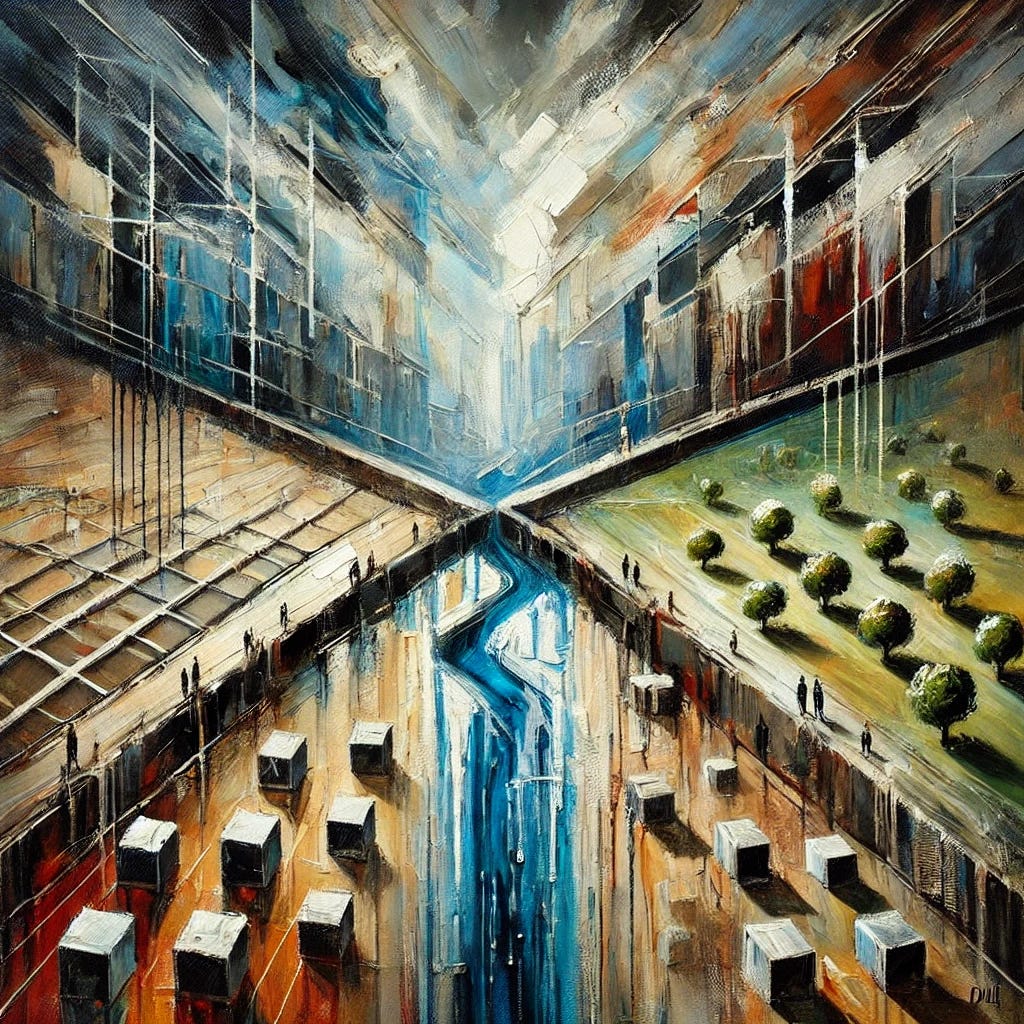
For those that don’t like the prison framing; it might be waterfront penthouses and a casino soon.
Many people have their moral compass on this issue anchored around the events of October 7th. I would invite you to understand Pearl Harbour, Lusitania and false flags (I’ve even created a checklist), specifically Passive Facilitation.
But there is a far more insidious form of False Flag, where a government knowingly allows another entity to attack its own people and then uses that attack to advance its own agenda, such as justifying war or curtailing civil liberties, it is another form of false flag operation. In this scenario, the government may not be directly carrying out the attack, but its complicity or deliberate inaction would make it morally and ethically responsible for the consequences.
With thanks to Ilan Pappe.
The Biggest Prison on Earth: A History of Gaza and the Occupied Territories: Pappe, Ilan
Related Posts
Deep Dive Conversation Library (Bonus for Paid Subscribers)
This deep dive is based on the book:
Discussion No.44:
22 key insights from “The Biggest Prison on Earth”
Thank you for your support.
Analogy
Imagine a large apartment building where the landlord gradually takes control not just of who enters and exits, but of every aspect of the tenants' lives. At first, the landlord claims this control is temporary and necessary for security. They install security cameras in the hallways, require permits to have visitors, and control the electricity and water supply. They then begin dividing the building into different zones - some areas become completely off-limits to the original tenants, while others require special permissions to access.
The landlord then starts moving in new tenants who get preferential treatment: better access to utilities, freedom of movement, and protection from security guards. These new tenants get to build extensions to their apartments by taking space from the original residents' units. Meanwhile, the original tenants find themselves increasingly restricted to smaller spaces, needing permission for basic activities like renovating their apartments or even having family stay overnight.
The building's infrastructure is designed to benefit the new tenants while making life increasingly difficult for the original ones. Simple tasks like going to work or visiting family in other parts of the building become complicated ordeals requiring multiple permits and long waits at security checkpoints. If tenants complain or resist these conditions, the landlord cuts off their utilities or restricts their movement even further. If they comply, they might receive small privileges - but these can be revoked at any time.
Most critically, while the landlord maintains to the outside world that this is just temporary property management, they are actually creating a permanent system of control where one group of tenants has full rights and freedoms while another lives under constant surveillance and restriction. The building's original residents find themselves trapped in an ever-shrinking space, their lives controlled down to the smallest detail by a system that claims to be temporary but is designed to be permanent.
This analogy captures the book's central message about how Israel created a sophisticated system of control that transformed occupied territories into a complex prison system, while maintaining the fiction of temporary military occupation for the international community.
12-point summary
The Prison Blueprint: Israel developed a sophisticated system of control in 1967 that effectively turned the occupied territories into what can be described as the world's largest prison system, with two models: an "open-air" version for compliant populations and a "maximum security" version for those who resisted.
Premeditated Control: The occupation wasn't improvised - Israel began preparing detailed plans for controlling the West Bank as early as 1963, showing that the 1967 war's outcome was part of a longer-term strategy rather than merely a response to immediate security threats.
Legal Manipulation: Israel created a complex legal framework by selectively combining Ottoman, British Mandatory, and military laws to legitimize its control while appearing to maintain rule of law, effectively creating a parallel legal system for Palestinians under occupation.
Jerusalem Strategy: The transformation of Jerusalem became a model for wider occupation policies, with systematic land confiscation, settlement construction, and demographic engineering reducing Palestinian-owned land in East Jerusalem from 100% to just 14% within a few years of occupation.
Economic Domination: Israel established complete control over the Palestinian economy through a sophisticated system of permits, restrictions, and forced dependencies, creating a captive market for Israeli goods while preventing independent Palestinian economic development.
Settlement Enterprise: The settlement project wasn't just about housing Israelis but served as a crucial tool for fragmenting Palestinian territory, with settlements strategically placed to create Jewish-only spaces that divided Palestinian communities and controlled key resources.
Water Control: Israel's control over water resources became a powerful tool of domination, with Palestinians forced to purchase water from Israeli companies while facing severe restrictions on developing their own water infrastructure, creating significant disparities between settlers and Palestinians.
Movement Restrictions: The system of checkpoints, permits, and physical barriers transformed Palestinian daily life, making even short journeys unpredictable and time-consuming while giving Israel granular control over Palestinian movement.
Gaza Evolution: Israel's approach to Gaza evolved from direct occupation to a sophisticated system of external control, particularly after 2005, creating what UN officials described as the world's largest open-air prison through control of borders, airspace, and maritime access.
International Complicity: The international community, particularly the United States, played a crucial role in sustaining the occupation through diplomatic protection, financial aid, and refusal to impose meaningful consequences for violations of international law.
Palestinian Resistance: The First Intifada demonstrated the potential of mass civil resistance, but Israel's harsh response and the failure of subsequent peace processes led to more militant forms of resistance, which Israel used to justify intensified control measures.
Peace Process Manipulation: The Oslo peace process, rather than ending the occupation, became a tool for reorganizing it, allowing Israel to maintain control while creating the appearance of progress toward Palestinian self-governance.
50 Questions & Answers
Question 1: How did Israel's approach to the occupied territories develop in the immediate aftermath of the 1967 war?
The Israeli government formulated its approach to the occupied territories through intensive cabinet meetings in June 1967. During these meetings, led by Prime Minister Levy Eshkol, the government made four crucial decisions: to exclude the West Bank and Gaza Strip from any future peace negotiations, to maintain control without formal annexation, to avoid mass expulsion while denying citizenship to Palestinians, and to create a system of control that would maintain Israeli dominance while providing limited autonomous governance to Palestinians.
The approach was characterized by a dual strategy - one for international consumption and another for actual implementation. While publicly discussing peace possibilities, the government proceeded with establishing facts on the ground through land acquisition, settlement construction, and the creation of a military administration system. This duality would become a hallmark of Israeli policy, allowing it to maintain international legitimacy while systematically strengthening its control over the territories.
Question 2: What was the significance of the Shacham Plan in preparing for occupation?
The Shacham Plan, developed in 1963, represented Israel's comprehensive preparation for occupying the West Bank and Gaza Strip. Named after Colonel Mishael Shacham, the plan divided the West Bank into eight districts and established detailed administrative frameworks for military rule. It included the appointment of legal advisors, military courts, and the translation of Jordanian laws, demonstrating a level of preparation that preceded the actual occupation by four years.
The plan incorporated British Mandatory emergency regulations and created a framework that gave military governors unlimited control over every aspect of Palestinian life. Training courses were conducted at the Hebrew University, preparing officials for their future roles in administering the occupied territories. The plan's existence reveals that Israel had long-term intentions regarding the territories before the 1967 war, contradicting claims that the occupation was merely a response to security threats.
Question 3: How did early Israeli government discussions shape the long-term policy for occupied territories?
The thirteenth government of Israel, representing the widest possible Zionist consensus, established the fundamental principles that would guide Israeli policy for decades. In meetings during June-August 1967, the government decided to treat the territories as permanently controlled by Israel while avoiding formal annexation. These discussions created a framework for maintaining control without granting citizenship to Palestinians, establishing a system that would later be described as a mega-prison.
The government deliberately chose a strategy of ambiguity, creating different messages for international and domestic audiences. While publicly maintaining the possibility of territorial compromise, internal discussions focused on methods to strengthen Israeli control and Jewish settlement. These early decisions became so deeply embedded in Israeli policy that subsequent governments, regardless of their political orientation, adhered to the same basic principles.
Question 4: What role did military planning play before 1967 in shaping the occupation?
Military planning played a crucial role through extensive preparations conducted between 1963 and 1967. The Israeli Defense Forces (IDF) developed detailed plans for controlling the territories, including the establishment of military courts, administrative systems, and governance structures. Military officers received specialized training at the Hebrew University, studying various aspects of military rule and preparing for the administration of occupied areas.
Each potential military governor received a box containing instructions, international conventions, and legal texts preparing them for their role. However, when the occupation began, the military largely abandoned these formal preparations in favor of extending the system of control already used against Palestinians inside Israel. This resulted in a more severe form of military rule than initially planned, based on emergency regulations that even Zionist leaders had once condemned as resembling Nazi legislation.
Question 5: How did Israeli policies towards the occupied territories evolve from 1967 to 1977?
During the first decade of occupation under Labor party rule, Israeli policies focused on establishing control through a combination of military administration and settlement construction. The period saw the implementation of the Alon Plan, which sought to create Jewish settlement blocs in strategic areas while avoiding heavily populated Palestinian areas. This decade established the fundamental patterns of control that would characterize the occupation, including land confiscation, settlement construction, and economic integration.
The period was marked by the gradual intensification of control mechanisms and the establishment of what became known as the "open-air prison" model. While initially presented as temporary security measures, these policies became permanent features of the occupation. The government developed sophisticated legal and administrative systems to maintain control while attempting to present a more benign face to the international community.
Question 6: What characterized the "open-air prison" versus "maximum security prison" models of control?
The open-air prison model allowed Palestinians limited autonomy under indirect Israeli control, including some freedom of movement and economic activity. This model was implemented when Palestinian resistance was minimal and included economic incentives such as work permits in Israel and limited self-administration of daily affairs. However, these "privileges" were always conditional on Palestinian compliance with Israeli demands and could be revoked at any time.
The maximum security model was implemented in response to Palestinian resistance and involved severe restrictions on movement, collective punishment, and intense military presence. This model included curfews, checkpoints, military operations, and economic sanctions. The ability to switch between these two models became a key feature of Israeli control, with the threat of harsh measures used to maintain compliance under the more lenient model.
Question 7: How did the military court system function in the occupied territories?
The military court system, established immediately after the occupation, served as the primary legal mechanism for controlling the Palestinian population. These courts were staffed by military officers who often lacked legal training and operated under military orders rather than civilian law. The system allowed for administrative detention without trial, swift prosecution of security offenses, and the enforcement of military regulations governing every aspect of Palestinian life.
The courts functioned with minimal due process protections and relied heavily on confessions, often obtained through interrogation methods that human rights organizations criticized as torture. The system processed hundreds of thousands of Palestinians over the years, creating a vast apparatus of control that could be used to pressure individuals and communities. The courts' decisions were technically subject to Israeli Supreme Court review, but this oversight rarely resulted in meaningful changes to the system's operation.
Question 8: What role did the Civil Administration play in managing the occupied territories?
The Civil Administration, established in 1981, was presented as a shift from military to civilian rule but remained under military control through the Coordinator of Government Activities in the Territories. This body managed daily Palestinian life, controlling everything from building permits to business licenses, while maintaining the facade of normal bureaucratic administration rather than military occupation.
The administration became a sophisticated tool for controlling Palestinian development and movement while facilitating Israeli settlement expansion. It issued or denied permits for construction, travel, and economic activity, creating a complex system of dependencies that could be manipulated to reward compliance and punish resistance. Despite its civilian name, the Civil Administration served as an extension of military control, implementing policies designed to maintain Israeli dominance over the territories.
Question 9: How did the permit system control Palestinian movement?
The permit system emerged as a comprehensive method for controlling Palestinian movement and activity. Every aspect of Palestinian life required permits: travel between areas, construction, business operations, and employment in Israel. The system created a vast bureaucratic apparatus that could monitor and control Palestinian activity while gathering intelligence through the application process.
This system transformed basic rights into privileges that could be granted or withdrawn based on security considerations or compliance with Israeli demands. The complexity and opacity of the permit system created uncertainty and dependency, forcing Palestinians to navigate an intentionally difficult bureaucratic maze while providing Israeli authorities with leverage over individual and collective behavior.
Question 10: What was the significance of checkpoints in maintaining control?
Checkpoints became a fundamental tool of the occupation, serving both practical and psychological functions in controlling Palestinian movement. These barriers, staffed by military personnel, fragmented Palestinian territory and made even short journeys unpredictable and time-consuming. The system allowed Israeli authorities to monitor and control Palestinian movement while demonstrating their power over daily Palestinian life.
Beyond their practical function, checkpoints served as visible symbols of occupation and control, creating points of regular interaction between Palestinians and Israeli military authority. The arbitrary nature of checkpoint operations - including sudden closures, lengthy delays, and humiliating searches - reinforced Palestinian powerlessness while providing Israeli authorities with immediate means to punish or reward entire communities through restrictions or easements of movement.
Question 11: How did Israel implement its Jerusalem policy after 1967?
Israel's Jerusalem policy was implemented through an immediate and systematic transformation of both the physical and demographic landscape after 1967. Within days of occupation, the government began redrawing municipal boundaries, expanding Jerusalem's territory from 5 square kilometers to 70 square kilometers by incorporating surrounding Palestinian villages and lands. This dramatic expansion was accompanied by the establishment of Jewish settlements in a ring around Palestinian neighborhoods, effectively creating multiple barriers between East Jerusalem and the rest of the West Bank.
The policy operated on multiple levels: legal annexation of East Jerusalem, though this was never recognized internationally; systematic land expropriation through various legal mechanisms including the Absentee Property Law; construction of Jewish settlements termed "neighborhoods" to appear more benign; and demographic engineering through strict building permit restrictions for Palestinians while encouraging Jewish settlement. By 1970, the process had already transformed Jerusalem's landscape, with only 14% of East Jerusalem land remaining in Palestinian hands, the rest being claimed by the state or designated as "green areas" where Palestinian construction was prohibited.
Question 12: What was the significance of the Jordan Valley in Israeli strategic thinking?
The Jordan Valley represented a crucial component of Israel's territorial strategy, with Yigal Alon particularly championing its importance as Israel's "security border." The valley was seen as essential for creating a buffer zone between the Palestinian population centers and Jordan, while also providing strategic depth against potential attacks from the east. This strategic vision was translated into policy through the establishment of agricultural settlements and military installations along the valley, effectively creating an Israeli-controlled corridor.
The control of the Jordan Valley also served broader objectives beyond security considerations. It allowed Israel to control vital water resources, restrict Palestinian development eastward, and create facts on the ground that would make any future territorial compromise more difficult. The valley became one of the first areas where Israel implemented its settlement policy, establishing a string of agricultural settlements that would ensure permanent Israeli presence and control over this strategically vital area, while simultaneously preventing Palestinian access to some of their most fertile agricultural lands.
Question 13: How did settlement construction alter the West Bank's geography?
Settlement construction fundamentally transformed the West Bank's geography by creating a network of Jewish-only spaces that fragmented Palestinian territorial continuity. The settlement enterprise operated through several types of colonies: urban settlements on hilltops overlooking Palestinian cities, agricultural settlements in the Jordan Valley, and suburban settlements near Jerusalem. This strategic placement created a multi-layered system of control that divided Palestinian areas into disconnected cantons while establishing Israeli dominance over key transportation routes and natural resources.
The settlements were connected by a network of bypass roads that Palestinians were prohibited from using, effectively creating two separate transportation systems within the same territory. This infrastructure, combined with military installations and security zones around settlements, resulted in a comprehensive system of spatial control that went far beyond the actual built-up areas of the settlements. The settlement enterprise thus created a new geographic reality where Israeli control was maintained through a complex matrix of physical structures, legal restrictions, and security measures.
Question 14: What was the purpose of bypass roads and territorial continuity?
Bypass roads served multiple strategic purposes in Israel's control system, creating a transportation network that connected settlements while simultaneously fragmenting Palestinian territory. These roads, built on expropriated Palestinian land, allowed settlers to travel directly between settlements and Israel proper without passing through Palestinian population centers. This created what Israeli planners called "transportation contiguity" for the Jewish population while establishing physical barriers that divided Palestinian communities from each other.
The road system also served as a means of land control, as each road required wide security buffers on either side where Palestinian construction and agriculture were prohibited. These security zones, combined with the roads themselves, created physical barriers that carved up Palestinian territory into isolated enclaves. The road network thus became a crucial tool in Israel's broader strategy of maintaining control while minimizing direct contact between settlers and Palestinians, effectively creating separate geographical realities for the two populations within the same territory.
Question 15: How did Israel's wall/barrier system affect Palestinian communities?
The construction of the separation barrier, beginning in 2002, created devastating impacts on Palestinian communities by physically cutting off villages from their agricultural lands, separating families, and disrupting traditional social and economic relationships. The barrier's route, which deviated significantly from the 1967 Green Line, effectively annexed additional Palestinian territory by incorporating major settlement blocs and creating what Palestinians called "bantustans" - isolated Palestinian enclaves surrounded by Israeli-controlled territory.
The wall's impact extended beyond its physical presence, creating a complex system of gates, permits, and restricted access zones that fundamentally altered Palestinian daily life. Communities caught between the barrier and the Green Line faced particular hardship, often requiring special permits to continue living in their own homes or accessing their lands. The barrier system thus became another layer in the occupation's control mechanism, combining physical obstacles with bureaucratic restrictions to further fragment Palestinian space and control Palestinian movement.
Question 16: What characterized Israel's land acquisition policies?
Israel's land acquisition policies in the occupied territories operated through a sophisticated combination of legal mechanisms, military orders, and administrative decisions. The process began with the revival of Ottoman land laws, particularly the classification of uncultivated land as "state land," and continued through the implementation of various military orders that allowed for land seizure for "security purposes." This legal framework was then used to systematically transfer Palestinian land to Israeli control through declarations of state land, military requisitions, and the creation of closed military zones.
The acquisition process was further facilitated by the manipulation of land registration systems, restrictions on Palestinian land use, and the creation of bureaucratic obstacles that made it difficult for Palestinians to prove land ownership. The policy was particularly effective because it combined formal legal mechanisms with practical restrictions on Palestinian land use, creating a situation where even privately owned Palestinian land could effectively be taken over if it remained uncultivated for certain periods. This comprehensive approach allowed Israel to gain control of approximately 60% of the West Bank by the early 1990s.
Question 17: How did Israel implement its settlement policy?
Israel's settlement policy was implemented through a carefully orchestrated combination of government planning, civilian initiative, and military support. The process typically began with the establishment of military outposts or "temporary" civilian encampments, which would then be gradually transformed into permanent settlements. The government provided infrastructure, security, and financial incentives to encourage Israeli civilians to move to these settlements, while simultaneously creating legal and administrative frameworks to support their expansion.
The policy operated on multiple levels, combining ideological settlements in areas of biblical significance with strategic settlements along the Jordan Valley and suburban settlements around Jerusalem. This created different types of settlements serving various purposes: some were intended to establish Israeli control over strategic areas, others to create facts on the ground that would prevent future territorial compromise, and still others to provide affordable housing for Israeli citizens. The policy was implemented incrementally but systematically, creating an ever-expanding network of Israeli control points throughout the occupied territories.
Question 18: How did Israel control Palestinian population growth?
Israel implemented various mechanisms to control Palestinian population growth and distribution in the occupied territories. The primary method was through strict building permit restrictions in areas under direct Israeli control, particularly in East Jerusalem and Area C of the West Bank. Palestinians were routinely denied building permits, forcing them to either build illegally (risking demolition) or leave these areas entirely, effectively creating pressure for demographic changes without direct expulsion.
The control mechanisms extended to family unification policies, residency rights, and movement restrictions that made it difficult for Palestinians to maintain normal family life and community development. In East Jerusalem, Palestinians faced particular pressure through policies that could revoke their residency rights if they lived outside the city for extended periods. These various administrative and legal restrictions created a system of indirect demographic control, limiting Palestinian population growth and concentration in areas Israel sought to control while avoiding the international criticism that would come with more direct methods of population transfer.
Question 19: How did Israel manage Palestinian labor?
Israel's management of Palestinian labor served both economic and control purposes. After 1967, Israel gradually integrated Palestinian workers into its economy, particularly in construction and agriculture, creating a dependent workforce that could be easily monitored and controlled through the permit system. This policy allowed Israel to access cheap labor while maintaining the ability to cut off Palestinian income sources as a form of collective punishment when desired.
The system created a paradoxical situation where Palestinians became economically dependent on Israel while remaining politically disenfranchised. The permit system controlling Palestinian employment in Israel became a sophisticated tool of control, allowing authorities to reward or punish individuals and communities based on their political behavior. Workers required security clearances and permits that could be revoked at any time, creating a precarious situation where economic survival became tied to political compliance. This system of labor control became particularly evident during periods of conflict when Israel would impose widespread restrictions on Palestinian workers entering Israel.
Question 20: What role did water resources play in the occupation?
Water resources became a crucial element in Israel's control system over the occupied territories, with Israel taking control of all water resources immediately after the 1967 occupation. Through military orders, Israel declared all water resources public property under its control and established a permit system for well drilling and water extraction. This gave Israel effective control over Palestinian access to water, creating significant disparities between water availability for settlements and Palestinian communities.
The control of water resources served multiple purposes in the occupation system. It provided essential resources for Israeli settlements while limiting Palestinian agricultural development and population growth. Palestinians were forced to purchase water from Israeli companies at higher prices while facing severe restrictions on developing their own water infrastructure. The water control system thus became another layer in the broader matrix of control, affecting everything from daily life to economic development potential in Palestinian communities. This disparity in water access and control remains one of the most visible aspects of the occupation's impact on Palestinian life.
Question 21: How did Israel manipulate Ottoman and British Mandatory laws?
Israel ingeniously repurposed historical legal frameworks to legitimize its control over Palestinian land. The Ottoman land law concept of "mawat" (dead land), which originally allowed uncultivated land to revert to state ownership, became a powerful tool in Israel's legal arsenal. Israeli authorities reinterpreted this centuries-old law to classify vast tracts of Palestinian land as "state land," particularly if it remained uncultivated for three years. This creative legal interpretation allowed Israel to claim ownership of land that Palestinians had traditionally used for grazing or seasonal agriculture.
The British Mandatory emergency regulations, originally condemned by Zionist leaders as resembling Nazi legislation, were ironically embraced and expanded after 1967. These regulations provided military governors with sweeping powers over every aspect of Palestinian life, including the ability to declare areas closed military zones, impose curfews, and conduct arrests without trial. The manipulation of these historical legal frameworks created a veneer of legal legitimacy for the occupation while establishing a system of control that went far beyond anything intended by the original Ottoman or British legislators.
Question 22: What role did military orders play in governing Palestinians?
Military orders became the primary legislative tool for controlling Palestinian life in the occupied territories, creating a comprehensive system of regulation that touched every aspect of daily existence. These orders, issued by military commanders, could instantly change local laws, restrict movement, close areas, and control economic activity. The military government issued thousands of such orders, creating a complex legal labyrinth that Palestinians had to navigate while trying to maintain their daily lives.
The scope of military orders was remarkably broad, ranging from fundamental issues like land ownership and water rights to minutiae like which books could be read or what crops could be planted. The orders were often written in technical legal language, published only in Hebrew, and frequently modified, making it extremely difficult for Palestinians to understand or challenge them. This created a system where Palestinians could unwittingly violate regulations they didn't even know existed, giving Israeli authorities broad discretion in enforcement and punishment.
Question 23: How did Israel's Supreme Court approach occupation policies?
The Israeli Supreme Court played a complex and often contradictory role in the occupation system. While it presented itself as a check on military power and occasionally ruled against specific government actions, its overall effect was to legitimize the occupation by providing it with a facade of legal oversight. The Court accepted the basic premise of indefinite occupation and generally deferred to military authorities on security matters, while focusing on procedural issues rather than challenging the fundamental legality of occupation policies.
The Court's involvement actually helped Israel maintain international legitimacy by creating an appearance of legal process and oversight. However, it rarely questioned the basic structures of occupation, such as settlement construction or resource exploitation. When the Court did rule against government actions, it often focused on procedural details while accepting the broader policy frameworks. This created a situation where Palestinians could win individual cases while the system that dispossessed them remained intact and legally sanctioned.
Question 24: What international laws were relevant to the occupation?
The Fourth Geneva Convention and the Hague Regulations formed the primary international legal framework governing military occupation, establishing clear obligations for occupying powers. These included prohibitions on transferring civilian populations into occupied territory, collective punishment, and the exploitation of resources for the occupier's benefit. The Geneva Convention specifically required occupying powers to protect the civilian population and maintain the existing legal and social order, treating occupation as a temporary situation.
However, Israel developed a unique legal interpretation that claimed these conventions didn't fully apply to the West Bank and Gaza Strip, arguing these territories weren't technically "occupied" since they hadn't been part of a recognized sovereign state before 1967. This interpretation, though rejected by the international community, allowed Israel to claim it was voluntarily applying humanitarian provisions while avoiding the full legal obligations of an occupying power. This creative legal reasoning became central to Israel's ability to maintain the occupation while claiming to respect international law.
Question 25: How did Israel justify its policies legally?
Israel developed a sophisticated legal framework to justify its policies, centered on the concept of "necessary security measures" and the claim that the territories were "administered" rather than occupied. This distinction allowed Israel to argue that while it would voluntarily apply humanitarian aspects of international law, it wasn't bound by all the restrictions placed on occupying powers. The government created a complex legal architecture that combined emergency regulations, military orders, and selective application of local laws to create a system that appeared legally sound while serving Israel's strategic objectives.
The justification system operated on multiple levels, using different arguments for different audiences. For international consumption, Israel emphasized security needs and the temporary nature of its control, while domestically it relied more on historical and religious claims to the territory. The legal system developed creative interpretations of various legal frameworks - Ottoman, British Mandatory, Jordanian, and international law - selecting and combining elements that could be used to legitimize Israeli control while maintaining the appearance of rule of law.
Question 26: How did Israel create economic dependency in the occupied territories?
Israel systematically restructured the Palestinian economy to create dependency on Israeli markets and employment. Through a combination of military orders and administrative decisions, Palestinian businesses were required to operate through Israeli companies, while restrictions on independent economic development forced Palestinians to become a source of cheap labor for the Israeli economy. The creation of a customs union essentially merged the economies while maintaining total Israeli control over external trade, taxation, and monetary policy.
This economic integration was highly asymmetric, designed to benefit Israeli businesses while preventing Palestinian economic independence. Palestinians were restricted from developing their own industrial base, forced to import most goods through Israeli companies at inflated prices, and made dependent on work permits in Israel for survival. This created a captive market for Israeli products while ensuring Palestinian economic development remained stunted and dependent. The system was particularly effective because economic benefits could be withdrawn as punishment for political resistance, creating a powerful tool for control.
Question 27: What restrictions did Israel place on Palestinian economic development?
Israel implemented a comprehensive system of restrictions that effectively prevented independent Palestinian economic development. These included controls on importing machinery and raw materials, restrictions on establishing industrial zones, limitations on agricultural development, and barriers to accessing international markets directly. Palestinians were required to obtain permits for virtually any significant economic activity, while facing numerous bureaucratic obstacles that made business development extremely difficult.
The restrictions extended to basic infrastructure development, with Palestinians unable to dig wells, build roads, or establish telecommunications networks without Israeli permission, which was rarely granted. Even when Palestinians obtained the necessary permits, they faced additional obstacles such as security checks, road closures, and restrictions on movement that made normal business operations nearly impossible. This created a situation where Palestinian businesses could barely survive, let alone compete effectively with Israeli companies that operated without such restrictions.
Question 28: How did Israel control Palestinian trade?
Israel established complete control over Palestinian external trade through its control of borders and customs policies. All imports and exports had to go through Israeli ports or border crossings, with Israeli companies acting as mandatory middlemen in most transactions. This system allowed Israel to collect customs duties on Palestinian trade while forcing Palestinians to pay additional costs for Israeli handling and processing. The arrangement effectively made Palestinian traders dependent on Israeli partners while allowing Israel to monitor and control all significant commercial activity.
Internal trade within the occupied territories was also heavily controlled through a system of checkpoints, permits, and movement restrictions. Palestinians faced numerous obstacles in moving goods between different parts of the West Bank, or between the West Bank and Gaza Strip. This fragmentation of the internal market, combined with restrictions on external trade, made it extremely difficult for Palestinian businesses to operate efficiently or develop economies of scale. The system ensured that Palestinian trade remained subordinate to Israeli interests and control.
Question 29: What role did taxation play in the occupation?
Taxation became another tool of control in the occupied territories, with Israel implementing a complex system that extracted resources from the Palestinian economy while providing minimal services in return. Palestinians were required to pay various taxes to the Israeli authorities, including value-added tax, income tax, and municipal taxes, while having little say in how these funds were used. The tax system was often used punitively, with tax collection becoming more aggressive during periods of political tension.
The taxation system was particularly onerous because Palestinians had to pay taxes to Israel while receiving far fewer services than Israeli settlers in the same areas. Tax collection often involved harsh measures, including business closures, seizure of property, and withholding of permits until tax demands were met. This created another layer of economic pressure that could be intensified or relaxed depending on political circumstances, making taxation an effective tool for maintaining control over Palestinian society.
Question 30: How did Israel manage Palestinian labor markets?
Israel's management of Palestinian labor markets combined economic exploitation with political control. After 1967, Israel gradually opened its labor market to Palestinian workers, particularly in construction and agriculture, creating a pool of cheap labor that could be easily controlled through the permit system. Workers required security clearances and work permits that could be revoked at any time, making employment contingent on political compliance and cooperation with Israeli authorities.
The system created a paradoxical situation where Palestinians became economically dependent on Israeli employment while remaining politically disenfranchised. Workers faced difficult conditions, including long commutes through checkpoints, lack of labor rights, and constant insecurity about their work permits. This vulnerability made the labor market an effective tool for control, as entire communities could be punished through the withdrawal of work permits. The system also prevented the development of an independent Palestinian economy by drawing workers away from local industries and agriculture.
Question 31: What characterized the First Intifada?
The First Intifada, beginning in December 1987, marked a fundamental shift in Palestinian resistance through its widespread popular participation and primarily non-violent nature. Starting with spontaneous demonstrations in Gaza's Jabaliyya refugee camp, it quickly spread throughout the occupied territories, involving Palestinians from all social classes and ages. The uprising was characterized by general strikes, commercial shutdowns, tax boycotts, and most symbolically, youth throwing stones at Israeli military vehicles - creating powerful images of Palestinian resistance against a heavily armed occupation force.
The uprising was coordinated by a Unified National Leadership, which included representatives from various Palestinian factions working together to direct civil disobedience. This period saw the emergence of local committees that organized alternative education systems when schools were closed by military order, independent economic initiatives to reduce dependency on Israel, and social support networks. The Intifada demonstrated Palestinians' capacity for sustained collective action and forced both Israeli society and the international community to confront the reality of occupation in unprecedented ways.
Question 32: How did Israel respond to Palestinian resistance?
Israel's response to Palestinian resistance, particularly during the First Intifada, was marked by a policy of "force, power and blows," as explicitly stated by Defense Minister Yitzhak Rabin. The military response included mass arrests, with over 120,000 Palestinians detained during the First Intifada alone, widespread use of beatings as official policy, and collective punishments such as lengthy curfews, school closures, and house demolitions. The response was deliberately disproportionate, aimed not just at stopping specific acts of resistance but at breaking the will of the entire Palestinian population.
The Israeli response also included sophisticated control mechanisms beyond direct violence. This included targeting local leadership through deportations and assassinations, using economic pressure through closure policies and withdrawal of work permits, and implementing an elaborate system of collaborators and informants. The severity of Israel's response revealed the occupation's underlying nature and contradicted Israel's claims of "enlightened occupation," leading to increased international criticism and eventually contributing to the conditions that led to the Oslo peace process.
Question 33: What methods of control did Israel implement during the Second Intifada?
During the Second Intifada (2000-2005), Israel implemented unprecedented levels of military control, including the first-ever use of F-16 fighter jets against Palestinian population centers. The response included massive military operations in Palestinian cities, the construction of the separation barrier, and the implementation of a complex system of movement restrictions that effectively carved the West Bank into isolated cantons. Israel also expanded its policy of targeted assassinations, killing not only military leaders but also political figures and civilians suspected of involvement in resistance activities.
The control methods extended beyond military measures to include economic warfare through closures and restrictions that devastated the Palestinian economy. The system of checkpoints was greatly expanded, making even short journeys between Palestinian towns lengthy and unpredictable. This period also saw the increased use of administrative detention, house demolitions as punishment, and the destruction of Palestinian infrastructure. The cumulative effect was to fragment Palestinian society physically and socially while establishing new mechanisms of control that would outlast the uprising itself.
Question 34: How did Palestinian resistance methods evolve over time?
Palestinian resistance methods underwent significant evolution from primarily non-violent mass protests during the First Intifada to more militarized forms during the Second Intifada. The First Intifada's strategy of civil disobedience and symbolic resistance through stones and general strikes demonstrated the potential of mass popular participation in resistance. This period also saw the development of alternative institutions and social organizations that helped Palestinian society survive under occupation.
The shift toward more militant forms of resistance during the Second Intifada, including suicide bombings and armed attacks, reflected growing frustration with the failure of the peace process and the intensification of Israeli control measures. However, this militarization came at a significant cost, both in terms of international support and internal social cohesion. Throughout both periods, Palestinians maintained various forms of everyday resistance, including cultural preservation, education initiatives, and economic survival strategies, demonstrating the multifaceted nature of resistance under occupation.
Question 35: What impact did resistance have on Israeli policies?
Palestinian resistance forced significant tactical adjustments in Israeli policies but ultimately led to intensified control measures rather than fundamental policy changes. The First Intifada's success in bringing international attention to the occupation led Israel to adopt more sophisticated control mechanisms, including greater use of bureaucratic restrictions and economic pressure rather than direct military force. However, it also contributed to Israel's decision to engage in the Oslo peace process, though this engagement was aimed more at reorganizing control than ending it.
The Second Intifada's more militant resistance provided Israel with justification for implementing extreme control measures, including the separation barrier and expanded settlement construction. Israel used Palestinian violence to legitimize policies of collective punishment and territorial fragmentation that had been planned before the uprising began. The resistance thus had the paradoxical effect of both exposing the occupation's nature while providing pretexts for its intensification, demonstrating the occupation system's ability to adapt and strengthen itself in response to challenges.
Question 36: How did the United States respond to Israeli occupation policies?
The United States' response to Israeli occupation policies evolved from initial criticism in 1967 to nearly unconditional support by the 1970s. Early American administrations expressed concern about settlement construction and demanded adherence to international law. However, this position gradually shifted, particularly after the 1973 Yom Kippur War, as Israel became increasingly integrated into American Cold War strategy. The growth of pro-Israel lobbying organizations like AIPAC also significantly influenced American policy, making criticism of Israeli actions politically costly.
American support manifested in multiple ways: diplomatic protection at the United Nations through vetoes of critical resolutions, massive military and economic aid that enabled Israel to maintain the occupation, and acceptance of Israeli security justifications for various control measures. While occasionally expressing mild criticism of specific policies, particularly settlement expansion, the US consistently opposed any meaningful pressure on Israel to change its occupation policies. This support was crucial in providing Israel with the international immunity needed to maintain and expand its control system.
Question 37: What role did the United Nations play?
The United Nations' role in addressing the occupation was characterized by a stark contrast between strong rhetorical opposition and practical ineffectiveness. While the UN General Assembly regularly passed resolutions condemning Israeli practices and affirming Palestinian rights, these had little practical impact due to US vetoes in the Security Council and Israel's dismissal of UN authority. The UN's inability to enforce its own resolutions, particularly regarding settlements and the status of Jerusalem, highlighted the limitations of international law in constraining occupation policies.
UN agencies, particularly UNRWA, played a crucial role in providing basic services to Palestinian refugees and documenting human rights violations. However, their presence also inadvertently helped Israel avoid its responsibilities as an occupying power by providing services that international law required Israel to provide. The UN's role thus became primarily humanitarian and documentary, maintaining detailed records of occupation practices while lacking the power to affect meaningful change in Israeli policies.
Question 38: How did European nations approach the occupation?
European nations generally maintained a more critical stance toward Israeli occupation policies than the United States, particularly regarding settlements and the status of Jerusalem. The European Union consistently declared settlements illegal and refused to recognize Israeli sovereignty over occupied East Jerusalem. However, this criticism rarely translated into meaningful action, as European countries continued extensive economic and military cooperation with Israel while providing humanitarian aid to Palestinians that effectively subsidized the occupation.
The European approach was characterized by a contradiction between stated principles and practical policies. While maintaining formal opposition to occupation policies, European nations developed deep economic and security ties with Israel that helped sustain these same policies. The EU became the largest donor to the Palestinian Authority, providing crucial funding that prevented economic collapse while inadvertently reducing pressure on Israel to end the occupation. This created a pattern where European criticism of occupation practices was offset by practical support that helped maintain the status quo.
Question 39: What was the Arab states' response to the occupation?
The Arab states' response to the occupation evolved from initial military confrontation to gradual accommodation, reflecting changing regional dynamics and individual state interests. After the 1967 war, Arab states maintained a formal position of non-recognition of Israel and support for Palestinian rights. However, this unified stance began to fragment, particularly after Egypt's separate peace with Israel in 1979, which effectively removed the strongest Arab military power from the equation and weakened collective Arab pressure against the occupation.
Other Arab states gradually developed unofficial relations with Israel while maintaining rhetorical support for Palestinian rights. This pragmatic approach prioritized their own security and economic interests over Palestinian liberation. The Arab states' financial support for Palestinians, while significant, often served to maintain the status quo rather than challenge it. Their response thus mirrored the broader international community's pattern of verbal criticism combined with practical acceptance of occupation realities.
Question 40: How did international aid influence the occupation?
International aid, particularly after the Oslo Accords, paradoxically helped sustain the occupation by relieving Israel of its responsibilities as an occupying power while subsidizing the costs of control. Aid became crucial for maintaining basic Palestinian services and preventing humanitarian crisis, but it also reduced pressure on Israel to end the occupation. The international community effectively took on the financial burden of occupation while Israel maintained control over resources and development.
The aid system created complex dependencies that served Israel's interests. Palestinian institutions became reliant on external funding, while aid projects required Israeli approval and cooperation, reinforcing Israeli control. Moreover, much of the aid money ultimately flowed back into the Israeli economy through forced trade relationships and restrictions on Palestinian development. International aid thus became integrated into the occupation's structure, helping to maintain its stability while masking its fundamental inequities.
Question 41: How did Israel's Gaza policy differ from its West Bank policy?
Israel's approach to Gaza evolved distinctly from its West Bank policy, largely due to Gaza's unique geography and demographics. The Strip's small size, dense population, and lack of religious or historical significance for Jewish claims made it less attractive for permanent settlement. While the West Bank was gradually fragmented through settlements and bypass roads, Gaza was treated more as a contained unit to be controlled from the outside, leading to what became known as the world's largest open-air prison.
The difference became even more pronounced after Israel's 2005 "disengagement" from Gaza. While maintaining absolute control over Gaza's borders, airspace, and maritime access, Israel shifted from direct internal control to a policy of external siege and periodic military operations. This contrasted sharply with the West Bank, where Israel continued to expand settlements and maintain direct military presence. The Gaza policy became increasingly focused on containment and punishment, particularly after Hamas took control in 2007, leading to a situation where Israel could impose collective punishment on the entire population through access restrictions and military operations while claiming it no longer occupied the territory.
Question 42: What characterized Israel's "disengagement" from Gaza?
Israel's 2005 disengagement from Gaza represented a strategic reorganization of control rather than a true end to occupation. The plan, initiated by Ariel Sharon, involved evacuating approximately 8,000 Jewish settlers and military installations from within Gaza while maintaining control over all external access points. This created a new form of control where Israel could regulate everything entering or leaving Gaza - from food and medicine to construction materials and fuel - while avoiding responsibility for the daily administration of the population.
The disengagement allowed Israel to claim it no longer occupied Gaza while actually tightening its control through other means. By controlling Gaza's borders, territorial waters, and airspace, Israel maintained the ability to regulate every aspect of life in the Strip without maintaining a physical presence inside it. This new form of control proved more efficient and less costly than direct occupation, while still allowing Israel to impose collective punishment through closure policies and military operations. The disengagement thus marked not an end to occupation but its evolution into a more sophisticated form of control.
Question 43: How did Israel maintain control after withdrawal?
After withdrawing from Gaza, Israel implemented a comprehensive system of external control that affected every aspect of life in the Strip. This included complete control over what could enter or leave Gaza through land crossings, a naval blockade that severely restricted fishing rights, and control of airspace that prevented any possibility of air travel. Israel maintained detailed lists of permitted and prohibited items, often making seemingly arbitrary decisions about what could enter Gaza, even restricting basic items like certain foods, construction materials, and medical supplies.
The control system also included sophisticated surveillance mechanisms and the creation of "buffer zones" inside Gaza's borders where Palestinians could not access their land. Israel maintained the ability to conduct military operations at will, using advanced technology to monitor movement within Gaza and launch strikes from outside. The system demonstrated how occupation could be maintained without permanent ground presence, creating a new model of remote control occupation that combined physical barriers with technological surveillance and periodic military interventions.
Question 44: What methods did Israel use to isolate Gaza?
Israel implemented a multi-layered system to isolate Gaza from the outside world and from the West Bank. This included physical barriers such as the security fence and wall around Gaza's perimeter, naval blockade extending into the Mediterranean, and sophisticated surveillance systems monitoring all movement. The isolation was reinforced through strict control of movement in and out of Gaza, with most residents effectively trapped inside the Strip, unable to travel even to the West Bank or East Jerusalem, let alone abroad.
The isolation strategy extended beyond physical constraints to include economic and social isolation. Israel severed most economic ties between Gaza and the West Bank, prevented students from attending universities outside Gaza, and restricted family visits between the two Palestinian territories. This isolation policy was particularly effective because it was coordinated with Egypt, which also kept its border with Gaza largely closed. The combination of physical, economic, and social isolation created what UN officials described as a "hermetic seal" around Gaza, transforming it into what became known as the world's largest open-air prison.
Question 45: How did Israeli military operations in Gaza evolve?
Israeli military operations in Gaza evolved from targeted incursions to massive operations involving unprecedented levels of force against civilian infrastructure. Early operations focused on responding to rocket fire or targeting specific individuals, but over time they expanded into large-scale assaults that employed massive air power, artillery, and ground forces. Operations like "Cast Lead" (2008-09), "Pillar of Defense" (2012), and "Protective Edge" (2014) demonstrated an escalating use of force that included the targeting of civilian infrastructure under the pretext of destroying militant capabilities.
The evolution of these operations revealed an increasingly sophisticated military doctrine that combined overwhelming force with psychological warfare. Israel developed new weapons and tactics specifically for Gaza operations, including the use of warning shots ("roof knocking") before strikes and the creation of a massive dummy city in the Negev desert for urban warfare training. The operations became more comprehensive over time, targeting not just military objectives but also Gaza's economic infrastructure, government buildings, and even UN facilities, reflecting a strategy of collective punishment aimed at pressuring the entire population.
Question 46: How did the occupation affect Palestinian society?
The occupation's impact on Palestinian society was profound and multi-generational, affecting every aspect of social, economic, and cultural life. The system of permits, checkpoints, and movement restrictions fragmented Palestinian society physically and socially, making it difficult to maintain normal family and community relationships. Educational opportunities were severely limited by travel restrictions and periodic closures of schools and universities. The constant presence of military control and settler violence created a pervasive sense of insecurity and vulnerability.
The occupation also transformed Palestinian social structures by creating new hierarchies based on access to permits and privileges granted by the occupation authorities. This led to the emergence of a class of intermediaries and beneficiaries of the occupation system, while traditional social leadership was undermined. The psychological impact was particularly severe on young people who grew up knowing nothing but occupation, creating generational trauma and a pervading sense of hopelessness about the future. These social effects were compounded by economic hardship and political fragmentation, fundamentally altering Palestinian society's fabric.
Question 47: What were the long-term effects on Palestinian economy?
The occupation created systematic underdevelopment of the Palestinian economy through a combination of restrictions, resource control, and forced dependency on Israel. Palestinian businesses were prevented from developing independent trade relationships or accessing international markets directly, while restrictions on movement and access to resources made normal economic development impossible. The economy became increasingly dependent on external aid and remittances from workers in Israel, creating a vulnerable and unsustainable economic structure.
The long-term effects included the de-industrialization of the Palestinian economy, with manufacturing and agriculture particularly hard hit by Israeli restrictions and competition from Israeli products. The occupation prevented the development of a normal economic base, leading to high unemployment, especially among young people, and widespread poverty. The separation of Gaza's economy from the West Bank, and both from East Jerusalem, created fragmented economic zones unable to achieve economies of scale or develop complementary economic relationships. This economic deterioration became self-reinforcing, as lack of opportunity led to brain drain and further economic decline.
Question 48: How did the occupation impact Palestinian political development?
The occupation profoundly shaped Palestinian political development by creating conditions that made normal political organization and representation extremely difficult. The system of control interfered with all aspects of political life, from preventing meetings and demonstrations to targeting political leaders for arrest or assassination. The physical fragmentation of Palestinian territory made it nearly impossible to maintain unified political institutions or develop coherent strategies of resistance and governance.
The occupation also influenced Palestinian political dynamics by creating divisions between different segments of the population - those in the occupied territories, refugees, and Palestinians inside Israel. The emergence of the Palestinian Authority under Oslo created new political hierarchies and tensions, while Israel's different treatment of Gaza and the West Bank after 2005 contributed to political division between Hamas and Fatah. The occupation thus not only restricted Palestinian political development but actively shaped it in ways that reinforced Israeli control and Palestinian fragmentation.
Question 49: What were the demographic consequences of the occupation?
The occupation's demographic impact operated through multiple mechanisms designed to maintain Jewish demographic dominance while controlling Palestinian population growth and distribution. In Jerusalem and other areas targeted for Jewish settlement, Palestinians faced systematic pressure to leave through building restrictions, residency revocations, and economic pressure. The separation wall and settlement expansion created new demographic realities by physically separating Palestinian communities and creating Jewish demographic continuity between Israel and settlements.
The occupation also influenced Palestinian demographic patterns through control of family unification, restrictions on movement between areas, and policies that encouraged emigration, particularly of educated young people. The creation of isolated Palestinian enclaves surrounded by Israeli-controlled areas made normal demographic growth difficult, while the separation of Gaza from the West Bank prevented natural population movement between Palestinian areas. These policies reflected Israel's broader strategy of maintaining control while managing the "demographic threat" posed by Palestinian population growth.
Question 50: How did the occupation affect prospects for peace?
The occupation created physical and psychological realities that made achieving peace increasingly difficult. The extensive settlement construction and infrastructure development in the West Bank created "facts on the ground" that made territorial compromise more challenging, while the separation wall and bypass roads fragmented Palestinian territory in ways that complicated the possibility of creating a viable Palestinian state. The occupation's impact on Palestinian society and economy also created conditions of desperation and hopelessness that undermined support for peaceful solutions.
The occupation's duration and intensity generated deep mistrust between the populations, while its various control mechanisms became so deeply embedded in both societies that imagining alternatives became increasingly difficult. The failure of peace processes, particularly Oslo, further eroded belief in the possibility of a negotiated solution. The occupation thus created a self-perpetuating cycle where its continuation made peace more difficult to achieve, while the absence of peace prospects reinforced the occupation's permanence. This dynamic remains one of the most challenging obstacles to resolving the conflict.
I appreciate you being here.
If you've found the content interesting, useful and maybe even helpful, please consider supporting it through a small paid subscription. While everything here is free, your paid subscription is important as it helps in covering some of the operational costs and supports the continuation of this independent research and journalism work. It also helps keep it free for those that cannot afford to pay.
Please make full use of the Free Libraries.
Unbekoming Interview Library: Great interviews across a spectrum of important topics.
Unbekoming Book Summary Library: Concise summaries of important books.
Stories
I'm always in search of good stories, people with valuable expertise and helpful books. Please don't hesitate to get in touch at unbekoming@outlook.com
For COVID vaccine injury
Consider the FLCCC Post-Vaccine Treatment as a resource.
Baseline Human Health
Watch and share this profound 21-minute video to understand and appreciate what health looks like without vaccination.
What a shameful distortion of historical and actual facts. Not a single word about the permanent idea of Palestinian Arabs for the destruction of Israel. Complete reversal of reality regarding the 67 war. Pappe is a famous liar, totally excluded from mainstream and serious historians. Not a word about the huge investment done in Gaza to build an underground system - not to protect its citizens but to hide cowards and savages building an opportunity to massacre Israeli civilians.
Shame on publishing this piece of crap.
Israel’s Necessity for Strength in the Face of Palestinian Extremism
Ilan Pappé’s The Biggest Prison on Earth paints a distorted picture of the Israeli-Palestinian conflict, presenting Israel as an unprovoked oppressor while ignoring the persistent and existential threats it has faced since its inception. This revisionist narrative neglects a critical reality: Israel has always needed to be tough because Palestinian leadership has never been moderate, nor has it ever effectively controlled violent extremism within its ranks.
Palestinian Leadership: A History of Rejectionism and Incitement
From the Grand Mufti of Jerusalem, Haj Amin al-Husseini’s alliance with Hitler to Yasser Arafat’s PLO orchestrating decades of terror attacks, Palestinian leadership has never demonstrated moderation or a genuine interest in peace. Every Israeli offer for compromise—including the 1947 UN Partition Plan, the 2000 Camp David Summit, and the 2008 Olmert proposal—has been met with outright rejection or violent uprisings.
Hamas, which seized Gaza in 2007, openly calls for Israel’s destruction in its charter and has turned the territory into a launching pad for rocket attacks against civilians. Even the Palestinian Authority (PA), which governs the West Bank, pays salaries to terrorists and glorifies "martyrs" who murder Israelis. How can Israel negotiate or extend goodwill under these conditions?
Lack of Control Over Extremists
Pappé’s book conveniently ignores the fact that no Palestinian government has ever disarmed terror groups within its jurisdiction. Hamas and Palestinian Islamic Jihad operate freely in Gaza, while the PA in the West Bank has repeatedly failed (or refused) to dismantle terror cells. The October 7th, 2023 massacre—where Hamas slaughtered over 1,200 Israelis, including children—demonstrates why Israel must maintain stringent security measures.
The so-called "prison" analogy collapses under scrutiny: when Israel withdrew from Gaza in 2005, it left greenhouses and infrastructure that could have helped build an economy. Instead, Gaza became a terror base. Had the Palestinians built a functioning state instead of waging relentless war, restrictions would not have been necessary.
Security Measures Are a Response, Not an Agenda
The book portrays Israeli checkpoints, the security barrier, and military operations as mechanisms of oppression rather than necessary responses to relentless Palestinian terrorism. The security fence, for example, was only built after suicide bombings killed over 1,000 Israelis during the Second Intifada. The blockade on Gaza was imposed after Hamas seized power and intensified rocket attacks. These measures exist because of real threats, not some sinister Israeli plot to control Palestinians indefinitely.
Conclusion
Pappé’s narrative distorts history by ignoring Palestinian intransigence, their leadership’s encouragement of terrorism, and Israel’s repeated peace efforts. Israel has no choice but to be tough because it faces enemies who refuse to recognize its right to exist and who have consistently used violence as a political tool. Until Palestinian leadership renounces terrorism and takes responsibility for controlling extremists, Israeli security policies will remain a necessary defense against existential threats.