

In the mid-19th century, urban centers across Europe and America festered under conditions that made disease inevitable: water supplies doubled as sewers, industrial soot choked the air, and families crowded into unventilated slums where malnutrition was as common as sunrise. It was here, amid the squalor of the Industrial Revolution, that infectious diseases like measles, scarlet fever, and tuberculosis claimed lives with unrelenting ferocity. Yet, as Roman Bystrianyk meticulously relays in his excellent recent discussion with Alec Zeck, the dramatic reduction in mortality from these diseases—often by 95-98%—occurred not through the heralded arrival of vaccines or antibiotics, but through a quiet revolution in sanitation, nutrition, and living standards. Clean water systems, sewage infrastructure, and labor reforms transformed societies, slashing death rates long before medical interventions took center stage. My own journey, detailed in Dissolving My Vaxxed Illusions, mirrors this revelation, as I unraveled the dogma that vaccines were our salvation. Bystrianyk’s work, built on exhaustive historical data and co-authored with Suzanne Humphries in Dissolving Illusions, exposes a material lie: the narrative crediting vaccines for victories won by public health reforms is not merely a misattribution but industrial propaganda, designed to enshrine a corrupt medical cartel.
This deception, as argued in 10 Reasons I Will Never Get Another, has profound implications, perpetuating a system that prioritizes pharmaceutical solutions over foundational health. Bystrianyk’s genius lies in wielding data as an axe to the spiritual core of this cartel, revealing, for instance, how measles was deemed a “mild, self-limiting” illness by 1950s medical journals, its mortality already negligible before the 1963 vaccine. He uncovers natural experiments—Leicester’s 1885 rejection of smallpox vaccination, Sweden’s 1979-1996 pertussis vaccine hiatus—where declining vaccination rates coincided with sustained mortality drops, defying herd immunity dogma. These findings challenge the presupposition that vaccines are indispensable, a myth propped up by selective data presentation, such as logarithmic charts that exaggerate post-vaccine declines while ignoring pre-vaccine progress. Yet, as Bystrianyk notes, the medical establishment doubles down, recommending boosters for vaccines like DTAP that, per a 2019 study, permanently impair immunity through “linked epitope suppression.” They hadn’t eradicated disease; they’d rewritten history. This Q&A sets the stage, inviting readers to question a narrative that, while seductive in its simplicity, crumbles under the weight of evidence.
With thanks to Roman Bystrianyk.
Analogy
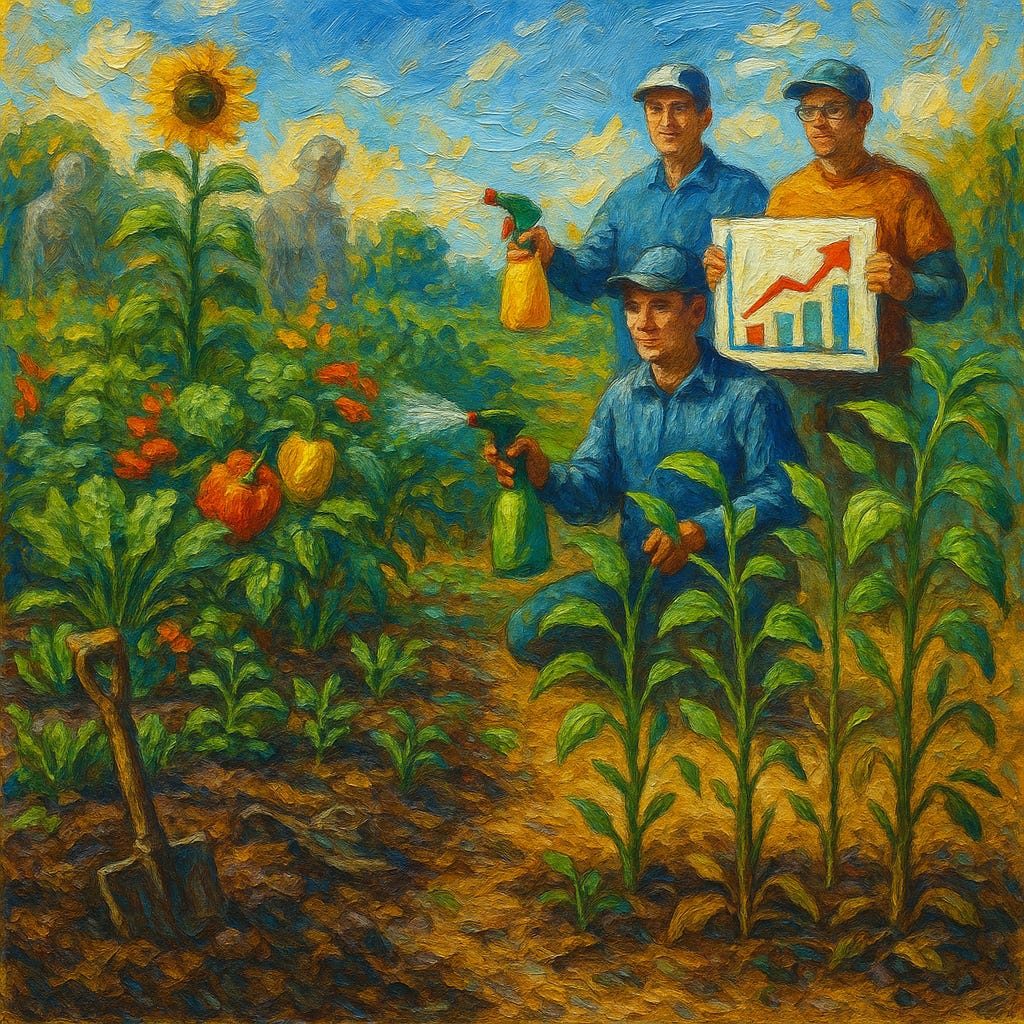
Imagine a vast, neglected garden plagued by weeds and pests, where few plants thrived and many withered. For generations, people struggled to grow anything in this hostile environment. Then, over decades, dedicated gardeners transformed this barren plot through painstaking work. They enriched the soil with compost, installed irrigation systems, removed toxic waste that had poisoned the ground, built protective structures against harsh weather, and carefully selected heartier plant varieties. Gradually, the garden flourished – plants grew stronger, produced more abundant harvests, and resisted pests and diseases naturally.
Just as this transformation neared completion, a new group arrived carrying spray bottles. They began spraying plants and declared, "Look at how our special formulas protect these plants from pests!" They created charts showing how pest damage decreased after they started spraying, but their charts only showed data from when the garden was already 98% transformed. When some plants still suffered damage despite spraying, they created new spray formulas and insisted everyone needed more frequent applications. Over time, the story of the original gardeners who actually transformed the land was forgotten, while the spray-bearers received all credit for the garden's health. Eventually, people began introducing artificial fertilizers and pesticides that damaged the soil and plants, yet continued to celebrate the spray-bearers while the garden's health slowly declined. The truth of what truly made the garden flourish – the fundamental improvements to its ecosystem – was buried beneath a narrative that gave credit to the least significant intervention while undermining what truly mattered.
12-point summary
Disease mortality declined before vaccines and antibiotics: Historical data shows that 95-98% of the mortality reduction for major infectious diseases (including measles, scarlet fever, whooping cough, diphtheria, and tuberculosis) occurred before the introduction of vaccines and antibiotics. This pattern is consistent across diseases with vaccines and those without, contradicting the narrative that medical interventions were primarily responsible for reducing infectious disease deaths.
Data presentation can be misleading: Charts showing vaccine efficacy often use logarithmic scales and selective time periods (starting at 1939 rather than 1900) to create the visual impression that vaccines dramatically reduced mortality, when standard charts reveal that mortality had already declined by 98% before vaccine introduction. This manipulation conceals the true historical pattern of disease mortality reduction that was largely independent of medical interventions.
Measles was considered mild by the medical community: By the 1950s-60s, medical journals described measles as a "relatively mild and inevitable childhood ailment" with few serious complications. Even Alexander Langmuir, who developed the measles vaccine, acknowledged it as "a self-limiting infection of short duration, moderate severity, and low fatality," stating he wanted to eradicate it simply "because it is there" and "it can be done," not because it posed a major health threat.
Living conditions in the 1800s created perfect conditions for disease: Urban environments in the 19th century featured contaminated water supplies (essentially "giant communal toilets"), extreme overcrowding, industrial pollution, coal smoke, dangerous labor practices, and malnutrition. These conditions, combined with harmful medical practices like bloodletting and mercury treatments, created an environment where infectious diseases were inevitably dangerous and deadly.
Public health improvements transformed society: The "world's greatest health revolution" occurred between the 1800s and mid-1900s, including clean water systems, modern sewage, improved housing, food quality improvements, labor reforms, and technological innovations like electricity and refrigeration. These changes had already reduced disease mortality by 95-98% before most vaccines were introduced, representing the true but often forgotten cause of improved public health.
Early vaccine practices were dangerous: Original vaccination involved scratching a person's arm with a lancet and inserting material from animals or other humans' vaccination sites, containing bacteria, fungus, and blood. "Arm-to-arm" vaccination was practiced for 100 years, spreading diseases like tuberculosis and syphilis. The primitive and unsanitary nature of early vaccination is typically omitted from historical accounts, which present it as the same medical intervention practiced today.
Some "infectious diseases" were actually vitamin deficiencies: Conditions like scurvy (vitamin C deficiency), pellagra (B3 deficiency), and beriberi (B1 deficiency) were initially thought to be infectious diseases before being recognized as nutritional deficiencies. The transcript suggests this confusion between nutritional deficiency and infectious disease may still influence our understanding of disease causation today, noting that mortality from scurvy and infectious diseases declined in parallel.
Vitamin supplementation shows remarkable effectiveness: Studies show vitamin A supplementation reduced measles mortality by 60% overall and 90% in infants, while Dr. Klenner's work in the 1950s demonstrated that vitamin C at appropriate doses could clear "all evidence of infection" from measles within 48 hours. Despite this evidence, nutritional approaches to infectious disease remain marginalized in favor of pharmaceutical interventions.
Vaccines proven ineffective through natural experiments: When Sweden discontinued pertussis vaccination from 1979-1996 due to safety and efficacy concerns, no increase in mortality occurred. Similarly, after Leicester, England reduced smallpox vaccination rates from 95% to 10% in 1885, smallpox mortality continued to decline rather than increase, contradicting predictions of catastrophe and challenging the concept of herd immunity.
Admissions about vaccine failures are rarely publicized: A 2023 paper co-authored by Fauci acknowledged that "after more than 60 years of experience with influenza vaccines, very little improvement in vaccine prevention of infection has been noted" and that "none of the predominantly mucosal respiratory viruses has ever been effectively controlled by vaccines." Despite these admissions in scientific journals, the public continues to be encouraged to receive annual flu shots.
Modern health deterioration since the 1980s: Despite increased healthcare spending (from 3.5% of GDP in 1930 to 17.6% today), public health has declined since the 1980s due to ultra-processed "food-tainment," reduced outdoor activity, increased technology exposure, and widespread nutrient deficiencies. Roman argues the current healthcare system focuses exclusively on pharmaceutical interventions while ignoring the fundamental nutritional and lifestyle factors that truly determine health.
Unquestioned presuppositions perpetuate harmful practices: The medical establishment refuses to question fundamental presuppositions even when evidence contradicts them. The DTAP vaccine was found to cause "linked epitope suppression," permanently damaging recipients' ability to clear pertussis infections, yet the response was to recommend more frequent boosters rather than questioning the approach. Roman describes this as seeing "everything as the vaccine hammer" while ignoring more fundamental approaches to health.
30 Questions and Answers
How does the presentation of measles mortality data in logarithmic versus standard charts affect perception of vaccine efficacy?
Logarithmic charts visually compress data at the bottom end of the scale, making small changes appear more significant than they actually are. When measles mortality data is presented in logarithmic format starting from 1939, it creates the illusion of a dramatic drop after the 1963 vaccine introduction. This visual manipulation makes it appear that vaccines were responsible for a significant decline in measles deaths, when in reality the standard chart reveals that mortality had already declined by over 98% before vaccine introduction. The logarithmic presentation also typically excludes earlier data (pre-1939) when the most substantial mortality declines occurred, further skewing perception of the vaccine's impact.
The standard chart presentation reveals the true historical context - that measles mortality was already near zero when the vaccine was introduced, having fallen dramatically due to improved living conditions, nutrition, and sanitation. Roman demonstrated how the same data points create entirely different impressions based solely on the type of chart used. This manipulation technique is commonly employed to make vaccines appear more effective by visually exaggerating minimal changes at already low mortality levels while concealing the massive pre-vaccine mortality decline.
What percentage of measles mortality decline had already occurred before the introduction of the measles vaccine in 1963?
Based on the data presented in the transcript, approximately 98% of measles mortality decline had already occurred before the introduction of the measles vaccine in 1963. This figure is specifically mentioned when discussing the standard (non-logarithmic) chart showing measles mortality rates from 1900 to the 1960s. The presentation notes that by the time the vaccine arrived in 1963, deaths from measles had already declined by "over 98%" compared to their peak in the early 1900s.
For England, where data collection began even earlier (1838), the decline was even more dramatic. The transcript indicates that measles deaths in England had fallen from between 40-70 per 100,000 in the early 1800s to "near zero" by the time their measles vaccine was introduced in 1968. This represents an almost 100% reduction in measles mortality before vaccination began, contradicting the common narrative that vaccines were responsible for eliminating measles as a deadly disease. The transcript emphasizes this point to highlight how the massive decline in disease mortality before vaccines is typically omitted from public discussions about vaccine efficacy.
How did medical professionals historically view measles before the vaccine was introduced?
Medical professionals in the 1950s and early 1960s generally viewed measles as a relatively mild, self-limiting childhood disease rather than a major health threat. The transcript quotes a 1959 British Medical Journal article stating that "measles is considered a relatively mild and inevitable childhood ailment" where "the whole episode had been well and truly over in a week." The same source noted that over a ten-year period, there had been "few serious complications at any age and all children have made complete recoveries." Because of this perception, the journal reported that "no special attempts have been made at prevention even in young infants."
Another quote from the Journal of Epidemiology further emphasized this perspective, stating that measles was "no longer important causes of death or severe illness except in a small minority of infants who are usually otherwise disadvantaged." Even Alexander Langmuir, described as "the father of infectious disease epidemiology" and a key figure in measles vaccine development, acknowledged measles as "a self-limiting infection of short duration, moderate severity, and low fatality." His justification for creating the vaccine was compared to climbing Mount Everest - "because it is there" and "it can be done" - not because it was seen as a pressing medical necessity.
What were the major issues with the first measles vaccine introduced in 1963?
The first measles vaccine introduced in 1963 used killed (inactivated) measles virus and caused severe adverse reactions in recipients. According to the transcript, this vaccine produced concerning neurological effects including "disturbed electrical activity in the brain" that was "suggestive of an encephalopathy." Common side effects included severe and persistent fever, concerning levels of headache suggesting central nervous system involvement, and pneumonia described as "a constant and prominent finding." These serious reactions were "unanticipated" by the vaccine developers.
Even more problematic was the emergence of "atypical measles" in those who received this vaccine. Atypical measles was characterized by "higher and more prolonged fever" than natural measles, making it actually worse than the disease it was meant to prevent. Cases of atypical measles continued to be reported up to 16 years after receiving the inactivated vaccine. Attempts to fix the problem by giving these individuals the later live virus vaccine "did not eliminate the subsequent susceptibility to atypical measles" and was "often associated with severe reactions at the site of live virus inoculation." The transcript notes that these negative outcomes were excluded from statistics about measles, effectively hiding the vaccine's harmful effects from public view.
How did the mortality rates of diseases like scarlet fever, which never had a vaccine, compare to those that eventually had vaccines?
Mortality rates for scarlet fever followed the same declining pattern as diseases that later received vaccines, despite never having a vaccine developed for it. The transcript shows multiple charts demonstrating that scarlet fever mortality dropped dramatically during the same time period as measles, diphtheria, and whooping cough. In the early 1800s, scarlet fever was actually "the worst one" with the highest mortality rates among common infectious diseases. By the mid-20th century, its death rate had declined by approximately 95-98% - matching the decline seen in diseases that would later receive vaccines.
This parallel decline undermines the narrative that vaccines were primarily responsible for reducing infectious disease mortality. As Roman notes, "who does anybody know who's died from scarlet fever? There's no scarlet fever vaccine. So how are we protected from [it]?" The data presented shows that improved living conditions, sanitation, nutrition, and overall health likely played a much more significant role than vaccines in reducing mortality from all these diseases. The charts presented consistently showed disease mortality rates declining in remarkably similar patterns regardless of whether a vaccine was eventually developed for that disease.
What was "atypical measles" and how was it related to vaccination?
Atypical measles was a condition that developed specifically in people who had received the killed measles virus vaccine introduced in 1963. According to the transcript, atypical measles was characterized by "higher and more prolonged fever" than natural measles, making it actually worse than the disease it was intended to prevent. This condition represented an iatrogenic (doctor-caused) illness that would not have existed without the vaccination program.
The complications from atypical measles persisted for years, with cases being "reported up to 16 years after receipt of the inactivated vaccine." Attempts to solve this problem by administering the live virus vaccine to those who had previously received the killed vaccine "did not eliminate the subsequent susceptibility to atypical measles" and often resulted in "severe reactions at the site of live virus inoculation." Roman emphasized that these negative outcomes were excluded from official statistics about measles mortality and morbidity, effectively hiding the vaccine's harmful effects by categorizing them as a separate condition rather than as adverse effects of vaccination. This historical episode demonstrates how vaccine complications can be obscured through medical classification, creating the illusion of safety and efficacy.
What does the historical data from England and Wales reveal about disease mortality trends from the 1800s to 1900s?
The historical data from England and Wales, which began record-keeping in 1838, reveals a consistent pattern of dramatically declining mortality rates for all major infectious diseases long before medical interventions were introduced. The transcript shows that deaths from measles, scarlet fever, whooping cough, diphtheria, and smallpox were extremely high in the mid-1800s, with some causing 40-70 deaths per 100,000 population. Around 1875, mortality rates for all these diseases began a steady decline that continued into the 20th century.
By the time antibiotics (1940s) and vaccines (1950s-60s) were introduced, disease mortality had already declined by 95-98%. Roman emphasizes that England's longer data record provides even stronger evidence of this pattern than US data, which only began in 1900. The transcript specifically notes that measles mortality in England had already plummeted "down almost 100%" before their measles vaccine was introduced in 1968, and similar patterns were observed for all other infectious diseases. Remarkably, diseases without vaccines (like scarlet fever) showed identical mortality decline curves, strongly suggesting that medical interventions played a minimal role in the historical reduction of infectious disease deaths compared to broader improvements in living conditions, nutrition, and sanitation.
What specific improvements in living conditions contributed to the decline in infectious disease mortality before vaccines?
Multiple improvements in living conditions dramatically reduced disease mortality before vaccines, including clean public water systems, modern sewage infrastructure, and improved housing that replaced overcrowded slums. Food quality improved significantly with proper refrigeration, milk pasteurization, and better preservation techniques. The transcript details how industries like slaughterhouses and tanneries were relocated away from residential areas, preventing contamination of water supplies. Transportation improvements allowed greater access to fresh fruits and vegetables, while numerous inventions like electricity, refrigeration, and the flush toilet revolutionized daily living.
Additional factors included the replacement of horses with automobiles (eliminating street waste), better air quality from reduced coal pollution, and the end of harmful medical practices like bloodletting and mercury treatments. Labor reforms eliminated dangerous child labor conditions, established reasonable working hours, and created public schools. The transcript describes this as "the world's greatest health revolution that nobody remembers," transforming societies from the horrific conditions of the 1800s to the vastly healthier environments of the mid-1900s. By the 1940s-60s, these improvements had already reduced disease mortality by 95-98% before most vaccines were introduced.
What were living conditions like in cities during the 1800s and how did they impact disease?
Urban conditions in the 1800s were described as horrific, with cities essentially functioning as "giant communal toilets." The transcript quotes an 1861 source describing cities as "great pestilent enclosures" where narrow streets, lack of sewage systems, and absence of ventilation created perfect conditions for disease. There was no piped water, and all waste (human, animal, and industrial) was discharged directly into the streets and water supplies that residents then drank from. Horse transportation meant streets were filled with animal waste, euphemistically called "mud," which was tracked into homes.
Housing conditions were equally appalling, with families crammed into single rooms where deceased family members would sometimes remain for days as relatives scraped together money for burial. Coal was the only heating source, releasing massive amounts of sulfuric acid and soot into the air. The transcript cites an 1844 source stating the poor were "deprived of all means of cleanliness, of water itself." These conditions made disease inevitable - as Roman notes, "who would be healthy in that? Nobody could be healthy in this." The combination of toxic living conditions, contaminated water, poor nutrition, and harmful medical practices created perfect conditions for widespread disease and death.
How did child labor practices in the 19th century affect health and disease susceptibility?
Child labor practices in the 19th century were brutal and directly contributed to disease susceptibility. Children as young as three or four years old were forced into "the hardest, most painful labor" for 12-16 hours daily without breaks, fresh air, or exercise. The transcript cites an 1890 source describing how children "worked to the point of extreme exhaustion," receiving no care or enjoyment. Those who survived grew up "weak, bloodless, miserable" and were often "deformed cripples" susceptible to "almost every disease."
A particularly disturbing example from a 1913 report describes a seven-year-old girl forced to work "sitting in the hot sun while she was sick with measles." The lack of care resulted in her death - raising the question of whether she died from measles itself or from the horrible conditions she was subjected to while ill. The transcript emphasizes that these labor practices destroyed children's health, making them vulnerable to infections that healthier children might easily survive. This context is critical to understanding why infectious diseases were far more deadly in the past - not because the pathogens were necessarily more virulent, but because the population's health was systematically undermined by inhumane working conditions from the earliest ages.
What were some harmful medical treatments historically used that may have worsened disease outcomes?
Historical medical treatments often exacerbated rather than alleviated disease. Bloodletting was a primary treatment for nearly everything, sometimes continuing until patients lost consciousness. Physicians administered toxic substances including mercury, strychnine, and arsenic as standard treatments. The transcript cites a physician named Samuel Dixon who in 1855 noted that "for upwards of 23 centuries to starve, bleed, purge, and torture had been all but the exclusive business of the medical man." The first U.S. president, George Washington, reportedly died from medical error - excessive bleeding combined with mercury administration.
Another harmful practice was the "hot regimen" for smallpox, where patients were placed in enclosed rooms under heavy blankets without fresh air or water, deliberately overheated to "sweat out" the disease. This treatment predictably increased mortality. Thomas Sydenham, described as "the father of English medicine," observed that smallpox was actually "the most slight and safe of all other diseases" if "no mischief be done either by physician or nurse" - suggesting that medical interventions were often more dangerous than the disease itself. The persistence of these harmful practices, despite evidence of their dangers, demonstrates how medical authority often overrode medical outcomes in historical healthcare.
What did Dr. Cherry's 2019 paper reveal about the DTAP vaccine and "linked epitope suppression"?
Dr. Cherry's 2019 paper "The 112-Year Odyssey of Pertussis and Pertussis Vaccines: Mistakes Made and Implications for the Future" contained a disturbing admission about the DTAP vaccine (the "safer" acellular pertussis vaccine). According to the transcript, Cherry stated that due to "linked epitope suppression" (previously called "original antigenic sin"), all children primed with DTAP vaccines "will be more susceptible to pertussis throughout their lifetimes" and "there is no way, no easy way to decrease this increased lifetime susceptibility." This represents an extraordinary acknowledgment that the vaccine permanently compromised recipients' immune responses to pertussis (whooping cough).
Rather than admitting error or suggesting a reassessment of the vaccine program, Cherry's solution was to recommend administering TDAP boosters every three years for the lifetime of anyone who received the DTAP vaccine as a child. Roman characterized this as an admission that "they broke everyone's immune system and they can't fix it," yet instead of transparency, the response was to "double down, triple down" with more vaccinations. This exemplifies what Roman described as the medical establishment's refusal to question fundamental presuppositions, even when evidence contradicts them, and the tendency to view vaccines as the only possible solution regardless of their demonstrated harms.
What does the historical data show about influenza vaccine effectiveness over the past 60+ years?
Historical data reveals that influenza vaccines have shown essentially no effectiveness in reducing mortality over their 60+ year history. The transcript presents a chart showing that flu vaccination rates climbed to approximately 60-70% among those 65 and older (the highest-risk group), yet after 40 years of influenza vaccination programs, mortality rates remained virtually unchanged from pre-vaccine levels. This lack of effectiveness was recently acknowledged in a scientific paper co-authored by Anthony Fauci in January 2023, which stated that "after more than 60 years of experience with influenza vaccines, very little improvement in vaccine prevention of infection has been noted."
The paper further acknowledged that influenza vaccine effectiveness rates "would be inadequate for licensure for most other vaccine-preventable diseases," essentially admitting that flu vaccines don't meet the standards applied to other vaccines. Most significantly, the paper stated it is "not surprising that none of the predominantly mucosal respiratory viruses has ever been effectively controlled by vaccines." Roman emphasized that this represents an admission in a major scientific journal that respiratory virus vaccines fundamentally don't work, yet this information isn't conveyed to the public, who continue to be encouraged to receive annual flu shots despite their demonstrated ineffectiveness.
What was Fauci's admission about respiratory virus vaccines in the 2023 paper cited?
In a January 11, 2023 paper titled "Rethinking Next-Generation Vaccines for Coronaviruses, Influenza Viruses, and Other Respiratory Viruses" published in Cell Host & Microbe, Fauci (listed as the third author) made several significant admissions about respiratory virus vaccines. The transcript quotes the paper stating: "After more than 60 years of experience with influenza vaccines, very little improvement in vaccine prevention of infection has been noted." More remarkably, the paper acknowledged, "it is not surprising that none of the predominantly mucosal respiratory viruses has ever been effectively controlled by vaccines."
The paper further admitted that the effectiveness rates of influenza vaccines "would be inadequate for licensure for most other vaccine-preventable diseases," essentially conceding that flu vaccines fail to meet standard efficacy benchmarks. The authors also stated that "vaccines against non-systemic mucosal respiratory viruses with high mortality rates have thus far eluded vaccine development efforts." Roman interpreted these statements as a tacit admission that vaccines against respiratory viruses like influenza and coronaviruses fundamentally don't work and never have. Yet despite this acknowledgment in a scientific journal, the public continues to be encouraged to receive these vaccines annually, and manufacturers are developing "new technology" approaches without addressing these fundamental limitations.
How did vaccination rates in Leicester, England change after 1885, and what happened to smallpox mortality afterward?
In 1885, the citizens of Leicester, England staged a massive protest against compulsory vaccination, overthrew their local government, and elected new officials who made vaccination voluntary. As a result, vaccination rates plummeted from around 95% to approximately 10% by 1887. Medical authorities predicted catastrophic smallpox outbreaks and mass casualties, warning citizens they would "all die" for rejecting "the greatest gift that mankind ever got from Dr. Jenner." However, contrary to these dire predictions, the data presented shows that smallpox "never reared its head again" in Leicester despite vaccination rates remaining below 40%.
This pattern extended beyond Leicester to all of England - as vaccination rates declined across the country after the 1870s epidemic, smallpox mortality continued to decrease rather than increase. By the 1920s, vaccination rates in England had fallen to around 40% while smallpox had virtually disappeared. Roman emphasized that this contradicts the concept of herd immunity, which claims high vaccination rates are necessary to prevent disease outbreaks. The Leicester experience represented a natural experiment demonstrating that declining vaccination rates coincided with, rather than reversed, the decline in smallpox mortality, suggesting that improved living conditions rather than vaccination were responsible for the disease's disappearance.
What was the original smallpox vaccination procedure like, and how does it differ from modern conceptions of vaccination?
The original smallpox vaccination procedure was dramatically different from modern sterile injections. It involved using a sharp instrument called a lancet to make multiple scratches or cuts on a person's arm (or sometimes inner thigh for women to hide resulting scars). The practitioner would then take material from either a vial or directly from someone else's vaccination site - containing what was later discovered to be a mixture of bacteria, fungus, and human blood - and push it into these open wounds. There was no cleanliness protocol, no alcohol for sterilization, and no understanding of what was actually being transferred.
For approximately 100 years, the predominant method was "arm-to-arm" vaccination, where material would be taken from one person's vaccination site and transferred directly to the next person, creating chains of transmission. This method frequently spread diseases like tuberculosis and syphilis. The procedure often resulted in severe infections, with one in ten patients developing what was called a "bad arm" - a large, infected wound that could lead to amputation or death. Later analysis revealed this "vaccine material" contained numerous contaminants. This primitive procedure bears little resemblance to modern vaccination, yet it's presented historically as the same medical breakthrough, obscuring its dangerous and unsanitary nature.
What was "arm-to-arm" vaccination and what problems did it cause?
Arm-to-arm vaccination was the primary smallpox vaccination method used for approximately 100 years, involving the transfer of material directly from one person's vaccination site to another's. After creating scratches on a recipient's arm with a lancet, practitioners would take pus or fluid from a previous vaccinee's arm (where a lesion had formed) and smear it into the new person's wounds. This material was later discovered to contain not just the supposed "vaccine virus" but also bacteria, fungus, and blood from the donor. The lancet was rarely if ever cleaned between patients, frequently drawing blood and creating open wounds.
This practice caused numerous serious problems, including the spread of tuberculosis (then called "consumption"), syphilis, and other blood-borne diseases. The transcript quotes multiple historical physicians who observed that "consumption follows on the footsteps of vaccination" and documented cases of "paralysis, blindness of both eyes, hip joint disease, consumption, [and] blood diseases" transmitted through vaccination. One source claimed "hundreds of children in Brooklyn public school systems are inoculated with tuberculosis" through this practice. Despite these severe consequences and cross-contamination, arm-to-arm vaccination continued for a century, with consequences of the practice typically not included in historical accounts of vaccination's benefits.
How did economic development impact disease rates according to Thomas Mack?
According to Thomas Mack, economic development was the primary factor in the disappearance of smallpox, not vaccination. The transcript quotes Mack's 2002 statement: "If people are worried about endemic smallpox, it disappeared from this country not because of mass herd immunity. It disappeared because of economic development." In 2003, he further elaborated that the "disappearance of smallpox was facilitated, not impeded, by economic development" and occurred "long before the World Health Organization's smallpox eradication program."
Mack specifically identified that smallpox had already disappeared from many countries "as they developed economically," listing Thailand, Egypt, Mexico, Bolivia, Sri Lanka, Turkey, and Iraq as examples. This contradicts the common narrative that global vaccination campaigns were responsible for smallpox eradication. Instead, Mack's perspective aligns with the broader theme throughout the transcript that improved living conditions, sanitation, nutrition, and general health were the primary factors in reducing infectious disease mortality. Roman presents this as evidence that the credit given to vaccination programs for disease eradication is largely misplaced, with economic development and its associated health improvements being the true drivers of disease reduction.
What role did vitamin deficiencies play in what were thought to be infectious diseases?
Several conditions originally believed to be infectious diseases were eventually discovered to be simple vitamin deficiencies. The transcript specifically discusses scurvy (vitamin C deficiency), pellagra (vitamin B3 deficiency), and beriberi (vitamin B1 deficiency). These conditions often manifested with skin symptoms that resembled infectious rashes, leading to the mistaken belief they were contagious. Roman notes that it made sense historically to think scurvy was infectious: "somebody gets on a boat and everybody starts their teeth start falling out and their limbs turn black, they think it's a plague."
The transcript suggests this confusion between nutritional deficiencies and infectious disease may still influence our understanding of disease today. Roman points out that if the scientists who believed pellagra and beriberi were caused by viruses "hadn't lost out, we'd probably be getting beriberi and pellagra vaccines." He also shows charts demonstrating that scurvy death rates declined in parallel with measles and whooping cough mortality, suggesting nutritional improvements likely played a key role in reducing deaths from all these conditions simultaneously. This historical misunderstanding underscores how nutritional status fundamentally influences disease susceptibility and mortality, a connection often overlooked in modern discussions of infectious disease.
What evidence is presented regarding vitamin supplementation for treating infections like measles?
The transcript presents compelling evidence about vitamin supplementation for infectious diseases, particularly focusing on vitamins A and C for measles. It cites a study showing that vitamin A supplementation for hospitalized measles patients reduced mortality risk by approximately 60% overall and by 90% in infants. This demonstrates that vitamin A deficiency was likely a major factor in measles mortality. Roman suggests that combining vitamins A, C, zinc, and D would likely produce even better results, addressing the underlying nutritional deficiencies that make infectious diseases dangerous.
The transcript also details Dr. Klenner's work from the 1950s, who found that vitamin C at doses of 1,000 milligrams every 4 hours would "modify the attack of measles," while increasing the frequency to every 2 hours would clear "all evidence of infection" within 48 hours. Klenner was reportedly "curing all these conditions way back in the 50s" using vitamin C, though his approach "didn't catch on." Roman emphasizes that adequate levels of vitamins D and A (the "anti-infective vitamin") make infectious diseases like measles and flu "not really a problem," yet medical professionals rarely recommend nutritional approaches, focusing instead on pharmaceutical interventions like vaccines and antibiotics.
How did US healthcare expenditure as a percentage of GDP change from 1930 to present day?
US healthcare expenditure has grown dramatically as a percentage of GDP over the decades. The transcript references a chart from a 1977 study showing healthcare costs rising from approximately 3.5% of GDP in 1930 to around 8.5% by the time of that study. Roman then notes that current spending has ballooned to 17.6% of GDP, representing $4.9 trillion dollars annually on what he sarcastically refers to as "so-called healthcare." He characterizes this escalation as "not a well-balanced society," suggesting healthcare spending should be closer to 3.5-4% for "accidents and emergency surgeries and all that."
Roman describes this "insane ever creeping giant amount of money" spent on healthcare as "bonkers" and projects that it's supposed to reach 20% by 2030. He remarks that the United States will soon spend "one in five [dollars] that the United States generates" on "drugs and vaccines and bogus surgery." This spending trajectory is presented as particularly concerning given earlier points in the transcript about how public health measures and improved living conditions, rather than medical interventions, were historically responsible for major health improvements. The implication is that modern healthcare spending delivers poor value compared to basic public health investments.
What happened in Sweden when they discontinued the pertussis vaccine from 1979-1996?
When Sweden discontinued their national pertussis vaccination program in 1979, they experienced no significant increase in pertussis mortality despite predictions of disaster. According to the transcript, Swedish health authorities determined the vaccine was ineffective after finding that "84% of children who had three doses of vaccine" were still contracting pertussis. Concerned about both safety and efficacy issues, they discontinued the national vaccination program, which remained suspended for 17 years until 1996.
The data presented in the transcript shows that during this 17-year period without pertussis vaccination, there was "no increase in mortality" from the disease. A closer examination of the chart reveals that from 1970 to 1996, deaths from pertussis remained consistently minimal, with Roman noting the years after vaccination resumed were actually "a little worse but not significant." This natural experiment in a whole country demonstrates that the absence of pertussis vaccination did not lead to the catastrophic outcomes predicted by vaccination proponents. This evidence contradicts the narrative that the pertussis vaccine was necessary for controlling mortality from the disease, supporting Roman's broader argument that vaccines have received undue credit for disease mortality reduction.
How did doctors' views on whooping cough severity change between the early 1900s and the 1990s?
Doctors' perspectives on whooping cough shifted dramatically from viewing it as deadly in the early 1900s to recognizing it as generally mild by the late 20th century. The transcript cites a 1960 British Medical Journal article questioning whether "universal vaccination against pertussis is always justified" given "the increasing mild nature of the disease and the very small mortality." Similarly, a 1977 Lancet article found "no evidence that vaccination played a major role in the decline of incidence and mortality" for whooping cough.
By 1995, the British Medical Journal described the "natural course of 500 consecutive cases of whooping cough" as showing that "most cases of whooping cough are relatively mild." The same paper noted that "doctors are unlikely to hear the characteristic cough" because it "may be the only symptom" and reassured parents that "a serious outcome is unlikely." Roman contrasts this medical reality with current perceptions, noting how his wife and he had been "incredibly fearful" of their child getting whooping cough due to modern messaging that portrays it as "incredibly dangerous" despite historical evidence showing it had become a mild disease by the time vaccines were introduced. This shift in medical perception paralleled the pattern seen with other infectious diseases that became less severe over time due to improved living conditions and nutrition.
What are the implications of presenting disease mortality data without proper context?
Presenting disease mortality data without proper context creates a fundamentally misleading narrative about vaccine efficacy and the true drivers of public health improvements. The transcript demonstrates how starting measles mortality charts at 1939 (rather than 1900) and using logarithmic scales visually exaggerates the impact of vaccines while concealing the massive pre-vaccine mortality decline. Similarly, failing to compare mortality trends across different diseases (including those without vaccines) conceals the universal pattern of declining mortality that occurred regardless of vaccination.
Without context showing that diseases like measles represented only 0.22% of total deaths by 1962 (ranking near the bottom of mortality causes), the public develops an exaggerated perception of both historical disease severity and vaccine benefits. The transcript explicitly states that Roman initially thought whooping cough would cause people to "just be coughing and coughing until you were dead," which was somewhat true in the 1800s and early 1900s, but "by the time they came out with the vaccines, it was no longer true." This misperception leads to unnecessary fear and overreliance on medical interventions while undervaluing the fundamental public health improvements that truly drove disease mortality reduction. The larger implication is that this contextual manipulation fundamentally distorts both medical history and current public health priorities.
How did Charles Creighton's research on vaccination history impact the Encyclopedia Britannica?
Charles Creighton, initially pro-vaccine, was commissioned to write an article on vaccination for the Encyclopedia Britannica in 1888. Instead of repeating standard talking points, he conducted extensive historical research that led him to unexpected conclusions. His resulting article, described as "quite scathing of vaccination," documented numerous problems with the practice and questioned its efficacy. This thoroughly researched critique remained in the Encyclopedia Britannica until 1922, providing an authoritative counterpoint to pro-vaccination narratives for over three decades.
In 1922, Creighton's "wonderfully written article" that was "multiple pages long on all the problems with vaccination" was removed without explanation and replaced with an uncritical entry titled "Vaccine Therapy." The new entry simply stated that "Jenner did this and we have lots and lots of new therapies that are coming up that are going to help humanity." Roman notes, "somebody decided hey we got to get rid of that thing that's not good, let's put this instead." This editorial shift represents a significant example of how critical historical information about vaccination was systematically removed from mainstream educational resources, effectively erasing well-documented concerns and contributing to the one-sided narrative that persists today.
What was the "world's greatest health revolution" according to Roman Bystrianyk?
Roman Bystrianyk describes the transformation of public health conditions between the 1800s and mid-1900s as "the world's greatest health revolution that nobody remembers." This revolution encompassed numerous improvements: clean public water systems, modern sewers, hand-washing practices, improved housing replacing dreadful slums, relocation of polluting industries away from residential areas, purification of the milk supply, better child feeding practices, labor and child protection laws, public schools, improved food handling, and transportation allowing access to fresh fruits and vegetables.
Additional components included technological innovations (electricity, refrigeration, automobiles replacing horses, flush toilets), addressing water and air pollution, abandoning toxic medical treatments like bloodletting and mercury, and a general rise in living standards. Roman emphasizes that by the 1940s-60s, these changes had transformed Western societies from the horrific conditions of the 1800s to "just wonderful" living environments. He contrasts images of children working in factories with smiling high school students, noting "not too many smiles on the left." This comprehensive public health revolution is presented as the true cause of declining infectious disease mortality, yet its role has been largely forgotten and replaced with a narrative crediting vaccines and antibiotics for improvements that were already 95-98% complete before these medical interventions arrived.
How does Roman Bystrianyk explain the decline in tuberculosis without widespread BCG vaccination in the US?
Roman explains that tuberculosis mortality declined dramatically without widespread vaccination in the United States, serving as a clear example of how diseases diminish without vaccines. He presents data showing tuberculosis (also called "consumption") was a major killer in the 1860s at approximately 350 deaths per 100,000 population - far higher than measles or smallpox. By the time antibiotics like penicillin (1944) and streptomycin (1947) were introduced, tuberculosis mortality had already declined by about 98% following the same pattern seen with other infectious diseases.
The BCG vaccine for tuberculosis was developed but, as Roman notes, "at least in the United States I still think this is true nobody gets the BCG vaccine as a matter of practice." Despite this lack of vaccination, tuberculosis was effectively eliminated as a major health threat in America. Roman emphasizes this point: "so it wasn't the vaccine that wiped out tuberculosis in the United States even though it was a far bigger killer, far bigger killer than measles." This example directly challenges the narrative that vaccines are necessary for controlling infectious diseases, as one of history's deadliest infections was controlled without widespread vaccination through the same public health improvements that reduced other disease mortality.
How did medical perspectives on the need for measles eradication evolve in the mid-20th century?
Medical perspectives on measles eradication in the mid-20th century reveal that the push for vaccination was motivated more by capability than necessity. The transcript quotes Alexander Langmuir, described as "the father of infectious disease epidemiology" who created the epidemiology section of what became the CDC. When asked why he wished to eradicate measles, Langmuir compared it to climbing Mount Everest, saying he wanted to do it "because it is there" and "it can be done." Significantly, Langmuir acknowledged measles as "a self-limiting infection of short duration, moderate severity, and low fatality."
This perspective is reinforced by quotes from medical journals of the time. A 1959 British Medical Journal article described measles as a "relatively mild and inevitable childhood ailment" with few serious complications. By 1963, measles mortality had already declined by 98%, with only 408 deaths recorded in the US that year (0.22% of all deaths). Despite this, vaccine developers made grandiose claims, including that the vaccine would "ensure the eradication of measles from the United States in 1967" - a prediction that proved wildly inaccurate. These perspectives reveal that measles vaccination was pursued primarily as a technical achievement rather than addressing an urgent public health crisis, contradicting the modern narrative that presents historical measles as universally deadly and vaccines as life-saving necessities.
What does Roman Bystrianyk identify as the fundamental presuppositions in vaccine science that should be questioned?
Roman identifies several fundamental presuppositions in vaccine science that remain unquestioned despite contradictory evidence. The primary presupposition is that vaccines are responsible for the historical decline in infectious disease mortality, despite data showing 95-98% of mortality reduction occurred before vaccine introduction. Another is that vaccine side effects should be categorized separately from the diseases they're meant to prevent, as exemplified by "atypical measles" being considered a new condition rather than a vaccine injury, effectively hiding negative outcomes from statistics.
A particularly critical presupposition involves the immune system response to vaccination. Using the example of Dr. Cherry's paper on pertussis vaccines, Roman highlights how the discovery that DTAP vaccines permanently damage recipients' ability to clear pertussis infections led not to questioning the vaccination approach but to recommending more frequent boosters. Roman observes, "the failure to go back and question the initial presupposition surrounding all of this is insane." He characterizes the medical establishment as having "only a hammer" (vaccines and antibiotics), causing them to see every problem as "a nail" while ignoring fundamental approaches like nutritional support through vitamins A, C, D, and zinc. This unwillingness to question foundational assumptions perpetuates interventions that may cause more harm than benefit.
How does the discussion suggest modern health has deteriorated since the 1980s despite increased healthcare spending?
Modern health began deteriorating in the 1980s when society "started going backwards" after reaching a public health peak in the 1940s-70s. Roman identifies several key factors in this regression: the proliferation of "toxic glues in our homes," increased "dirty electricity running below our floors," and most significantly, the explosion of ultra-processed foods. He describes the rise of "food-tainment" - highly processed products in "boxes with these cute characters and sparkles" that provide entertainment value but little nutritional benefit, contrasting this with his childhood in the 1970s when families primarily ate at home and fast food was an occasional treat rather than a dietary staple.
Other factors contributing to declining health include reduced outdoor activity and increased technology exposure. Roman recalls spending his childhood "outside all day" engaged in physical activities, whereas contemporary children spend more time indoors with electronic devices. He notes that many people today are deficient in essential nutrients like magnesium (due to agricultural practices) and vitamin D (from reduced sun exposure), yet medical authorities focus exclusively on pharmaceutical interventions rather than addressing these fundamental nutritional deficiencies. This nutritional decline parallels the rising healthcare expenditure (from 3.5% of GDP in the 1930s to nearly 20% projected by 2030), suggesting that increased medical spending correlates with worsening rather than improving health outcomes.
I appreciate you being here.
If you've found the content interesting, useful and maybe even helpful, please consider supporting it through a small paid subscription. While 99% of everything here is free, your paid subscription is important as it helps in covering some of the operational costs and supports the continuation of this independent research and journalism work. It also helps keep it free for those that cannot afford to pay.
Please make full use of the Free Libraries.
Unbekoming Interview Library: Great interviews across a spectrum of important topics.
Unbekoming Book Summary Library: Concise summaries of important books.
Stories
I'm always in search of good stories, people with valuable expertise and helpful books. Please don't hesitate to get in touch at unbekoming@outlook.com
Baseline Human Health
Watch and share this profound 21-minute video to understand and appreciate what health looks like without vaccination.
Wonderful. If I truly believed we needed HHS, Mr. Bystrianyk would be my pick for Secretary. He has ethics, reads and knows how to use graph paper correctly. Much admiration for this gentleman. His book has been life-altering.
Great summation. To deal with toxicity/invasion or other trauma, the body heats up, isolates, expels...and we call these needed reactions "diseases". They may involve a certain dis-ease, but they are a remedy not a cause. There may be cases where repression of symptoms is desirable, but when that's all you ever want to do...congrats, you're a qualified modern medical professional!