

Author’s note: The vocabulary examined in these pages belongs to establishment medicine. The twelve terms appear throughout clinical practice as neutral technical descriptions, and when they appear here in that register (in quoted sources, in diagnostic categories, in direct discussion of their clinical use), they operate in the voice of the institutions that produced them. When the essay turns to what is actually happening inside the body of a patient receiving one of these labels, it moves to the terrain paradigm. Disease, in this frame, arises from four categories of insult: toxic exposure, nutritional depletion, electromagnetic exposure, and psychological strain. Symptoms are the body’s intelligent responses to these insults. Shifts between the two registers are deliberate. The method of the essay is to let the first vocabulary expose what the second makes visible.
The Mayo Clinic page on multiple sclerosis contains two statements, printed on the same page under the same heading. The first: “The cause of multiple sclerosis is unknown.” The second, in the next clause: multiple sclerosis “is considered an immune mediated disease in which the body’s immune system attacks its own tissues.”¹
The two statements are made in the voice of the same institution on the same page about the same disease. The first admits that medicine does not know what causes MS. The second asserts a mechanism that would require medicine to know what causes MS, because to classify a condition as the body attacking itself is to make a claim about causation. The two sentences cannot both be true. Neither is retracted. Patients read both and leave the page understanding that they have an autoimmune disease.
The incoherence passes unnoticed because the labels have been taught as technical categories. The ignorance inside them has never been named as ignorance.
Essential hypertension accounts for roughly 90 to 95 percent of all hypertension diagnoses.² The remaining five to ten percent is classified as secondary because an identifiable cause has been found: a kidney condition, an endocrine tumor, a specific drug. Everything else is called essential, which comes from the Latin essentia, the “being” or “essence” of a thing, and signals in clinical usage that the elevated pressure is the essence of the condition. The condition is defined by its symptom, and nothing causal has been identified. Ninety-five percent of a diagnostic category, and the word for it is a Latin shrug.
This is the operation that runs across the diagnostic vocabulary of modern medicine. Idiopathic performs the shrug in Greek dress. Autoimmune reverses the arrow of causation. Genetic predisposition relocates the cause inside the chromosomes, where no further question can reach. Chronic and incurable close down the possibility of recovery. The twelve words examined here each foreclose a specific line of inquiry, and together they explain how a profession can produce more than seventy thousand distinct diagnostic codes while being unable to tell most patients what caused their condition.³
Essay PDF Download (Free Subscribers)
Audio Deep Dive (Paid Subscribers Only)
Support This Work
The essays are free and will stay free. What paid subscribers get is the library that surrounds them: the full digital book catalogue, audio deep dives, archived, and embedded in each essay, and the Questions for Your Doctor, Before You Consent, and Package Insert series. Platinum Supporters also receive the digital edition of every paperback on the day it’s published.
Whichever tier suits, thank you for being here. If you’d like to become a paid subscriber, upgrade a tier, or gift a subscription to someone who might value the work, the options are below.
The admission dressed as explanation
Five of the twelve words share a single structure. They admit, in a language the patient does not speak, that the cause has not been identified. They then present the admission as the name of the condition.
1. Idiopathic is the clearest example. The word combines the Greek idios (one’s own) and pathos (suffering), literally “a suffering of its own.” Inside medical training there is a joke worn thin by repetition: idiopathic means the physician is pathetic and the patient is an idiot. The joke lands because it is almost true. Idiopathic pulmonary fibrosis, idiopathic thrombocytopenic purpura, idiopathic intracranial hypertension, idiopathic scoliosis, idiopathic hypersomnia. The word itself declares that the cause is unknown. The declaration is then dressed as a diagnostic category and billed accordingly.
2. Essential performs the identical work in Latin, with an added rhetorical lift. The word suggests that something essential about the condition has been identified, when what has been named is the symptom. Essential hypertension, essential tremor, essential thrombocythemia. The essence that medicine has located is the elevation of the pressure, the shaking of the hand, the proliferation of platelets. The underlying cause is what the word quietly admits it does not know.
3. Primary performs the same work in English. Primary biliary cholangitis, recently renamed from primary biliary cirrhosis. Primary insomnia. Primary dysmenorrhea. Primary immune thrombocytopenia. The category primary exists because there is a parallel category secondary. Secondary means the cause has been identified. Primary means it has not. A patient diagnosed with secondary hypertension knows what caused it. A patient diagnosed with primary hypertension believes they know what they have. Both diagnoses are spoken in the same clinical register, with the same confidence, and billed under the same category of expertise. Only one of the two labels contains information.
4. Unexplained admits the shape openly. Medically unexplained symptoms. Unexplained infertility. Unexplained chronic cough. Unexplained anemia. This is the most honest of the five words. It does not translate ignorance into Latin or Greek; it tells the patient directly that nothing has been explained. The honesty does not alter the function. The patient leaves the appointment with the same information they came in with, carrying a diagnosis made of their own words with a billing code attached. The inquiry still stops at the point where it would otherwise continue.
5. Syndrome is a variation on the pattern. From the Greek syn (together) and dromos (running), a syndrome is a cluster of symptoms that run together. Clustering is not causation. Many syndromes carry the name of the physician who first described the cluster: Guillain-Barré, Raynaud’s, Sjögren’s, Reye’s, Reiter’s, Behçet’s. The eponym honors the observer. It does not identify what is producing the cluster. Chronic fatigue syndrome, irritable bowel syndrome, polycystic ovary syndrome, restless legs syndrome, metabolic syndrome, premenstrual syndrome, fibromyalgia syndrome. Each describes a cluster. Each has been designated a condition. None of the names tells the patient what is driving the cluster.
The arrow reversed
Two words do more aggressive work. They do not merely leave the cause unexamined. They relocate the cause inside the patient’s body, where further investigation is foreclosed by definition.
6. Autoimmune inverts the direction of causation. The observation is tissue damage: joints in rheumatoid arthritis, nerve sheaths in multiple sclerosis, thyroid in Hashimoto’s, pancreas in type 1 diabetes, skin and connective tissue in lupus. The question is what caused the damage. The autoimmune label answers: the body attacked itself. The body’s own repair response is reframed as the primary aggressor, and the exposure that initiated the sequence disappears from the chart.
Charles Richet won the 1913 Nobel Prize in Physiology or Medicine for demonstrating what happens when a foreign protein is injected into a living body. He had intended to study whether low doses of a toxic protein could induce tolerance, so that larger subsequent doses would be survivable. He discovered the opposite. A dog that survived a first intravenous injection of foreign protein did not become tolerant to the second. The second dose, often smaller than the first, killed the dog within minutes. The body had not adapted. It had sensitized. Richet named the phenomenon anaphylaxis, from the Greek for “against protection,” and spent the next two decades documenting its mechanism in laboratory animals and in humans.⁴
The mechanism Richet identified is not controversial. It appears in every immunology textbook under the heading of allergy. What has been quietly removed from the autoimmune literature is the extension of the mechanism to the injections given routinely across a human lifetime. The textbooks acknowledge foreign protein exposure in classical allergy, where bee stings and peanut proteins produce the kind of sudden collapse Richet described. The analysis is not extended to injected pharmaceutical products, injected adjuvants, injected lipid nanoparticles, injected polyethylene glycol, or the injected synthetic genetic sequences delivered to the general population from 2021 onward. The mechanism is accepted. The populations to which it is applied are curated.
The medical literature catalogs more than one hundred pharmaceutical products that produce conditions classified as autoimmune, with symptoms resolving when the medication is withdrawn. A 2019 study published in the Annals of the Rheumatic Diseases interrogated the World Health Organization’s pharmacovigilance database and identified 118 drugs implicated in drug-induced lupus alone, 42 of them not previously reported.⁵ The condition was not an autoimmune disease. The condition was the body’s response to a specific chemical, and the response ceased when the chemical ceased. Each case recorded as drug-induced is also a case documenting that the body does not attack itself. The body responds to what has been introduced into it.
7. Genetic predisposition performs a related but distinct relocation. Instead of blaming the body’s repair response, it blames inheritance. A condition is said to run in families, or to be associated with certain gene variants, and the explanation is sealed. The investigation into shared environmental exposures (the same water, the same diet, the same regional industrial contamination, the same household chemicals, the same injection schedule from birth, the same stress patterns across generations) does not need to be opened. The cause has been declared innate.
The Human Genome Project, completed in 2003, expected to find more than one hundred thousand genes. It found approximately twenty thousand, fewer than are present in a grain of rice.⁶ Genome-wide association studies have consistently failed to explain the heritability patterns the genetic model predicted.⁷ The gap between the model’s predictions and its findings is routinely labeled “missing heritability,” which is another phrase meaning we do not know. In clinical practice, genetic predisposition continues to function as if the Human Genome Project had confirmed the model rather than revealed how little the model explains. It declares the condition innate. It ends the inquiry.
The sentence passed
Four words do a different kind of work. They do not comment on causation. They comment on prognosis. They tell the patient what will happen next, and in doing so, they close down the possibility of recovery before the patient has considered what might cause recovery.
8. Chronic signals that the condition is now in management mode. Chronic obstructive pulmonary disease. Chronic kidney disease. Chronic Lyme. Chronic fatigue. The word originally referred to time (from chronos); a chronic condition was one of long duration. In contemporary usage it has acquired a secondary meaning: ongoing, not resolving, requiring long-term treatment. The patient hears chronic and understands that they are expected to live with this for the rest of their life.
9. Progressive goes further. A progressive condition is defined as one that worsens over time. Multiple sclerosis is often described as progressive. The same word appears in progressive supranuclear palsy, progressive multifocal leukoencephalopathy, and primary progressive aphasia, where two of the twelve words combine into a single diagnosis. The word packages a trajectory into the chart. If the patient worsens, the diagnosis is confirmed. If the patient improves, the diagnosis is suspended or reconsidered. The clinical frame does not account for the possibility that a worsening trajectory reflects continuous toxic exposure plus continuous suppression of symptoms, rather than a disease process with its own momentum.
Herbert Shelton described this mechanism almost a century ago. The body’s efforts to clear toxins are suppressed by pharmaceutical intervention. The suppression adds new toxins. New symptoms emerge. These in turn are suppressed. The acute condition is driven toward the chronic. What medicine labels progressive is often this cycle in operation, visible only when traced across the full span of pharmaceutical interventions a patient has received.⁸
10. Lifelong passes the final sentence. Type 1 diabetes is lifelong. Hashimoto’s is lifelong. Lupus is lifelong. Celiac is lifelong. The word is not a biological observation. It is a prediction, and the prediction is self-fulfilling. Once a condition is categorized as lifelong, no clinical pathway exists for its reversal, no insurance code reimburses the attempt, no research program is funded to investigate what might undo it. The word creates the thing it describes. The commercial implications are so plain that they barely need stating. A lifelong condition is a lifelong customer.
11. Incurable completes the sequence. If a condition is incurable, there is no recovery to pursue. The patient’s investment of energy must shift from asking what caused this to asking how to manage it. The incurable label is particularly powerful because it does not describe an observed reality. It describes the absence of a current pharmaceutical cure, which is a different claim. The 118 drugs cataloged in the drug-induced lupus literature alone produce conditions widely labeled autoimmune and widely assumed to be incurable. When the drug is withdrawn, the condition resolves. The condition was not incurable. The cause had not been removed.
The symptom dismissed
12. Functional sits in a category of its own. In contemporary clinical usage, a functional disorder is one in which no structural lesion can be identified. The investigation has looked at the organ, the scan is clear, the laboratory values are within range, and the patient’s symptoms do not fit a recognized pathology. The label functional means: the symptoms are real, but we cannot see what is causing them, so we are classifying the problem as a disturbance of function rather than a disturbance of structure.
Functional neurological disorder. Functional dyspepsia. Functional abdominal pain syndrome. Functional constipation. In older literature these were often called psychogenic or psychosomatic, meaning in the mind. The vocabulary has been updated. The function of the word has not.
The label is efficient at ending inquiry because it carries a note of dismissal that the other eleven words do not. A patient with an idiopathic condition at least receives the dignity of a Greek word. A patient with a functional condition is told, in effect, that the problem is not where it should be and the medical system does not know what to do with it. The implication reaches toward the patient’s reliability as a reporter of their own experience.
What functional often names is the body’s response to exposures that do not show on standard imaging and do not appear in standard laboratory panels. Chronic low-level toxicity from a dental amalgam, a glyphosate residue on the produce, a mold colony behind the bathroom wall, a cumulative load of pharmaceutical metabolites, a smart meter radiating through the exterior wall day and night. The scan is clear because the scan was not designed to detect these. The lab values are within range because the ranges were set against populations with the same exposures. Functional is the label applied to patients whose symptoms are produced by causes the diagnostic system is not looking for.
Nine words, one lifetime
Consider a composite case assembled from countless real ones. A boy of six develops eczema. His pediatrician names it atopic dermatitis of unknown etiology and prescribes a topical steroid. The eczema improves on the cream and returns off it. At eleven he develops asthma. The specialist describes the asthma as having a genetic component and places him on an inhaled steroid. At nineteen, after a course of antibiotics for acne, he develops gut symptoms that his gastroenterologist diagnoses as irritable bowel syndrome, a functional disorder in which stress may play a role. At twenty-eight he develops joint pain and fatigue. His inflammatory markers are elevated. The rheumatologist diagnoses an autoimmune condition described in the chart as idiopathic and progressive and starts him on an immunosuppressant. At thirty-four his primary care doctor begins management of essential hypertension; a beta-blocker joins the regimen. At thirty-eight he develops neurological symptoms and receives a secondary diagnosis of chronic Lyme, which another specialist describes as controversial and lifelong. By forty-two he carries six diagnostic labels, takes nine daily medications, and has been told that his various conditions are unrelated to one another, incurable, and in several cases probably genetic.
Nine of the twelve words have been applied to him. Nowhere on his chart does anyone record what he has been exposed to.
Four questions that do not get asked
The point of the vocabulary is not what it says. The point is what it stops.
Each word shuts down a specific line of inquiry. Idiopathic, essential, primary, unexplained, and syndrome close the question of what caused this. Autoimmune and genetic predisposition close the question of where the cause came from, by locating it inside the body. Chronic, progressive, lifelong, and incurable close the question of whether recovery is possible. Functional closes the question by implying that the complaint does not warrant one.
Behind every closure sit four questions that do not get asked.
What has the body been exposed to? Toxic burden across a lifetime includes pharmaceuticals, dental amalgams, pesticide residues on produce, industrial solvents in household products, heavy metals in municipal water, mold in insulation, injections administered from the first day of life, cosmetic ingredients absorbed through the skin daily for decades, air pollution specific to the neighborhood, flame retardants off-gassing from furniture, phthalates leaching from plastics. The idiopathic label forecloses this inquiry.
What has the body not been given? Nutrient depletion from degraded soil, processed food displacing whole food, pharmaceutical interference with absorption, surgical removal of digestive tissue, long-term antibiotic exposure disrupting the microbial ecology, repeated vomiting from chemotherapy, lifetime subsistence on calorically adequate but nutritionally bankrupt diets. The essential label forecloses this inquiry.
What electromagnetic environment is the body operating in? Chronic exposure to Wi-Fi routers held active twenty-four hours a day, cell phone signals from devices held against the body, smart meters radiating from the exterior wall, Bluetooth connections running continuously, 5G infrastructure installed on every lamppost, dirty electricity from unshielded wiring threaded through the walls. The genetic predisposition label forecloses this inquiry by placing the cause in a time before any of these exposures began.
What psychological and emotional load is the body carrying? Unresolved trauma, chronic financial precarity, isolation, grief, caretaking burdens, the nocebo effect of the diagnosis itself. The functional label forecloses this inquiry by treating the symptoms as the condition rather than as the body’s communication about the load.
These four questions map onto the four categories of insult that Dawn Lester and David Parker identify as exhaustive of what damages human health: toxic exposure, nutritional depletion, electromagnetic exposure, and psychological strain.⁹ The twelve words do not describe medical conditions. They describe the places where investigation has been told to stop.
Each of the four foreclosed questions corresponds to a research literature that mostly does not exist. There is no large-scale vaccinated-versus-unvaccinated outcome study. There is no study of lifetime chemical exposure through products delivered to vaginal, oral, or dermal tissue. There is no long-term antidepressant outcome study against untreated controls. There is no study of cumulative electromagnetic exposure across a lifetime. The clinical vocabulary of foreclosure and the funding architecture that keeps the studies unfunded are the same mechanism viewed at two scales. One operates at the research grant. The other operates at the chart. The companion essay The Streetlight Effect develops the funding architecture at length.
Why the vocabulary persists
A vocabulary that forecloses inquiry on this scale does not arise accidentally. It persists because it serves the structure that produced it.
A profession that could not say idiopathic would have to say instead: we do not know what caused this, and we have not investigated further. Without the word autoimmune, the clinician would have to track what the patient was exposed to in the months before the condition appeared, which would mean recording the pharmaceutical and injection history alongside the dietary and environmental history. The word chronic cannot survive in a profession that produces recoveries.
Each foreclosure is also a protection. Pharmaceutical products that produce conditions can continue to be prescribed because the conditions are coded as autoimmune or idiopathic rather than drug-induced. Environmental exposures that produce clusters of illness do not need to be investigated because the cases are scattered across different Latin names, and no single category accumulates enough weight to trigger inquiry. Lifelong management is a sustainable revenue model in a way that resolution is not.
In April 2018 a Goldman Sachs equity research analyst named Salveen Richter published a report titled The Genome Revolution in which she posed the question openly to her clients: “Is curing patients a sustainable business model?”¹⁰ She was not being provocative. She was raising a legitimate concern for shareholders about the one-time curative treatments then entering development. Gilead’s hepatitis C franchise, which cured more than ninety percent of the patients it treated, generated $12.5 billion in revenue in 2015, the year of its release; by 2018 the number had fallen below $4 billion as the pool of untreated patients contracted.¹¹ The cure had worked exactly as advertised. The market had punished it. Richter’s question was not rhetorical. It was a report from the trading floor.
The twelve words are the clinical answer to the question Richter posed. They do not cure patients; they manage them. The vocabulary of management is the architecture of the business model.
Sasha Latypova has given this operating logic its sharpest name: ABV, Anything But Vaccines.¹² The entire investigative apparatus of modern medicine can be directed anywhere, into any gene, any cofactor, any novel mechanism, any mystery variant, provided the inquiry does not fall on the injection schedule. Three of the twelve words perform the ABV operation across different anatomies: autoimmune locates the cause inside the body’s own tissues, genetic predisposition locates it inside the chromosomes, and idiopathic locates it nowhere at all. Each of the three sends the investigation anywhere but at the needle.
The placeholder objection
A defender of the vocabulary might point out that every profession carries placeholder terms for phenomena it cannot explain. Physicists speak of “dark matter” and “dark energy” to describe roughly ninety-five percent of the mass-energy content of the universe. Economists invoke “the residual” when their models fail to account for observed variance. Nobody accuses physicists of foreclosing inquiry when they use the term dark matter. The parallel appears real.
The parallel stops being real at the moment the placeholder leaves the research literature and enters the patient’s chart.
The physicist does not tell a patient she has dark matter and must take dark matter medication for the rest of her life. The term operates inside the discourse of a research community whose explicit project is to characterize what dark matter is. The patient encountering idiopathic receives a diagnosis to be managed, not an open problem to be solved. The physicist’s placeholder is openly a placeholder; the clinician’s is written on the chart as a diagnosis, and a diagnosis implies that the condition has been identified and categorized. The admission of ignorance disappears inside the appearance of knowledge.
The physicist’s institution does not derive revenue from dark matter remaining unexplained. If dark matter is characterized next year, the dark matter observatory wins a Nobel Prize and attracts more funding. If idiopathic pulmonary fibrosis is characterized next year as the predictable consequence of a specific pharmaceutical class, the manufacturer loses a product line and the specialty loses a billing category. The incentives point in opposite directions. The physicist’s institution is organized to retire the placeholder. The clinician’s institution is organized to keep it.
The vocabulary of unknown causes is identical in shape across professions. The incentive to let it remain a vocabulary of unknown causes is not.
The clinician’s inheritance
The vocabulary does not persist because physicians are cynical. Most clinicians inherit these words during medical training and encounter them as neutral technical terminology, the way a first-year carpenter inherits terms like dovetail and mortise. A student who hears essential hypertension does not learn that essential means cause unknown. They learn that essential is the technical name for the condition. The ignorance is sealed inside the words at the moment the words are taught.
This is not an exoneration. It is a description of what makes the structure so durable. A system that depended on cynical actors would fracture when the cynics retired. A system that runs through well-meaning actors runs for generations. The physician who believes they are helping and the physician who has stopped believing anything in particular write the same prescription, assign the same diagnostic code, deliver the same prognosis. The vocabulary produces the same outcome whether or not the person speaking it has reflected on what the word does.
The patient’s situation does not change based on the physician’s intent. A chart that reads idiopathic reads the same whether the clinician wrote it with resignation or with confidence. What is on the chart is what gets billed, what gets treated, what gets researched, and what gets managed for the rest of the patient’s life. The intent of the writer does not alter the function of the writing.
The method
The twelve words translate consistently once the method is in hand. When a physician uses one of them, the patient can perform a two-step conversion.
The first step is substitution. In place of the clinical word, insert the plain-language equivalent. Idiopathic becomes “cause unknown.” Autoimmune becomes “the body is responding to something that has not been identified.” Genetic predisposition becomes “the cause is being placed in your inheritance so that environmental exposures will not be investigated.” Chronic, lifelong, and incurable become “the pharmaceutical system has no cure for this condition.” Functional becomes “no structural lesion was found; the complaint is being treated as a disturbance of function.” The clinical word was concealing the plain-language sentence. Substitution restores it.
The second step is to ask the four questions. What has the body been exposed to. What has the body not been given. What electromagnetic environment is the body operating in. What psychological and emotional load is the body carrying. These are the questions the clinical word was built to foreclose. The physician is not required to answer them. The patient is permitted to ask them.
How to Explain It to a Six-Year-Old
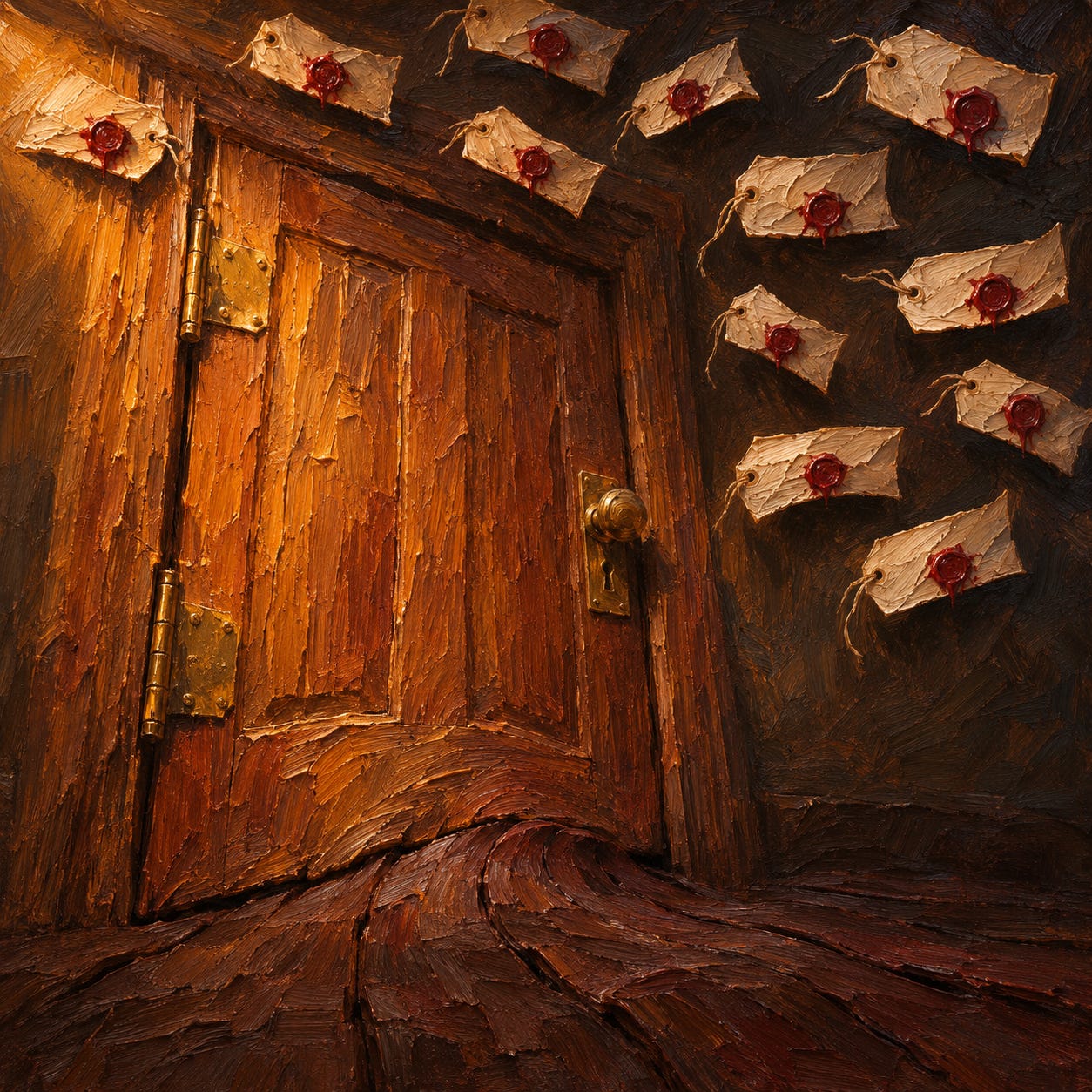
Imagine your bedroom door keeps getting stuck. You call someone to look at it. He arrives, inspects the door, and says: “This is idiopathic door-sticking.” You ask what that means. He says: “It means your door sticks for an unknown reason. It is a condition of your door. Here are some things to try when it happens. Pull harder. Kick it. Oil the handle.” You ask again what is causing it. He says: “It is genetic. Doors in houses like yours tend to stick. It runs in the family.” You ask whether it can be fixed. He says: “No. This is a progressive, chronic, lifelong condition. We can only manage it.”
You tell him you noticed that the door started sticking right after the floor was replaced. He writes “primary door dysfunction syndrome” on his clipboard and leaves you a prescription for door oil to be applied twice a day for the rest of your life.
The door is still sticking. The floor is still too high. Nobody looked at the floor.
That is what the twelve words do.
The floor is one of four places the twelve words have told nobody to look.
In Print
The Unbekoming library is available in paperback, printed to order through Lulu and shipped worldwide. The shelf begins with the paradigm question underneath everything else — No Virus, the isolation problem, the collapse of virology’s foundational claims, and a disease-by-disease reappraisal — and moves through the suppressed compounds mainstream medicine set aside: The DMSO Book, Chlorine Dioxide: The Forbidden Remedy, The Iodine Book, and The Hydrogen Peroxide Book. Two more recover what’s still on the kitchen shelf: Baking Soda and The Castor Oil Book. Two more recover the minerals modern soil, water, and processing quietly stripped from the diet: The Magnesium Handbook and The Boron Book. Sitting alongside these is No Contagion, co-authored with Jamie Andrews — the case against germ theory itself, catalogued through 258 failed contagion experiments.
The critique books cover what medicine, dentistry, psychiatry, and veterinary practice have become. The Unvaccinated treats the completely unvaccinated as a comparison group across twenty chapters and five appendices. Medicalized Motherhood follows a woman through 123 documented interventions from teenage pill to postpartum discharge. Drilling for Profit treats cavities, gum disease, and crooked teeth as the dietary problem they are. What Your Vet Can’t Tell You applies the same critique to pets. Escape from Psychiatry documents the fabrication of the DSM and the specific damage of every major psychiatric drug class. The Vitamin K Injection covers what happens in the first hours of a newborn’s life.
The full shelf is at lulu.com/spotlight/unbekoming. A physical book reaches the person a Substack post never will — the skeptical relative, the friend who won’t click a link but might open a book, the visitor whose eye lands on a coffee table. Buy one to keep, and one to give away.
References
Mayo Clinic. “Multiple Sclerosis: Symptoms and Causes.” mayoclinic.org, Diseases & Conditions, Multiple Sclerosis. “The cause of multiple sclerosis is unknown. It’s considered an immune mediated disease in which the body’s immune system attacks its own tissues.” Wording as published and confirmed by independent captures of the page from 2019 forward. The same construction appears in the Merck Manual (updated 2026, M.C. Levin): “The cause is unknown but may involve an attack by the immune system against the body’s own tissues (autoimmune reaction).”
Carretero OA, Oparil S. “Essential hypertension. Part I: Definition and etiology.” Circulation. 2000;101(3):329-335. See also Oparil S, Zaman MA, Calhoun DA. “Pathogenesis of hypertension.” Annals of Internal Medicine. 2003;139(9):761-776. The 90-95 percent figure is standard across contemporary internal medicine references.
World Health Organization. International Statistical Classification of Diseases and Related Health Problems, 11th Revision (ICD-11). WHO, 2022. The clinically operational diagnostic vocabulary (ICD-11 combined with ICD-10-CM modifications still in active use in the United States) exceeds seventy thousand codes.
Richet C. “Anaphylaxis.” Nobel Lecture, December 11, 1913. In Nobel Lectures, Physiology or Medicine 1901-1921. Elsevier, Amsterdam, 1967.
Arnaud L, Mertz P, Gavand PE, et al. “Drug-induced systemic lupus: Revisiting the ever-changing spectrum of the disease using the WHO pharmacovigilance database.” Annals of the Rheumatic Diseases. 2019;78(4):504-508. doi:10.1136/annrheumdis-2018-214598. See also StatPearls (updated January 2026), entry Drug-Induced Lupus Erythematosus: “more than 100 drugs have been implicated... across more than 10 therapeutic categories.” Related: Olsen NJ. “Drug-induced autoimmunity.” Best Practice & Research Clinical Rheumatology. 2004;18(5):677-688; Pretel M, et al. “Drug-Induced Lupus Erythematosus.” Actas Dermo-Sifiliográficas. 2014;105(1):18-30.
International Human Genome Sequencing Consortium. “Finishing the euchromatic sequence of the human genome.” Nature. 2004;431(7011):931-945.
Manolio TA, Collins FS, Cox NJ, et al. “Finding the missing heritability of complex diseases.” Nature. 2009;461(7265):747-753.
Shelton HM. Human Life: Its Philosophy and Laws. How to Live Publishing Co., San Antonio, 1928. See also Shelton, Natural Hygiene: Man’s Pristine Way of Life. Dr. Shelton’s Health School, San Antonio, 1968.
Lester D, Parker D. What Really Makes You Ill? Why Everything You Thought You Knew About Disease Is Wrong. Independently published, 2019.
Richter S. The Genome Revolution. Goldman Sachs equity research report, April 10, 2018. The question “Is curing patients a sustainable business model?” is quoted from the report by Kim T. “Goldman Sachs asks in biotech research report: ‘Is curing patients a sustainable business model?’” CNBC, April 11, 2018.
Gilead Sciences, Inc. Annual reports and SEC filings, 2015-2018. Hepatitis C franchise peak revenue of approximately $12.5 billion in 2015 is widely documented in financial coverage; the fall below $4 billion by 2018 is cited in the Goldman Sachs report at reference 10 and in contemporaneous financial press.
Latypova S. Public writings and interviews, 2022-2026. The ABV framing is developed at length in Unbekoming, The Primary Cause: An Essay on One Impost, Three Shadows, July 2026.
First of all, I would like to congratulate you on this interesting report and for inviting us to reflect on the need to investigate the true causes of diseases, rather than settling merely for a diagnostic label. 👍👌🏆
Patients often face fear, uncertainty, complex medical terminology, contradictory information, and the pressure to make life-altering decisions in a very short amount of time.
Many believe that modern medicine is entirely precise, personalized, and backed by scientific certainty. However, the reality is far more complex. Diseases involve a multitude of factors: genetics, metabolism, inflammation, the immune system, the microbiota, the environment, and lifestyle habits.
There is a need for clearer and more transparent communication regarding diagnoses, the actual benefits of treatments, their risks and adverse effects, as well as independent scientific information that enables truly informed decision-making.
It is also essential to hold large multinational pharmaceutical companies accountable when their drugs cause serious harm—especially if such harm is not properly acknowledged or disclosed. Independent pharmacovigilance and transparency should be non-negotiable.
Furthermore, much greater emphasis should be placed on prevention, healthy nutrition, physical activity, rest, and other lifestyle habits, avoiding unnecessary medicalization and the use of medication when reasonable alternatives exist.
The goal is to avoid pharmacological treatments whenever possible—prioritizing the Hippocratic maxim “FIRST, DO NO HARM”—and to place the individual’s well-being and quality of life above any economic interests.🙏
MEDICINE SHOULD FOCUS ON INVESTIGATING ROOT CAUSES AND PREVENTING DISEASES, RATHER THAN LIMITING ITSELF TO TREATING SYMPTOMS.❤️
These infamous twelve could be characterized as 'medical euphemisms'. Euphemisms typically avoid stating realities.