

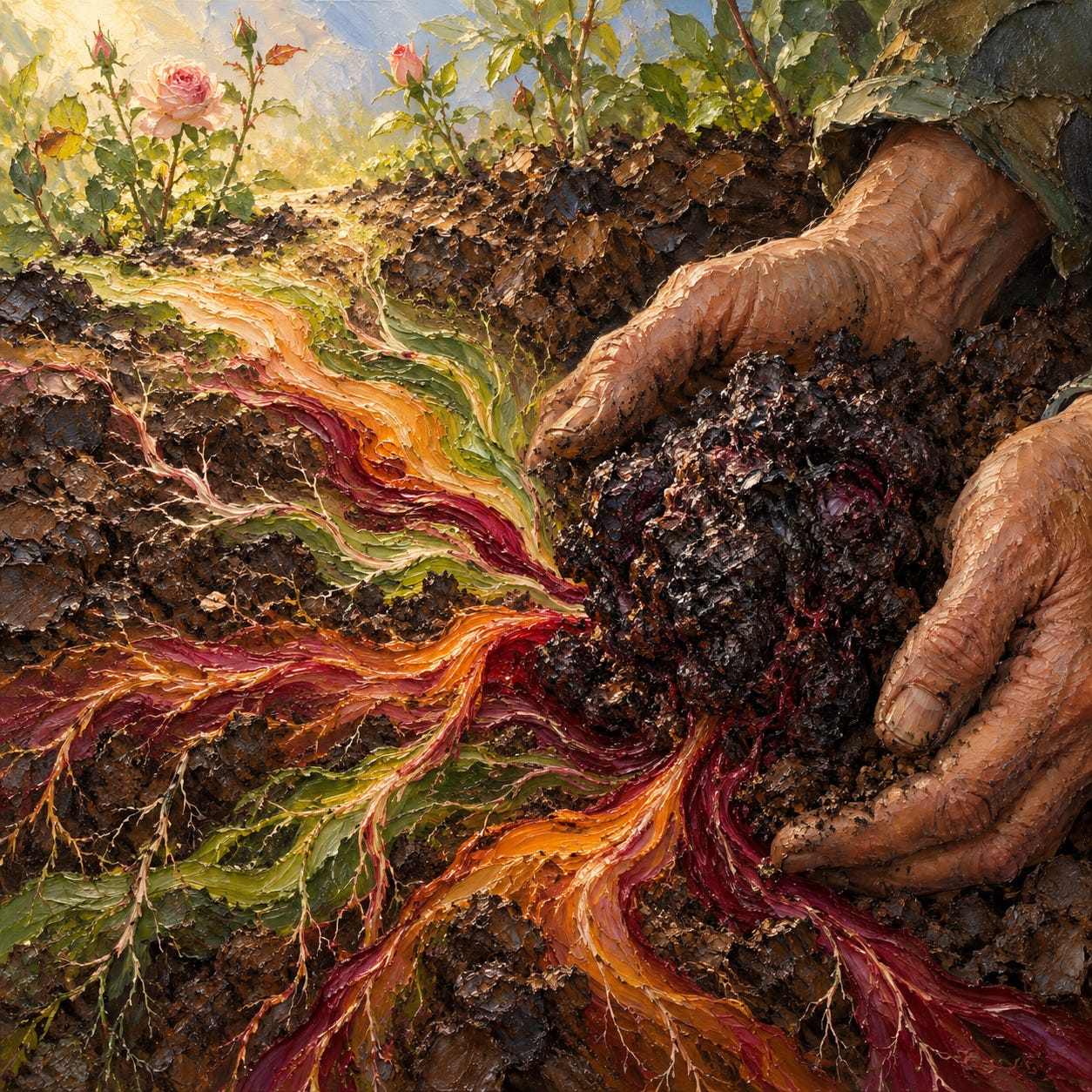
On October 1, 1952, an Austrian electromechanic named Rudolf Breuss examined the iris of a woman whose doctors had diagnosed leukemia and given her no hope. What he saw contradicted everything he had been told. Leukemia, he concluded on the spot, is not a cancer of the blood at all. It is a decomposition of the blood caused by a malfunctioning portal vein circulation, and the portal vein is failing because the patient is depressed. Six days after Breuss began treatment, Regina Lorunser was discharged from hospital. Over the following decades he treated 150 more leukemia patients the same way, all of them helped, most working normally again within a week. The finding is recorded in The Breuss Cancer Cure, published in German in 1978 and in English by Alive Books in 1998, and it has been nowhere incorporated into hematology in the half-century since.
Breuss was born in 1899 in the Vorarlberg, the son of a stonemason who drank and a laundress who fed five children on her own earnings. He wanted to attend high school and could not afford to. He earned his living as an electromechanic and taught himself everything he knew about healing from books, lectures, and patients. In April 1944 he bought Dr. Otto Wirz’s book on iris diagnosis, which gave him both his primary diagnostic method and his working understanding of how household poisons lock illness into a body. He treated his first cancer patient in 1950 — a woman with breast cancer who refused surgery because her mother had died on the table — and she recovered on a juice formula he had developed ten years earlier for stomach cancer. From that case to his death in 1990, roughly 40,000 patients passed through his treatment, about 2,000 of them under his personal direction. He asked repeatedly that medical doctors and scientists test his method. The request was refused for four decades.
By the time Breuss wrote his book, the standard of care for cancer in the West had settled into the three modalities it still occupies — surgery to remove the tumour, radiation to burn what remained, and chemotherapy to poison what the first two could not reach. The testimonial letters in the book document what this looked like in practice: patients whose first surgery was followed within a year by a second, then a third; a kidney cancer patient told she had one year to live after her kidney was removed, then losing a lung, then told to prepare for a second lung operation she refused; a lip cancer patient scheduled for five successive skin transplants over five years. Breuss’s position directly contradicted the premise behind this sequence. He argued that cutting into a small growth or pressing around it was itself the mechanism that produced metastasis — that the growth, left alone and starved of what fed it, would die where it stood. The medical profession’s response was not to examine the claim but to deny that his recovered patients had ever had cancer in the first place, while refusing to release the records that would have confirmed the original diagnoses.
Breuss sits within the terrain tradition as an empirical practitioner rather than a theorist — closer in method to Weston Price than to Béchamp, documenting what worked across tens of thousands of cases without building a systematic biology around it. The full summary unpacks his theory that a cancerous growth is an autonomous mass formed when tissue is starved of blood by prolonged pressure (a pipe held on the same side of the mouth every evening for ten years, food sitting for hours in a diseased stomach) and reorganises itself to survive on whatever it can draw from its surroundings. It details the forty-two day protocol — the specific vegetable juice mixture, the three teas, the tablespoon of sediment removed from every quarter litre because that sediment “would serve as food for the cancer” — and the three daily rules Breuss insisted were enough to keep the terrain clean: never eat reheated food, always drink sage tea, keep no poisons in the house. The woman who was his first patient in 1950 was still alive and well in 1986, when Breuss noted it in the margin of her testimonial letter.
Related


Support This Work
The essays are free and will stay free. What paid subscribers get is the library that surrounds them: the full digital book catalogue, audio deep dives, archived, and embedded in each essay, and the Questions for Your Doctor, Before You Consent, and Package Insert series. Platinum Supporters also receive the digital edition of every paperback on the day it’s published.
Whichever tier suits, thank you for being here. If you’d like to become a paid subscriber, upgrade a tier, or gift a subscription to someone who might value the work, the options are below.